
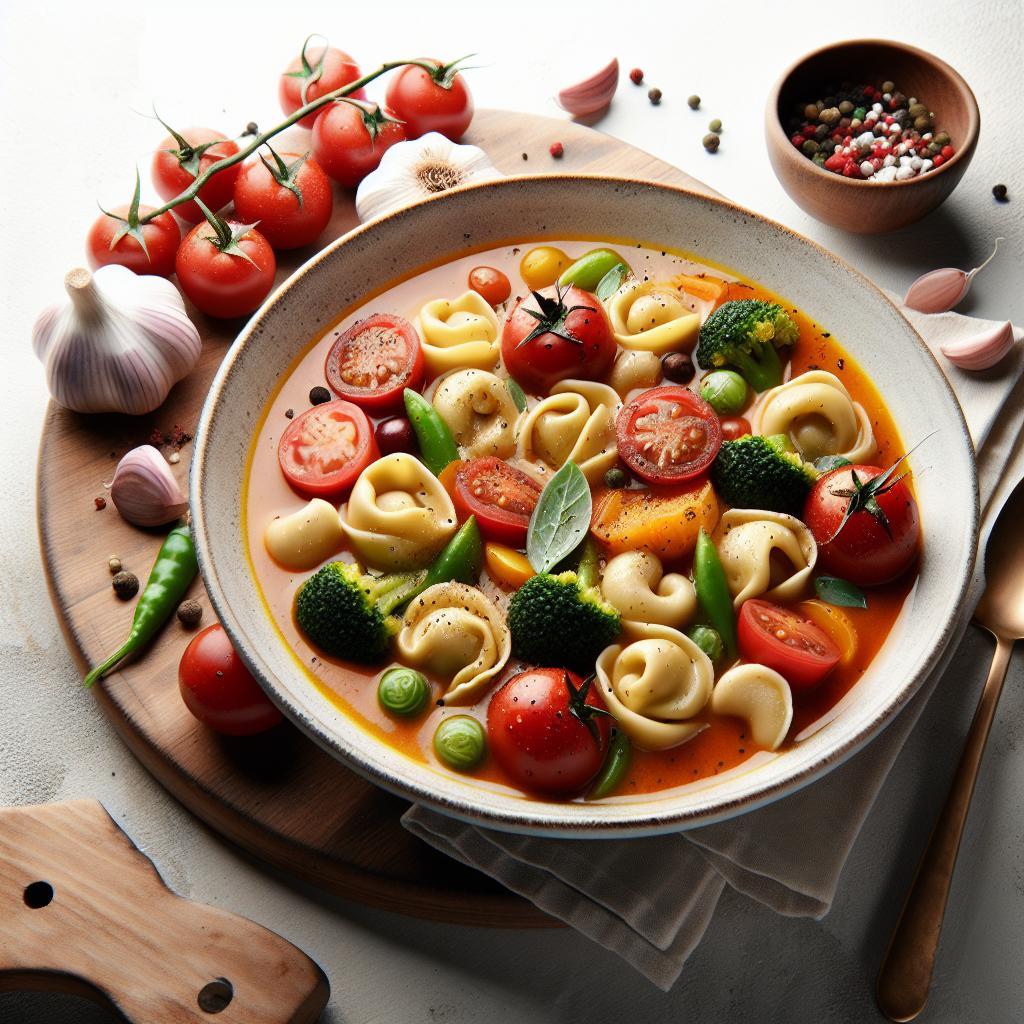

There’s a unique comfort in a steaming bowl of tomato and cheese pasta soup that calms the senses. This creamy tomato tortellini soup blends a silky tomato base, tender cheese-filled tortellini, and savory broth to deliver a balanced, satisfying bowl.
- Ready in 45 minutes: fast weeknight option with make-ahead base.
- Simple pantry staples: canned tomatoes, stock, and fresh tortellini.
- Flexible: easy dairy-free and gluten-free swaps maintain texture.
Overview
This recipe creates a rich, velvety tomato base that supports the pillowy tortellini. The technique emphasizes low-and-slow simmering, careful emulsification of cream, and finishing with aged cheese for depth.
I use tested timing and ingredient ratios so you can reproduce consistent results. The method suits both chicken and vegetable stock and adapts well to fresh or refrigerated tortellini.
Prep and Cook Time
Preparation Time: 15 minutes. Keep mise en place: dice onions, measure broth, and grate the cheese before heating the pot.
Cook Time: 30 minutes. Simmer the tomato base for at least 10 minutes to reduce acidity and develop flavor before adding cream and pasta.
Yield and Difficulty
Yield: Serves 4 generous bowls. Portion sizes will vary with accompaniments like bread or salad.
Difficulty: Easy. The steps are straightforward, and the recipe tolerates small timing variations without collapsing the final texture.
Ingredients
The ingredient list focuses on quality over complexity. Choose a good canned tomato and freshly grated cheese for the best flavor lift.
For reference, I prefer a medium-high quality canned tomato and real Parmigiano-Reggiano for finishing; these contribute umami and balance.
- 2 tablespoons olive oil
- 1 medium yellow onion, finely diced
- 3 cloves garlic, minced
- 1 (28-ounce) can crushed tomatoes
- 3 cups low-sodium chicken or vegetable stock (stock)
- 1 cup heavy cream or half-and-half for a lighter touch
- 12 ounces fresh cheese tortellini (store-bought or homemade) (tortellini)
- 1 teaspoon dried basil
- 1/2 teaspoon dried oregano
- 1/4 teaspoon crushed red pepper flakes (optional)
- Salt and freshly ground black pepper, to taste
- 1/4 cup freshly grated Parmigiano-Reggiano (Parmigiano-Reggiano)
- Fresh basil leaves for garnish
Equipment
Use a heavy-bottomed pot to avoid hotspots and a quality immersion blender if you prefer to puree the soup in the pot. Both methods produce a smooth base; the immersion blender saves time and reduces dishes.
Keep a ladle and heatproof spatula handy for stirring, and an accurate timer to avoid overcooking the tortellini. A fine grater for the cheese improves melting into the soup.
Instructions
Follow these seven practical steps to achieve a balanced, creamy soup without curdling the dairy. I present clear sequencing to protect texture and flavor.
Step 1: Sauté aromatics
Heat the olive oil in a large heavy-bottomed pot over medium heat. Add the diced onion and sauté until translucent and fragrant, about 5 minutes, stirring often to avoid browning.
Add the minced garlic and cook for 1–2 minutes until fragrant, stirring constantly to prevent burning. Keep heat moderate: burned garlic gives bitter notes that dominate the soup.
Step 2: Build the tomato base
Pour in the crushed tomatoes and stir to combine with the aromatics. Let the mixture simmer gently for 10 minutes, stirring occasionally to reduce raw acidity and concentrate flavor.
Stir in dried basil, oregano, and crushed red pepper flakes early so they hydrate and mellow. Taste and add salt and pepper in small increments as the flavor concentrates during simmering.
Step 3: Add stock and emulsify
Carefully add the stock and bring the soup to a gentle boil, then reduce to a simmer. Simmer for 5–10 minutes to marry the flavors and slightly reduce volume.
For a silky texture, remove the pot from heat and purée the soup using an immersion blender until smooth. Alternatively, transfer in batches to a blender and return the puréed soup to the pot.
Step 4: Finish with cream and cheese
Return the pureed soup to low heat and stir in the heavy cream slowly. Warm gently without boiling to prevent the dairy from separating.
Stir in the grated Parmigiano-Reggiano until it melts into the base and adds savory depth. Cheese dissolves more evenly when freshly grated instead of pre-shredded blends.
Step 5: Cook the tortellini
Add the fresh tortellini directly to the warm soup and cook according to package instructions, usually 3–5 minutes. Stir gently and test one for doneness to avoid overcooking.
If using frozen tortellini, add an extra minute or two and check frequently. Reserve a splash of stock if you need to thin the soup before serving.
Step 6: Final seasoning and serve
Taste and adjust salt, pepper, and herb balance right before serving. Finish each bowl with torn fresh basil and a small drizzle of olive oil to brighten the flavor.
Garnish with additional grated Parmigiano-Reggiano for texture and umami. Serve hot in deep bowls with crusty bread or a crisp salad.
Tips for Success
Small technique choices change the outcome more than exotic ingredients. The two most impactful moves are managing tomato acidity and handling the dairy gently.
Opt for quality canned tomatoes and low-sodium stock so you control the final salt level. Freshly grated cheese and moderate simmering yield the cleanest, creamiest finish.
Use an immersion blender for a quick, consistent purée that integrates aromatics and stock. If using a countertop blender, allow cooled batches to avoid pressure buildup.
Make-ahead strategy: cook and cool the tomato base, then refrigerate up to 48 hours. Add cream and tortellini only at serving time for fresher texture.
Variations and Dietary Swaps
Swap heavy cream for full-fat coconut milk or blended cashews for a dairy-free option that still provides body. Adjust seasoning to offset the subtle sweetness these swaps introduce.
Use gluten-free tortellini for celiac-friendly bowls; check the stock for hidden gluten. For added greens, stir in chopped spinach or kale during the last minute of tortellini cooking.
Serving Suggestions
Serve this soup in deep bowls to showcase its creamy body and to keep tortellini warm. A small salad or lemon-dressed greens brighten the palate and cut richness between bites.
Pair with garlic-rubbed crusty bread or a simple focaccia for dipping. Fresh basil and a light drizzle of good olive oil finish each bowl with aroma and sheen.
Nutrition per Serving
Estimated nutrition depends on tortellini type and cream choice. Using the recipe as written yields approximately 380 kcal per serving with a balance of fat, protein, and carbohydrates.
Substitutions can reduce calories: swap cream for half-and-half or use light cheese choices. For higher protein, choose a meat-filled tortellini or stir in shredded rotisserie chicken.
Images

Related culinary context
Tomato-based soups are a global comfort food category with many regional variations. The tomato itself provides acidity and sweetness and links this dish to broader tomato preparations (tomato).
Cheese-filled pasta like tortellini has a rich history in Italian cuisine and pairs naturally with tomato platforms and broths. Learning the texture of fresh tortellini helps you time the final cook precisely (tortellini).
Q&A
These concise answers address common execution and storage questions to keep your process efficient. Each answer draws on practical kitchen experience to prevent typical pitfalls.
Q1: What makes this soup so comforting?
The combination of a creamy tomato base and cheese-filled pasta creates a warm, satisfying mouthfeel. Layered aromatics and aged cheese provide the savory backbone that feels like a home-cooked hug.
Q2: Is this soup good for busy weeknights?
Yes. The tomato base can be made in advance and reheated, and fresh tortellini cooks quickly for fast assembly. The total active time remains modest while delivering restaurant-quality texture.
Q3: How do I prevent the tortellini from overcooking?
Add tortellini at the end and follow package timing closely, tasting for al dente texture. Remove the pot from heat when tortellini reach doneness and allow residual heat to finish gentle softening.
Q4: Can I make this dairy-free?
Yes. Use full-fat coconut milk or cashew cream to maintain body and add a small splash of lemon to balance sweetness. Taste and adjust salt because dairy-free alternatives can mute savory notes.
Q5: How long do leftovers keep?
Store leftovers in an airtight container in the refrigerator for up to 3 days. Reheat gently on the stove and add a splash of stock if the soup thickens to restore silky consistency.
Concluding Remarks
This creamy tomato tortellini soup combines accessible technique with adaptable ingredients to produce reliable comfort food. Follow the steps and simple trade-offs here to make a repeatable, crowd-pleasing soup.
Experiment with your favorite tortellini fillings and stock choices to make the recipe your own while preserving the core method for a stable, creamy result.
Discover more on ingredient roles: garlic adds aroma and bite, while aged cheeses like Parmigiano-Reggiano supply umami that lifts the soup.
See also: Tortellini Soup