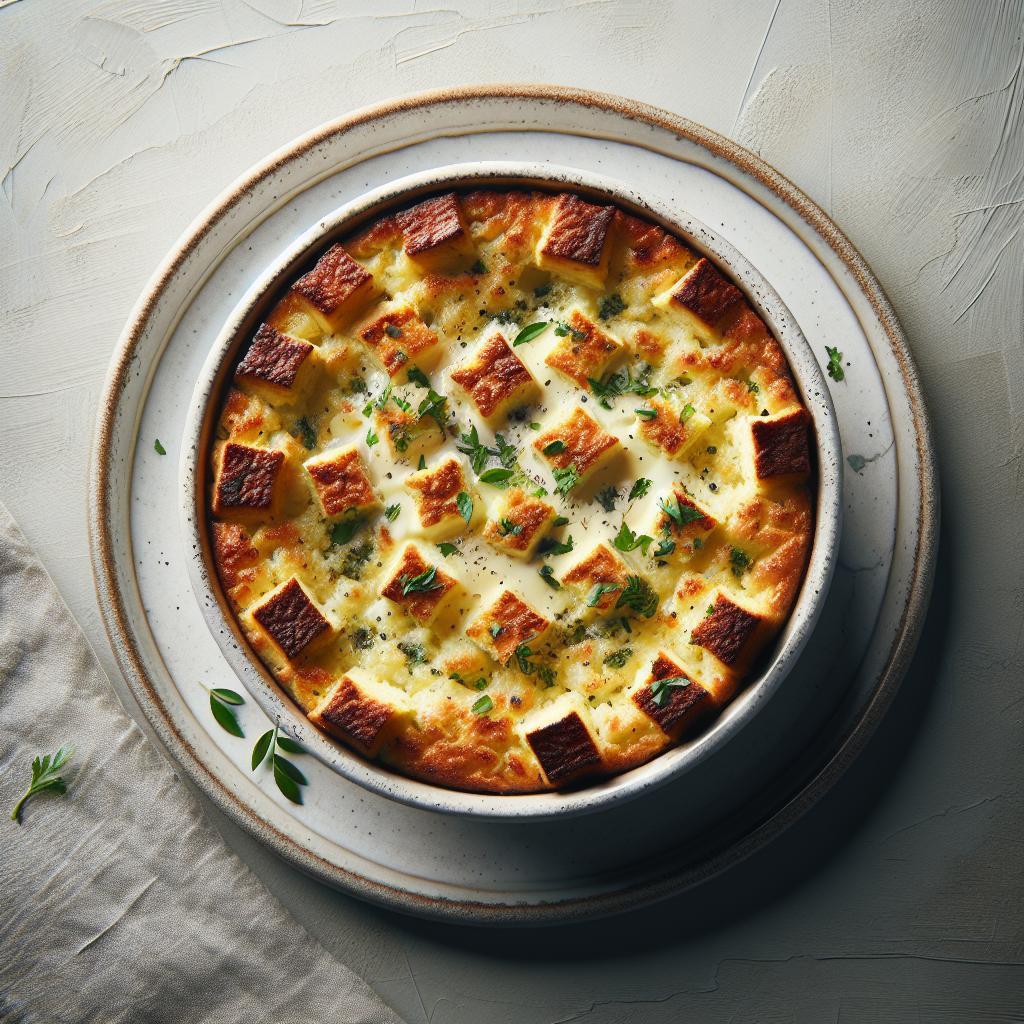

There’s a simple pleasure in turning stale bread into a savory, custardy bake that rivals restaurant fare. This cheese and herb bread pudding layers melted cheeses, fragrant herbs, and a silky custard for a golden, satisfying result that holds up as brunch centerpiece or a comfort-food side.
- Hands-on time: About 20 minutes for prep and 45 minutes to bake.
- Texture goal: Crisp top, custardy interior — achieved by day-old bread and proper soak time.
- Flexibility: Easily adapts to cheese and herb swaps for varied profiles.
Why this savory bread pudding works
This dish relies on three technical elements: a sturdy bread matrix, an emulsion-rich custard, and compatible melting cheeses. When these elements interact correctly the result is a structure that crisps on top while remaining creamy inside.
For context, this recipe sits in the savory branch of a classic category; see the broader culinary history under bread pudding. Understanding the science of soaking and heat transfer is how you control final texture.
Prep and Cook Time
Prep Time: 20 minutes. Cook Time: 40–45 minutes. The cadence of those intervals keeps the custard set without drying out the surface.
Allow an additional 10 minutes to rest after baking so the custard firms slightly for cleaner slices. Plan for a total of roughly 1 hour and 5 minutes from start to finish, including rest.
Yield
This recipe yields 6 generous portions, ideal for a family meal or a small brunch gathering. Portion size will vary with plating and accompaniments, but expect substantial, satisfying servings.
Scale the recipe up by 50–100% for larger groups and use a correspondingly larger pan to maintain the same bake profile and crust formation.
Difficulty Level
Medium. The technique demands attention to timing, sautéing aromatics, and balancing wet-to-dry ratio, but no advanced skills. Cooks comfortable with basic sautéing and whisking will handle this recipe easily.
Key checkpoints: sweat the onion until soft, cool sautéed aromatics slightly before adding to eggs, and allow bread to soak for 10 minutes so the custard penetrates without pooling excessively.
Ingredients
Use sturdy, day-old rustic bread such as a country loaf or sourdough for structure. For background on fermented breads and crumb structure, consult sourdough resources which explain why stale crumb absorbs custard effectively.
Core ingredients: 6 cups cubed day-old bread, 2 cups whole milk, 1 cup heavy cream, 4 large eggs, and 1 ½ cups mixed shredded cheeses. Aromatics include sautéed onion and garlic, plus thyme, rosemary, and parsley for brightness.
- Bread: 6 cups day-old rustic bread, cubed
- Dairy: 2 cups whole milk, 1 cup heavy cream
- Eggs: 4 large
- Cheese: 1 ½ cups shredded (see note below)
- Aromatics & herbs: 1 medium onion, 2 cloves garlic, 1 tsp thyme, 1 tsp rosemary, ½ cup parsley
- Seasoning: 1 tsp sea salt, ½ tsp black pepper, ¼ tsp nutmeg (optional)
- Fat: 3 tbsp unsalted butter for sautéing
When you select cheeses, aim for a balance of melt and flavor. For a primer on dairy categories and behavior during cooking, refer to cheese literature which outlines moisture, fat, and melting characteristics.
Instructions
1. Preheat and prepare the pan. Heat oven to 350°F (175°C) and thoroughly butter a 9×13-inch baking dish to prevent sticking and encourage browning at the contact points.
2. Sauté aromatics. Melt butter in a skillet over medium heat, add diced onion and cook until golden and translucent, about 7 minutes. Add minced garlic for the final minute and, if you use a splash of wine, deglaze briefly then remove from heat to cool.
Assemble the custard and mix
3. Whisk the custard. In a large bowl, whisk eggs with milk, cream, salt, pepper, and nutmeg until smooth. A uniform emulsified mixture ensures even setting during bake.
4. Combine bread, cheese, and herbs. Fold bread cubes, shredded cheeses, sautéed aromatics, and chopped herbs into the custard. Press lightly into the dish so pockets of air remain for lightness.
5. Soak and bake. Let the assembled mixture sit for 10 minutes so the bread absorbs custard fully. Bake uncovered for 40–45 minutes until the top is golden and the center is just set; avoid overbaking to keep the interior creamy.
6. Rest before serving. Remove from oven and rest 10 minutes; this brief hold time allows the custard to stabilize for cleaner portions and better mouthfeel.
Tips for Success
Choose bread with an open but sturdy crumb to soak custard without collapsing. Avoid pre-slicing sandwich bread that has a delicate crumb; rustic loaves offer the most reliable texture.
To prevent sogginess, cut bread into uniform cubes and distribute custard evenly, then allow for the 10-minute soak time so pieces absorb without floating. If you must use fresh bread, toast cubes lightly first to emulate day-old texture.
Variations and Add-Ins
Add cooked mushrooms, wilted spinach, or caramelized onions for depth; drain vegetables thoroughly so they don’t release water during baking. You can also fold in small diced ham or smoked salmon for a non-vegetarian twist.
Season tweaks: swap rosemary and thyme for chives and basil for a lighter finish, or add red pepper flakes for a subtle heat. Keep ratios comparable to preserve balance between custard and solids.
Serving Suggestions and Pairings
Serve warm, garnished with chopped parsley or microgreens. A light acidic counterpoint such as a lemon vinaigrette-dressed salad balances the richness and refreshes the palate.
For beverages, select a crisp white like Sauvignon Blanc or a dry sparkling wine to cut through the creaminess. Non-alcoholic pairings include herbal iced tea which complements the herb notes without weighing the dish down.
Storage and Make-Ahead
Assemble the pudding up to 24 hours ahead and refrigerate covered; bake directly from chilled, adding a few extra minutes if needed. Cooling slightly before covering preserves the crust texture and prevents condensation from sogging the surface.
Leftovers keep covered in the refrigerator for up to 3 days. Reheat gently in a low oven with a splash of cream or milk to restore creaminess; microwaving works for single portions but may compromise texture.
Nutrition (per serving)
This recipe delivers a balanced macronutrient profile with emphasis on protein and fat from eggs and cheese and carbohydrates from bread. Exact numbers depend on cheese choices and any add-ins.
| Nutrition (per serving) | Amount |
|---|---|
| Calories | 320 |
| Protein | 15g |
| Carbohydrates | 28g |
| Fat | 18g |

Further reading
For deeper context on herb classifications and culinary uses, consult the herb page. These resources help you match herb intensity to cheese and milk fat for a harmonious final dish.
If you explore more cheese specifics or substitutions, refer to pages on individual cheeses such as Gruyère cheese which explains aging and melting behavior relevant to this recipe.
FAQ
What makes this savory bread pudding different from the sweet version?
This savory version omits sugar and spices like cinnamon, replacing them with savory cheeses and fresh herbs. The result emphasizes umami, fat, and aromatic compounds rather than sweetness.
Can I use any bread, or must it be day-old?
Day-old or lightly toasted rustic bread yields the best texture because it soaks custard without collapsing. If you only have fresh bread, toast cubes briefly to mimic dryness and increase absorption control.
Which cheeses work best for melt and flavor?
Combine a firm, flavorful grate (like Parmesan) with a meltier cheese (like Gruyère or fontina) for both flavor complexity and a smooth, cohesive interior. Adjust salt levels when using aged cheeses to avoid oversalting.
Is this recipe suitable for vegetarians?
Yes, if you select cheeses made without animal rennet. Check labels for vegetarian-friendly production. The dish provides a hearty, meat-free option that many vegetarians appreciate.
How should leftovers be reheated for best texture?
Reheat in a low oven (300°F/150°C) covered for 10–15 minutes, adding a splash of milk or cream if it seems dry. This method revives creaminess while preserving a bit of crust; microwaving works for time-pressed reheating but sacrifices some texture.
With tight technique and thoughtful ingredient choices you can reliably produce a restaurant-quality savory bread pudding. The recipe rewards small adjustments: cheese blends, herb profiles, and precise soak times all influence the final bite.
Enjoy experimenting, and treat day-old bread as an asset rather than waste — this dish turns pantry basics into something memorable.
See also: Bread pudding