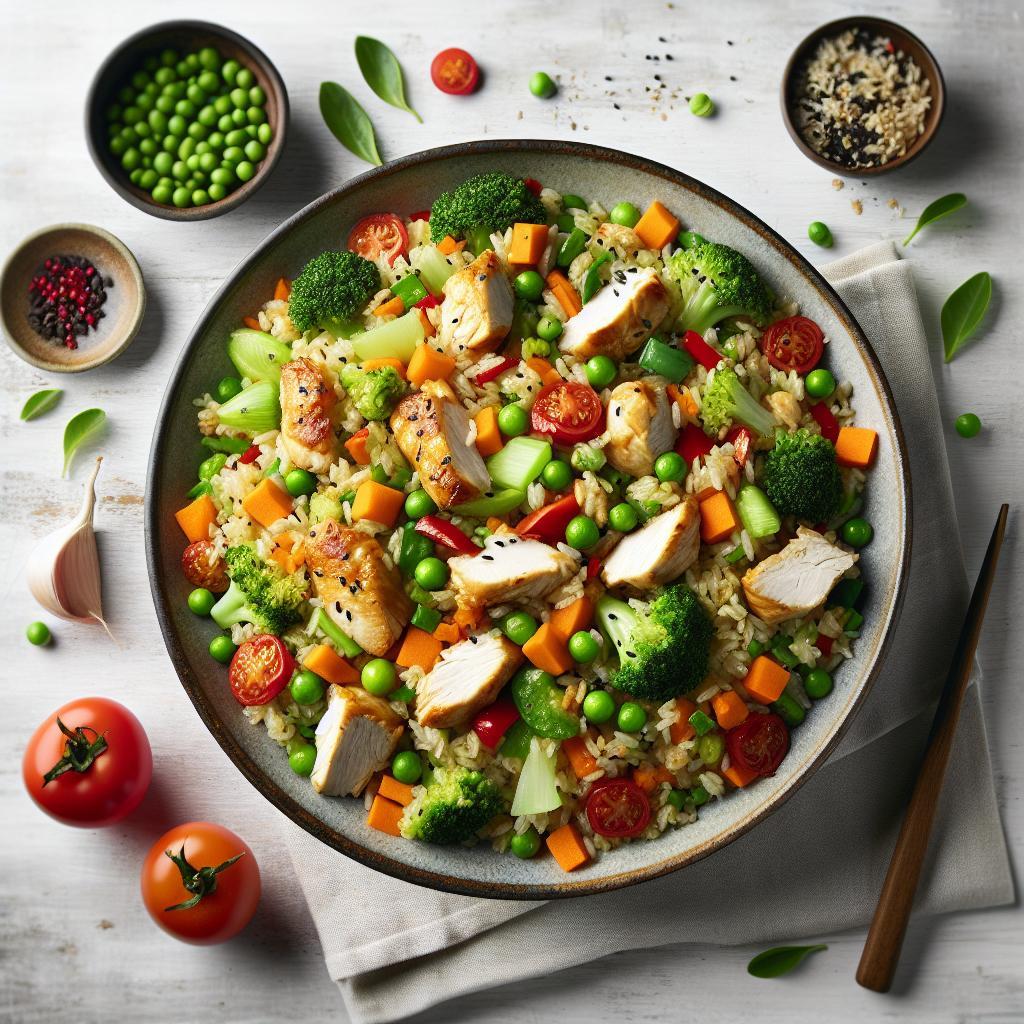

Savor the Flavor: Chicken Fried Rice Packed with Veggies combines tender chicken, separated grains, and crisp vegetables into a fast, balanced weeknight plate. The following guidance covers technique, seasoning, and timing to help you achieve restaurant-style fried rice at home.
- Fast assembly: mise en place and chilled rice speed the cook.
- Flavor layering: aromatics, soy, and a finishing oil create depth.
- Texture control: high heat and minimal stirring maintain bite and browning.
Prep and Cook Time
Plan roughly 35 minutes total if you use pre-cooked, chilled rice. Active stove time falls near 20 minutes, which suits busy weeknights and meal prep sessions.
Allocate 10–15 minutes for mise en place: chop vegetables, measure sauces, and separate eggs. Organized prep shortens cooking windows and prevents steaming, which keeps the fried rice dry and texturally pleasing.
Yield
This version yields four generous servings, each balanced with protein, carbohydrates, and vegetables. It scales well; however, crowding the pan reduces heat transfer and produces soggy rice.
When increasing the recipe, work in batches or use two skillets so each grain sees direct high heat. That maintains the seared edges and individual grain texture essential to good fried rice.
Difficulty Level
Skill-wise, this recipe rates easy-to-medium: basic knife work and high-heat stir-frying are the primary skills. Timing is the most technical part — manage heat so you sear without steaming.
Use a heavy wok or a wide, heavy skillet for the largest contact patch with the heat source. This concentrates energy, promoting rapid evaporation and the light crust on rice that many cooks prize.
Ingredients
The ingredient list is straightforward and flexible, built around chilled rice and uniformly cut vegetables for even cooking. Swap items seasonally to keep the dish fresh and economical.
Core pantry items include neutral oil, eggs, soy-based seasoning, and a touch of toasted sesame oil to finish. For background on rice variety choices, see jasmine rice.
- 2 cups cooked jasmine rice (chilled overnight for best texture)
- 1 lb boneless, skinless chicken breasts, cut into bite-size pieces
- 2 tbsp neutral oil (vegetable, canola, or peanut)
- 3 large eggs, lightly beaten
- 1 cup carrots, finely diced
- 1 cup frozen peas, thawed
- 1 small red bell pepper, diced
- ½ cup chopped green onions (white and green parts separated)
- 3 cloves garlic, minced
- 1 tbsp fresh ginger, grated
- 3 tbsp low-sodium soy sauce
- 1 tbsp oyster sauce (optional)
- ½ tsp toasted sesame oil to finish
- Salt and black pepper to taste
- Fresh cilantro or extra scallions for garnish
Instructions
Work in clear stages: sear the chicken, scramble the eggs, flash-cook the vegetables, then combine. This staged approach prevents overcooking and preserves contrasting textures.
Keep heat high and use a roomy surface so ingredients fry instead of steam. For a primer on the cooking method, consult stir-frying.
- Prepare the Chicken: Heat 1 tablespoon oil in a wok or large skillet over medium-high heat. Season the chicken lightly and sear until golden and cooked through, about 6–8 minutes; remove and keep warm.
- Scramble the Eggs: Add 1 tablespoon oil, then pour in beaten eggs and scramble softly; transfer to a plate when just set.
- Sauté Aromatics and Veggies: Add the remaining oil, then garlic and ginger; stir until fragrant, about 30 seconds. Toss in carrots, peas, and bell pepper; stir-fry until slightly tender, roughly 3–4 minutes.
- Combine Rice and Sauces: Add chilled rice, breaking clumps with your spatula so each grain separates. Pour in soy sauce and optional oyster sauce; stir and toss to coat the rice evenly for 1–2 minutes.
- Return Chicken and Eggs: Fold the chicken and eggs back into the pan, mixing gently to keep the egg texture intact. Finish with the white parts of green onions and a quick toss to heat through.
- Serve Hot: Remove from heat, garnish with green tops and cilantro, and drizzle toasted sesame oil. Plate immediately to preserve crisp vegetable bite and grain separation.
Use a wok for the fastest, most even heating when possible. A wok concentrates heat, which helps develop sear and quick evaporation for ideal fried rice texture; see wok for more on design and use.
The sequence matters: ingredients that take longest go first, delicate items last. That sequencing reduces moisture release and keeps the finished fried rice lively and dry rather than clumped.
After removing from heat, let the pan rest briefly before plating to allow flavors to settle. A brief rest tightens the dish and makes portioning easier.
Chef’s Notes
Day-old rice fries better because refrigeration firms up starches so each grain separates rather than clumping. Use medium-grain jasmine or equivalent for a balance of fragrance and texture.
Use low-sodium soy so you can control salt, adding more at the end if necessary. Finish with a tiny amount of toasted sesame oil for aroma; add it off the heat to preserve its fragile aroma compounds.
- Rice Tips: Always use chilled rice for the best grain separation.
- Vegetable Swaps: Replace carrots and peas with snap peas, baby corn, or diced zucchini for variety.
- Protein Alternatives: Substitute thighs or cooked shrimp for different flavor and juiciness.
- Make-Ahead: Chop vegetables and pre-cook chicken to cut final assembly time.
Serving Suggestions
Serve fried rice in shallow bowls to display the colorful mix and to let sauces sit lightly on the rice. A crisp cucumber salad or pickled radish adds a refreshing counterpoint.
Garnish with chopped scallions and toasted sesame seeds for contrast and crunch. Offer lime wedges and a mild chili condiment on the side so diners control heat and acidity.
Nutritional Snapshot
Each serving balances macronutrients: lean protein from chicken, complex carbohydrates from rice, and fiber-rich vegetables. Nutrition will vary with portion size and ingredient choices.
Typical values per serving hover near 420 kcal with approximately 32 g protein, 45 g carbohydrates, and 10 g fat. Reduce oil or lower-sodium soy to adjust calories and sodium as needed.
| Nutrient | Per Serving |
|---|---|
| Calories | 420 kcal |
| Protein | 32 g |
| Carbohydrates | 45 g |
| Fat | 10 g |
FAQ
How do I get non-sticky fried rice every time?
Use chilled, day-old rice and break apart clumps with a fork before frying. Heat the pan well so rice hits a dry surface and fries instead of steaming.
Avoid adding too much sauce at once and keep ingredients moving. If the rice begins to stick, work in smaller batches to maintain a dry surface and good texture.
Can I make this recipe vegetarian?
Yes. Replace chicken with firm tofu or a mix of mushrooms and omit eggs if you prefer. Use mushroom-based or vegetarian oyster-style sauces to mimic that umami depth.
Add edamame or tempeh for plant protein and adjust soy levels to taste. A splash of rice vinegar lifts flavor without adding sodium or fat.
What is the best oil to use for stir-frying?
Choose a neutral oil with a high smoke point such as vegetable, canola, or peanut oil for safety at high heat. These oils tolerate the rapid searing needed for good fried rice.
Finish with a touch of toasted sesame oil for aroma; add it off-heat to preserve its delicate compounds. For technical context on soy-based seasoning, see soy sauce.
How should I store and reheat leftovers?
Keep leftovers in an airtight container in the refrigerator for up to three days. Reheat quickly in a hot pan with a splash of oil to restore texture and flavor.
Microwaving can make rice gummy; a fast stir-fry at high heat revives separation and gives a near-fresh result. For stir-fry method background, consult stir-frying.
What gives fried rice an authentic taste?
Layered aromatics, timely seasoning, and confident high-heat cooking create authentic flavor. Garlic, ginger, soy, and a finishing oil produce the familiar scent-and-taste profile.
Technique matters: quick searing, minimal steaming, and timing the sauce preserve volatile aromatics. For context on rice varieties, see jasmine rice.

See also: explore the wok technique and rice variety notes for further refinement in your kitchen.
See also: fried rice