
Savor the Flavors of Mediterranean lamb Roast by choosing the right cut and mastering a focused, herb-forward marinade. This recipe uses a bone-in leg of lamb for steady, even roasting and deep flavor development; the approach suits both weeknight dinners and special occasions.
- Key takeaway: Proper marinating and resting create tender, juicy slices.
- Key takeaway: Moderate roasting temps build a crisp crust without overcooking.
- Key takeaway: Fresh herbs and olive oil anchor authentic Mediterranean lamb flavor.
- Key takeaway: A simple pan sauce from drippings elevates the meal.
Why this roast works
The Mediterranean lamb approach relies on bright aromatics, balanced acid, and high-quality oil to lift roasted meat. These elements combine to temper lamb’s natural richness and to focus the palate on herb and citrus notes.
Roasting a bone-in leg preserves moisture and gives the pan drippings depth for sauce. For context on regional flavor frameworks, see Mediterranean cuisine.
Prep and Cook Time
Preparation Time: 20 minutes to assemble the marinade and score the meat. Set an alarm for marinating and allow the lamb to come to room temperature before roasting.
Marinating Time: 8–12 hours for best penetration; at least 4 hours if short on time. Refrigerate while marinating, then bring the meat out about 45 minutes before roasting to equalize temperature.
Timing details
Preheat the oven to 375°F (190°C) and plan on 1 hour 15 minutes to 1 hour 30 minutes for a 3–4 lb bone-in leg to reach medium-rare to medium. Use a calibrated instant-read thermometer to monitor the thickest part of the roast.
Rest the roast 15–20 minutes tented in foil before carving; carryover cooking will raise internal temperature 5°F–8°F. Resting gives the single biggest payoff in juice retention and slice quality.
Yield and Difficulty
Serves 6 hearty portions from a 3–4 lb leg of lamb. The recipe rates as medium difficulty; basic roasting experience produces reliable results with the right tools.
Key equipment: a roasting pan with rack, a reliable instant-read thermometer, and a sharp carving knife. These tools remove variability and help you reproduce the results consistently.
Ingredients
Main protein: 3–4 lbs bone-in leg of lamb, trimmed of excess fat. The bone stabilizes the roast and adds flavor to the pan drippings during roasting.
Marinade basics: 1/4 cup extra virgin olive oil, 4 cloves garlic (minced), 2 tbsp fresh rosemary, 2 tbsp fresh thyme, 1 tbsp fresh oregano, 1 tbsp ground cumin, 1 tsp smoked paprika, 1 tsp sea salt, 1 tsp freshly cracked black pepper, zest and juice of 1 lemon, and 1/2 cup low-sodium chicken broth or water for the pan.
Herb and spice notes
Use fresh herbs for brightness; their volatile oils release during marinating and roasting, improving aroma and taste. For a quick primer on rosemary varieties, consult rosemary.
Rely on quality olive oil for mouthfeel and flavor building; a fruity extra-virgin carries the herb aromatics into the meat. For background on oil types and grades, see olive oil.
Step-by-Step Instructions
1. Prepare the marinade: In a medium bowl whisk the olive oil, minced garlic, rosemary, thyme, oregano, ground cumin, smoked paprika, salt, pepper, lemon zest, and lemon juice. This emulsified mixture coats the meat and transfers flavor during the long marinate.
2. Score and marinate the lamb: Lightly score the fat cap and surface with shallow cuts, then rub the marinade into those crevices. Place the lamb in a sealable bag or container, refrigerate 8–12 hours, and turn occasionally to redistribute the marinade.
Roasting and finishing
3. Bring to room temperature: Remove the lamb from the fridge about 45 minutes before roasting to reduce thermal gradient. Equalizing internal temperature produces more even doneness from edge to center.
4. Roast at moderate heat: Preheat oven to 375°F (190°C). Set the lamb on a rack in a roasting pan and pour 1/2 cup broth or water into the pan to protect drippings; roast until the thermometer reads 135°F (57°C) for medium-rare or 145°F (63°C) for medium.
Rest and carve
5. Rest the meat: Tent the roast loosely with foil and rest 15–20 minutes so juices redistribute. Carve against the grain to preserve tenderness and present tidy slices.
6. Pan sauce (optional): Reserve drippings and deglaze the roasting pan over medium heat with a splash of broth. Reduce briefly, whisk in a knob of butter, then strain for a silky sauce to spoon over slices.
Tips for Success: Mastering the Marinade with Herbs and Spices
Use fresh herbs whenever possible; their essential oils release during marinating and roasting, improving aroma and taste. Toasting whole cumin seeds lightly before grinding enhances the spice’s warmth and complexity; see cumin for background.
Marinate overnight for best results; if time is limited, allow at least 4 hours to let acid and oil penetrate the meat’s surface. Also, reserve some marinade (separate from raw meat) to brush on the roast in the final 10 minutes for boosted surface flavor.
When searing or finishing under a broiler, watch closely; a few minutes will create an attractive crust without drying the interior. Rest the meat after any high-heat finish to regain juice balance.
Serving Suggestions to Complement Your Lamb Delight
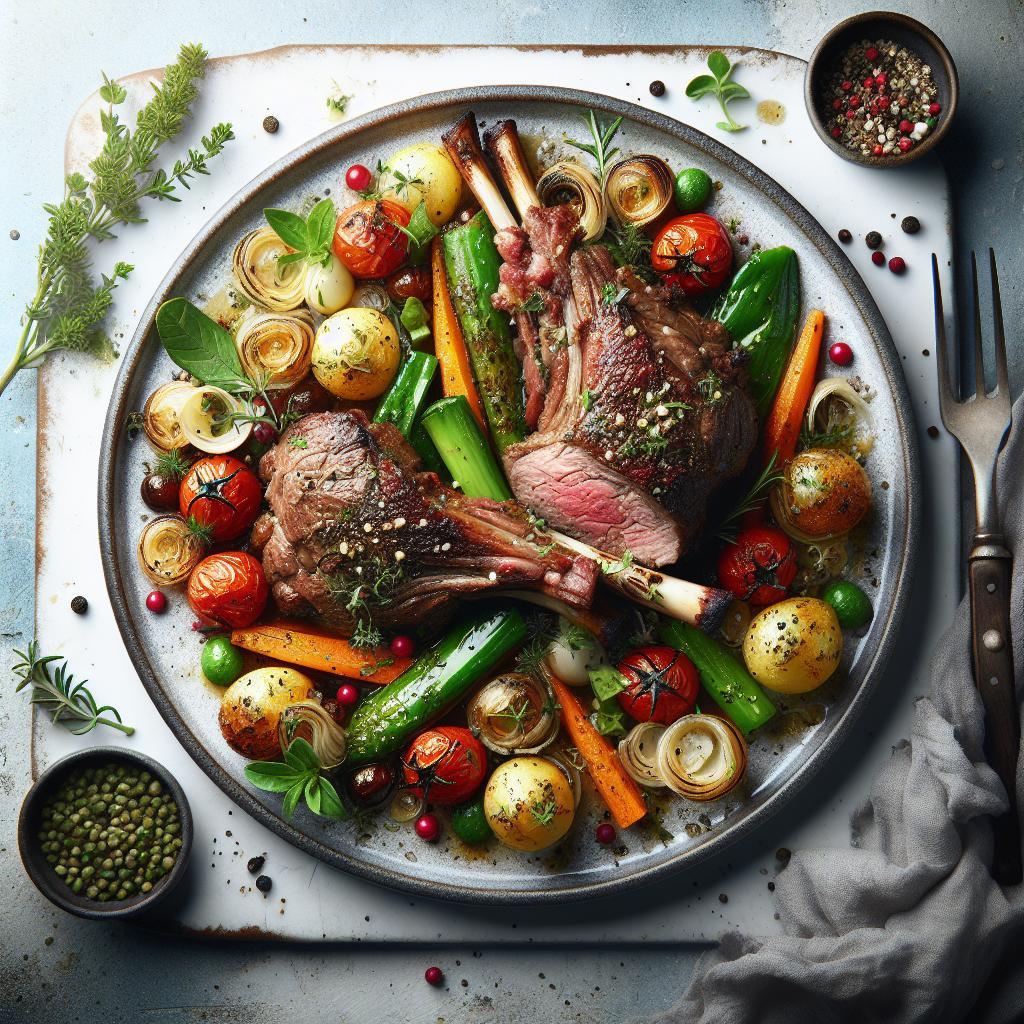
Pair the roast with bright, textural sides that cut through richness: roasted garlic potatoes with rosemary and a crisp tomato-cucumber salad dressed in lemon vinaigrette. These sides add acidity and crunch to balance the lamb.
Serve cooling yogurt-based sauces to refresh the palate; a classic cucumber-yogurt sauce like tzatziki works especially well. For reference on the condiment, see tzatziki.
Consider sprinkling pomegranate seeds or chopped mint for color and an acidic pop. Serve with warm pita or rustic bread and a link to more related recipes on the site at Mediterranean lamb and general roasting guidance at CookHarvest home.
Nutrition, Yield and Practical Notes
Per serving estimates: approximately 410 kcal, 42 g protein, 25 g fat, and minimal carbohydrates when served as described. These values vary by trimming, portion size, and sides served.
Yield: six portions from a 3–4 lb leg. If you scale up, increase roast time by roughly 15–20 minutes per additional pound and monitor internal temperature rather than relying on time alone.
Common Troubleshooting
If the exterior browns too quickly while the interior lags, reduce oven temperature by 25°F and tent with foil until the roast approaches target temperature. Then finish at higher heat briefly to crisp the surface.
Conversely, if the roast stays pale, move it closer to the heat source for the final 5–10 minutes or use a short broil to develop color. Always rest after such a finish to maintain juiciness and sliceability.
FAQ
What internal temperature should I target for roast lamb?
For medium-rare aim for 135°F (57°C) before resting; for medium aim for 145°F (63°C). Carryover cooking will add another 5°F–8°F during the rest interval.
Can I substitute a boneless cut?
Yes, boneless leg roasts work and make carving easier. However, bone-in cuts deliver marginally better flavor and steadier heat distribution.
How long can I marinate the lamb safely?
Refrigerate lamb safely for up to 24 hours in a marinade. Beyond that window, texture can change due to prolonged acid exposure; keep within recommended timeframes.
Can I grill this recipe?
Absolutely. Use indirect heat for larger cuts and finish over direct heat for crust formation. Monitor internal temperature closely to avoid overcooking.
What sides pair best with Mediterranean lamb?
Bright salads, roasted root vegetables, herbed potatoes, and yogurt-based sauces complement the roast and balance richness. Choose sides that add acidity, texture, and freshness.

Recommended Reading:
- 10-Minute Beef Stir-Fry: Fast, Flavorful One-Pan Dinner
- 7 Bright Reasons to Make Zesty Greek Lemon Soup (Avgolemono)
- 7 Pro Tips to Master Beef Moussaka & Roasted Tomato Bruschetta