
Savor the Ultimate Meal Pizza: A Slice of Culinary Joy
Savor the Ultimate Meal Pizza: A Slice of Culinary Joy presents a practical, professional approach to crafting a restaurant-quality pizza at home. This guide focuses on technique, ingredient choices, and baking strategy so you get consistent results every time.
- Master dough technique to control texture and rise.
- Balance sauce acidity with cheese and toppings for layered flavor.
- Use heat strategically to get a blistered, crisp crust.
Why this recipe works
This recipe isolates the variables that most affect pizza quality: dough hydration, fermentation, sauce concentration, and oven heat. By adjusting each element deliberately you control chew, crisp, and flavor instead of hoping for luck.
The approach borrows from classic technique and modern home-baking reality: it uses a short ferment for flavor and quick, high heat for crust development. The result is an approachable method that scales to household ovens and basic equipment.
Prep and Cook Time
Preparation: 20 minutes active, plus 1 hour dough proofing. Short, targeted work sessions help maintain dough structure and avoid overworking. Keep tools and mise en place ready to speed the assembly stage.
Cooking: 12–15 minutes at high heat on a preheated stone or heavy baking surface for the best crust expansion. Preheating thoroughly concentrates oven heat and helps recreate a professional bake in a domestic oven.
- Total: Approximately 1 hour 35 minutes (including proofing).
Yield
This formula makes two 12-inch pizzas, serving 4–6 people depending on appetite and accompaniments. Scaling is linear: double the ingredients for twice the pizzas, maintaining hydration ratios.
For smaller servings, divide the dough into individual portions and refrigerate a few hours for easier handling. Cold dough tames stickiness and improves shaping control.
Difficulty Level
Medium — the recipe demands basic dough handling and timing, but it rewards precision with noticeably better texture and flavor. Familiarity with dough feel and oven response improves outcomes after a few bakes.
Home bakers equipped with a pizza stone or cast-iron skillet and a reliable oven will find this method reproducible. A kitchen scale makes scaling and consistency far easier than measuring by volume.
Ingredients
The ingredient list separates functional groups: dough, sauce, cheese, and toppings. Each group affects structure, moisture, and flavor; treat them as systems rather than single ingredients.
Quality matters: choose ripeness and provenance deliberately for tomatoes and cheeses, and pick an olive oil with clean flavor. If you want background reading on pizza history or regional styles, consult Pizza on Wikipedia.
Dough
3 ½ cups all-purpose flour, 1 ¼ cups warm water (about 110°F/45°C), 2 tsp active dry yeast, 1 tbsp olive oil, 1 ½ tsp salt, 1 tsp sugar. Hydration and handling govern crumb and crust.
Mix until a shaggy mass, then knead 8–10 minutes to develop gluten. For additional context on yeast behavior and fermentation, see Yeast fundamentals.
Sauce
One 14 oz can crushed tomatoes, 2 garlic cloves minced, 1 tbsp olive oil, 1 tsp dried oregano, 1 tsp dried basil, pinch red pepper flakes optional, salt and freshly ground black pepper. Simmer to concentrate and remove raw edge.
Use an oil with a neutral, fruity finish and add fresh herbs at the end for aroma. For background on olive oil composition and culinary use, consult Olive oil.
Cheese Blend
1 cup fresh torn mozzarella, ½ cup shredded Fontina, ¼ cup finely grated Parmesan. A mix balances melt, stretch, and umami intensity.
Adjust the ratio for texture preferences: more Fontina increases creaminess; extra Parmesan boosts savory finish. Grate fresh for best melt characteristics.
Toppings
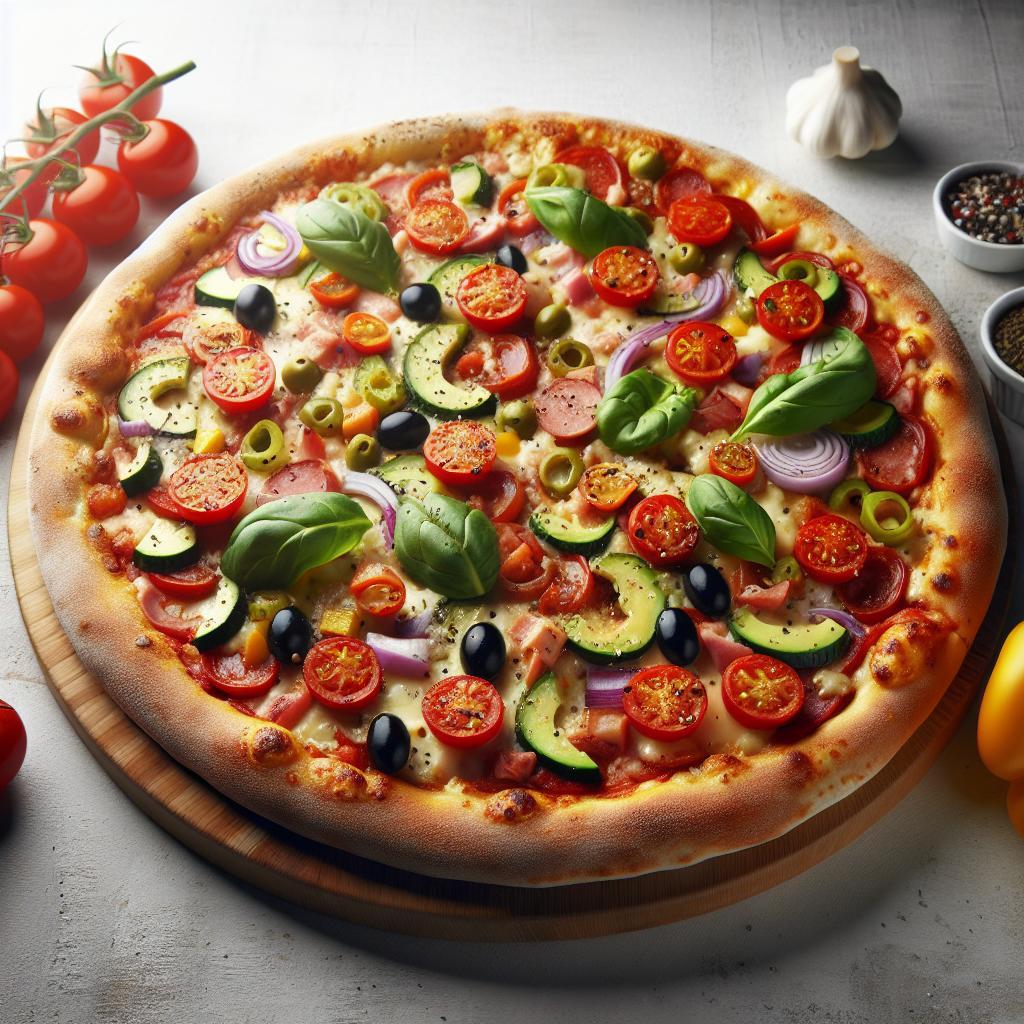
Choose toppings that release limited moisture and can be pre-cooked if necessary: sautéed mushrooms, roasted red peppers, pitted olives, thin red onion slices, fresh basil to garnish. Arrange sparingly to preserve crust crispness.
Pre-roast watery vegetables to concentrate flavor and reduce sogginess on the bake. Reserve delicate herbs for after baking to keep their volatile aromatics intact.
Instructions
Follow a stepwise workflow: activate yeast, mix, knead, proof, prepare sauce and toppings, then shape and bake. Organizing tasks in parallel reduces idle time and improves timing accuracy for high-heat baking.
Use a well-floured surface and light handling when shaping to retain interior bubbles that create an airy crumb. Always preheat your stone or heavy pan to concentrate heat at the crust.
- Activate the yeast: Combine warm water, sugar, and yeast. Let rest 8–10 minutes until frothy.
- Mix the dough: Combine flour and salt, add yeast mix and olive oil, stir until combined.
- Knead: Knead 8–10 minutes until smooth and elastic; add only small amounts of flour if very sticky.
- First proof: Oil a bowl, cover dough, and let rise about 1 hour until doubled.
- Prepare the sauce: Sauté garlic briefly, add crushed tomatoes and herbs, simmer 15–20 minutes until slightly reduced.
- Prepare toppings: Sauté mushrooms until golden; slice peppers, olives, and onion.
- Preheat oven: Place pizza stone or heavy baking sheet inside; preheat to 475°F (245°C) for 30 minutes.
- Shape dough: Divide dough, stretch gently to a 12-inch round, preserving gas bubbles for an open crumb.
- Assemble: Transfer to parchment or peel, spread a thin sauce layer, add cheese and toppings sparingly.
- Bake: Slide onto hot stone; bake 12–15 minutes until golden crust and bubbling cheese.
- Finish: Top with grated Parmesan and fresh basil, slice, and serve immediately.
After baking, allow the pizza to rest 1–2 minutes before slicing; this helps the cheese set slightly and prevents topping run. Serve on a wooden peel or platter to preserve texture and presentation.
Tips for Success
Small technique adjustments yield large improvements: cornmeal on the peel reduces sticking, a short cold rest firms the dough, and a final fresh herb garnish brightens the profile. Track changes in a kitchen notebook for repeatability.
For richer flavor, ferment dough longer in the refrigerator (up to 24 hours) after the first rise; slow fermentation produces organic acids and aroma compounds. This method requires planning but delivers clear sensory benefits.
Experiment with cheese combinations like adding a touch of smoked provolone for depth or a few dollops of ricotta post-bake for creaminess. Keep toppings balanced so no single element overwhelms the slice.
Serving Suggestions
Serve with a crisp green salad dressed in lemon vinaigrette to cut through richness and refresh the palate between bites. A light balsamic drizzle or finishing olive oil adds complexity when used sparingly.
Consider antipasti like marinated artichokes or olives as a starter. These small plates introduce complementary textures and flavors without competing with the main pizza.

| Nutrient | Per Serving |
|---|---|
| Calories | 430 kcal |
| Protein | 22 g |
| Carbohydrates | 48 g |
| Fat | 15 g |
Q&A
This section answers common practical questions from home bakers about texture, toppings, and technique. Each response focuses on actionable adjustments to improve results.
Questions cover crust styles, cheese choice, and tips to mimic restaurant conditions in a domestic oven. Read the answers and apply the suggested test changes one at a time to measure impact.
Q1: What makes a pizza the “ultimate meal”?
The ultimate pizza balances crust, sauce, cheese, and toppings so every bite has texture and flavor contrast. Personalization and communal sharing also contribute to its cultural status as a complete meal.
Q2: How do crust styles affect flavor and texture?
Thin crust emphasizes toppings and yields crisp bite, while thicker crusts provide a bready chew that pairs with heavier toppings. Hydration, fermentation, and oven heat control these outcomes.
Q3: What vegetarian toppings elevate a pizza?
Roasted red peppers, caramelized onions, wild mushrooms, artichoke hearts, and fresh basil add layers of taste and texture. Precooking watery vegetables concentrates flavor and prevents sogginess.
Q4: How does cheese choice change the final taste?
Mozzarella provides stretch; Fontina or provolone adds depth; parmesan or pecorino delivers umami salt. Blending cheeses lets you tune melt and flavor complexity precisely.
FAQ
How long should I proof dough for best texture?
Proof about 1 hour at room temperature for a quick rise, or refrigerate up to 24 hours for slow fermentation and greater flavor. Cold fermentation develops acids that improve aroma and crust color.
Can I bake pizza on a baking sheet instead of a stone?
Yes—use a heavy baking sheet or cast-iron skillet preheated in the oven to concentrate heat. A hot surface encourages oven spring and gives better bottom crisp than a cool sheet.
What oven temperature works best at home?
Preheat to the highest safe temperature (typically 475–500°F / 245–260°C) and allow the stone or pan to heat at least 30 minutes. Higher heat shortens bake time and improves charring and texture.
How should I store leftover pizza?
Refrigerate slices in an airtight container for up to three days. Reheat briefly in a hot skillet or oven to restore crispness; microwaving will soften the crust.
Where can I learn more about pizza styles and history?
For authoritative background on regional pizza styles, read the article on Neapolitan pizza and the broader Pizza entry on Wikipedia. These overviews explain traditional techniques and cultural context.
The Way Forward
Pizza rewards iterative learning: test hydration, fermentation time, and oven strategies one variable at a time. Record your changes and outcomes to build a reliable home pizza routine.
With focused practice and ingredient attention you can achieve artisan-quality pizzas at home that deliver consistent texture and vibrant flavor. Bon appétit, and enjoy the process of dialing in your perfect slice.
See also: Pizza