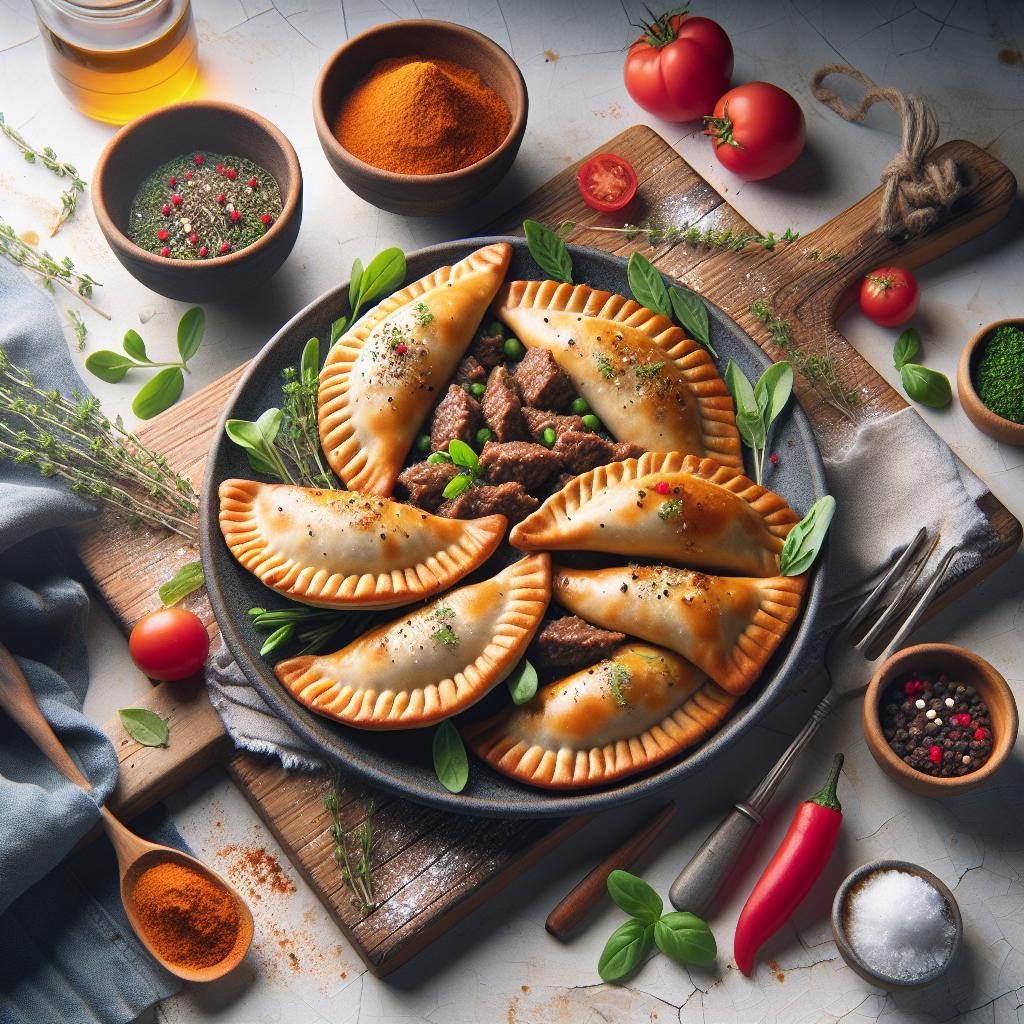

Savoring Beef Empanadas starts with a clear technique and precise ingredients. These handheld pies carry centuries of culinary practice and regional tweaks; the classic form appears across cultures as the empanada, and mastering one requires attention to dough temperature and spice balance.
- Flaky crust needs cold fat, brief kneading, and a resting period.
- Filling control means cooled, well-drained meat to avoid soggy dough.
- Versatility spans baking or frying—each method alters texture and flavor.
- Make-ahead options improve workflow for parties and meal prep.
Savoring Beef Empanadas: Prep and Cook Time, Yield & Difficulty
Plan efficiently to keep texture and flavor consistent across batches. Prep work, chilling, and a brief bake allow you to produce a uniform result for a crowd.
Use the times below as a guideline; recipe yield scales predictably with simple multipliers. Adjust oven time slightly if you change empanada size or oven calibration.
- Prep Time: 30 minutes active
- Cook Time: 25 minutes per batch
- Total Time: ~55 minutes (plus chilling)
- Yield: 12 medium empanadas
- Difficulty: Medium — requires basic dough handling
Ingredients for the Perfect Dough and Authentic Beef Filling
A reliable dough uses measured ingredients and cold fat to create distinct layers. Keep everything chilled and work quickly to preserve pockets of fat that give flakiness when baked.
The filling balances savory beef with aromatic spices, subtle acidity, and textural contrasts such as olives or hard-cooked egg. Using a warm-to-room-temperature strategy during assembly prevents condensation that makes crusts limp.
- Dough:
- 3 cups all-purpose flour, sifted
- 1 teaspoon salt
- 1/2 cup unsalted butter, chilled and cubed
- 1 egg
- 3/4 cup cold water
- 1 tablespoon white vinegar
- Beef Filling:
- 1 lb lean ground beef
- 1 medium yellow onion, finely chopped
- 1 red bell pepper, finely diced
- 2 cloves garlic, minced
- 1 tsp smoked paprika
- 1 tsp ground cumin (cumin)
- 1/2 tsp chili powder
- 1/2 cup green olives, sliced
- 1 hard-boiled egg, chopped
- Salt and freshly ground black pepper, to taste
- 2 tbsp olive oil
Step-by-Step Instructions
Follow the sequence carefully: dough first, then filling, then assembly. Cold dough and cooled filling make sealing predictable and prevent breakage during baking or frying.
Work in small batches when rolling and filling to keep dough temperature even. Light dusting with flour prevents sticking without absorbing too much moisture.
- Prepare the dough: Whisk flour and salt. Cut chilled butter into the flour until the mix resembles coarse crumbs; this creates the flaky layers.
- Mix wet ingredients: Beat egg with cold water and vinegar. Combine gently with the flour mix until dough just holds together.
- Knead briefly: On a floured surface, knead 5–7 strokes until smooth. Wrap and refrigerate for 30+ minutes to relax gluten.
- Prepare the filling: Heat oil, then sauté onion, bell pepper, and garlic until soft. Add ground beef and brown thoroughly.
- Season and cool: Stir in paprika, cumin, chili powder, salt, and pepper. Toast spices briefly, then fold in olives and chopped egg. Chill filling before assembling.
- Roll and portion: Divide dough into 12 balls. Roll to 6-inch circles, keeping thickness even for uniform bake.
- Fill, seal, and crimp: Place a tablespoon of filling in each circle, moisten edges, fold, and press. Crimp with a fork or hand-twist for a decorative seal.
- Finish and bake: Brush with beaten egg for gloss. Bake at 375°F (190°C) for 20–25 minutes until golden. Let rest 5 minutes before serving.
Baking vs Frying: Texture and Flavor
Baking yields a lighter, flakier crust that highlights the dough’s butter pockets. It suits larger batches and reduces oil absorption for a cleaner finish.
Frying produces a crisper, richer exterior and accelerates cooking time but adds oil. Choose frying for a crunchy contrast, or bake for a more refined mouthfeel.
For technique background, review standard methods in baking practices and adjust heat and time to your oven’s characteristics. This reduces guesswork and improves consistency.
Chef’s Notes and Tips for Success
Small technique adjustments yield big improvements in texture and flavor. Control moisture, temperature, and spice balance to build a professional result at home.
A kitchen scale and instant-read thermometer increase repeatability. Measure fat and flour ratios precisely to maintain dough behavior from batch to batch.
- Dough variations: Replace 1/4 cup butter with vegetable shortening for extra tenderness.
- Filling swaps: Mix ground beef with chopped mushrooms or roasted sweet potato for volume and umami.
- Prevent soggy dough: Always cool filling fully; high internal temperature releases steam that softens crust.
- Make-ahead: Dough refrigerates up to 48 hours; freeze assembled empanadas up to 3 months.
After a short rest, the dough relaxes and rolls uniformly, which reduces tearing and patching during assembly. Invest time here to simplify the final bake.
Serving and Pairing Suggestions
Serve empanadas warm at room temperature to let flavors settle and textural contrasts show. Bright sauces and pickles cut through the rich filling and keep the palate active.
Classic pairings include a herbaceous green sauce and simple slaw for crunch. Learn regional pairings like chimichurri to match authenticity with modern presentation.
To highlight provenance, present empanadas with a short note about regional styles. For example, Argentine styles differ from Galician turnovers; learning history deepens appreciation of techniques.
Regional context ties dishes to place—research sources like Argentina for cultural cues on fillings, or browse culinary histories to inform ingredient choices.
Nutrition Snapshot
Estimate nutrition per medium empanada to guide portioning for events. Values change with fat content, filling moisture, and cooking method.
| Per Empanada | Calories | Protein | Carbs | Fat |
|---|---|---|---|---|
| 1 medium | ~310 kcal | 18 g | 28 g | 14 g |
Adjust estimates when you alter ingredients: leaner beef lowers fat, while added cheese raises calories and protein. Use labels for guests with dietary needs.
FAQ
Below are concise, searchable answers to common questions cooks ask when preparing beef empanadas. Each response focuses on actionable technique and reliable options.
These entries also serve as quick reference points during prep or scaling; keep them handy on your phone while you cook.
What makes a beef empanada dough flaky?
Flakiness results from cold fat distributed as discrete particles in the flour. When heated, that fat melts and creates steam pockets, separating layers into a flaky structure.
Can I freeze empanadas before baking?
Yes. Freeze assembled empanadas on a tray until solid, then transfer to airtight containers. Bake from frozen, adding 5–8 minutes to the baking time.
How do I prevent a soggy bottom crust?
Cool the filling fully and brush the dough edge with a light egg wash to create a moisture barrier. Bake on a preheated sheet or stone for immediate heat transfer and crisper bottoms.
Should I use beef fat or olive oil for the filling?
Olive oil provides a clean flavor and higher smoke point control, while rendered beef fat adds depth and umami. Combine both for balanced richness and aromatic lift.
What temperature and time work best for baking empanadas?
Preheat oven to 375°F (190°C) and bake 20–25 minutes until golden. Check after 18 minutes for color; rotate the tray if your oven has hot spots.
The techniques above give you repeatable control over dough texture, filling balance, and final presentation. Apply the tips methodically, and you will produce consistent, crowd-pleasing beef empanadas.
See also: Beef Empanadas