
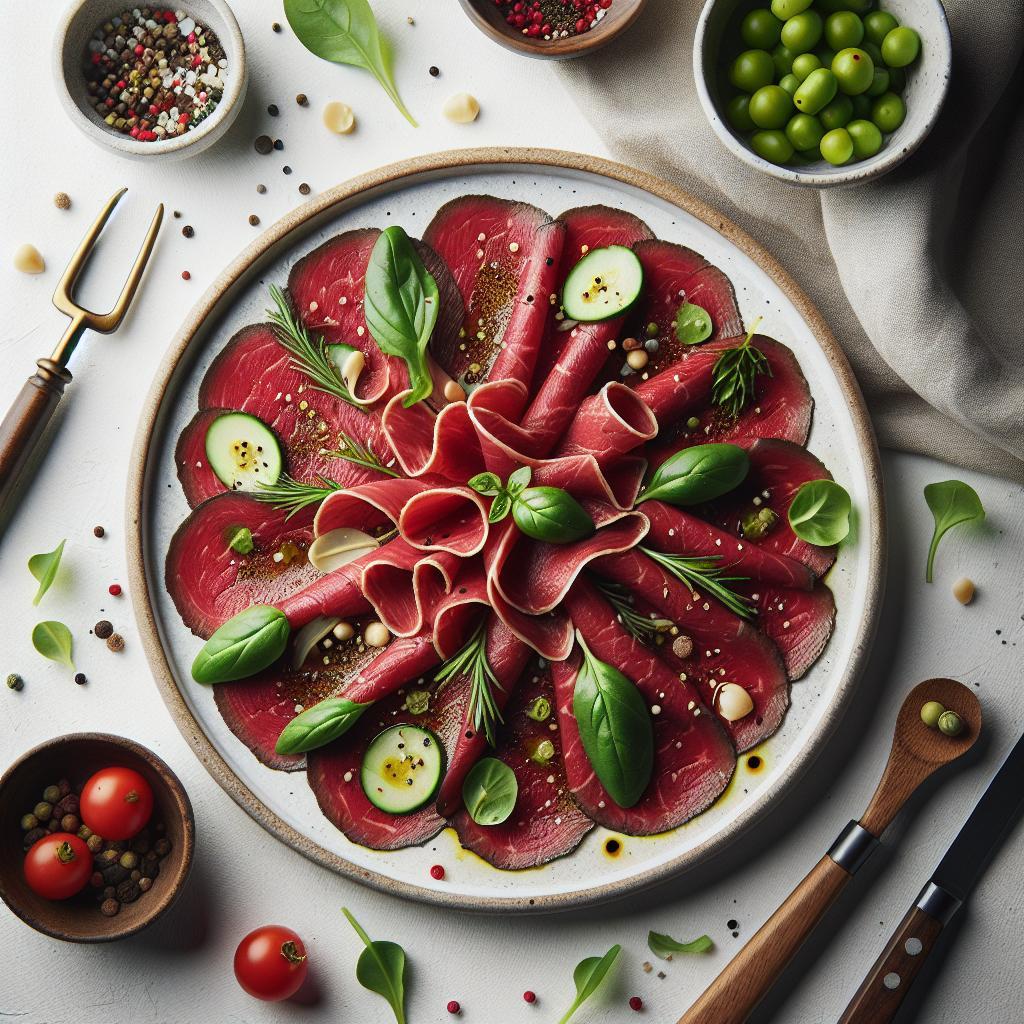

Savoring Elegance: The Art and Flavor of Beef Carpaccio presents a concise, expert roadmap for preparing classic beef carpaccio with confidence. The dish relies on precise sourcing, knife skill, and balanced seasoning to transform simple beef into a refined starter.
- Paper-thin slicing amplifies texture and mouthfeel.
- Quality beef and clean handling reduce risk and improve flavor.
- Bright acid and fat create harmonious contrasts.
Mastering Beef Carpaccio: Sourcing, Slicing, and Flavor Balancing
Carpaccio showcases raw beef at its most revealing: texture, color, and pure protein flavor. To serve it well, follow techniques developed in professional kitchens and adapt them to your home setup.
Classic carpaccio traces to Venice and remains a study in restraint and precision. For context on the recipe’s name and history, see carpaccio.
Sourcing Excellence
Choose a lean, tender cut with minimal connective tissue; tenderloin and eye of round are common choices. Purchase beef from a reputable supplier and request the freshest, chilled cut possible to minimize surface bacteria.
When evaluating color and odor, trust sight and smell: bright red and neutral aroma indicate freshness. For background on beef cuts and quality, consult the general overview at beef.
Slicing Technique
Partially freeze the trimmed tenderloin for 30–45 minutes to firm the muscle fibers and enable ultra-thin slices. Use a razor-sharp slicing knife or a mechanical slicer at 1–2 mm thickness for the best texture.
Alternate: place slices between parchment and gently pound to even thickness if necessary. Consistent thinness matters because it affects mouthfeel and how dressings meld with the meat.
Flavor Balancing
Carpaccio favors minimal, high-impact elements: extra virgin olive oil for silk, fresh lemon for lift, and a finishing cheese for savory depth. Arugula or microgreens add pepper and textural contrast without overwhelming the beef.
Use acid sparingly to avoid cooking the surface too much, and layer flavors so each bite remains bright yet rich. For cheese pairing context, see Parmigiano-Reggiano.
Prep and Cook Time
Carpaccio requires short hands-on time but benefits from a cold staging period for the meat. Total elapsed time remains under an hour for most home cooks.
Use this quick schedule to plan plating and service. Efficient timing preserves texture and flavor while reducing food safety exposure.
- Preparation: 20 minutes (plus chilling)
- Assembly: 10 minutes
- Total Time: 30 minutes
Yield and Difficulty
This recipe serves 4 as a starter and suits dinner-party service or intimate dining. The technical level rates medium because slicing takes practice and steady hands.
Professional kitchens manage carpaccio with specialized slicers; at home, practice and a sharp knife produce excellent results. Controlled technique prevents tearing and preserves the dish’s silkiness.
Ingredients
Assemble lean, chilled beef and a few high-quality accompaniments for dramatic effect. Keep extras minimal so the meat remains the focal point.
- 300g (10.5 oz) beef tenderloin, trimmed and chilled until firm
- 3 tbsp extra virgin olive oil, plus extra for drizzling
- 1 tbsp freshly squeezed lemon juice
- 2 tbsp grated Parmigiano-Reggiano
- 1 handful arugula leaves, washed and dried
- 1 tsp capers, rinsed if salted
- Sea salt and freshly cracked black pepper, to taste
- Fresh herbs such as chives or parsley, finely chopped for garnish
- Optional: thinly shaved frozen truffle or a drizzle of truffle oil for an earthy finish
Instructions
Work on a clean, chilled surface and use clean utensils to minimize contamination risk. Assemble garnishes and tools before slicing to keep the process swift.
Follow these ordered steps for consistent plates. Plate immediately after dressing to preserve texture and visual appeal.
- Chill and Prepare the Beef: Wrap the tenderloin tightly and freeze for 30–45 minutes to firm the muscle fibers for slicing.
- Slicing Technique: Slice against the grain as thin as possible, 1–2 mm ideal; use a mandoline or slicer if available.
- Arrange with Elegance: Place slices on a chilled platter, slightly overlapping in a fan or single layer for visual drama.
- Add Toppings and Dressings: Scatter arugula and capers, then drizzle olive oil and a splash of lemon for brightness.
- Finishing Touches: Grate Parmigiano-Reggiano over the plate, season with sea salt and cracked pepper, and finish with herbs or truffle if desired.
- Garnish and Serve: Serve immediately with lemon on the side for diners who prefer extra acidity.
Chef’s Notes for Success
Source sashimi-grade or very fresh beef from a trusted butcher and ask about the cut’s handling history. Cold handling and rapid service limit bacterial growth and preserve texture.
Partially freezing the beef is a reliable technique for uniform, thin slices that feel silky on the palate. For pairing ideas, truffle and aged cheeses complement beef without masking its character.
- Request a clean-trimmed tenderloin from your butcher to minimize connective tissue.
- Layer parchment between slices if you store them briefly; refrigerate no more than 24 hours after slicing.
- Substitute Pecorino Romano for a sharper cheese accent when desired.
Allow at least one full paragraph after the tip to separate content blocks and maintain visual rhythm. This pause also gives readers a moment to absorb the technique advice before moving to safety considerations.
Serving Suggestions
Present carpaccio on a large white platter to showcase the meat’s color and translucence. Add a small bowl of crusty grilled bread at the side for texture contrast.
Pair the plate with a clean, mineral-driven sparkling water or a light white wine to refresh the palate between bites. Simple accompaniments keep the experience refined and focused on the beef.
Nutritional Snapshot
Below is a concise macronutrient estimate per serving based on typical ingredient portions. Adjust values for ingredient substitutions.
| Nutrient | Per Serving |
|---|---|
| Calories | 250 kcal |
| Protein | 28 g |
| Carbohydrates | 3 g |
| Fat | 14 g |

Related Classics and Context
Carpaccio sits among other Italian raw and cured preparations that emphasize ingredient quality over heavy cooking. Think of it as part of a broader tradition that includes cured hams and thinly sliced preparations.
For general context on Italian cured meats and their techniques, review the overview at Italian cuisine. For truffle pairing notes, see truffle.
FAQ
Q1: What is beef carpaccio and where did it originate?
Beef carpaccio is an Italian appetizer of paper-thin raw beef, dressed with oil, citrus, and modest seasonings. The dish originated in Venice and became popular mid-20th century as a way to showcase premium raw beef.
Q2: Which cuts of beef work best for carpaccio?
Tenderloin (filet) and eye of round are common choices due to their leanness and tenderness. Choose cuts with minimal connective tissue to ensure a silky texture when sliced thin.
Q3: How thin should I slice the beef?
Aim for slices around 1–2 mm thickness for the ideal mouthfeel; partially freezing the meat makes this manageable at home. Uniform thinness ensures each bite blends evenly with dressings.
Q4: Is raw carpaccio safe to eat?
When sourced from a reputable supplier and handled with strict cold-chain practices, carpaccio can be served safely to healthy adults. However, avoid serving raw preparations to vulnerable populations and minimize time at room temperature.
Q5: What variations can elevate carpaccio for special occasions?
Add delicate elements like shaved truffle, microgreens, or a scatter of toasted pine nuts for texture and aroma. Keep additions subtle so they complement rather than mask the beef’s flavor.
For further reading on the core ingredients and history referenced here, the linked Wikipedia resources provide concise background and widely accepted context.
See also: beef carpaccio