
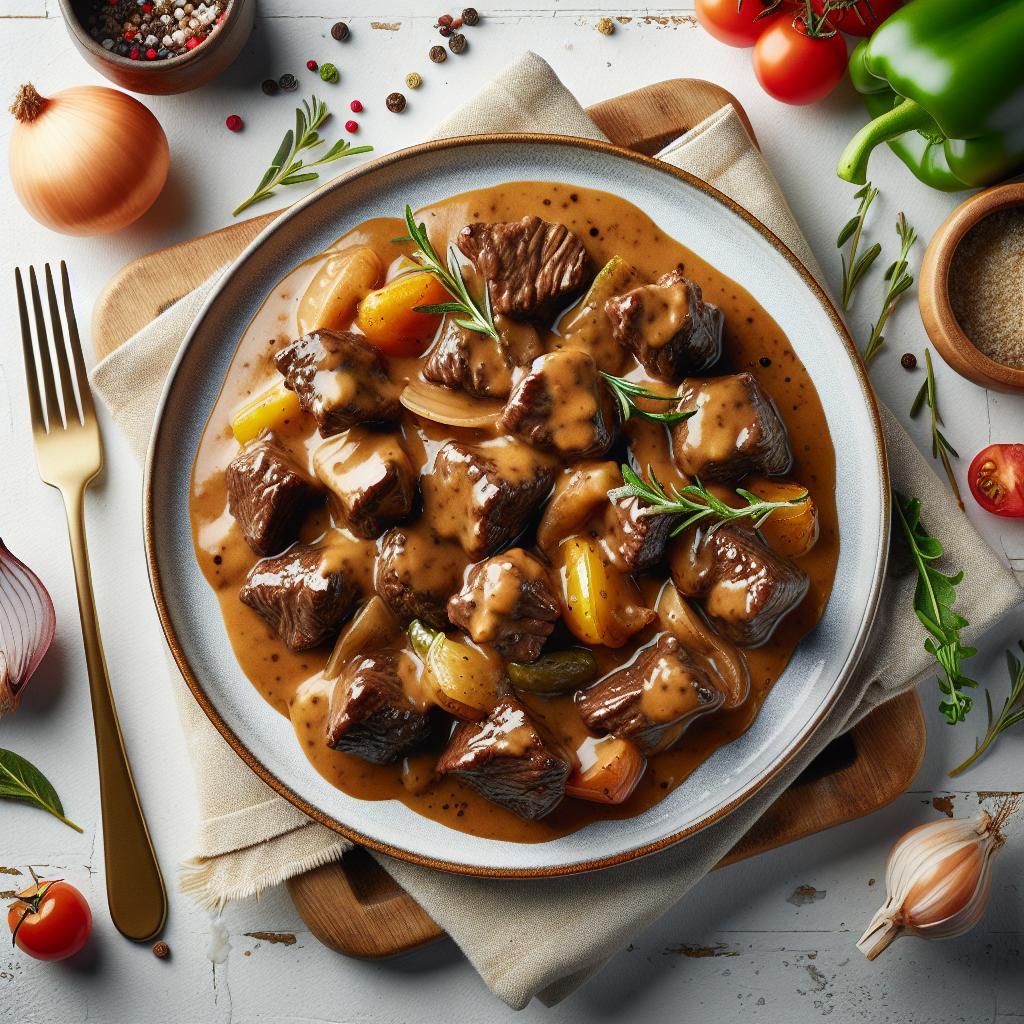

Savory Beef Tips with Rich, Homemade Gravy Delight
There is something comfortingly direct about tender beef tips in a glossy, homemade gravy. This recipe focuses on sear-first technique, gradual simmering, and a finishing step that creates a velvety sauce and deeply savory beef.
- Fast sear, slow simmer: brown for flavor, then cook low and long for tenderness.
- Gravy base: deglaze with broth and use residual pan fond to amplify depth.
- Serve smart: pair with mashed potatoes or buttered noodles to maximize comfort.
This guide walks through ingredient choices, timing, and small technique tweaks that yield reliably tender results. Expect clear steps, troubleshooting cues, and pro notes to elevate a simple dish into a standout dinner.
Key culinary science backs the method: browning produces Maillard flavors that form the backbone of the sauce, while slow, moist heat breaks down connective tissue for melt-in-your-mouth beef. Learn more about the chemistry behind browning on Maillard reaction.
Prep and Cook Time
Preparation: 20 minutes. Use this time to trim, dry, and flour the beef; proper prep speeds searing and improves texture.
Cooking: 1 hour 30 minutes total. This includes searing, sautéing aromatics, and a gentle simmer to tenderize. Slow cooking techniques help dissolve collagen; see slow cooking for background on how low heat transforms tougher cuts.
Yield
This recipe yields about four hearty portions suitable for a family meal or small dinner party. Portion sizes change based on whether you serve heavy sides like mashed potatoes or lighter vegetables.
Leftovers store well and often improve after refrigeration as flavors marry. Reheat gently to maintain gravy texture and avoid overcooking the meat.
Difficulty Level
Rated medium: the steps are straightforward but timing and heat control matter for optimal texture and sauce consistency. Searing technique and gentle simmering are two skills to focus on.
Anyone with basic stovetop skills can execute this recipe reliably by following the sequence: sear, sauté, deglaze, simmer, finish. The method teaches repeatable results and is scalable.
Ingredients
Gather these primary ingredients to start: beef tips (sirloin or chuck), all-purpose flour, vegetable oil, onion, garlic, beef broth, sour cream, butter, thyme, smoked paprika, salt, and pepper. Optional Worcestershire sauce can add umami.
Choose well-marbled beef for flavor and moisture. For a primer on beef cuts and marbling, consult the general information on beef.
- 2 lbs beef sirloin tips, trimmed and cut into 1-inch cubes
- 1/2 cup all-purpose flour, sifted
- 3 tablespoons vegetable oil
- 1 large onion, thinly sliced
- 3 cloves garlic, minced
- 2 cups beef broth
- 1/2 cup sour cream, room temperature
- 2 tablespoons unsalted butter
- 1 teaspoon dried thyme
- 1 teaspoon smoked paprika
- Salt and black pepper, to taste
- Fresh parsley, chopped, for garnish
- Optional: 1 tablespoon Worcestershire sauce
Instructions
1. Prepare the beef tips: Pat beef cubes dry with paper towels. Toss lightly in seasoned flour to encourage a crisp outer crust during searing.
2. Heat and sear: Use a heavy skillet or Dutch oven and heat oil until shimmering. Add beef in batches and sear until deeply browned on all sides, about 3-4 minutes per batch. Browning creates the pan fond that will flavor the gravy; this links to the Maillard reaction explained earlier.
Searing: Technique and timing
Sear over medium-high heat without crowding the pan. Crowding drops surface temperature and causes steaming instead of browning; remove the beef when an even crust forms on each piece.
Transfer seared pieces to a plate and reserve the fond. Use the same pot to build the sauce so you capture all caramelized flavor particles.
Sautéing aromatics and building the gravy
Add butter and sauté sliced onions until soft and beginning to caramelize, about 7 minutes. Stir in garlic and spices just long enough to become fragrant; burned garlic gives bitter notes that mask depth.
Sprinkle in paprika and thyme, then deglaze with beef broth, scraping the bottom of the pan. Deglazing dissolves the fond into the liquid, forming the backbone of the gravy; learn more about classic gravies on gravy.
Simmering and finishing
Return the seared beef and any collected juices to the pot. Bring to a low simmer, cover, and cook gently for one hour to tenderize connective tissue and fat. The low simmer softens collagen into gelatin, enriching mouthfeel.
Uncover, reduce heat, and stir in sour cream to finish the gravy. Adjust seasoning with salt, pepper, and optional Worcestershire sauce. Warm through on low without boiling to preserve the cream’s texture.
Rest the dish briefly off heat to let flavors settle before serving. Garnish with fresh parsley to add brightness against the rich sauce.
Tips for Success
Choose the right cut: Sirloin tips or chuck offer the combination of flavor and connective tissue that benefits from slow cooking. Lean cuts will dry out if overcooked.
Pat meat completely dry before flouring; a dry surface sears more effectively and produces more pan fond for the gravy. Use a neutral oil with a high smoke point for searing.
If the gravy thickens too much after chilling, whisk in warm broth a tablespoon at a time until you reach the desired consistency. Avoid adding cold liquid directly into a hot sauce to prevent clumping.
Make-ahead advantage: the dish often tastes better the next day as flavors meld. Reheat slowly and add a splash of broth to restore silky texture.
Serving Suggestions
Serve the beef tips over creamy mashed potatoes to capture every drop of gravy. Alternatively, buttered egg noodles or roasted root vegetables work well and provide textural contrast.
Add a crisp green salad with a bright vinaigrette to cut through the richness. Garnish with fresh parsley or chives for aroma and color balance.
Nutritional Overview
This recipe balances protein with moderate fat from the beef and butter. Calorie counts will vary by cut and portion size; the table below gives a typical per-serving estimate.
Adjust portion sizes and side dishes to meet dietary needs. Use low-sodium broth to control overall salt levels.
| Nutrient | Per Serving |
|---|---|
| Calories | 420 kcal |
| Protein | 38 g |
| Carbohydrates | 10 g |
| Fat | 24 g |
Storage and Make-Ahead
Refrigerate cooled leftovers in an airtight container for up to three days. The sauce will thicken after chilling; stir in warm broth while reheating to restore a silky finish.
For longer storage, freeze portions in sealable containers for up to three months. Thaw in the refrigerator overnight and reheat on low to preserve texture.
FAQ
What cut of beef is best for beef tips?
Sirloin tips and chuck are strong choices because they balance tenderness with beefy flavor. Chuck offers more connective tissue that breaks down into gelatin during slow cooking.
For lean cuts, shorten simmer time and monitor closely to avoid drying. Choose according to budget and desired texture.
How do I thicken the gravy without lumps?
Whisk a slurry of warm broth and cornstarch or flour until smooth, then add gradually to simmering sauce while stirring. Heat activates the thickener evenly and avoids clumps.
Alternatively, reduce the sauce over medium-low heat to concentrate flavors and naturally thicken without added starch.
Can I make this gluten-free?
Yes. Replace all-purpose flour with a gluten-free flour blend or cornstarch slurry for thickening. Verify that beef broth and any sauces are certified gluten-free.
Keep preparation surfaces and utensils clean to avoid cross-contamination if cooking for someone with celiac disease.
Why did my gravy separate and how do I fix it?
Separation often occurs if the sauce reaches a hard boil after adding dairy or if fat and liquid temperatures differ too much. Fix by whisking in a small amount of cold water or a pat of cold butter off heat to re-emulsify.
Prevent separation by finishing on low heat and tempering dairy ingredients before adding them to hot liquid.
Can I pressure-cook this recipe?
Yes, pressure cooking reduces time and tenderizes quickly, but you’ll miss some surface-browning benefits unless you sear first. Sear in the pressure cooker pot on sauté mode before pressure cooking for the best flavor.
Follow your appliance guidelines for timing; adjust liquid slightly to account for reduced evaporation under pressure.
Closing Remarks
Savory beef tips in rich, homemade gravy reward careful technique more than complex ingredients. Master the sear, take time to simmer, and finish gently to create a dish that consistently delivers depth and comfort.
Practice these steps once and you will have a reliable template for variations — add mushrooms, swap herbs, or use different sides to adapt the plate for any season.
Explore variants and pairings within your own kitchen and let the method guide you to repeatable, delicious results.

For more hearty dishes, explore the Comfort Food Classics collection in your recipe index.
See also: Beef Tips