
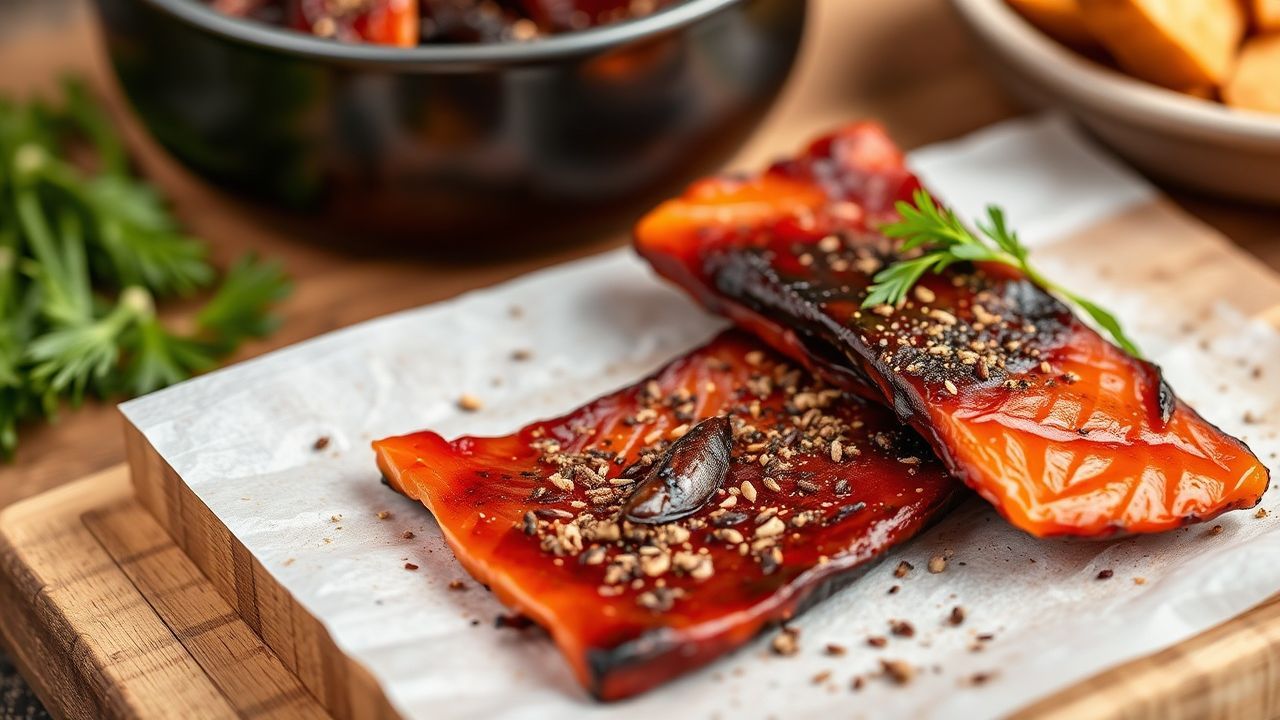

Savory Homemade Salmon Jerky: A Step-by-Step Recipe Guide
There is a satisfying contrast when rich, oily fish meets the concentrated chew of jerky. Making salmon jerky at home transforms fresh fillets into a portable, protein-rich snack that holds bold seasoning and lasting texture.
- Key takeaway: Proper slicing and low-temperature drying make or break texture.
- Key takeaway: A balanced marinade preserves umami while controlling moisture.
- Key takeaway: Safe storage extends shelf life and preserves omega-3 benefits.
Prep and Cook Time
Preparation: 20 minutes for trimming and slicing. Keep equipment and surfaces clean to reduce contamination risk.
Marinating: 6–8 hours or overnight for deeper flavor penetration. Marinating longer changes texture; monitor salt concentration to avoid overly dry results.
Yield
This recipe yields approximately 8–10 servings, depending on slice thickness and moisture loss during drying. Expect roughly a 60–70% weight reduction from raw fillet to finished jerky.
Portion sizes vary by use-case: single-serve snack packs, hiking rations, or appetizer strips for boards. Vacuum sealing or jars change how you portion for storage.
Difficulty Level
Medium: The steps are accessible but require attention to temperature control and food-safety practices. A kitchen scale, sharp knife, and a dehydrator or oven produce consistent results.
Technique matters more than fancy gear: uniform slices and controlled drying yield predictable chew and flavor. Learnable skills include slicing with the grain and judging final pliability.
Ingredients
Use fresh, firm salmon for best texture; avoid fish that smells off or appears slimy. Wild-caught salmon typically provides firmer flesh and richer flavor than farmed varieties.
Organize ingredients before you start: marinade components, a glass mixing bowl, and trays or racks for drying. Measure wet and dry components to keep seasoning consistent between batches.
- 1 pound fresh salmon fillet, skin removed and sliced 1/4 inch thick
- 1/4 cup tamari or soy sauce (tamari for gluten-free)
- 2 tablespoons pure maple syrup or honey
- 1 tablespoon apple cider vinegar
- 1 teaspoon smoked paprika
- 1 teaspoon garlic powder
- 1/2 teaspoon freshly ground black pepper
- 1/2 teaspoon crushed red pepper flakes (optional)
- 1 teaspoon sea salt
- 1 tablespoon freshly grated ginger
Instructions
Follow a clear sequence: select and prep fish, mix the marinade, marinate evenly, and dry at a safe low temperature. Each stage affects moisture, flavor absorption, and shelf stability.
Keep the workspace sanitary and chill the fish between steps when possible. Salmon has high oil content, so avoid high heat that cooks rather than dries the flesh.
Selecting and Preparing Fresh Salmon
Start with firm, glossy fillets that smell clean and slightly briny rather than fishy; these indicate freshness. Remove skin and any pin bones with tweezers to prevent chewy obstructions in the finished strips.
Slice the fillet into uniform strips about 1/4 inch thick, cutting with the grain for firmer chew or against the grain for a softer bite. Uniform thickness ensures even drying and consistent cook time.
Mixing and Applying the Marinade
Combine tamari, maple syrup, apple cider vinegar, smoked paprika, garlic powder, black pepper, red pepper flakes, salt, and grated ginger in a non-reactive bowl. Whisk until smooth so every strip gets even coating.
Submerge fish strips in the marinade and refrigerate for 6–8 hours, turning halfway to ensure even penetration. Excess salt concentration or overly long marination can start to cure the meat rather than flavor it, so monitor overnight soaking.
Drying: Dehydrator or Oven Method
Dry at low temperature to remove moisture without cooking: set a dehydrator to about 145°F (63°C) or use the oven at its lowest setting with the door propped open slightly. This mimics traditional food drying methods while preserving delicate oils.
Arrange strips on racks with space for airflow and flip halfway through drying for uniform texture. The finished piece should be firm on the outside and slightly pliable inside; over-drying makes jerky brittle and hard to enjoy.
Cooling and Storing
Cool jerky to room temperature on a clean tray for 20–30 minutes before packaging to avoid trapping residual steam. Warm-packaging can create condensation and shorten shelf life.
Store in airtight containers or vacuum-sealed bags. For short-term keeping, a cool, dry pantry works for up to two weeks; refrigeration or freezing extends life to several months and preserves omega-3s.
[NOTE: The paragraph below separates the expert tip and the caution block.]
[FAQ PARAGRAPH SEPARATOR]
After your first trial, adjust marination time and sugar content to fine-tune chew and sweetness. Small tweaks—an extra minute on the slicer or a teaspoon of acid—change mouthfeel significantly.
Maintain temperatures and humidity control during drying; inconsistent conditions produce uneven texture and can allow bacterial survival in moist pockets. Use a calibrated thermometer for accuracy.
Expert Tips for Storing and Enjoying Your Salmon Jerky
Store in small, single-use packs if you plan to carry jerky for outdoor activities. This reduces repeated exposure to air and keeps larger batches fresher longer.
Label packages with date and salt content so you track shelf life and replicate successful batches. Record drying times and temperature in a kitchen notebook for consistent future results.
- Short-term: Airtight jar or resealable bag in a cool place for up to 2 weeks.
- Long-term: Refrigerate up to 3 months; freeze up to 6 months for best quality retention.
- Serving: Pair with sharp cheese or crisp fruit for contrast, or crumble over salads for a savory boost.
Why Salmon Jerky Works: Science and Tradition
Preserving fish by drying and salting draws on long-standing food preservation practices that reduce water activity and slow microbial growth. Salmon jerky adapts those principles for home kitchens.
The marinade balances osmotic salt transfer and sugar to preserve flavor while stabilizing texture. Additionally, low-temperature dehydration keeps omega-3 fatty acids intact better than high-heat processing.
For cultural background, jerky-like products appear across cuisines; modern homemade jerky blends traditional methods with controlled, sanitary processes. See the Wikipedia entry on jerky for historical context and variations.
Nutritional Snapshot
Salmon jerky delivers concentrated protein, modest carbohydrates from sweeteners, and beneficial omega-3 fats per serving. The drying process concentrates nutrients, so portion control matters.
Approximate per-serving values will vary by recipe, but expect a high-protein, low-fat snack that supports sustained energy for activity. Keep sodium content in mind if you limit salt intake.
| Nutrient | Per Serving (approx.) |
|---|---|
| Calories | 90 kcal |
| Protein | 16 g |
| Carbohydrates | 3 g |
| Fat | 2 g |
FAQ
Q: What temperature should I use to dry salmon jerky?
Dry at approximately 145°F (63°C) for safety and texture. Use the lowest oven setting and prop the door if you lack a dehydrator to maintain airflow.
A calibrated thermometer inside the dehydrator or oven confirms consistent temperature throughout the cycle. Avoid temperatures above 160°F (71°C) to prevent cooking instead of drying.
Q: How long should I marinate salmon for jerky?
Marinate 6–8 hours or overnight for robust flavor. Shorter times impart a lighter salt profile, while overnight yields deeper seasoning but may firm the meat due to osmotic effects.
Always refrigerate during marination, and rinse lightly only if you over-salt; otherwise pat dry and place directly on racks for even dehydration.
Q: Can I use frozen salmon for jerky?
Yes, if you thaw it safely in the refrigerator and pat it dry before slicing. Frozen-thawed fish often releases more water, so expect slightly longer drying times.
Handle thawed fish within 24 hours and keep it chilled until it goes into the marinade. Rapid refreezing after drying preserves freshness if you do not consume the batch quickly.
Q: How do I store homemade salmon jerky long term?
Vacuum-seal and freeze for the longest shelf life; refrigeration extends freshness for several months. For pantry-style storage, keep small batches in airtight containers and consume within two weeks.
Labeling with date and salt content helps you manage rotation and replicate successful batches. Avoid repeated thaw-refreeze cycles which degrade texture.
Q: Is salmon jerky safe for children and older adults?
Yes, when prepared and stored properly, salmon jerky is safe for most age groups. Ensure pieces are tender enough and cut into manageable sizes to lower choking risk.
If you prepare jerky for those with compromised immunity, prioritize refrigeration and consume sooner rather than later. Follow safe handling guidelines at each step.
Final Notes
Homemade salmon jerky rewards careful prep and precise drying with a flavorful, nutrient-rich snack. With repeated practice, you will dial in slice thickness and marinade balance to match your preferred chew and flavor intensity.
Use a log to record successful adjustments, and treat each batch as a learning step toward consistent, delicious jerky that showcases salmon’s natural richness. For general background on the species used in this recipe, consult the salmon article.
See also: Salmon jerky