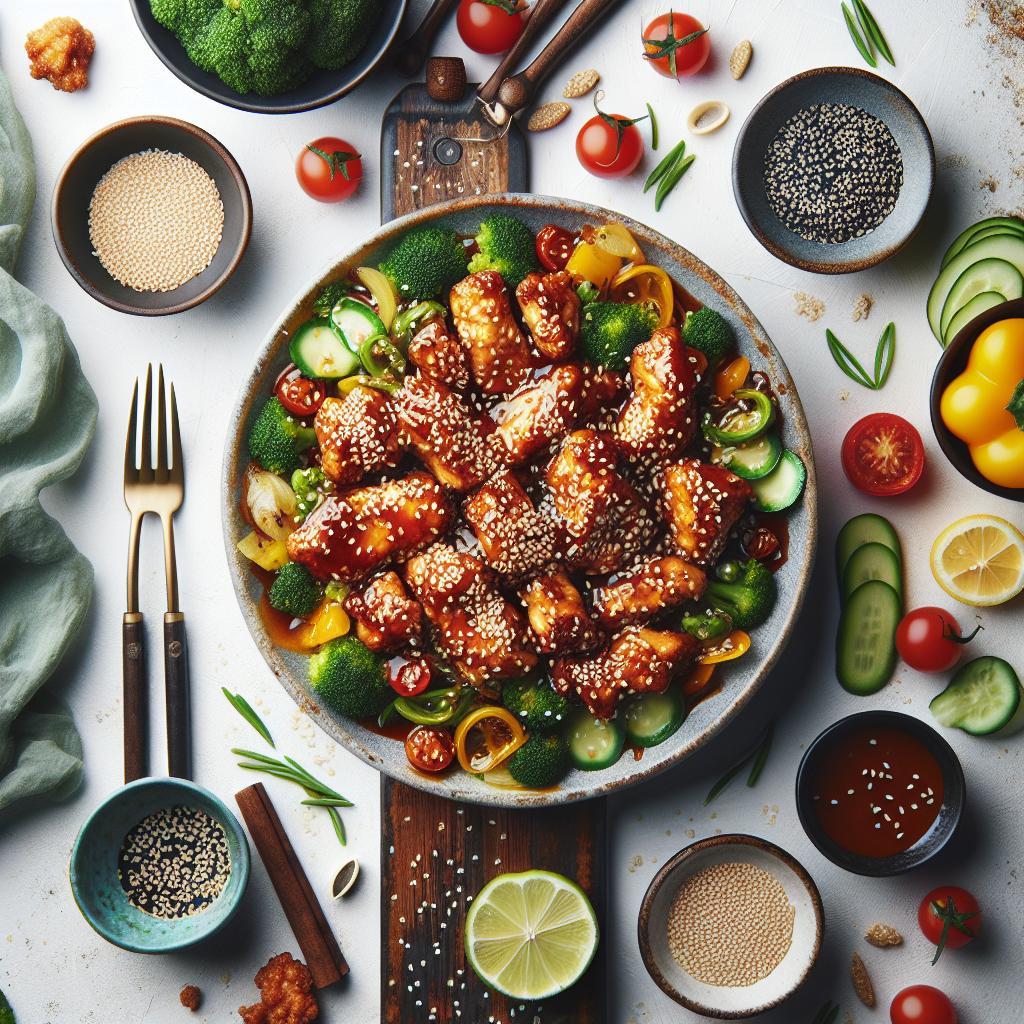

Sesame chicken rewards deliberate technique. Its contrast of a golden, crunchy exterior and a glossy, balanced sauce defines why home cooks chase the recipe.
The dish sits in the Chinese-American vernacular and borrows both technique and flavor balance from wider Asian cookery. For cultural context, consult Chinese American cuisine for historical perspective.
- Crisp coating: Dry, cold chicken and a light cornstarch-flour dredge give the best crunch.
- Glaze balance: A 3:2:1 ratio of sweet to salty to acid keeps sauce glossy and layered.
- Heat control: Maintain oil at 350°F (175°C) and fry in small batches.
- Finish fast: Toss fried chicken gently in warm sauce to retain texture.
Prep and Cook Time
Preparation Time: 20 minutes. I recommend mise en place: measure, slice, and set ingredients before heating oil.
Cook Time: 15 minutes. Work in batches and use a reliable thermometer to hold temperature near 350°F (175°C) for consistent results.
Yield
This recipe yields about four generous portions. Portioning at the plating stage helps control sauce distribution and keeps crisp pieces separate from saucier portions.
If you scale the recipe, increase frying oil volume and work in proportionally larger batches to avoid temperature drop and sogginess.
Difficulty Level
Medium. The techniques involve frying discipline and a calibrated sauce but remain approachable with basic kitchen tools.
Practice oil management and a simple slurry method for a glossy finish; these two skills elevate results more than complex steps do.
Ingredients
The ingredients list balances protein texture with starch and sauce chemistry. Use quality soy for umami and toasted sesame oil for aroma.
For a quick primer on soy products and their role in savory cooking, see soy sauce.
- 1 lb boneless, skinless chicken thighs, cut into bite-sized pieces
- 1 cup all-purpose flour, sifted
- 1/2 cup cornstarch
- 2 large eggs, beaten
- 1 tsp baking powder
- 1 tsp kosher salt
- 1/2 tsp freshly ground black pepper
- 1 cup vegetable oil, for frying
- 1 tbsp toasted sesame seeds, for garnish
- 2 stalks green onions, thinly sliced (for garnish)
Sweet and Savory Sauce:
Assemble sauce ingredients in a bowl before cooking so you can adjust seasoning quickly while it simmers.
For background on sesame as a flavor element, consult the botanical and culinary notes at sesame.
- 1/3 cup honey
- 1/4 cup soy sauce (low sodium preferred)
- 2 tbsp rice vinegar
- 1 tbsp hoisin sauce
- 1 tsp toasted sesame oil
- 2 cloves garlic, minced
- 1 tsp fresh ginger, grated
- 1 tbsp cornstarch mixed with 2 tbsp water (slurry)
Instructions
Follow the sequence below to preserve crispness and achieve a glossy sauce. Prepare tools: thermometer, two bowls for dredge and eggs, and a spider/skimmer for frying.
Keep fried chicken separate from the sauce until final toss to avoid steam-softening. Work steadily but deliberately during the finishing stage.
- Prepare the chicken: Combine flour, cornstarch, baking powder, salt, and pepper in a bowl. Pat chicken pieces dry with paper towels, then dip into beaten eggs and dredge in the dry mix to achieve an even, thin coating.
- Fry the chicken: Heat vegetable oil to 350°F (175°C). For technique context, the method relates to deep frying principles; read more at deep frying. Fry in small batches to avoid crowding; cook 4–5 minutes per batch until golden. Drain briefly on a wire rack over paper to prevent steam contact.
- Make the sauce: In a small saucepan set over medium heat, combine honey, soy sauce, rice vinegar, hoisin, sesame oil, garlic, and ginger. Bring to a gentle simmer while whisking to dissolve sugars and integrate flavors.
- Thicken the sauce: Stir the cornstarch slurry again, then add it slowly to the simmering sauce while whisking. Heat until the sauce turns glossy and syrupy, which should take about 1–2 minutes. Remove from heat promptly to avoid over-thickening or starch breakage.
- Combine and finish: Transfer hot fried chicken to a warmed bowl, pour the warm sauce over the pieces, and toss gently to coat. Garnish with toasted sesame seeds and sliced green onions. Serve immediately for optimal texture.
Tips for Success
Dry chicken yields the lightest, crispiest coating. Moisture creates steam and softens crusts fast, so use paper towels and refrigerate briefly if necessary.
Maintain oil temperature with a thermometer. If the temperature dips below 325°F, coatings absorb oil; above 375°F the exterior burns before the interior cooks.
Resting between fries prevents oil temperature collapse and reduces the chance of soggy results. Use a wire rack rather than paper towels to maintain airflow.
Let fried chicken cool a minute on a rack before saucing. A short dwell lets the crust firm and prevents immediate steam loosening.
Serving Suggestions
Serve sesame chicken on steamed jasmine rice or tossed with lightly sautéed greens for contrast. A crisp vegetable side restores textural balance.
To vary presentation and flavor, top with toasted white or black sesame seeds, fresh sliced scallions, and a wedge of lime or a controlled drizzle of chili oil for heat.
Nutrition
The table below lists approximate per-serving nutrition for the typical recipe. Values vary with ingredient brands and portion sizes.
| Nutrient | Per Serving |
|---|---|
| Calories | 420 kcal |
| Protein | 35g |
| Carbohydrates | 28g |
| Fat | 15g |
Adjust ingredients like honey and oil to tune calories and sweetness. Lower-sodium soy and lighter sweeteners reduce sodium and sugar while preserving savory notes.
Related Reading
If you want context on ingredients and techniques, here are credible references on key items. These pages explain the origins and culinary use of the staples used in sesame chicken.
Explore the science and tradition behind components such as sesame, soy sauce, and deep frying for deeper understanding of flavor and technique.
FAQ
What makes sesame chicken a standout dish?
Sesame chicken balances a crisp, fried coating with a glossy sweet-savory glaze. Texture contrast and aromatic sesame notes give the dish its appeal.
How do I keep the chicken crunchy when reheating?
Reheat in a preheated oven or air fryer at a high temperature for a few minutes. Keep sauce separate until right before serving to minimize steam softening.
Can I make sesame chicken healthier?
Yes. Use an air fryer or oven-bake method with a light cornstarch coating, reduce sweetener, and choose low-sodium soy to cut fat and sodium while keeping flavor.
Which cut of chicken works best?
Boneless, skinless thighs stay juicier and withstand frying; breasts deliver a leaner profile. Both work, but adjust frying time slightly for uniform doneness.
How can I adjust the sauce to taste?
Taste the warm sauce and tweak sweetness, acid, or salt in small increments. A 3:2:1 approach—sweet to salty to acid—serves as a reliable starting ratio.
See also: Sesame Chicken