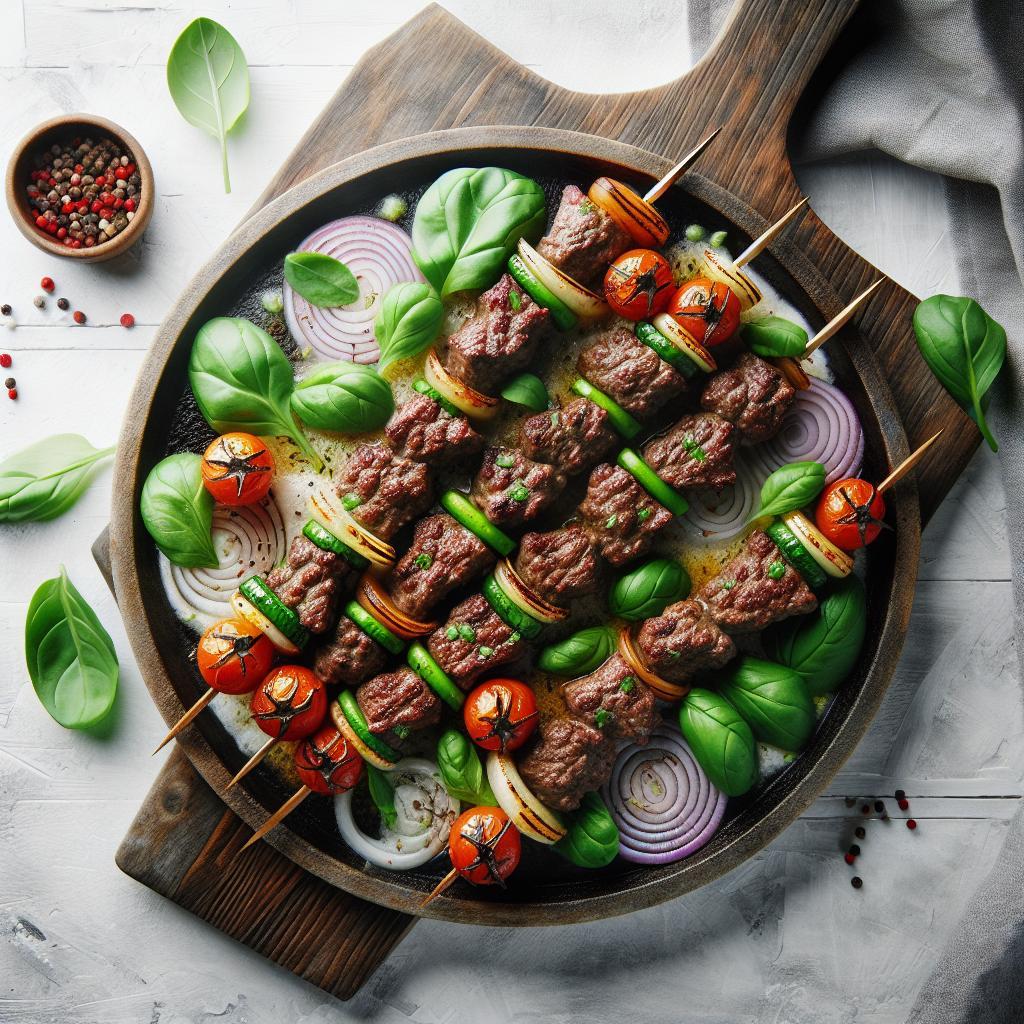

There is something magnetic about the sizzle of beef kebabs fresh off the grill. The aroma, the visual char, and the burnished edges promise a contrast of smoky crust and tender interior that few other dishes deliver.
- Marinade depth matters: acid, oil and spice balance define tenderness and flavor.
- Cut and cube size: uniform pieces cook evenly and retain juiciness.
- Heat control: steady medium-high searing yields color without drying the center.
- Resting time: brief rest after grilling locks in juices for better texture.
The Art of Marinating Beef for Maximum Flavor
Marination changes both texture and flavor by breaking down muscle fibers and carrying seasoning into the meat. Good marinades combine an acid, fat, aromatics, and spices to tenderize and season simultaneously.
For technical context, review the science behind marination to understand how acids and enzymes interact with proteins. Apply that knowledge to tailor marinating time and ingredient ratios for different cuts.
Balancing Components
Start with a measured acid: lemon juice, vinegar, or a small amount of yogurt help break down connective tissue. Combine acid with oil to protect the meat from over-toughening while transferring fat-soluble flavors.
Add aromatics—garlic, onion, fresh herbs—and spice like smoked paprika and cumin for depth. Then taste the liquid; the marinade should be assertive but not overpowering, because the beef retains its primary role.
Choosing the Perfect Cuts for Tender Juicy Kebabs
Select tender cuts that tolerate quick, hot grilling. Cuts with moderate marbling—top sirloin, chuck eye, and ribeye—deliver both flavor and forgiveness on the grill.
For a grounding reference on meat types, see the overview of beef. Adapt cut choice to your budget and the desired doneness profile when planning skewers.
Cut Size and Uniformity
Cut beef into consistent cubes—about 1 to 1.5 inches—for even cooking. Smaller cubes cook faster and develop more exterior sear per volume; larger cubes need longer heat exposure and risk uneven doneness.
Trim excess fat for clean grill performance, but keep some marbling for flavor. Consistency reduces guesswork and prevents dry edges or underdone centers.
Prep and Cook Time
Plan active and passive time: prepare, marinate, assemble, grill, and rest. Efficient flow keeps the meat safe and maximizes flavor extraction from the marinade.
Typical timing: 20 minutes prep, 4–6 hours marinating, 12–15 minutes grilling, and a short rest. Use a thermometer for reliable doneness rather than guessing.
- Preparation: 20 minutes (plus 4–6 hours marinating)
- Cooking: 12–15 minutes
- Total: Approximately 5 hours including marination
Ingredients
Keep ingredients focused so each element contributes. The backbone is quality beef, olive oil, fresh lemon juice, garlic, smoked paprika, cumin, coriander, and fresh herbs like oregano or parsley.
Optional additions like a tablespoon of yogurt leverage enzymatic action for added tenderness; for context see yogurt. Use kosher salt and freshly ground black pepper for the base seasoning profile.
- 1.5 lbs top sirloin, cut into 1.5-inch cubes
- 3 tbsp olive oil
- 3 tbsp fresh lemon juice
- 4 garlic cloves, minced
- 1 tbsp smoked paprika
- 1 tbsp ground cumin
- 1 tsp ground coriander
- 1 tsp freshly ground black pepper
- 1 tsp kosher salt
- 1 tbsp fresh oregano, chopped
- 1 medium red onion, cut into chunks
- 1 red bell pepper, cut into chunks
Instructions
Work cleanly and methodically. Combine marinade ingredients, taste, then add beef and refrigerate long enough for penetration without turning the surface mushy.
Assemble skewers with alternating beef and vegetables to promote even heat circulation. Leave small gaps between pieces for airflow and predictable doneness.
- Combine: Whisk oil, lemon juice, garlic, smoked paprika, cumin, coriander, pepper, salt, and oregano.
- Marinate: Add beef cubes; refrigerate 4–6 hours. For quicker tenderizing, use 2 hours with hotter spices.
- Soak skewers: If wooden, soak 30 minutes to prevent burning. Metal skewers do not require soaking.
- Assemble: Thread beef, onion, and bell pepper alternately, leaving small gaps for heat circulation.
- Preheat grill: Clean, oil, and heat to medium-high.
- Grill: Sear and turn every 2–3 minutes. Aim for medium-rare to medium; target 130°F (54°C) for medium-rare.
- Rest: Let kebabs rest 5 minutes before serving to redistribute juices.
Chef’s Notes: Tips for Success
Adjust marinating time by cut and acidity: leaner cuts benefit from longer, milder marination; fattier cuts need shorter exposure to strong acids. Uniform cubes equal uniform results.
Use tongs rather than a fork to minimize juice loss during handling. Keep an instant-read thermometer on hand for dependable results instead of relying solely on timing.
- Marination magic: Add 1 tbsp yogurt for enzymatic tenderizing when using lean cuts.
- Cut consistency: Keep cubes to 1–1.5 inches for even grilling.
- Spice swaps: Try rosemary or thyme as aromatic alternatives to oregano based on your menu.
- Make ahead: Skewer in advance and refrigerate covered until grilling time.
Mastering the Grill: Tips for Ideal Searing and Cooking
Control of temperature determines final texture. A hot, clean grate creates the desired Maillard crust while a stable medium-high zone prevents charred exteriors with raw centers.
For technique pointers, consult the grilling overview at grilling. Use direct heat for searing, then move to indirect heat if the kebabs need slower finishing.
Turn skewers frequently to develop uniform caramelization without burning. Avoid pressing the meat, which forces moisture out and reduces juiciness.
Serving Suggestions and Complementary Sauces to Elevate Your Kebabs
Balance the smoky, robust beef with bright, acidic, or cooling sides. Think warm flatbreads, herbed couscous, or a crisp cucumber and tomato salad for contrast.
Popular condiments include cooling yogurt-based sauces, a bright chimichurri, or a tangy vinaigrette. Garnish with lemon wedges and fresh herbs for immediate brightness on the plate.
For culinary and cultural context on skewered meats, see kebab. Understanding regional variations will help you adapt spices and accompaniments to your menu.

| Nutrition | Per Serving |
|---|---|
| Calories | 320 kcal |
| Protein | 35 g |
| Carbohydrates | 6 g |
| Fat | 18 g |
To Conclude
The humble skewer packages technique, timing, and cultural history into a single, shareable course. Execute the fundamentals—balanced marinade, uniform cuts, controlled heat, and brief resting—and the results will speak for themselves.
When you apply controlled searing and thoughtful seasoning, beef kebabs become more than grilled meat; they become a reliable centerpiece for casual dinners and elevated gatherings alike.
FAQ
What makes beef kebabs a popular dish worldwide?
Beef kebabs combine portability, shared eating, and bold flavor, which explains their global popularity. They adapt easily to regional spices and accompaniments, making them versatile for many cuisines.
How do I choose the best cut for kebabs?
Pick cuts with good marbling that handle high heat, like top sirloin, chuck eye, or ribeye. These cuts deliver juiciness and tolerate quick grilling with excellent flavor retention.
How long should I marinate beef for optimal tenderness?
Marinate for 4–6 hours for most steaks; leaner cuts may benefit from up to 12 hours if the acid content is low. Avoid extremely acidic marinades for prolonged periods to prevent a mealy texture.
What internal temperature indicates perfect doneness?
Aim for 130°F (54°C) for medium-rare and 140°F (60°C) for medium, measured with an instant-read thermometer. Remove kebabs a few degrees early to allow carryover cooking during resting.
Can I prepare kebabs ahead for entertaining?
Yes. Marinate and skewer the night before, then refrigerate covered. Grill just before serving to maintain the fresh sear and optimal texture.
See also: beef kebabs