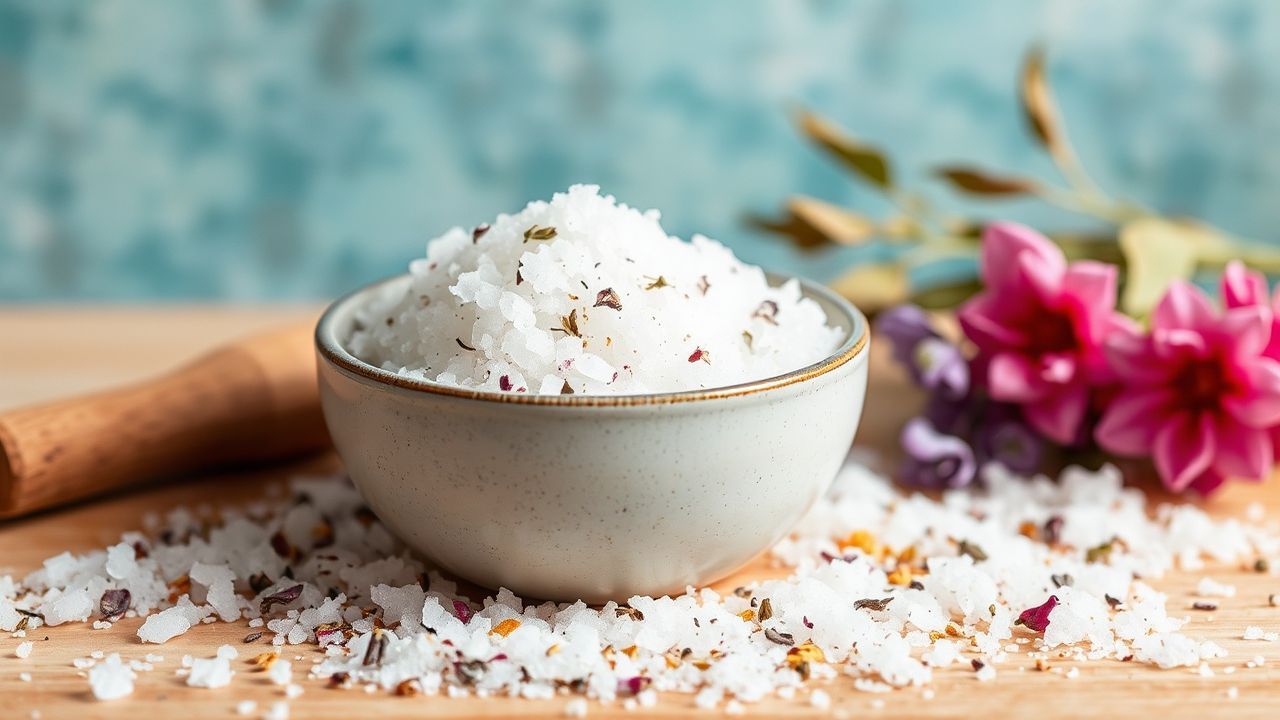

Step into a hands-on ritual that blends botanical science with sensory comfort. This guide shows how to make soothing DIY bath salts infused with dried herbs and blooms, tuned for relaxation, skin support, and gift-ready presentation.
- Simple recipes: two-salt base plus herbs and essential oils.
- Safe storage: airtight glass jars, dry conditions, labeled blends.
- Aromatherapy tips: pair essential oils to match mood goals.
- Customization: swap herbs for sensitivity or muscle relief.
Choosing the Perfect Herbs and Flowers for Relaxing Bath Salts
Select botanicals that deliver aroma, skin benefits, and visual appeal. Use dried lavender for its calming scent and skin-soothing profile; see scientific background on lavender (Lavandula).
Include chamomile for gentle anti-inflammatory action and a mild floral scent; consult the herb profile on chamomile. Rose petals add humectant qualities and luxury notes.
For texture and color, add cornflower or hibiscus petals. Dry all botanicals completely to avoid moisture that encourages clumping or spoilage.
Key Minerals and Why They Matter
Choose a mineral base that supports your purpose. Epsom salt supplies magnesium that many bathers use for muscle ease; read basic facts on Epsom salt.
Dead Sea salt offers a different mineral profile and a denser mouthfeel in water; both salts dissolve readily when stirred into warm running water. Mixing mineral types balances cost, texture, and skin benefits.
Crafting Your Own Herbal Bath Salt Blend Step by Step
Prep and Timing
Preparation: 15 minutes active work. Drying botanicals requires separate air-drying time if you harvest fresh.
Drying/Mixing: 10–20 minutes once botanicals are dry. Allow at least 24 hours of scent melding in a sealed jar before gifting or use.
Yield and Difficulty
Yield: about 2 cups per recipe as written. Scale easily: double salts and botanicals proportionally for larger batches.
Difficulty: easy. The process uses basic kitchen tools and clear measuring. Beginners find these blends forgiving and fast to assemble.
Ingredients (base formula)
- 1 cup Epsom salts (magnesium sulfate)
- 1 cup Dead Sea salt or coarse sea salt
- ½ cup dried lavender buds
- ¼ cup dried rose petals, gently crushed
- ¼ cup dried chamomile flowers
- 2 tbsp dried calendula petals (optional)
- 10 drops lavender essential oil; 5 drops sweet orange essential oil
Step-by-step Instructions
Combine the salts: In a large bowl, stir Epsom and Dead Sea salts until uniform. Use a whisk or wooden spoon to break clumps and keep texture even.
Add dried botanicals: Fold in lavender, rose, chamomile, and calendula. Stir gently to preserve petal shape and visual appeal.
Incorporate essential oils: Add oils drop by drop across the surface and fold the mixture to disperse scent. Avoid saturating any single area to prevent clumping.
Customize texture: Increase petals for a botanical-rich look or increase salts for a more mineral-forward soak. Add a tablespoon of finely ground oats for a soothing, gentle scrub.
Transfer & cure: Pack the blend into an airtight glass jar. Let it rest in a cool, dry place for 24 hours to allow aromatics to integrate. Label jars with blend name and date.
Usage: Add ¼ to ½ cup to warm running bath water and stir to help salts dissolve. Step in once the salts have dispersed and the aroma opens.
[NOTE: For essential oil safety, consult a qualified practitioner when pregnant or on medication.]
When using bath salts, rinse your tub after soaking to remove botanical residue that can stain or clog drains. This simple step maintains tub finish and prevents slippery buildup.
Tips for Enhancing Aromatherapy Benefits with Essential Oils
Select essential oils by effect and safety profile. Lavender supports calm, while sweet orange lifts mood. Use eucalyptus for clearer breathing, but limit its concentration around children.
Always dilute essential oils into a carrier (the salt matrix acts as a carrier here) and perform a quick sniff-and-skin test. Record blends and outcomes to refine future batches.
Pairing principle: combine one dominant base note (e.g., lavender) with a bright top note (e.g., sweet orange) to create a rounded scent that opens quickly and then settles into depth.
Safe Storage and Usage Guidelines for Long-lasting Homemade Bath Salts
Store bath salts in airtight glass containers away from humidity and heat. A pantry shelf or linen closet works well; avoid bathrooms with poor ventilation if possible.
Label each jar with the blend date, ingredients, and any allergen notes. Use within six months for best aroma and visual quality; botanicals may fade over time but remain usable.
To prevent contamination, scoop salts with a dry spoon rather than fingers. Keep small test jars for guests or gifting to avoid cross-contact with other household products.
Presentation, Gifting, and Practical Notes
Layer salts and petals for striking jars, and include usage instructions on a small tag. Jars with tight lids preserve scent and keep humidity out.
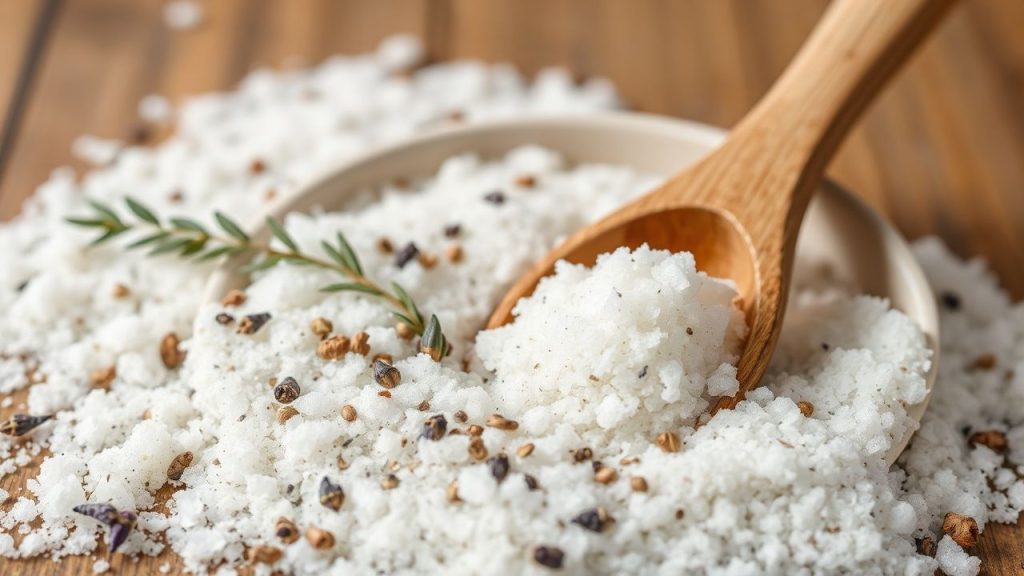
For gift sets, pair a jar with a muslin bag for steeping botanicals, a wooden scoop, and a printed card describing the blend. Link your gift notes to related in-house guides like the Herbal Bath Rituals Guide.
For more DIY ideas and visual inspiration, browse our collection of projects at DIY Bath Salt Ideas. These internal resources expand on layering, labeling, and scaling for craft markets.
Chef’s Notes and Substitutions
Herb swaps: Replace chamomile with rosemary or peppermint for an invigorating blend. Keep ratios similar to maintain texture.
Gentle exfoliation: Add one tablespoon of finely ground oatmeal or sugar for a scrubby option. Avoid coarse abrasives if you have sensitive skin.
Storage longevity: Well-dried botanicals and sealed jars maintain fragrance for about six months. Consider small-batch production to keep aroma bright.
Serving Suggestions
Set the scene: place a small dish of matching dried herbs by the tub, light a soy candle, and prepare a warm, caffeine-free beverage for after your soak. These cues reinforce relaxation.
Use a muslin bag to contain petals if you prefer a clear drain. A bath pillow and soft lighting complete the experience, turning a routine bath into a restorative ritual.
| Ingredient | Benefit | Recommended Amount |
|---|---|---|
| Epsom Salt | Muscle ease, magnesium source | 1 cup |
| Lavender Buds | Calming, skin soothing | ½ cup |
| Rose Petals | Hydration, fragrance | ¼ cup |
| Chamomile Flowers | Anti-inflammatory, gentle | ¼ cup |
| Lavender Essential Oil | Relaxation aid | 10 drops |
FAQ
How do I prevent clumping in homemade bath salts?
Keep salts and botanicals completely dry before mixing. Store blends in a sealed jar with a desiccant packet if your environment is humid. Scoop with a dry spoon to avoid introducing moisture.
Can I use fresh herbs instead of dried?
Fresh herbs contain moisture and will shorten shelf life. If you use fresh botanicals, dry them first by air-drying or low-heat drying to remove moisture and preserve scent.
Are essential oils safe for everyone in bath salts?
Essential oils are potent. Dilute them in the salt base, perform a patch test, and avoid certain oils during pregnancy or with medical conditions. Seek professional advice for medical concerns.
How long do homemade bath salts stay fragrant?
When stored sealed in glass and kept dry, expect peak fragrance for three to six months. Scent will mellow with time but salts remain usable beyond that window.
Can I sell homemade bath salts commercially?
Yes, but follow local cosmetic and labeling regulations. List all ingredients, include allergen information, and comply with packaging rules in your jurisdiction.
See also: bath salts