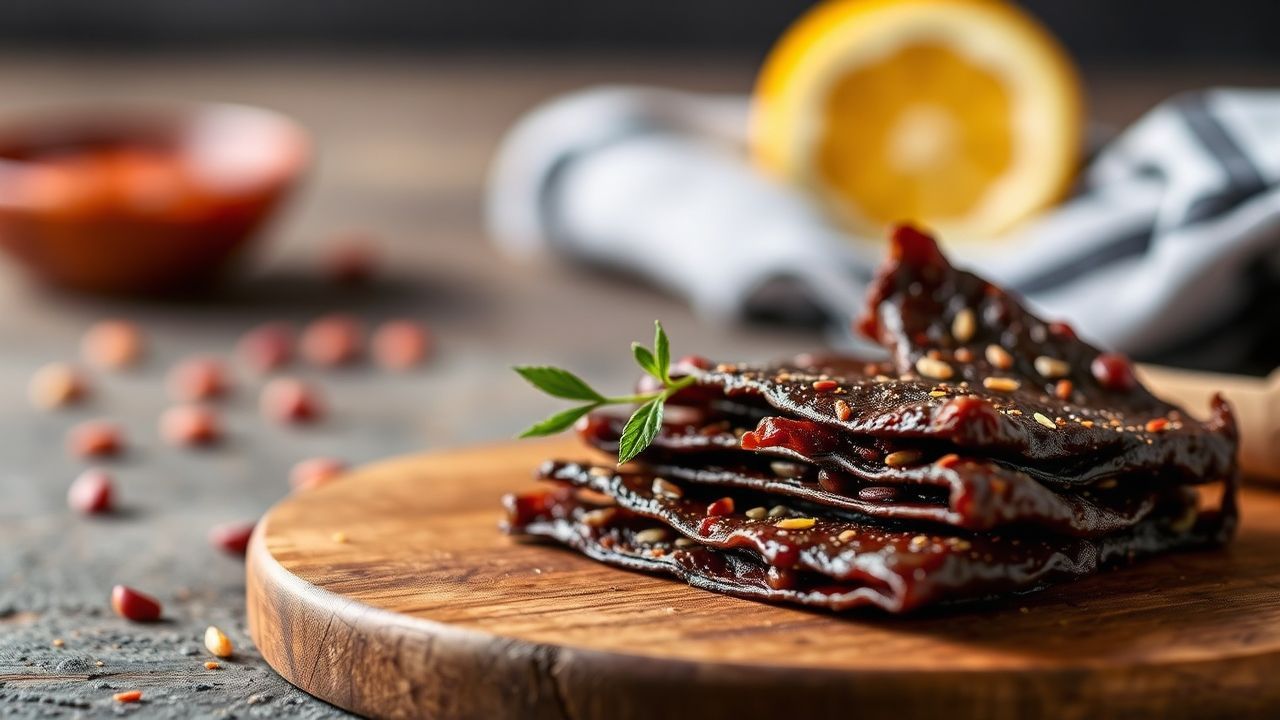

Jerky Marinade: build a sugar-free, layered marinade that emphasizes umami, smoke, and controlled acid to deliver jerky with sustained savory depth. This approach uses tamari, smoked paprika, and brewed black tea to amplify meat flavor while avoiding sugar.
- Layer umami: use high-salt, fermented liquids and optional mushroom powder to intensify savoriness.
- Tame moisture: remove surface marinade before drying to speed dehydration and protect texture.
- Control heat: maintain 155°F (68°C) or higher during most of drying to ensure safety.
- Finish for crust: use short, high-heat searing or smoked paprika for a bark-like surface without sugar.
Prep and Cook Time for Jerky Marinade
Mixing this jerky marinade takes about 10–15 minutes using a whisk and a non-reactive bowl. The active prep stage is short; the rest is patience while the flavors penetrate.
Plan for 12–24 hours of refrigerated marination and 4–6 hours of drying, depending on slice thickness and drying method. Monitor texture and temperature rather than relying strictly on clock time for final doneness.
Yield from This Jerky Marinade
Starting with 1.5–2 pounds of lean beef, expect roughly six servings after dehydration. Weight loss sits near 40–50% in most dehydrators and ovens at the recommended settings.
Document starting and final weights if you need precise serving counts for meal planning or labeling. Store finished jerky in airtight containers and rotate stock by date.
Difficulty Level When Using This Jerky Marinade
The technique ranks moderate: accurate slicing and consistent drying take practice but no advanced equipment. A single trial yields repeatable results if you measure temperature and slice thickness precisely.
Follow the food-safety steps and test a small batch to dial in your oven or dehydrator. Consistency comes from repeatable slice thickness and steady airflow during drying.
Ingredients for Jerky Marinade
Build the marinade around a high-salt umami backbone, an acid to brighten, and aromatics to create a bark-like surface without sugar. I recommend tamari for depth; tamari is a concentrated soy-based seasoning that adds salt and umami without added sweetness (Tamari).
Include smoked paprika and toasted spices for a crust, and brewed black tea for tannic lift when you want more complexity. For background on umami as a taste, review the concept of umami.
- 1/2 cup tamari (or soy sauce alternative)
- 1/4 cup apple cider vinegar
- 2 tbsp extra virgin olive oil
- 1 tbsp smoked paprika
- 1 tbsp garlic powder
- 1 tbsp onion powder
- 1 tsp freshly ground black pepper
- 1 tsp ground cumin
- 1 tsp chili flakes (optional)
- 1 tbsp fresh rosemary, finely chopped
- 1 tbsp fresh thyme leaves
- 1/4 cup brewed strong black tea
Instructions: Jerky Marinade and Process
These instructions separate into three stages: prepare the jerky marinade, marinate the meat, and dry to the correct texture. Read each step fully and keep a probe thermometer on hand for temperature checks.
Use active, even strokes when whisking so spices emulsify into the tamari and oil, ensuring consistent flavor pickup. Taste the raw marinade to check balance, remembering raw tamari will taste saltier after drying concentrates flavors.
Prepare the Marinade
Combine tamari, apple cider vinegar, and olive oil in a non-reactive bowl; whisk until glossy. Add smoked paprika, garlic powder, onion powder, black pepper, cumin, and chili flakes, stirring until evenly distributed.
For extra savory heft, dissolve 1 tsp mushroom powder or 1/2 tsp miso into the wet base; these increase umami without adding sugars. Toast whole spices briefly in a dry pan, then grind and add for brighter aroma.
Marinate and Dress the Meat
Slice lean beef (top round, flank, or sirloin) to about 1/8 inch thick; partially freeze the roast for 30–45 minutes to ease uniform slicing. Place strips in a shallow dish or resealable bag, pour the jerky marinade over them, and massage for full contact.
Refrigerate 12–24 hours, flipping or massaging once to redistribute marinade. If you use miso, mix it with a small amount of warm water before combining so it disperses evenly and avoids clumps.
Drying Technique for Safety and Texture
Pat strips dry to remove excess surface moisture before arranging on dehydrator trays or oven racks. Excess marinade clinging to the surface prolongs drying and can prevent the prized pliable texture.
Dry at 155°F (68°C) until jerky bends and cracks but does not snap; this temperature target helps control bacterial risk. Rotate trays halfway through and allow airflow to remain steady; for further reading on dehydration methods, consult food dehydration.
After drying, cool strips fully at room temperature and transfer to airtight containers. Refrigerate for up to one week or freeze for longer storage; always label with the preparation date for rotation.
Chef’s Notes on the Jerky Marinade
Swap tamari with coconut aminos for a milder flavor profile; coconut aminos are lower in sodium and slightly sweeter, which changes the final balance. Reduce salt proportionally when switching to lower-sodium alternatives to avoid underseasoned jerky.
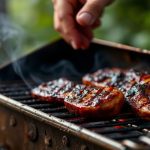
Use dried herbs at one-third the quantity of fresh herbs to prevent overpowering the meat during the long marination. If you seek more browning without sugar, finish with a short high-heat sear or a quick pass under a broiler for 20–40 seconds per side.
Serving Suggestions for Sweet-Free Jerky Marinade Results
Serve the sugar-free jerky on a tasting board with aged cheese and pickled vegetables to highlight savory contrasts. Small portions work best; the concentrated flavors perform well alongside bright or bitter elements.
Pair the jerky with roasted nuts, olives, or crusty bread for texture and balance. A few herb sprigs add a fresh counterpoint to the dense, savory meat slices.
Nutrition Overview for Jerky Marinade Results
Nutrition depends on cut and processing losses; typical 1 oz servings of lean beef jerky contain roughly 100–120 calories with high protein and low carbs. Salt content varies with the amount of tamari and any added sodium in substitutes.
To calculate exact values, weigh your starting meat and finished yield, then use a reliable nutrition calculator for per-serving breakdowns. Adjust serving size when adding oil or miso, which contribute measurable fat and sodium.
Internal Resources
For additional techniques and recipe variants, see our internal guides on Jerky Marinade and beef jerky recipes. These pages provide step-by-step photos and troubleshooting for common issues.
Use those internal references to compare dehydration times across different ovens and dehydrators. Cross-referencing your results helps dial in consistent texture batch to batch.
FAQ
Q: Will omitting sugar change jerky preservation?
A: No. Preservation depends on salt concentration, low final moisture, and sustained drying temperature rather than sugar. Use accurate drying temperatures and test texture to ensure shelf stability.
Q: How do I get a crust without sugar?
A: Use smoked paprika, liquid smoke, or a short high-heat finish to deepen surface browning through the Maillard reaction rather than caramelization. For the chemical basis, see Maillard reaction.
Q: Can I use other meats with this jerky marinade?
A: Yes. Poultry and game absorb flavors differently and usually dry faster. Reduce drying time for thinner cuts and monitor texture to avoid over-drying.
Q: Is tea necessary in the recipe?
A: Tea adds tannic depth that amplifies savory notes; use brewed black tea sparingly for tannins and aroma. If you skip it, substitute a small amount of unsweetened stock or vinegar for a similar lift; see background on black tea.
Q: What is the safest way to test doneness?
A: Jerky is done when it bends and cracks slightly but does not snap. If uncertain, use a probe thermometer to confirm the drying environment held 155°F (68°C) during most of the process.
This sugar-free approach to a bold jerky marinade focuses on ingredient synergy, controlled heat, and practical technique. Repeatable results come from consistent slice thickness, steady airflow, and accurate temperature control.
See also: Jerky Marinade