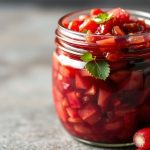
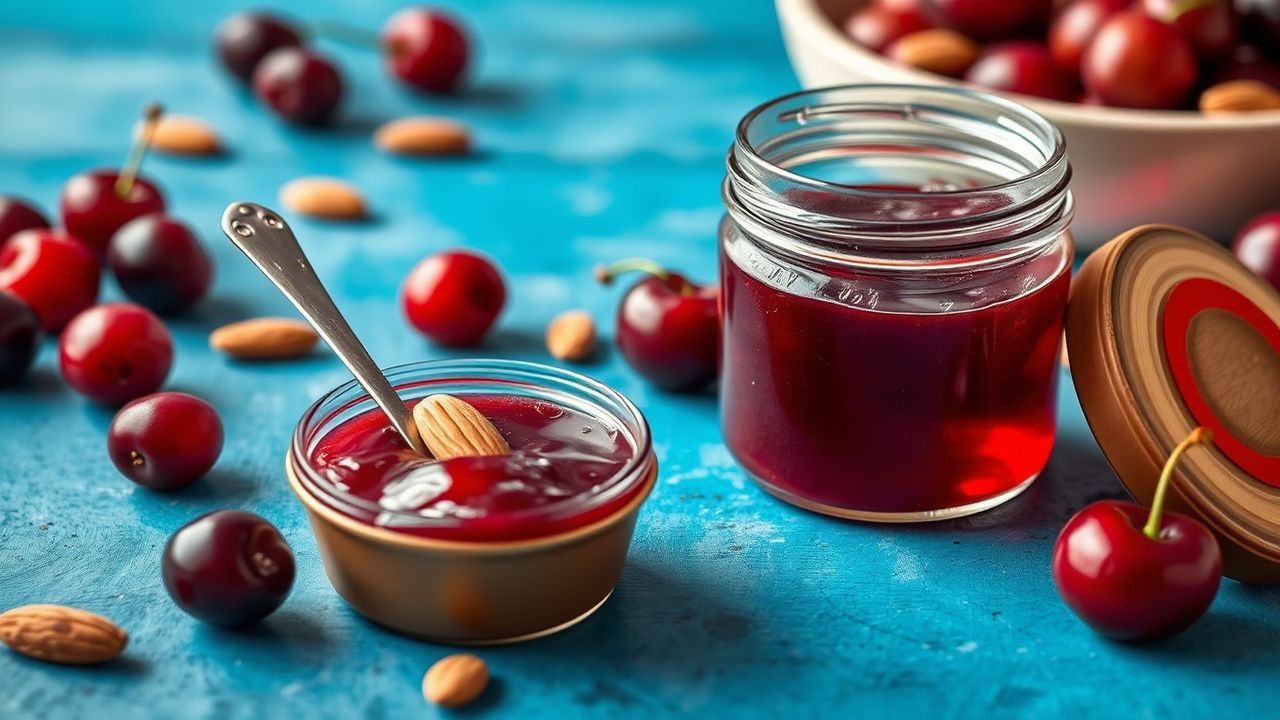

Cherry jam captures the bright acidity of ripe fruit and the warm depth of toasted almonds in a spreadable form that holds through canning. This recipe and technique set emphasize controlled heat, precise timing, and sensory checks so your cherry jam achieves consistent texture and flavor.
- Small-batch testing prevents wasted jars.
- Toasted almonds add aroma without sogginess.
- Acid, sugar, and pectin determine final set.
- Proper water-bath processing gives shelf stability.
Why cherry jam and almonds pair well
Cherries bring natural sugars and moderate pectin to the pot while almonds supply oil, fragrance, and a subtle crunch that balances sweetness. That interplay of fruit chemistry and nut fat gives cherry jam a layered mouthfeel and perfume.
When selecting fruit, consider variety and ripeness since those factors shift sugar and pectin content. For botanical context, learn about cherries and how cultivar differences affect preserves.
At-a-Glance Prep and Yield
Preparation: 20 minutes. Cooking: 45 minutes. Total: ~1 hour 5 minutes. This small batch yields roughly three half-pint jars so you can refine seasoning and set before scaling.
Use a chilled saucer for set tests and a heavy-bottomed pan to avoid hot spots. Keep a batch log noting fruit variety, sugar ratio, and minutes to set for future consistency.
Ingredients and equipment
Ingredients: 4 cups pitted cherries, 1 1/2 cups granulated sugar, 2 tbsp lemon juice, 1/2 cup slivered almonds (toasted), 1 tsp almond extract (optional), 1/4 cup water. Adjust sugar by 10–15% for sweeter fruit.
Equipment: heavy-bottomed saucepan, wooden spoon, jam funnel, sterilized half-pint jars with lids, candy thermometer (optional), chilled plate for testing. For preservation fundamentals see canning methods.
Step-by-step cherry jam instructions
1) Wash and pit cherries, then halve to speed juice release and reduce cooking time. Halving helps preserve color and aromatic esters in the finished cherry jam.
2) Toast almonds briefly in a dry skillet over medium-low heat until fragrant and lightly golden. Remove immediately to a cool pan to stop carryover browning and keep nut bitterness at bay.
3) In a heavy saucepan, combine cherries, sugar, lemon juice and water. Bring to a gentle boil while stirring so sugar dissolves evenly and fruit heats through without scorching.
4) Lower to a steady simmer and mash some fruit for a chunky-smooth texture. Simmer 30–40 minutes, stirring frequently and skimming foam as needed to clarify the jam.
5) Add toasted almonds and a splash of almond extract in the last five minutes of cooking. Adding nuts at the end keeps their aroma bright and prevents them from soaking into mush.
6) Test for set on a chilled plate: place a teaspoonful, cool 30–60 seconds, then push; if it wrinkles, the jam is ready. If not, simmer a few more minutes and retest until the desired set for your cherry jam appears.
7) Hot-fill sterilized jars leaving 1/4 inch headspace, wipe rims, fit lids, and process in a boiling water bath for 10 minutes. Label jars with date and fruit used, and store in a cool, dark place for up to one year.
Technique details and small-batch control
Use a wide, heavy pot to speed evaporation and reduce the chance of scorching. Even heat distribution concentrates sugars and pectin activity so your cherry jam sets reliably without an overcooked flavor.
If you prefer a smoother texture, pass half the cherries through a food mill before cooking, then fold back larger pieces after. For a chunkier jam, chop half the cherries and stir them in at the end to preserve fruit integrity.
Managing color and aroma
High heat darkens fruit and dulls aromatics, so aim for a brisk simmer rather than a rolling boil. Adding lemon juice early stabilizes pectin and helps retain brighter color in cherry jam.
For extra fragrance, add a strip of lemon zest during cooking and remove it before jarring. That step adds complexity without changing texture.
[having-a-separator-for-expert-blocks]
Include toasted almond dust in the final stir for aroma without textural bite. This trick amplifies almond presence in the aroma while keeping most pieces intact for pleasant contrast.
Using pectin and alternatives
Cherries contain moderate natural pectin, but ripeness affects concentration. Very ripe cherries often need added pectin to reach a firm set, while firmer fruit can gel without additions.
When using commercial pectin, follow package ratios and add at the manufacturer-recommended time. For a more natural approach, cook longer to concentrate natural pectin or add a small amount of apple peel, removing it before jar filling.
Technical readers can reference pectin chemistry to understand how pectin, acid, and sugar form a gel network in jam.
Tips and flavor variations
Swap slivered for chopped almonds for more crunch, or grind a portion into a paste to intensify almond flavor without adding texture. A light dusting of toasted almond on the jar lid before sealing makes for attractive presentation.
Mix tart and sweet cherries to balance acidity and depth. Reduce sugar by up to 10–15% with very sweet fruit but track results; sugar influences both preservation and mouthfeel in cherry jam.
For subtle spice, add a split vanilla pod during cooking and remove before jarring. For a boozy note, stir in a tablespoon of brandy after removing the pan from heat.
Keep an open jar refrigerated and consume within three weeks for best texture and flavor. Always discard jars showing signs of spoilage to avoid food-safety risks.
Preservation, safety, and storage
Process filled jars in a boiling water bath for the recommended time and cool undisturbed. Properly sealed jars stored in a cool, dark cupboard will hold for up to one year.
After opening, refrigerate and use within three weeks. Label jars with pack date and ingredients; clear labeling helps recipients avoid allergens and choose serving options.
For an overview of safe home canning practices see home canning guidelines and follow altitude adjustments for your location.
Serving suggestions
Spread cherry jam on warm buttered toast, swirl into plain yogurt, or fold into ricotta for a quick dessert. The almond note pairs well with aged cheeses on a cheeseboard for sweet-and-savory contrasts.
Use spoonfuls as a glaze for roasted poultry or pork. Reserve a few toasted almond flakes as a finishing garnish to add texture and visual appeal to plated servings.
Explore related recipes on the site such as cherry jam collections and preserving tips to adapt this small-batch method to other fruits.
Nutritional snapshot
Per serving (2 tbsp): Calories ~85, Protein ~1 g, Carbohydrates ~22 g, Fat ~2 g. Values vary with cherry variety and almond quantity used.
This jam provides quick energy from carbohydrates and a modest nut-derived fat content; serving size controls caloric contribution while maximizing flavor intensity.
Quality control and troubleshooting
If your jam does not set, simmer a few extra minutes and retest, or incorporate a measured amount of commercial pectin and reprocess. Keep batch notes so you can replicate successful adjustments.
If the final product is too firm, gently reheat with a splash of hot water to loosen texture. Small-batch tweaks—minutes of simmer or a tablespoon of water—can rescue a problem jar.
FAQ
What cherries work best for cherry jam?
Tart varieties yield brighter, more balanced preserves while sweet cherries give a richer profile. Try a blend to achieve complexity and consistent set.
For background on cherry types, consult the Cherry entry for cultivar notes and sugar ranges.
Can I omit almonds for a nut-free jam?
Yes. Omitting almonds yields a classic cherry jam. Use a teaspoon of almond extract for aroma only, but note cross-contact risks for those with nut allergies.
Label jars clearly when gifting to inform recipients about allergen content and ingredients used.
Do cherries need added pectin?
Cherries contain moderate pectin, but full gel depends on ripeness and cooking. Extremely ripe fruit may need commercial pectin to achieve a firm set in your cherry jam.
Further technical reading on the polymer behavior of pectin is available at Pectin.
How long will canned jars last?
Properly processed jars stored in a cool, dark place remain good for up to one year. After opening, refrigerate and consume within three weeks for best texture.
Follow accepted home-canning protocols and adjust processing time for altitude; consult canning resources for specifics.
Is cherry jam a good homemade gift?
Yes. Small-batch, well-labeled jars make thoughtful, handcrafted gifts. Include ingredient lists and simple serving suggestions so recipients know what to expect.
Check seals and present with a dated label; jars that show a tight vacuum and clear liquid around the fruit indicate successful processing.
See also: Cherry Jam