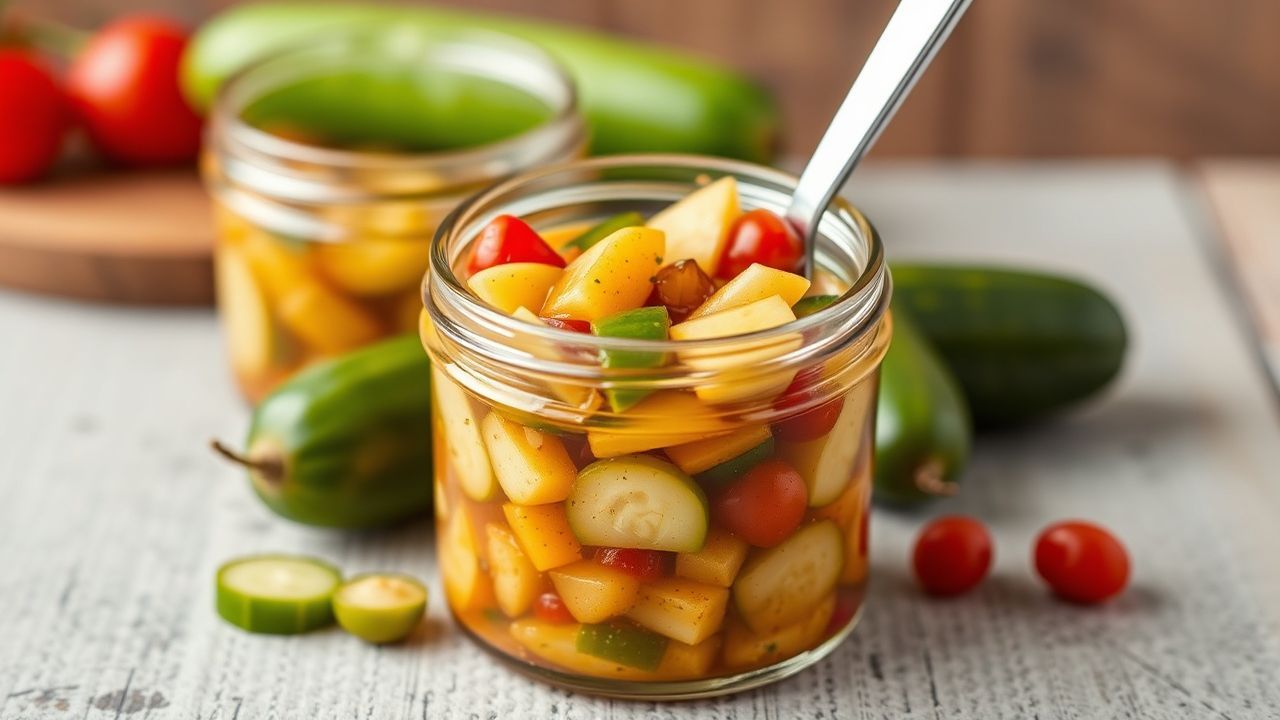

There is a bright, tangy pleasure in a spoonful of homemade sweet pickle relish. It brings crunch, balance, and a sweet-sour lift that transforms sandwiches, salads, and grilled fare.
- Quick yield: about 4 cups of relish ready to chill in under an hour.
- Texture focus: salting and draining preserves crunch and prevents a watery jar.
- Flavor control: you can dial sugar and vinegar to taste for perfect balance.
- Preservation: refrigerate for weeks or process in a water bath for long-term storage.
Choosing, Balancing, and Perfecting Your Sweet Pickle Relish
Start with firm cucumbers and fresh aromatics for a lively relish. Firm flesh gives crispness while fresh onion and optional bell pepper add texture and flavor contrast.
Pay attention to the cucumber variety. Use a firm pickling or Kirby-type cucumber to avoid a mushy final product. See cucumber varieties for cultivar guidance and seasonal picking tips.
Prep and Cook Time
Preparation: 30 minutes. Cooking: 20 minutes. These windows keep vegetables bright and not overcooked.
Total Time: 50 minutes. Allow additional time for salting and draining, which is passive but crucial for texture control.
Ingredients
Gathering ingredients ahead speeds the process and ensures even chopping. Use a sharp knife or a food processor set for small dice to create uniform pieces that heat evenly.
Core ingredients include fresh cucumbers, onion, sugar, and white vinegar. For background on vinegar chemistry and acidity standards, consult the vinegar reference.
- 4 cups finely chopped fresh cucumbers (pickling/Kirby cucumbers preferred)
- 1 cup finely chopped onion
- 1/2 cup finely chopped green bell pepper (optional)
- 1 1/2 cups granulated sugar
- 1 cup white vinegar (5% acidity)
- 1 tsp celery seeds
- 1/2 tsp turmeric powder
- 1 tsp salt
Step-by-Step Instructions
This sequence preserves crunch while marrying flavors. Follow timing and heat guidance to avoid over-softening the vegetables during simmering.
For instructions on traditional pickling techniques and food-safety guidelines, review the pickling overview.
- Pick the Right Cucumbers: Choose firm, medium-small cucumbers without soft spots. Small fruit have tighter cell structure and yield a better crunch.
- Prep the Veggies: Rinse and finely chop cucumbers, onion, and pepper. Uniform pieces ensure consistent texture and appearance.
- Salt and Drain: Toss the chopped vegetables with salt and let sit 1–2 hours. This draws out excess moisture and firms the cell walls.
- Drain and Rinse: Press the vegetables in a sieve or cheesecloth, then rinse to remove excess salt. Drain thoroughly to prevent a watery brine.
- Prepare the Brine: Bring sugar, vinegar, turmeric, and celery seeds to a rolling boil, stirring until the sugar dissolves and the mixture smells bright and tangy.
- Combine and Cook: Stir the drained vegetables into the hot brine. Simmer 10–15 minutes on medium heat, stirring so the vegetables heat through but keep snap.
- Cool and Jar: Remove from heat, cool slightly, then fill sterilized jars leaving 1/2 inch headspace. Seal and refrigerate for short-term use or process via water bath for long-term storage.
When you choose to process by canning, follow tested canning times and methods for safety. If you plan to preserve jars, consult the authoritative canning practices in the canning entry.
Practical Tips for Success
Small technique changes yield big improvements in texture and shelf life. For example, salting time and thorough draining control final viscosity and prevent a watery relish.
Adjust sugar and vinegar incrementally to match your taste. Start with the base ratio, then tweak by 1–2 tablespoons at a time to avoid oversweetening or excessive tang.
- Texture is King: Always salt and drain. This tightens vegetable fibers and concentrates flavor.
- Balance the Brine: Taste warm brine before adding vegetables and adjust sugar or vinegar if needed.
- Chop Uniformly: Consistent dice traps fewer air pockets and produces a smooth mouthfeel.
- Make Ahead: Relish often tastes better after a night in the fridge as flavors marry and mellow.
Canning Notes and Safety
If you plan to shelf-stable jars, use tested water-bath canning times based on altitude and jar size. Incorrect processing risks spoilage and off-flavors.
Sanitize lids and jars and follow a trusted canning guide for headspace and processing times. If uncertain, refrigerate jars and consume within several weeks.
Serving Suggestions
Sweet pickle relish pairs with hot dogs, burgers, and classic potato salad. It also brightens egg dishes, sandwiches, and chilled dips.
Garnish with fresh dill or a few mustard seeds for a visual lift and a complementary flavor layer. Small additions like dill alter aroma without masking the sweet-tart profile.
Nutritional Snapshot
Relish provides flavor with modest calories and carbohydrates due to sugar. Portion control keeps its culinary benefits without excessive added sugar.
| Nutrient | Per 2 Tbsp Serving |
|---|---|
| Calories | 30 |
| Protein | 0g |
| Carbohydrates | 8g |
| Fat | 0g |
Resources and Further Reading
For cultivar selection, the cucumber page lists common pickling varieties and growing characteristics. This helps you choose fruit with dense flesh for relish.
To understand acidity levels, consult the vinegar article. It explains why 5% acidity white vinegar works reliably in most home pickling recipes.
FAQ
What is sweet pickle relish made of?
Sweet pickle relish combines finely chopped cucumbers with sugar, vinegar, and spices such as celery seed and turmeric. The sugar and vinegar create the signature sweet-sour flavor and golden color.
Why salt and drain the cucumbers?
Salting draws out moisture and firms the cucumber cell walls, which prevents a watery, limp relish. Rinsing removes excess salt while preserving the firmer texture achieved by osmosis.
Can I can sweet pickle relish for long-term storage?
Yes, you can process jars in a water-bath canner following tested times for your altitude. If you prefer caution, refrigerate jars and consume them within several weeks to enjoy peak quality.
How can I adjust sweetness or tang?
Adjust sugar or vinegar in small increments and taste warm brine before cooking. You can also add a pinch of mustard seed or a dash of allspice for depth without altering sweetness.
Are there good substitutes for cucumbers?
If cucumbers are unavailable, firm slicing or Kirby cucumbers are the best substitutes because they maintain texture. Other vegetables change the flavor profile and may require technique tweaks.
Wrapping Up
Homemade sweet pickle relish rewards careful prep and modest hands-on time. With a few technique points—salting, uniform chopping, and correct simmer time—you get a crisp, balanced condiment every time.
Store jars properly and label with date and processing method. When you follow measured steps and safe canning guidance, you preserve both flavor and quality for many meals to come.
See also: pickle relish