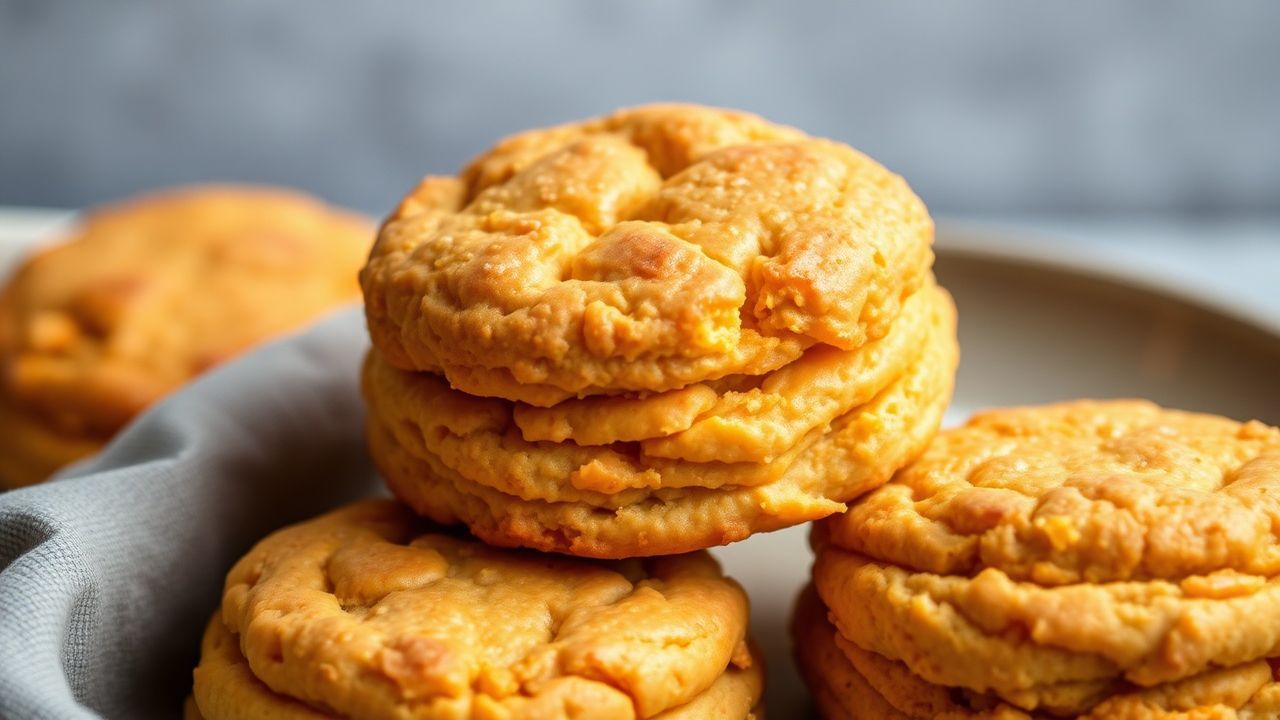

Sweet potato biscuits capture cozy flavor and dependable texture in one simple bake. They mix mashed sweet potato into biscuit dough to add moisture, color, and a hint of sweetness that balances both savory and sweet toppings.
- Moist crumb: Sweet potato adds natural moisture so biscuits stay tender longer.
- Fast prep: A full batch takes about 35 minutes from start to finish.
- Versatile: Work as breakfast, side, or sandwich bread with savory fillings.
Sweet Potato Biscuits Origins and Their Heartwarming Tradition
Regional cooks in the American South adapted pantry staples to stretch ingredients and add flavor. Sweet potatoes became a natural candidate because they store well and mash into a creamy binder for quick breads.
These biscuits sit inside a broader Southern baking tradition linked to the region’s foodways. For background on that culinary context, see Southern United States cuisine.
Prep, Timing, Yield and Skill
Preparation: 20 minutes. Cooking: 12–15 minutes. Total: about 35 minutes. These numbers assume the sweet potato is already cooked and mashed.
Yield: Roughly 12 medium biscuits, depending on cutter size. Level: easy to medium—good for new bakers who follow technique.
Key Ingredients for Perfectly Fluffy and Flavorful Biscuits
Use quality staples and cold fat. The recipe centers on mashed sweet potato, flour, a chemical leavening agent, cold butter, and an acidified milk like buttermilk to tenderize the crumb.
Typical ingredient list: 1 cup cooked mashed sweet potato, 2 cups all-purpose flour (sifted), 1 tbsp baking powder, 1/2 tsp baking soda, 1 tsp salt, 6 tbsp cold unsalted butter, 1/2 cup buttermilk (plus extra), and 1 tbsp honey optional. Keep butter cold to create flaky layers.
Step-by-Step Guide to Crafting Homemade Sweet Potato Biscuits
Preheat the oven to 425°F (220°C). Line a sheet with parchment; cold baking surfaces and quick handling help rise.
Warm mashed sweet potato cools faster if spread thin on a plate. Aim for room temperature before adding to dough so it blends without melting the butter.
Dry Mix and Cutting in Fat
Whisk flour, baking powder, baking soda, and salt in a large bowl to distribute leaveners evenly. Sifting adds air and reduces lumps.
Cut cold butter into the dry mix until it resembles coarse crumbs with some pea-size pieces. That texture produces the desired flaky interior after baking.
Mixing, Folding, and Cutting
Make a well in the dry mix. Stir in mashed sweet potato, buttermilk, and honey just until cohesive. Avoid overworking; short mixing preserves loft.
Turn dough onto a floured surface. Pat to 3/4-inch thick, fold 2–3 times, then press back to thickness. Cutting straight down without twisting improves rise.
Baking and Finishing Touches
Place biscuits close for softer sides or spaced for crisper edges. Bake 12–15 minutes until tops turn golden and bottoms are lightly browned.
Let cool briefly on a rack; that rest stabilizes the crumb and prevents sogginess from steam. Serve warm with butter or a glaze.
[PARAGRAPH_BREAK]
[NOTE: The following callout offers a focused technique insight.]
Expert Tips for Serving, Storing, and Flavor Variations
Serve warm with herb butter, honey, or gravy. For brunch, split and fill with fried chicken or ham for a substantial sandwich that contrasts tender biscuit with savory fillings.
Store cooled biscuits in an airtight container at room temperature up to 2 days. For longer storage, freeze individually wrapped biscuits up to 3 months, then reheat in a 350°F oven wrapped in foil.
Flavor Variations
Additions that work well: shredded sharp cheddar and chives for savory, or a pinch of cinnamon and nutmeg for a spiced version. Each addition shifts the profile but keeps the biscuit structure intact.
For dairy-free versions, substitute coconut oil for butter and use a milk-plus-acid to mimic buttermilk. Expect slightly different texture when using plant fats.
Practical Baking Warnings and Common Mistakes
Maintain cold ingredients and minimal handling. Overworking dough develops gluten, which yields tough biscuits rather than tender, flaky ones.
Also, do not twist the cutter when cutting biscuits; twisting seals the edges and prevents proper vertical rise.
Tips for Consistent Results
Measure flour by spooning into the cup and leveling with a knife rather than scooping; scooping compacts flour and makes dry dough. Use a kitchen scale when possible for precise results.
Check oven temperature with an independent thermometer. Many home ovens run hot or cold, and a 20° difference will change bake time and browning.
Nutrition Snapshot
A typical medium sweet potato biscuit averages around 180 calories, with approximately 3 g protein, 25 g carbohydrates, and 7 g fat. Values vary by exact ingredients and portion size.
Sweet potatoes contribute fiber, beta-carotene (a provitamin A source), and vitamin C compared with plain biscuits. For nutrient context, review the sweet potato nutrient profile and adjust serving sizes accordingly.
Related Culinary Concepts
The technique of cutting cold fat into flour appears across quick breads globally. For technical reference and historical context on the biscuit as a baked good, see the biscuit article.
Understanding chemical leaveners helps: baking powder and baking soda react with moisture and acid to create carbon dioxide and lift. For quick experiments, small adjustments in leavening can change crumb structure markedly.
Q&A
Q&A: Sweet Potato Biscuits – Homemade Comfort in Every Bite
Q1: What makes sweet potato biscuits different from regular biscuits?
A1: They include mashed sweet potato in the dough, which adds moisture and gentle sweetness. The result is a tender crumb and a warm golden hue that signals the added root vegetable.
Q2: Why use sweet potatoes in biscuits?
A2: Sweet potatoes add fiber, moisture, and vitamins while reducing the need for added sugar. They create a softer texture and extend freshness by holding moisture.
Q3: Can sweet potato biscuits be served beyond breakfast?
A3: Absolutely. Use them as a side with soups and stews, or split and fill for sandwiches. Their flavor adapts to both sweet and savory pairings.
Q4: Are sweet potato biscuits difficult to make at home?
A4: No. The method is straightforward: keep ingredients cold, mix briefly, and bake hot. Time-tested technique beats fancy tools for consistent success.
Q5: How should sweet potato biscuits be stored?
A5: Store at room temperature in an airtight container for up to two days, or freeze individually wrapped for longer storage. Reheat gently to restore the fresh-baked texture.
In Retrospect
Sweet potato biscuits reward careful technique with consistent comfort. They pair the humble root vegetable with classic biscuit methods to create a versatile baked good that works across meals.
For bakers seeking a reliably tender biscuit, focus on cold fat, minimal handling, and correct leavening. These simple controls determine whether biscuits bake into flaky, golden rounds or a dense outcome.
Further Reading
To explore ingredient science and regional baking traditions, consult the linked references on sweet potato, buttermilk, and biscuit. Those pages provide precise context and background for cooks who want deeper technical detail.
See also: sweet potato