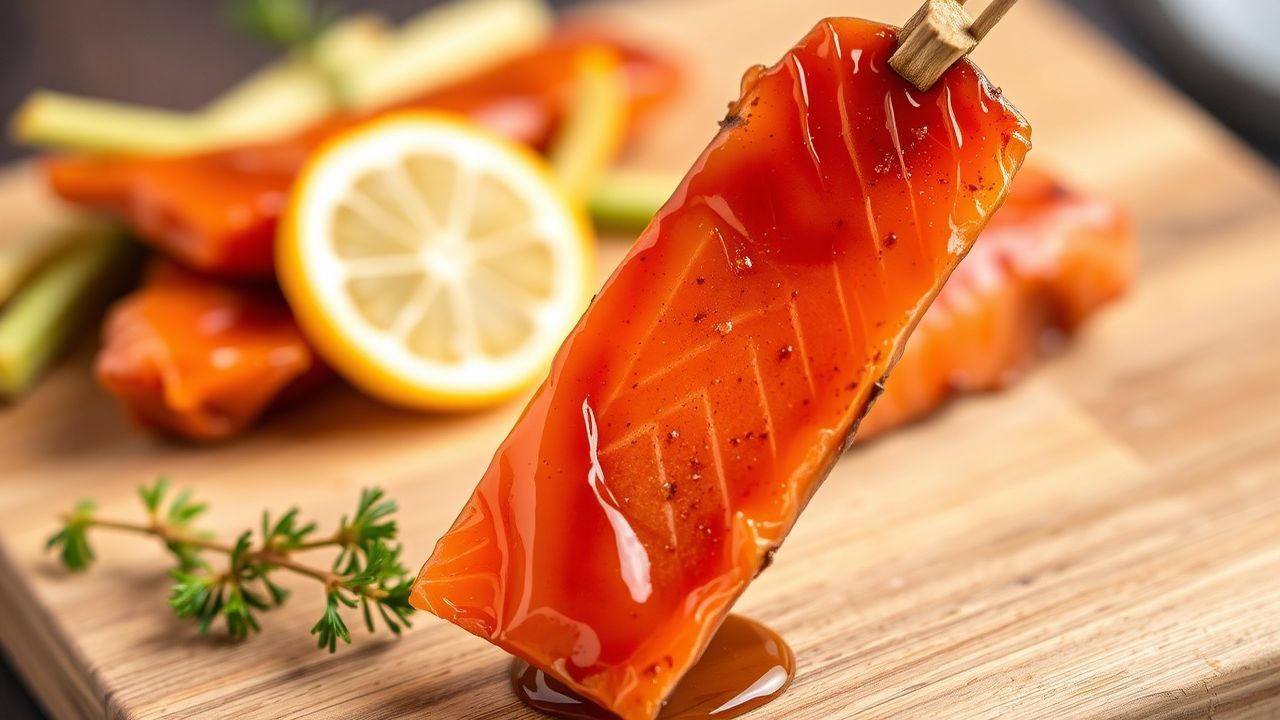

Jerky earns its place as a portable, protein-rich snack, and maple-glazed salmon jerky elevates that category with natural sweetness and depth. This recipe balances technique and timing to turn fresh salmon into a shelf-stable gourmet snack with glossy glaze and true seafood umami.
- Key takeaway: Consistent slicing and precise drying yield chewy, safe jerky.
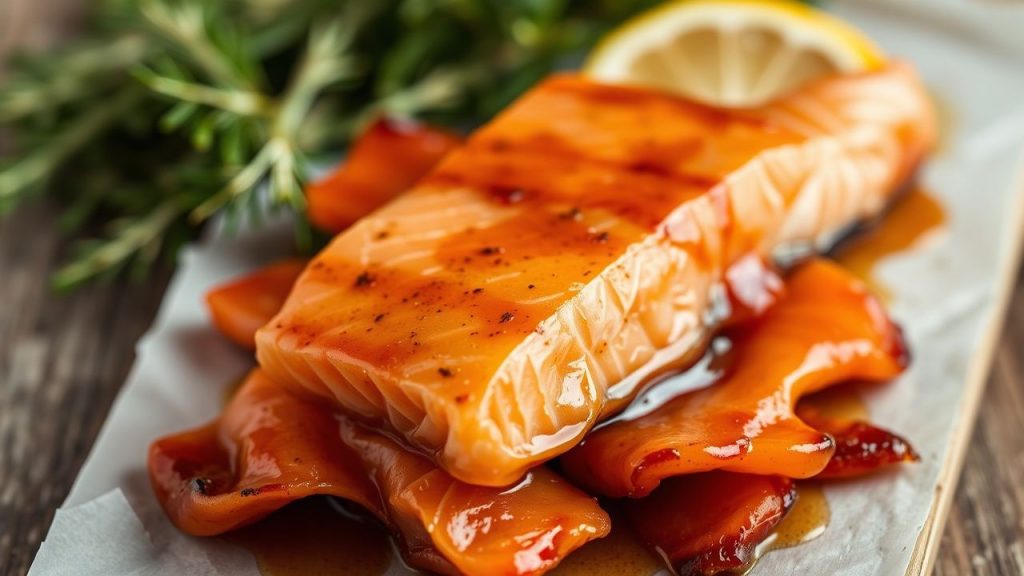
- Flavor note: Pure maple syrup caramelizes to create a shiny, savory-sweet finish.
- Timing: Plan for 4+ hours of marination and 6–8 hours of drying.
- Yield: About 12 servings from 1 lb of salmon when sliced 1/4″ thick.
Key Preparation Details
Prep and Cook Time
Expect a staged workflow: quick prep, a long marinade, and slow drying. The hands-on work takes roughly 30 minutes, marination at least 4 hours, and dehydration 6–8 hours depending on equipment and humidity.
Follow those windows to allow flavor penetration and moisture reduction. Proper pacing prevents overruns that produce brittle or under-dried jerky.
Yield and Servings
This recipe produces approximately 12 snack-sized servings from 1 pound of salmon. Final yield varies with strip thickness and moisture loss during drying.
Track net weight loss after your first batch to set expectations for future runs. That helps when scaling recipes for gifts or events.
Difficulty Level Assessment
Skill level rates as medium because of slicing technique and careful drying management. You need precise temperatures and consistent strip thickness for reliable results.
Nevertheless, home cooks who follow timing and temperature guidance will reproduce excellent results after one or two attempts.
Essential Ingredients for Maple-Glazed Salmon Jerky
Salmon Selection
Use 1 pound of fresh, skinless salmon fillet cut into uniform strips about 1/4 inch thick. Uniformity ensures even dehydration and predictable texture.
Choose the salmon species that matches your texture preference; fattier cuts yield more tender jerky, while leaner fish produces a firmer chew. Learn more about salmon varieties on Salmon.
The Maple Glaze Marinade
Combine 1/3 cup pure maple syrup, 2 tablespoons low-sodium soy sauce or tamari, 1 tablespoon apple cider vinegar, 1 teaspoon smoked paprika, 1/2 teaspoon sea salt, 1/4 teaspoon freshly ground black pepper, 1 teaspoon minced fresh ginger, and 1 grated garlic clove. Whisk until smooth.
Use pure Grade A maple syrup for clean caramelization and balanced sweetness. For background on the ingredient, see Maple syrup.
Optional Flavor Enhancements
Add 1/2 teaspoon crushed red pepper flakes for heat or a splash of bourbon for complexity. Small adjustments change the final flavor dramatically, so add sparingly on first trials.
Use pantry spices like smoked paprika and toasted sesame sparingly. They complement maple without masking the salmon’s natural profile.
Step-by-Step Jerky Crafting Process
Step 1: Salmon Preparation
Select firm, fresh fillets and pat them dry with paper towels. Dry surface tissue promotes better glaze adhesion and faster marinade absorption.
Slice across the grain for a tender bite, or with the grain for chewier texture. Consistent 1/4-inch strips give predictable drying times.
Step 2: Creating the Maple Glaze Marinade
Whisk maple syrup with soy sauce, vinegar, smoked paprika, salt, pepper, ginger, and garlic in a medium bowl. Warm the mixture briefly to help the maple integrate and slightly thicken the glaze.
Taste and adjust for balance: more soy for saltiness, more vinegar for brightness. A small amount of warming coaxes oils and flavors together without cooking the aromatics.
Step 3: Marinating the Salmon Strips
Place strips in the marinade ensuring full coverage. Refrigerate for a minimum of 4 hours, or overnight for deeper penetration.
Rotate pieces once during marination to guarantee uniform flavor distribution. Keep marinade-to-fish ratios consistent for predictable results.
Step 4: Preparing Your Drying Setup
Preheat your dehydrator or oven to 145°F (63°C). Arrange strips in a single layer on racks or on parchment-lined sheets, leaving space for airflow.
Good airflow matters. Consult the food drying resource on Food drying for principles that apply to home dehydrators and ovens.
Step 5: The Drying Process
Dry the salmon for 6 to 8 hours, flipping halfway to ensure even moisture removal. Aim for pliable, leathery strips that bend without cracking.
Use a thermometer to validate oven or dehydrator temperature. Monitor humidity and adjust time—high humidity extends drying.
Step 6: Optional Glaze Application
About 30 minutes before the end of drying, brush a light coat of maple syrup for a glossy finish. Continue drying until the glaze sets and feels tacky but not tacky enough to stick to containers.
Apply glaze conservatively; excess sugar can darken disproportionately and increase stickiness in storage.
Step 7: Cooling and Storage
Cool pieces completely on racks to prevent condensation. Cooling preserves texture and reduces microbial risk before packaging.
Store jerky in airtight containers or vacuum-sealed bags. Refrigerate up to two weeks or freeze longer-term in portioned packs for months.
[p]
Expert Chef’s Notes
Salmon Choice Matters
King or Chinook salmon yields a richer, more tender jerky due to higher fat content. Sockeye produces leaner, firmer strips with pronounced color and flavor.
Match fish choice to your audience: fattier fish suits indulgent snacks; leaner fish works for compact, portable jerky with a longer perceived chew.
Glaze Variations and Additions
Swap maple for honey or agave for different sweetness profiles. Add citrus zest or a splash of bourbon for aromatic layers that complement smoky paprika.
Test small batches when trying new additions. Subtle tweaks can shift shelf life and texture if they add extra moisture or sugar.
Make-Ahead and Storage Tips
Prepare jerky a week in advance and store tightly sealed in the refrigerator for short-term use. Freeze portions for longer preservation without major texture loss.
Label containers with date and batch notes. That practice helps you refine drying times based on observed moisture retention in future batches.
The Dryness Test Explained
Bend a strip; it should flex without snapping. Snapping indicates over-drying; excessive give indicates more time is needed.
Practice this tactile test and record your findings. Over successive batches, you will calibrate exact times for your specific dehydrator or oven model.
Serving Suggestions for Maple-Glazed Salmon Jerky
Sophisticated Pairings
Pair jerky with crisp apple slices and a smear of mild goat cheese for contrast. Fresh thyme or toasted sesame seeds add aromatic depth and visual appeal.
These pairings work well on appetizer boards and at tastings where your jerky should sit alongside complementary textures and acids.
Casual Gatherings and Appetizers
For casual settings, serve with artisan crackers and a sparkling cider to cut the maple sweetness. Jerky also anchors charcuterie-style spreads as a unique protein option.
Consider bite-sized portions for parties to let guests sample without overwhelming richer palate items.
| Nutrient Information (Approximate per Serving) | Value |
|---|---|
| Calories | 120 kcal |
| Protein | 15 g |
| Carbohydrates | 5 g |
| Fat | 4 g |
FAQ
What makes salmon jerky different from beef jerky?
Salmon jerky carries more omega-3 fats and a delicate, oily mouthfeel that beef lacks. Fish absorbs marinades differently, often requiring gentler handling and specific drying profiles.
Texture expectations differ: salmon tends toward a tender chew while beef often aims for firmer resistance.
Why choose a maple glaze for salmon jerky?
Maple syrup provides clean sweetness and caramelizes during drying, producing a glossy finish that contrasts the fish’s savory notes. The result highlights maple’s natural complexity alongside the salmon’s umami.
Maple also creates a surface glaze that enhances visual appeal and mouthfeel when applied sparingly.
What are the core ingredients I must have?
Fresh, skinless salmon; pure maple syrup; soy sauce or tamari; sea salt; black pepper; and aromatics like ginger and garlic. Optional smoked paprika contributes desirable smoky tones without liquid smoke.
High-quality base ingredients let minor additions shine. Prioritize fresh fish and pure maple for best outcomes.
How do I dry glazed salmon safely at home?
Set dehydrator or oven to about 145°F (63°C) and ensure good airflow. Dry until strips bend without cracking; typical times range from 6 to 8 hours depending on humidity and strip thickness.
Always use a thermometer to confirm your unit’s internal temperature and adjust time for local environmental conditions.
How should I store finished salmon jerky?
Cool completely, then seal in airtight containers or vacuum bags. Refrigerate for up to two weeks or freeze portions for longer storage. Proper cooling prevents condensation that accelerates spoilage.
Rotate stock by date and keep small tasting batches to verify texture over time.
For background reading on related processes, consult the Wikipedia pages on Jerky, Salmon, and Food drying.
See also: Salmon Jerky