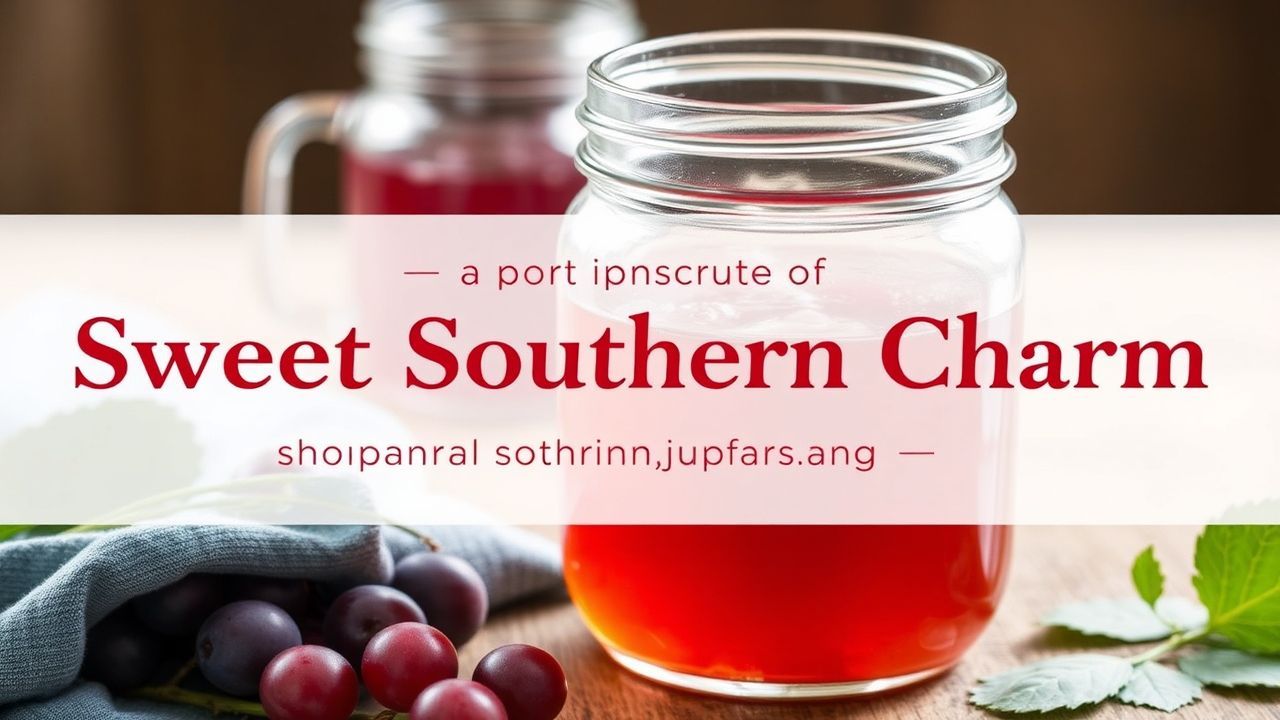

The South holds a soft, sunlit ritual: harvesting Scuppernong grapes and turning them into jars of clear, honeyed jelly. This recipe guides you through reliable technique, measured timing, and canning steps to get consistent results.
- Use ripe Scuppernongs for maximum flavor and natural pectin.
- Measure juice precisely to match pectin and sugar ratios.
- Water-bath canning keeps jars shelf-stable for months.
- Patience in juice extraction yields a clear, translucent jelly.
Discovering the Unique Flavor and History of Scuppernong Grapes
Scuppernong grapes belong to the muscadine family and produce a distinct golden-green fruit with a floral aroma. For botanical context, read more about Scuppernong and how this cultivar fits into Southern foodways.
These grapes evolved in the Southeastern United States and remain a regional heirloom. Related species and broader grape biology provide useful background on sweetness and pectin levels; see Muscadine and Grape for technical detail.
Prep and Cook Time
Preparation: 30 minutes total active time, including washing and stemming grapes. Start with a clean workspace and all jars sterilized before you begin.
Cooking: About 45 minutes to extract juice and complete the jelly boil. Total elapsed time, including cooling and processing, runs roughly 1 hour 15 minutes.
Yield and Difficulty
This recipe yields about four half-pint jars of clear Scuppernong jelly when you begin with 4 cups of grape juice. The technique rates as medium difficulty because it requires attention to pectin timing and proper canning methods.
Follow the steps exactly and you will avoid common setting problems and spoilage. Consistent results come from measured ingredients and correct water-bath processing.
Essential Ingredients and Tools for Perfect Southern Scuppernong Jelly
Below are the tested ingredients and tools used by experienced jam-makers. Each item contributes directly to clarity, gel strength, and shelf stability.
Gather the following and lay them out before you start to keep the process smooth and fast.
- 4 cups fresh Scuppernong grape juice (strained)
- 1½ cups granulated sugar
- 1 tbsp freshly squeezed lemon juice
- 1 pouch (1.75 oz) fruit pectin (packaged, tested for grapes)
- 1/2 cup water
- Half-pint jelly jars with fresh lids and bands
- Heavy-bottomed saucepan, fine mesh strainer or jelly bag
- Water bath canner or large stockpot with rack
Step by Step Guide to Preparing and Cooking Your Scuppernong Jelly
Work actively and in sequence: crush, simmer, strain, measure, then cook the jelly to gel point. Precise measurements and timing during the high-heat boil determine whether the jelly will set properly.
Use a rolling boil for the final sugar-pectin reaction and avoid stirring during the hard boil to maintain texture. Follow each step carefully so you maintain clarity and a consistent finish.
Crush and Simmer
- Crush the grapes: Place grapes and 1/2 cup water in a heavy saucepan and crush with a potato masher to release juices.
- Simmer: Bring to a boil, then simmer 12–15 minutes until fruit softens and aroma intensifies.
Extract Juice
Transfer the cooked fruit to a fine mesh strainer or jelly bag and let the juice drip without pressing for about 30 minutes. Avoid forcing solids through the strainer to keep the jelly clear and translucent.
Measure exactly 4 cups of strained juice; add a little water only if you fall short. Precise volume aligns with the pectin packet’s setting instructions.
Prepare and Boil the Jelly
- Combine: In a clean saucepan combine the 4 cups juice, lemon juice, and the pectin.
- Boil: Bring mixture to a full rolling boil over high heat while stirring constantly. Quickly add all sugar, stir to dissolve, and return to a hard boil for 1 minute.
- Jar: Remove from heat, skim foam if needed, and ladle into sterilized jars with 1/4 inch headspace. Wipe rims and apply lids and bands.
- Process: Place jars in a boiling water bath canner and process for 5 minutes at a full boil. Allow jars to cool undisturbed 12–24 hours before checking seals.
Canning and Storing to Preserve Authentic Sweetness
Water-bath canning secures a shelf-stable product when done correctly and prevents common bacterial and mold risks. Use the principles of canning to set processing times based on altitude and jar size.
After processing, test lids by pressing the center; a sealed lid will not flex. Label jars with date and store in a cool, dark place for up to a year for peak quality.
Once opened, refrigerate and use within a few weeks to keep flavor fresh. If any jar shows bulging, off-odors, or mold, discard it immediately.
Expert Tips for Canning and Flavor
Small technique choices deliver big results: use fresh lemon juice to balance sweetness and opt for packaged pectin designed for fresh fruit. These choices stabilize the set and preserve natural aroma.
Remove foam before jarring for a glossy surface and allow juice to settle before measuring. These steps increase visual appeal and customer satisfaction when gifting jars.
Chef’s Notes, Variations, and Troubleshooting
Experiment carefully: add a cinnamon stick during simmering for a warm note or a teaspoon of vanilla at the end for depth. Remove whole spices before straining to maintain smooth texture.
If your jelly fails to set, test it on a chilled plate to confirm. You can re-cook with additional pectin or follow a second-pectin method depending on the cause.
- Variation: Spice with cinnamon or a splash of bourbon for adult jars.
- Substitution: If Scuppernongs are unavailable, a blend of Muscadine and white grapes approximates the flavor.
- Troubleshooting: Jelly that won’t set usually needs longer boiling or more pectin; re-measure next batch carefully.
Serving Suggestions
Scuppernong jelly pairs beautifully with buttermilk biscuits, soft cheeses, and grilled poultry. Use it as a glaze for pork chops or as a sweet counterpoint to sharp cheddar on a cheese board.
For dessert, spoon a little over vanilla ice cream or fold into plain yogurt for a quick parfait. Garnish with a fresh grape or mint for a Southern-farmhouse presentation.
Nutritional Snapshot
Per tablespoon, Scuppernong jelly is primarily a carbohydrate-based spread with concentrated sugars. Use moderation when serving, and note that canning concentrates fruit sugars compared with fresh grapes.
| Nutrient | Per 1 Tbsp |
|---|---|
| Calories | 50 kcal |
| Protein | 0.1 g |
| Carbohydrates | 13 g (mostly sugars) |
| Fat | 0 g |
FAQ
What are Scuppernongs and how do they differ from other grapes?
Scuppernongs are a cultivar of muscadine grapes known for a thick skin and floral, honeyed flavor. Their unique chemistry yields a distinctive aroma and makes them ideal for jelly and preserves.
How do I know when Scuppernongs are ripe for picking?
Ripe Scuppernongs show a golden-green color with a slight amber blush and yield slightly when pressed. Sweet fragrance and a full, plump appearance indicate peak flavor for jelly-making.
Why didn’t my jelly set and how can I fix it?
Failure to set usually results from inaccurate measurements, insufficient boiling, or low pectin in the fruit. Re-test by boiling with added commercial pectin per manufacturer instructions or check sugar-to-juice ratios before reprocessing.
How long will properly canned Scuppernong jelly keep?
Properly processed jars stored in a cool, dark pantry maintain quality for up to one year. Once opened, refrigerate and consume within a few weeks for best flavor.
Can I use fresh lemon juice instead of bottled juice?
Yes, fresh lemon juice provides both acid and aromatics that balance sweetness more cleanly than many bottled juices. Use the amount specified to achieve the correct acidity for pectin activation.
For additional reading about related topics, consult general references on jam and jelly making and the botanical background on grapes. These sources supply technical context for pectin, sugar chemistry, and preservation techniques.
When you follow these tested steps, your jars will yield a clear, shimmering Scuppernong jelly that captures Southern sweetness and stores safely for months. Enjoy the rhythm of the work and the reward of a perfectly set, golden jar.
See also: Scuppernong jelly