
The art of Italian pizza begins with a disciplined approach to dough, ingredients and heat. This piece guides cooks through authentic techniques that deliver a light cornicione, balanced sauce, and a perfectly blistered crust.
- Simple ingredients: quality flour, water, yeast, salt and olive oil.
- Timing matters: short mixing, long fermentation for flavor and texture.
- High heat: a hot stone or steel mimics wood-fired ovens for ideal crust.
Overview: What Defines Authentic Italian Pizza
Authentic Italian pizza emphasizes restraint: a thin, tender base, precise fermentation and fresh toppings. This approach highlights single ingredients rather than piling layers, producing a clean flavor profile.
The style traces to Naples and the rise of the Neapolitan pizza, where high-heat baking and simple toppings created the classic Margherita. Understanding regional roots helps you replicate technique and tone at home.
Prep and Cook Time
Plan for active prep and passive fermentation. Active work sits around 20–30 minutes while most time goes to proofing and resting the dough.
High heat shortens bake time substantially, so preheat thoroughly. A pizza stone or steel reduces total cooking time, producing quick oven spring and desirable char.
- Preparation: 20 minutes
- Proofing dough: 1 hour 30 minutes (standard) or 24–72 hours refrigerated for slow fermentation
- Baking: 10–12 minutes at home ovens; 60–90 seconds in traditional wood-fired ovens
- Total time: Approximately 2 hours (or longer with cold fermentation)
Yield
This recipe yields two 10–12 inch pizzas, suitable for 3–4 people depending on appetite. You can scale quantities linearly for larger batches.
Divide dough after the first rise to control shaping and final proof. Individual portions relax more predictably than one large mass.
Difficulty Level
Intermediate: this recipe suits cooks who master basic dough handling and temperature control. Hands-on technique—kneading, stretching and heat management—matters more than specialized equipment.
With consistent practice you will improve crust texture and topping balance. Small adjustments to hydration and proof time produce distinct results, so log your changes.
Ingredients
Use minimal, high-quality ingredients to preserve authenticity. Replace convenience or processed items with single-ingredient alternatives when possible.
Key pantry components influence structure and flavor: protein in the flour for gluten strength, correct water temperature for yeast activity, and drained fresh cheese for moisture control.
- 3 ½ cups bread flour, sifted
- 1 ¼ cups warm water (around 105°F / 40°C)
- 1 tsp active dry yeast
- 1 tsp sugar
- 2 tsp fine sea salt
- 2 tbsp extra virgin olive oil
- 1 cup San Marzano peeled tomatoes, crushed by hand (San Marzano tomatoes)
- 8 oz fresh buffalo mozzarella, sliced and drained (mozzarella)
- Fresh basil leaves (handful)
- Extra virgin olive oil for drizzling
- Coarse sea salt for finishing
Instructions
Follow steps in sequence and respect resting intervals. Short, focused work periods deliver better dough structure than rushed kneading or insufficient proofing.
Preheat your oven and tools while the dough rests; temperature carryover affects bake results. Use a thermometer for consistency.
Mixing and Kneading
Activate the yeast. Combine warm water, sugar and yeast; wait 5–7 minutes until foamy. Active yeast gives predictable rise and flavor.
Make the dough. Mix sifted flour and salt, add yeast mixture and olive oil, and bring to a shaggy ball. Transfer to a floured surface and knead 8–10 minutes until smooth and elastic.
Proofing and Shaping
First proofing. Lightly oil a bowl, place dough inside and cover. Let it double at room temperature or slow ferment in the refrigerator for 24–72 hours for deeper flavor.
Shape the bases. Gently deflate, divide dough into two portions and shape into rounds. Stretch each portion by hand to preserve gas in the edge—this yields a tender, airy cornicione.
Toppings and Baking
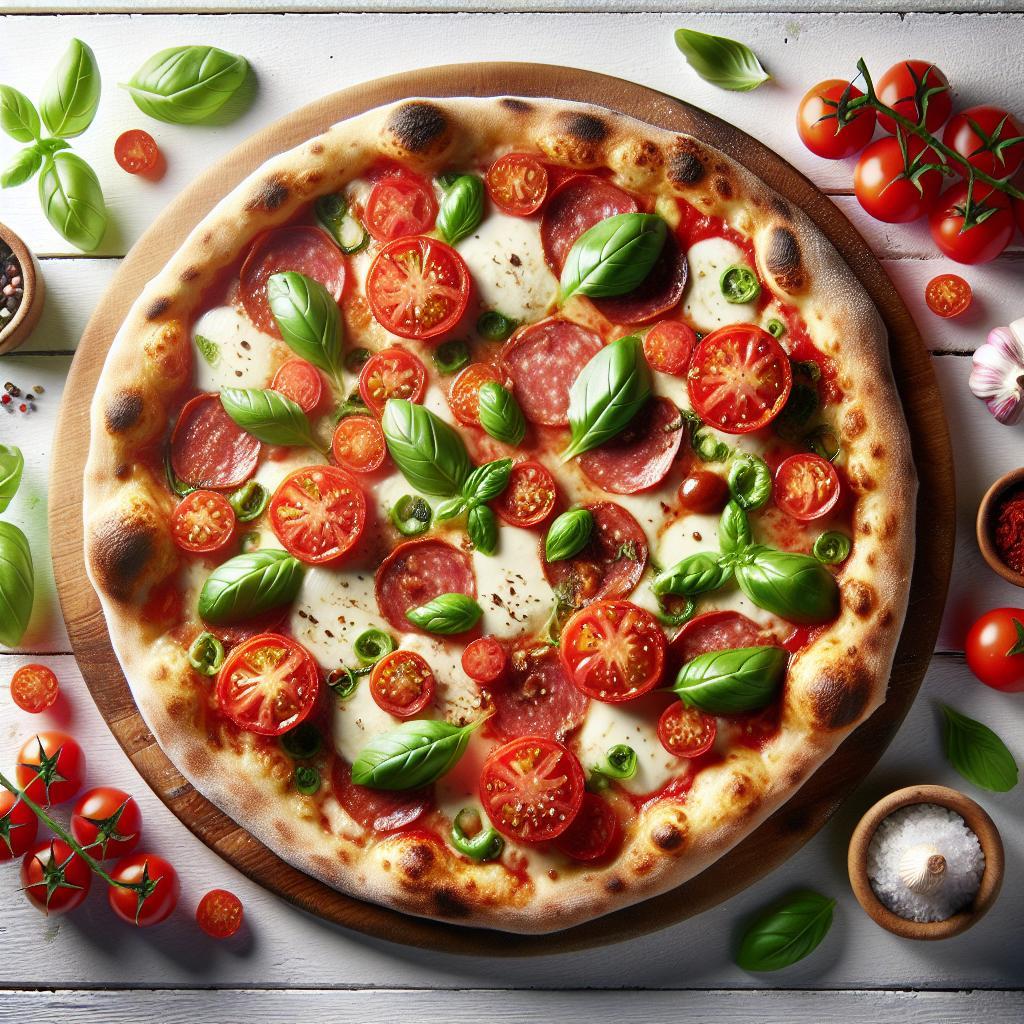
Assemble. Spread crushed tomatoes sparingly and add drained mozzarella. Keep toppings light so the crust can crisp and char under high heat.
Bake. Slide the pizza onto a preheated stone or steel at the oven’s highest setting. Bake 10–12 minutes at ~500°F (260°C) for home ovens; in traditional settings, around 900°F cooks in under two minutes.
Chef’s Notes: Tips for Success
Refine texture by adjusting hydration: higher water yields larger holes and a more open crumb, while lower hydration gives a denser interior. Measure by weight when possible for repeatability.
Drain fresh cheese thoroughly. Excess moisture kills oven spring and produces a soggy center; blot slices with paper towel before topping.
When shaping, avoid overworking the outer rim. Pressing too hard deflates trapped gas and flattens the cornicione that creates the signature airy edge.
Preheat a pizza stone or steel at maximum temperature for at least 45 minutes. Heat mass in the stone conducts into dough quickly and optimizes bottom crust crispness.
Serving Suggestions
Serve pizzas immediately off the stone to preserve texture and aroma. Let slices rest only a minute; residual heat continues melting cheese and concentrates flavors.
Garnish with fresh basil and a light drizzle of extra virgin olive oil. Pair with simple sides like a fruit-forward tomato salad or crisp greens to refresh the palate between bites.
Nutrition Snapshot
The following values are estimates based on common ingredient weights. Use labeled products for precise caloric accounting when needed.
| Nutrient | Per Serving (1/4 pizza) |
|---|---|
| Calories | 350 kcal |
| Protein | 15 g |
| Carbohydrates | 40 g |
| Fat | 12 g |
FAQ
What makes Italian pizza different from other pizzas?
Italian pizza prioritizes harmony: thin base, high-quality ingredients and controlled fermentation. Chefs avoid heavy layering to let tomato, cheese and crust sing together.
Regional methods—such as Neapolitan techniques—use intense heat to develop char and a tender interior, which contrasts with thicker, heavily topped styles.
How long should I ferment dough for the best flavor?
Short room-temperature proofing (1–3 hours) produces a neutral flavor and quick turnaround. Cold fermentation for 24–72 hours increases complexity through slow enzymatic activity.
Record time and temperature. The same recipe behaves differently across kitchens; incremental adjustments refine your ideal schedule.
Can I replicate wood-fired results at home?
Home ovens cannot fully match a 900°F wood-fired oven, but a preheated stone or steel plus the highest oven setting gets much closer. Use a broiler burst for added top blistering when needed.
Technique and timing compensate: thin bases, minimal toppings and a very hot surface give the best approximation of a pizzeria finish.
Which tomatoes work best for sauce?
Peeled, low-acid plum tomatoes yield balanced sweetness and texture. Crush them by hand for better mouthfeel and to preserve small tomato fragments that caramelize during baking.
Avoid water-based canned sauces with added thickeners. Straight tomatoes let you control seasoning and viscosity.
How should I store leftover pizza?
Cool quickly, then refrigerate in a single layer to preserve crust. Reheat in a hot skillet or oven on a stone to restore crispness rather than using a microwave that softens the base.
For longer storage, freeze slices individually wrapped; reheat from frozen on a hot surface until cheese bubbles and crust crisps.
Final Notes and Further Reading
Italian pizza blends technique, ingredient quality and temperature control. Master these three variables and you will see measurable improvement every bake.
To study historical and regional context, consult resources on pizza and the city of Naples. These references clarify why certain methods developed and how regional identity shapes ingredients and style.
See also: Italian pizza