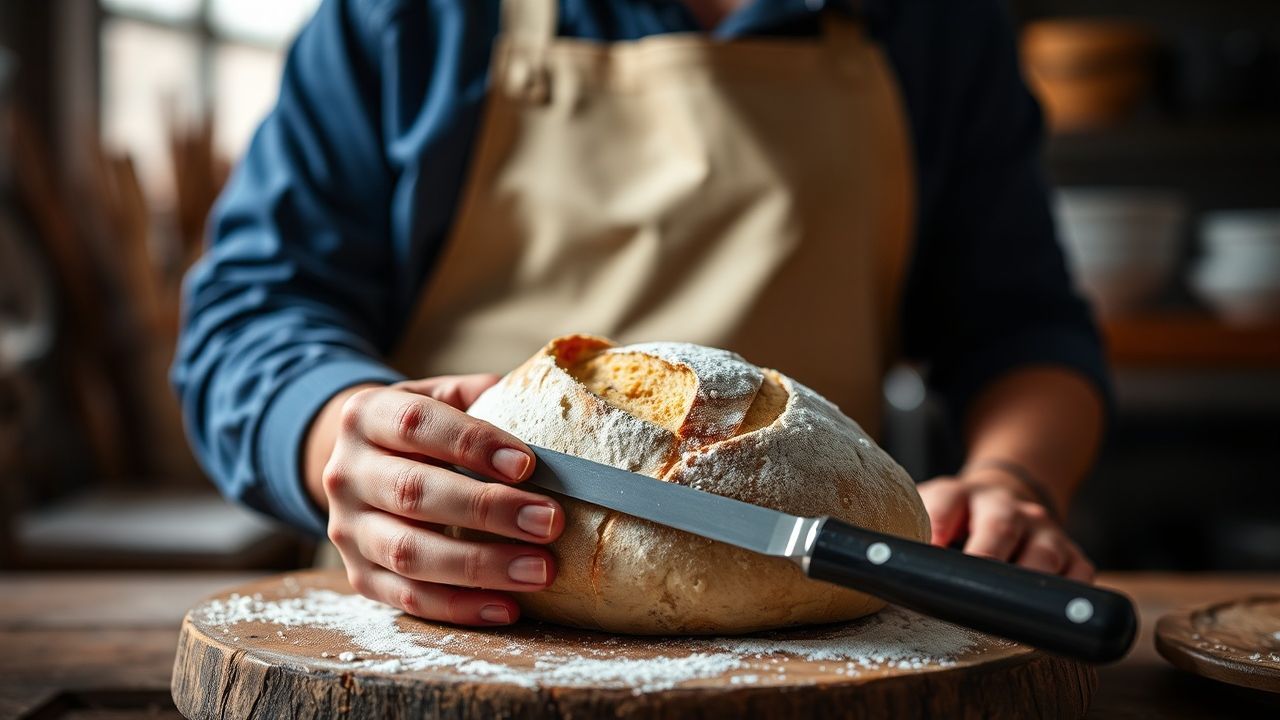

In a working bakery, a small tool controls how a loaf announces itself. The baker’s lame directs expansion, shapes the crust, and defines a baker’s signature with a single confident slice.
- Score for control: Intentional cuts direct oven expansion and avoid random bursts.
- Blade matters: Razor-sharp edges create clean slashes and better bloom.
- Angle & depth: They determine crust texture and oven spring behavior.
- Practice beats panic: Repetition builds muscle memory for consistent results.
The lame is deceptively simple, yet its correct use requires technique and judgement. Used well, it turns everyday dough into a clear expression of structure, hydration, and heat management.
Prep and Cook Time
Practical timing helps you plan scoring right after proof and before the oven. Scoring is a fast step, so plan an uninterrupted flow from workbench to oven.
Typical timing for a single artisan loaf is short: a quick 10-minute final setup then 30–35 minutes in the oven. Having everything staged—paddle, steam source, and preheated stone or Dutch oven—keeps the cut decisive and effective.
- Preparation Time: 10 minutes
- Baking Time: 30-35 minutes (depending on loaf size)
- Total Time: 40-45 minutes
Yield
This technique and timing produce one artisan loaf of about one pound (450 g). The yield depends on dough recipe, hydration, and how aggressively you score the surface.
When you master scoring, the same dough can yield very different visual results without changing flavor. Scoring patterns primarily affect appearance and crust structure rather than mass.
Yield: 1 artisan loaf (approximately 1 lb/450 g)
Difficulty Level
Scoring sits at an intermediate skill level; basic slashes are accessible, while ornate patterns take practice. The technique rewards steady hands and familiarity with dough feel and tension.
Start with simple single slashes and advance once you trust your motion and blade. Focus on consistency of angle and depth before attempting decorative designs.
Ingredients
The lame affects outcome, but the dough determines potential. Use a well-developed dough with clear surface tension to get the best visual and structural results.
Below are the basic items required to score and bake a single artisan loaf. Keep spare blades and a dusting of flour on hand for contrast and grip.
- 1 loaf of artisan bread dough (prepared and proofed, ready for scoring)
- Baker’s lame (curved or straight, depending on preference)
- Sharp razor blade or disposable blade compatible with the lame
- Flour (for dusting to highlight scoring patterns)
Instructions
Score immediately after final proof and just before the loaf goes into the oven. The goal is decisive motion; hesitation leads to ragged cuts.
Work with a well-floured surface or a floured banneton turn to cold parchment for transfer. Gentle handling preserves tension and the fidelity of the cut.
- Dust and contrast: Lightly dust the loaf to prevent sticking and to create visual contrast on bakes. The flour highlight lets you judge depth and pattern after oven spring.
- Choose blade and angle: Use a clean, sharp blade. Hold the lame at about a 30–45° angle for smooth incisions and controlled bloom.
- Grip and motion: Hold the lame like a pen with a relaxed wrist. Cut with one confident, fluid motion; avoid sawing that drags or tears the dough.
- Depth and placement: Aim for 1/4 to 1/2 inch depth for most wet doughs; adjust shallower for high-hydration batards to prevent collapse. Place slashes to guide expansion—parallel for baguettes, curved for boules.
- Transfer and bake: Move the scored loaf into the preheated oven or Dutch oven carefully to preserve your cuts. Bake immediately to capture oven spring and preserve blade marks.
After baking, examine the bloom to learn what the dough and cut produced. Notes taken across bakes accelerate skill development and predictability.
Tips for Success: Choosing and Maintaining Your Baker’s Lame
Selecting the right lame and keeping it sharp are the two most impactful factors for consistent scoring. Ergonomics matter: choose a handle that fits your grip and a blade that suits your preferred motion.
Additionally, learn to read your dough. Hydration, gluten development, and fermentation all change how a cut behaves. Adjust angle and depth accordingly to match dough characteristics.
Choosing the right lame
Curved lamés give a nice sweeping motion ideal for boules and decorative patterns. Straight lamés or fixed blades work well for precise, single slashes on bâtards and baguettes.
Try both styles and note which feels more natural. Ergonomics combined with the blade profile will dictate control and the type of cuts you can execute reliably.
Blade care and storage
Keep spare blades and change them at the first sign of dullness. Clean residue with a soft cloth; avoid soaking wooden handles to prevent warping and bacterial growth.
Store blades safely in a dedicated case away from moisture and out of reach. Proper storage preserves edge quality and reduces the chance of injury.
Practice on scrap dough or parchment to refine angle and speed. Short, focused practice sessions will improve confidence without wasting finished bakes.
Serving Suggestions
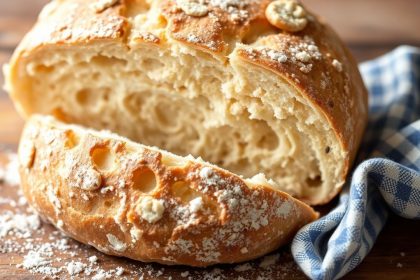
Score patterns provide more than beauty; they influence sliceability and crumb orientation. A clean bloom creates attractive slices and a predictable crumb when cutting.
Serve loaves as a centerpiece with simple accompaniments that let the crust and crumb shine. Rustic platters highlight the artisan quality imparted by deliberate scoring.
Nutrition and Final Bake Notes
Scoring itself does not change macronutrients, but crust development alters moisture distribution and texture. Loaves with strong oven spring often trap more steam, producing a lighter crumb.
Use a food thermometer to check internal doneness when testing new recipes. Aim for 200–210°F (93–99°C) for typical lean artisan loaves to ensure proper crumb set.
| Nutrition per Slice (1/12 loaf) | Calories | Protein | Carbs | Fat |
|---|---|---|---|---|
| Artisan Bread (basic dough) | 120 kcal | 4 g | 24 g | 1 g |
Q&A
Below are common practical questions bakers ask when they begin scoring. The answers focus on action: what to test, what to change, and what to expect.
Use these responses as check-points rather than strict rules, because doughs and ovens differ. Testing and recording outcomes turns opinion into reproducible technique.
Q1: What exactly is a baker’s lame?
A lame is a thin, razor-style blade mounted on a handle that allows precise scoring. It exists to cut tissue-like gluten surfaces cleanly and produce the controlled expansion called a bloom.
Q2: Why use a lame instead of a chef’s knife?
A lame’s razor edge slices without compressing the dough, while heavier knives can drag or pinch. The razor’s minimal resistance keeps crust integrity intact for a better oven spring.
Q3: How deep should I score?
Depth depends on dough hydration and structure; a general starting point is 1/4 to 1/2 inch. Adjust by testing: deeper cuts on sturdier doughs, shallower on very wet or weakly structured doughs.
Q4: When in the process should I score?
Score just after final proof and immediately before baking to capture maximum oven spring. Delaying invites surface collapse or drying, both of which blunt the blade’s effect.
FAQ
The following questions are formatted for schema and quick answers. Each one targets a discrete decision point bakers face when using a lame.
How does scoring affect oven spring?
Scoring creates a controlled weak point where the loaf can expand. This avoids random ruptures and focuses the oven spring into predictable bloom locations.
Which blade angle works best?
A 30–45° angle works for most shapes and hydrations because it slices the surface while leaving enough tissue to open attractively. Experiment in small increments to match your dough.
Can beginners get consistent results?
Yes. Start with one simple slash, use a fresh blade, and bake immediately. Consistency comes from repetition and steady staging of tools and oven conditions.
What maintenance extends a lame’s life?
Wipe the blade after each use, avoid water on wooden handles, replace disposable blades regularly, and store the lame in a dry case. These steps keep edges cleaner and safer.
Where can I learn more about bread and baking fundamentals?
Study core topics such as bread, the processes behind baking, and the equipment that controls heat like the oven. Also review tool basics such as the knife to understand blade geometry.
Concluding Remarks
The baker’s lame amplifies intent; a planned cut yields predictable results and revelatory blooms. With steady practice and sharp edges, scoring becomes an expressive and reliable part of artisan baking.
Keep records, change one variable at a time, and learn from each bake. Over weeks, deliberate scoring choices translate into a recognizable personal style and consistently superior loaves.
See also: baker’s lame