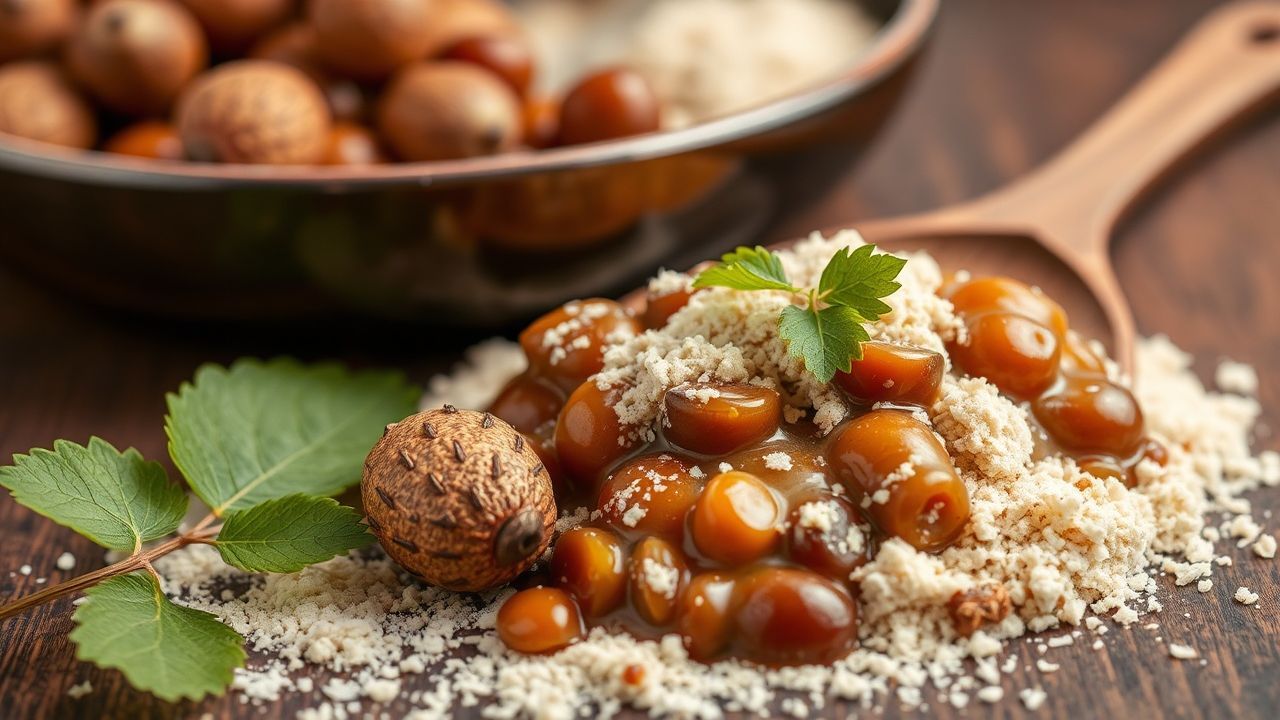

There’s an old culinary practice that turns foraged ingredients into kitchen essentials. One such ingredient is acorn flour, a naturally gluten-free powder that thickens stews while adding a gentle nutty depth. Use toasted acorn flour to bind liquids, enrich texture, and impart a subtle roasted aroma without processed thickeners.
- Natural thickening: acorn flour swells and binds for a hearty, non-gummy finish.
- Flavor lift: toasted acorn adds roasted, slightly sweet notes to savory stews.
- Versatile use: works in meat, mushroom, and legume-based stews and sauces.
- Storage-friendly: reheats with a splash of broth to restore silky texture.
Unlocking Acorn Flour’s Natural Thickening Power in Stews
Acorn flour contains complex carbohydrates and fibers that absorb cooking liquid and swell during gentle simmering. When toasted, these components toast lightly and integrate into a stew to create viscosity without producing that glossy, gelatinous sheen you sometimes get with pure starches.
For technical context, acorn comes from oak trees and contains starches similar to other root and nut flours. Learn more about the nut itself via acorn and how oak species relate to regional foraging. Use this flour as a slow-acting thickener; it stabilizes texture over long simmers.
Practical benefits and culinary fit
Acorn flour behaves like a combined binder and flavor agent. It thickens steadily during the final simmer and contributes texture and aroma that pair well with beef, root vegetables, or umami-rich mushrooms.
Because acorn flour is not pure starch, it produces a more rustic mouthfeel. Compare its functional role to a standard thickening agent to understand differences in clarity, sheen, and body.
Recipe Overview: Slow-Simmered Acorn-Thickened Beef Stew
This recipe targets a balanced, silky stew using toasted acorn flour. Work in stages: toast the flour, brown protein, build aromatics, then finish with a measured addition of the flour so the sauce rounds out but stays natural.
Below, you will find precise prep and timing, an ingredient list, and stepwise instructions optimized for a consistent outcome. Also, use the internal guides for deeper technique on flour preparation: how to make acorn flour and natural thickeners guide.
Prep and Cook Time
Preparation: 15 minutes. Prepare vegetables and toast the acorn flour before searing.
Cooking: 1 hour 30 minutes. Allow a long, gentle simmer so fibers hydrate and the beef tenderizes.
Yield
Serves 6 hearty portions. Multiply or reduce ingredients proportionally for different yields.
Difficulty Level
Medium. Suitable for cooks who can manage a multi-stage braise and adjust seasoning during finish.
Ingredients
- 2 tablespoons acorn flour (lightly toasted)
- 1 lb beef chuck, 1-inch cubes
- 2 tablespoons olive oil
- 1 medium onion, finely diced
- 3 garlic cloves, minced
- 3 medium carrots, sliced
- 2 celery stalks, chopped
- 1 cup red wine (optional)
- 4 cups beef broth (low sodium)
- 1 teaspoon dried thyme
- 2 bay leaves
- Salt and freshly ground black pepper, to taste
- Fresh parsley, for garnish
Instructions
1. Toast the acorn flour: Heat a dry skillet over medium heat. Stir acorn flour constantly for 3–4 minutes until it smells toasty and its color deepens slightly.
Toasting reduces any residual raw edge and helps the flour disperse evenly when added to liquid. Cool the toasted flour before using to avoid clumps.
2. Brown the beef
Heat olive oil in a heavy-duty Dutch oven over medium-high heat. Brown beef cubes in batches until a deep crust forms on each side, about 5–7 minutes per batch.
Remove seared beef and set aside. Leave browned fond on the pot bottom; it builds concentrated flavor during deglazing.
3. Sauté aromatics
Add onion, garlic, carrot, and celery to the pot. Sauté until softened and lightly caramelized, about 6–8 minutes, stirring often so vegetables pick up fond flavors.
These developed aromatics form the backbone of the stew—slow-simmered liquids will carry these flavors throughout the dish.
4. Deglaze and build
Pour in the red wine (if using) or a splash of broth. Scrape the pot bottom to release browned bits, and reduce the liquid by half to concentrate flavor.
Return the beef to the pot, pour in beef broth, and scatter the toasted acorn flour evenly over the surface. Stir to combine before lowering the heat.
5. Simmer and finish
Add thyme and bay leaves, then reduce heat to low and cover. Simmer gently for 1 hour 15 minutes to 1 hour 30 minutes until beef is tender and the broth thickens into a cohesive gravy.
If the stew needs additional body, whisk 1 teaspoon of acorn flour with cold water to form a slurry and stir it in. Simmer for 5 more minutes to activate thickening and cook out any starchy bite.
Tips for Success
Introduce acorn flour slowly; it thickens over time during simmering. Start conservatively and test texture midway through the final simmer, then adjust.
Because acorn flour is fiber-rich, the stew will firm slightly when chilled. Reheat gently with a splash of broth and whisk to restore a silky consistency.
Pair acorn flour’s earthy sweetness with herbs like rosemary or sage in small amounts. These aromatic notes balance the flour without masking the stew’s savory profile.
For vegetarian versions, replace beef with mushrooms or lentils. Acorn flour works especially well with long-simmered legumes because it complements their natural creaminess.
Serving Suggestions
Serve the stew in rustic bowls alongside crusty bread or mashed potatoes to sop up the sauce. For brightness, finish with lemon zest or a scattering of fresh herbs like parsley.
A bold red wine pairs well, but non-alcoholic pairings such as a herbal tea or robust iced tea also match the stew’s deep flavors. Garnish just before serving to retain color contrast.
Nutrition and Practical Notes
Acorn flour adds fiber, healthy fats, and micronutrients such as potassium and magnesium to your dish. It also has a comparatively low glycemic response versus refined flours, which helps moderate post-meal blood-sugar spikes.
For a technical overview of flour processing and composition, see the general flour article. For stew techniques and cultural contexts, reference the global stew entry.
| Nutrient | Per Serving |
|---|---|
| Calories | 420 kcal |
| Protein | 35 g |
| Carbohydrates | 12 g |
| Fat | 22 g |
Q&A
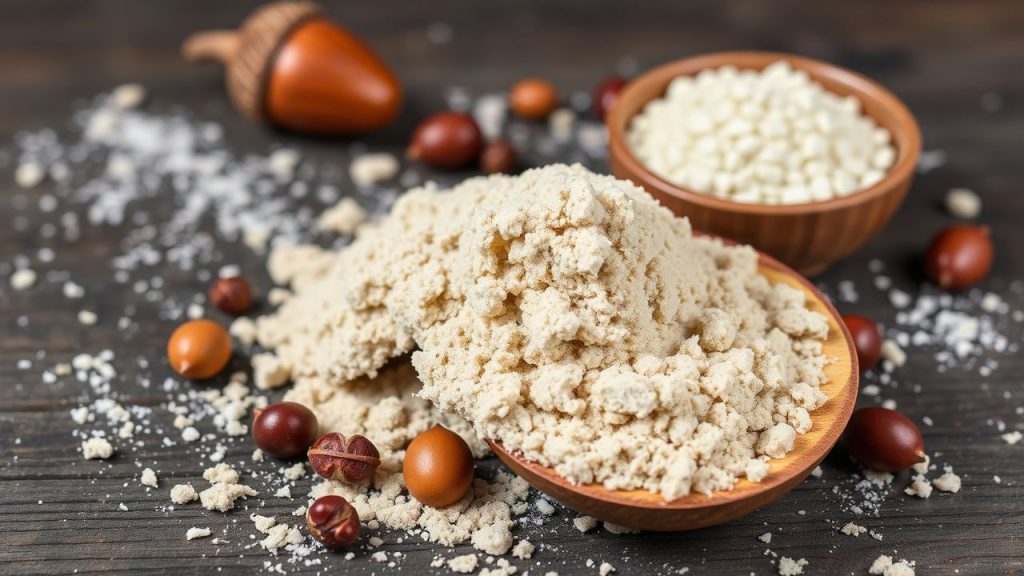
This short Q&A clarifies common questions about using acorn flour as a natural thickener. The answers focus on technique, texture, and safety so you can apply the method confidently.
Refer back to the instructions for exact timing and to the linked internal guides for making flour at home or exploring other thickeners.
Q: What makes acorn flour a unique thickening agent for stews?
A: Acorn flour contributes both binding properties and flavor. Its fiber matrix swells during simmering, producing body and a muted nutty sweetness that enhances savory dishes without a slick or overly glossy finish.
Q: How does acorn flour compare to wheat flour or cornstarch?
A: Unlike refined wheat flour or cornstarch, acorn flour thickens gradually and yields a more rustic mouthfeel. It lacks the clear, glossy gel that cornstarch gives and instead produces a hearty, balanced texture suitable for long-simmered preparations.
Q: Do I need to prepare acorn flour differently before using?
A: Yes. Use only leached or commercially processed acorn flour to avoid tannins. Toast the flour briefly to improve aroma and reduce clumping, and always whisk it with cold water when making a slurry for a lump-free finish.
Q: When during cooking should I add acorn flour?
A: Add acorn flour near the end of cooking, when ingredients are almost tender. This timing lets the flour hydrate and thicken without overcooking its delicate roasted notes.
Q: Can I use acorn flour in other recipes?
A: Absolutely. Acorn flour works in quick breads, pancakes, muffins, and sauces. Its binding qualities help in both baked goods and savory reductions when used in moderation.
The Conclusion
Acorn flour offers a dual benefit: functional thickening and a flavor upgrade. It integrates into stews to create stable body, subtle nuttiness, and a more natural mouthfeel than some refined thickeners.
By mastering toast and slurry techniques and by starting with small additions, you can reliably use acorn flour to elevate everyday stews. Explore the internal guides for flour preparation and complementary natural thickeners to expand your repertoire.
FAQ
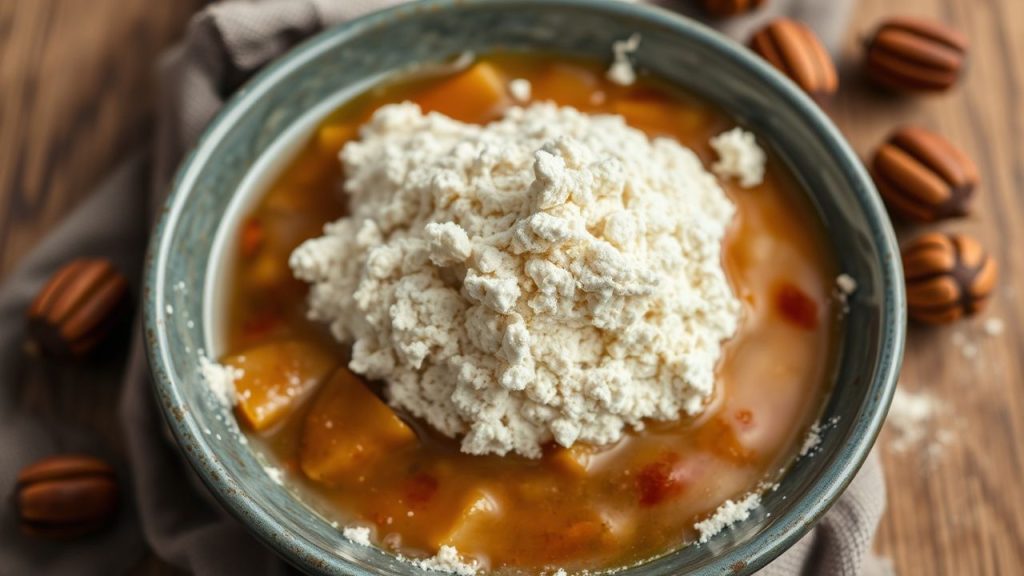
Below are concise, schema-ready questions and answers designed for quick reference and indexing. Each answer stays on topic and provides actionable guidance.
Is acorn flour gluten-free?
Yes. Acorn flour is naturally gluten-free because it derives from tree nuts rather than cereal grains. However, check labels if you need certified gluten-free processing to avoid cross-contamination.
How much acorn flour should I use to thicken one cup of liquid?
Start with 1 teaspoon of toasted acorn flour per cup of liquid, whisked into cold water as a slurry. Simmer and evaluate, then add in small increments until you reach desired consistency.
Can I substitute acorn flour for cornstarch in gravy?
Yes, but expect a different mouthfeel. Acorn flour gives a fuller, less glossy body than cornstarch. For a lighter finish, use a smaller amount and combine with a finer starch if desired.
Where can I buy reliable acorn flour?
Look for specialty stores, small-batch producers, or reputable online retailers that state leaching and processing methods. If you plan to make it yourself, consult the internal guide on making acorn flour for safe leaching procedures.
How long does stew thickened with acorn flour keep?
Store refrigerated in an airtight container for 3–4 days. Reheat gently with a splash of broth, stirring to return the stew to a silky consistency.
See also: acorn flour