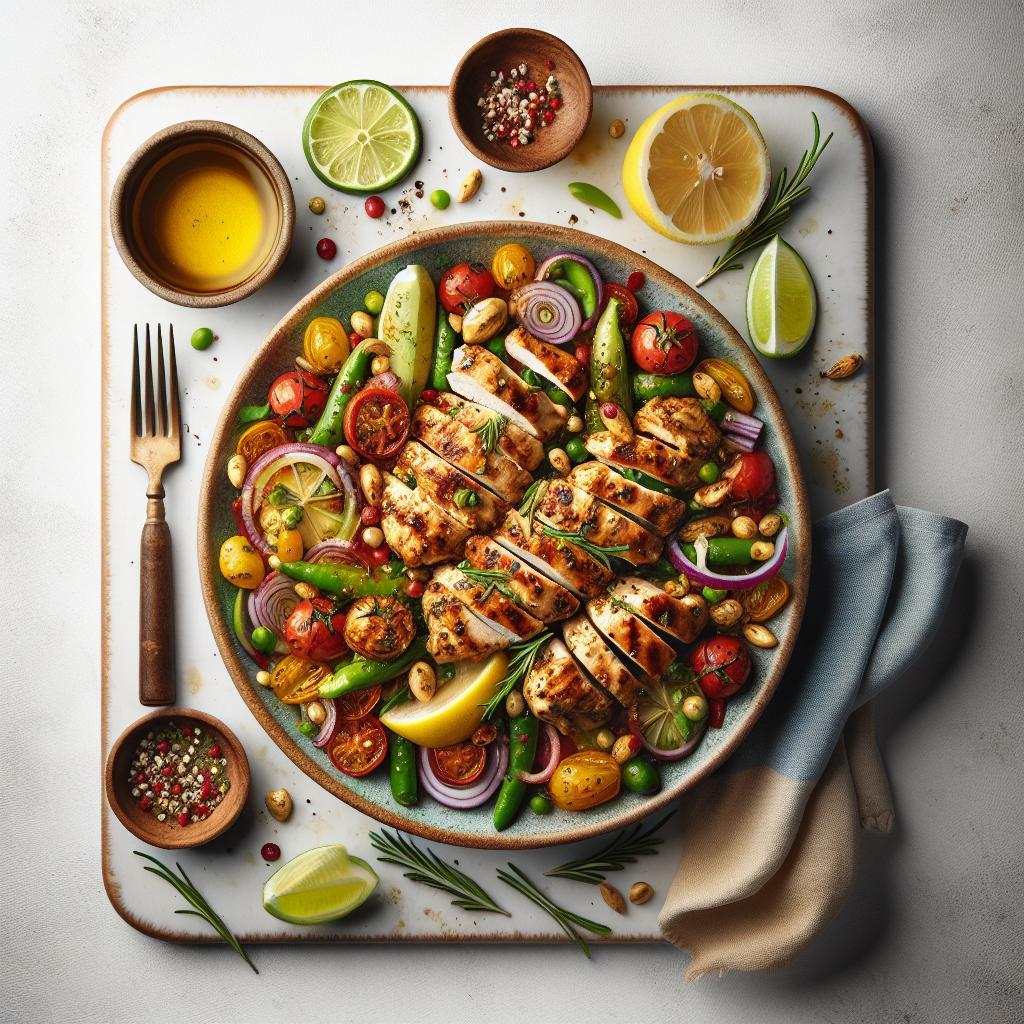

Unlock bold, bright flavor with a concise Mediterranean chicken marinade built for juicy results. This recipe blends lemon, olive oil, garlic, and robust herbs to turn plain chicken into a fragrant, savory main.
- Bright citrus and aromatics tenderize while adding high-impact flavor.
- Short prep, flexible cook methods—grill, roast, or sear with consistent success.
- Fresh herbs amplify depth but dried herbs work in a pinch at half volume.
Why this marinade works
The core technique uses acid, oil, salt, and aromatics to both flavor and tenderize the meat. Acid and oil act in tandem: acid slightly breaks down surface proteins while oil carries fat-soluble flavor compounds into the meat.
Moreover, combining aromatic herbs and spices with mechanical steps—mincing garlic, finely chopping oregano—releases volatile oils that infuse the chicken faster. For context on regional flavor traditions, see Mediterranean cuisine.
Prep and Cook Time
Preparation: 15 minutes. This includes whisking and prepping chicken for even coating.
Marinating: 2–4 hours recommended; overnight for maximum depth. Marinating longer than 24 hours can change texture due to acidity.
- Cooking: 20–30 minutes depending on method.
- Total active time: ~35–45 minutes excluding passive marinating.
Yield
This recipe serves 4 generously based on four boneless chicken breasts of ~1.5 lb total. Portions vary with appetite and side dishes.
Leftovers keep well refrigerated for 2–3 days and perform well in salads or wraps. Reheat gently to preserve juiciness and texture.
Difficulty Level
This recipe rates Easy and suits home cooks of any skill level. You need only basic knife work and a thermometer to achieve consistent outcomes.
Equipment options vary: grill, oven, or sauté pan each yield great results when you control time and temperature. Use a probe thermometer for accuracy.
Ingredients
Use high-quality staples for the best flavor transfer. Choose extra virgin olive oil for mouthfeel and fragrant herbs for aromatics.
Key Wikipedia references: olive oil and lemon profile the core taste drivers used here.
- 4 boneless, skinless chicken breasts (~1.5 lb)
- 1/3 cup extra virgin olive oil
- Juice of 2 large lemons (~1/4 cup)
- 3 cloves garlic, finely minced
- 2 tbsp fresh oregano, chopped (or 1 tbsp dried)
- 1 tbsp fresh rosemary, finely chopped
- 1 tsp smoked paprika
- 1/2 tsp ground cumin
- 1/2 tsp crushed red pepper flakes (adjust to heat preference)
- 1 tsp sea salt
- Freshly ground black pepper, to taste
- 1 tbsp honey (optional—balances acidity)
Instructions
Follow sequences to extract maximum flavor without overworking the meat. Measure, mix, then marinate to allow time for diffusion of flavors.
Plan ahead: allow 30 minutes post-refrigeration for chicken to come to room temperature before cooking. This step promotes even cooking and reduces overcooking risk.
- Combine marinade: Whisk olive oil, lemon juice, garlic, oregano, rosemary, smoked paprika, cumin, red pepper flakes, salt, pepper, and honey until emulsified.
- Marinate chicken: Place breasts in a resealable bag or shallow dish. Pour marinade over, ensuring full contact. Refrigerate 2–4 hours, or overnight for deeper penetration.
- Bring to temp: Remove from fridge 30 minutes before cooking so meat cooks evenly.
Grilling method
Preheat grill to medium-high and oil grates to prevent sticking. Grill breasts 6–7 minutes per side until internal temp reaches 165°F (74°C).
Close the lid to maintain even heat; use indirect heat if flare-ups char the exterior too fast. Let rest before slicing to retain juices.
Roasting or pan-searing
For oven roasting, preheat to 400°F (200°C) and bake 20–25 minutes, flipping halfway, until internal temperature hits 165°F (74°C). Use parchment or foil on a rimmed sheet to catch drips.
For pan-sear, heat a skillet over medium-high, add a little oil, and sear 4–6 minutes per side before finishing in the oven if needed. Check doneness with a probe thermometer.
Tips for Success: Mastering the Marinade and Cooking Process
Fresh herbs amplify brightness. Use fresh oregano and rosemary when possible; they release volatile oils that dried herbs cannot fully match.
If you must use dried herbs, use about half the quantity because drying concentrates flavor. Additionally, crush dried herbs in your palm to release aroma before adding them.
Balance acidity thoughtfully. Lemon tenderizes but can firm proteins if left too long; therefore, limit highly acidic contact to under 24 hours.
Substitute a splash of orange juice for sweeter citrus notes while preserving tenderizing action. Moreover, honey helps round acidity without making the marinade cloying.
Pairing Suggestions to Elevate Your Mediterranean Chicken Experience
Pair with bright, textural sides that echo the marinade’s freshness. A cucumber-tomato salad with olive oil and mint complements the main without overpowering it.
Serve grains like couscous or herbed quinoa for a neutral, absorbent base that captures juices and offers pleasing mouthfeel. Add a dollop of cooled yogurt sauce for contrast.
Tips for Achieving the Perfect Grilled or Roasted Finish
Control heat to achieve a caramelized crust without drying the interior. Medium-high direct heat sears; indirect heat finishes thick pieces evenly.
Turn the chicken only once when it releases easily from the grill. Additionally, rest meat for 5 minutes to redistribute juices and improve tenderness.
Nutritional Snapshot
This section gives a practical estimate for planning. Values reflect a 4 oz serving of cooked chicken with residual marinade.
| Nutrient | Per Serving (4 oz chicken + marinade) |
|---|---|
| Calories | 280 kcal |
| Protein | 35 g |
| Carbohydrates | 3 g |
| Fat | 14 g |

Serving, Storage, and Reheating
Serve warm with a squeeze of fresh lemon and a scatter of chopped fresh herbs for brightness. The citrus finish cuts through the olive oil for a lively bite.
Store cooked chicken in an airtight container in the fridge for up to 3 days. Reheat gently in a low oven or covered skillet to prevent drying and to keep the texture appealing.
Variations and Uses Beyond Chicken
This marinade adapts well to other proteins and vegetables. Try it on lamb chops, firm fish fillets, or skewered vegetables for vibrant results.
For plant-forward options, marinate thick slices of eggplant or portobello mushrooms to absorb citrus-herb flavors. Watch cook times closely because vegetables can overcook faster than meat.
Q&A
This Q&A answers common execution and flavor questions to ensure repeatable success. Use a thermometer and tasting to guide final seasoning.
Q: What makes this Mediterranean chicken marinade so special?
Answer: The formula balances acid, oil, salt, and aromatics to penetrate and flavor the meat efficiently. The combination of lemon, garlic, and fresh herbs creates layers of brightness and savory depth.
Q: How long should I marinate for maximum flavor?
Answer: A minimum of 2 hours develops noticeable flavor. Overnight (up to 12–18 hours) yields deeper infusion; avoid overexposure to acid beyond 24 hours to prevent textural changes.
Q: Can I use this marinade on fish or vegetables?
Answer: Yes. Use shorter marination for delicate proteins like fish—15–30 minutes is enough. Vegetables benefit from 30 minutes to 2 hours depending on density.
Q: What if I do not have fresh herbs?
Answer: Substitute dried herbs at roughly half the volume. Crush dried leaves between your palms to wake up oils before adding them to the mixture.
Q: How do I avoid flare-ups when grilling?
Answer: Trim excess fat and pat chicken dry before grilling to reduce dripping. Use a two-zone fire: direct high heat for searing, indirect for finishing thicker pieces.
Insights and Practical Conclusions
Adopt this marinade structure—acid, oil, aromatics, salt—and you gain a flexible template for many recipes. It scales easily and performs reliably across cooking methods.
Experiment with herb blends and citrus types to create signature variations while keeping technique constant. The methodical approach yields consistent, restaurant-quality results at home.
FAQ
Below are concise, schema-ready questions and answers for quick reference and indexing. Each answer gives an actionable takeaway.
How long can I marinate chicken safely?
Answer: Marinate up to 24 hours in the refrigerator. Beyond that, acidity can begin to alter texture and make meat firmer.
Should I discard the marinade after use?
Answer: Yes, discard any marinade that touched raw chicken. If you want to use it as a sauce, boil it vigorously for at least one minute to kill bacteria.
Can I freeze marinated chicken?
Answer: Yes. Freeze marinated chicken in a sealed bag for up to 3 months. Thaw in the refrigerator before bringing to room temperature for cooking.
What internal temperature ensures safe, juicy chicken?
Answer: Cook to an internal temperature of 165°F (74°C). Remove from heat slightly before target and rest so residual heat finishes the cook while preserving moisture.
Which herbs pair best with this marinade?
Answer: Oregano and rosemary provide classic Mediterranean notes; fresh parsley and mint make bright finishing touches. For more on oregano, see oregano.
See also: Mediterranean chicken