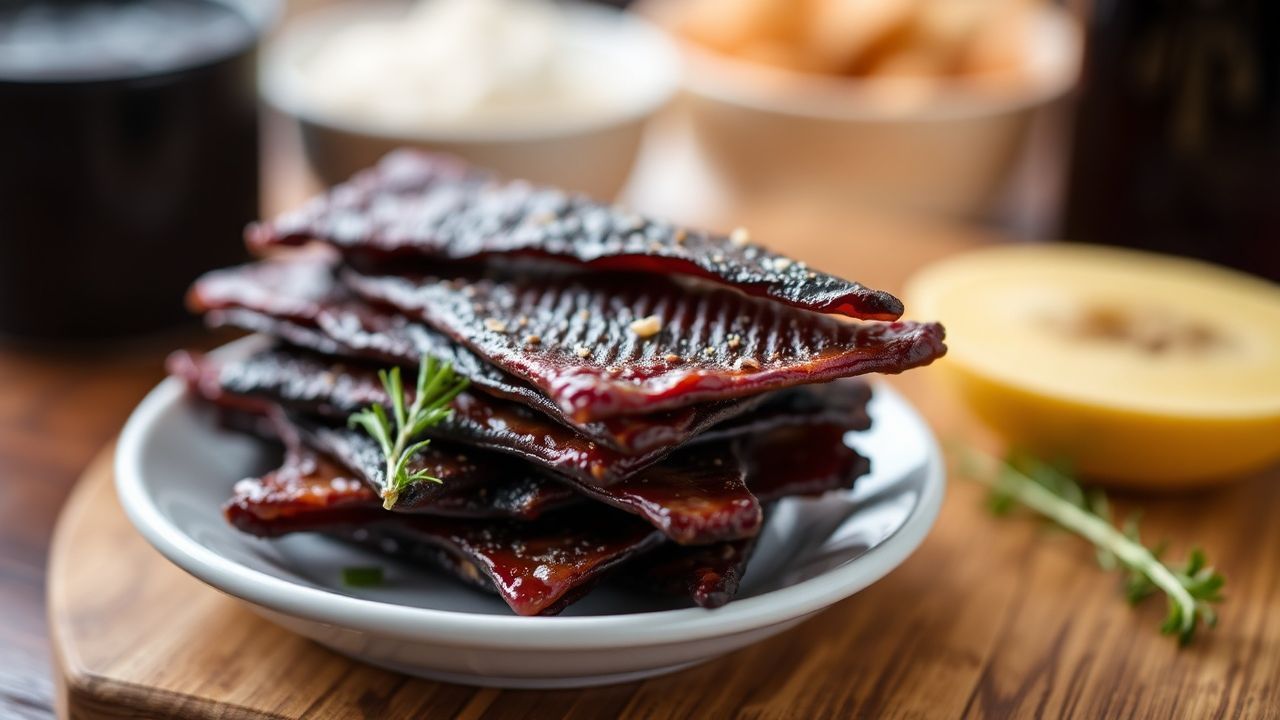

There is a deep satisfaction in crafting homemade jerky: concentrated protein, concentrated flavor, and a texture that rewards patience. The marinade defines the final product, building layers of umami, acid, and heat that transform simple strips of meat into memorable snacks. Jerky has a long cultural history and simple science behind preservation and flavor infusion; understanding both helps you design better marinades.
- Balance matters: salt, acid, sweet and aromatics create depth.
- Timing controls texture: marination length affects tenderness.
- Drying method shapes result: dehydrator versus oven changes mouthfeel.
- Store smart: cool, airtight storage preserves flavor and safety.
Prep and Cook Time
Preparation: about 15 minutes to mix and assemble; slicing time depends on chill and skill. Marination: standard range 8–12 hours for most recipes; lean proteins soak faster.
Dehydration/Cooking: allow 4–6 hours in a dehydrator at controlled temperature or slightly longer in an oven with steady airflow. Monitor texture: jerky should be dry and slightly pliable when finished.
Yield
This batch yields approximately 6 servings when using 1 lb of lean meat. Yield varies with cut and slice thickness; thin strips produce more edible pieces by weight.
Expect small weight loss from moisture removal—typically 40–60%—so plan portions accordingly if preparing snacks for a group. Use airtight packaging to maintain that yield over time.
Difficulty Level
Rated Medium: requires basic knife skills, ingredient balance and attention during drying. Anyone comfortable with simple cooking techniques can reliably produce high-quality jerky.
Tools needed are minimal: a sharp knife, mixing bowl, trays or racks, and either a food dehydrator or oven. Knowledge of safe drying temps and storage keeps results both tasty and shelf-stable.
Ingredients
Here is a go-to marinade that balances savory, sweet and acid. Use lean cuts like top round, eye of round or venison loin sliced thinly for best texture.
Substitutions work: gluten-free tamari for soy, maple for mirin, and citrus juice for rice vinegar if you want a brighter profile. Keep ingredient ratios consistent when scaling.
- 1/2 cup dark soy sauce — deep umami base
- 1/4 cup mirin or honey — gentle sweet balance
- 2 tbsp sesame oil — nutty aroma
- 1 tbsp fresh ginger, grated — bright, sharp heat
- 3 cloves garlic, minced — savory backbone
- 1 tbsp chili paste or sriracha — controlled heat
- 1 tbsp rice vinegar — acid to balance
- 2 sprigs fresh rosemary or thyme — herbal layer
- 1/2 tsp cracked black pepper — subtle warmth
- 1 lb lean beef or venison, thinly sliced — jerky base
Instructions
Combine all marinade ingredients in a medium bowl and whisk until homogeneous. Keep flavors balanced: salt first, then test sweetness and acid; you can always adjust one element at a time.
Pat meat slices dry with paper towels to help the marinade penetrate and to reduce surface water that slows drying. Submerge the slices fully in the marinade and refrigerate for 8–12 hours; avoid exceeding 24 hours to prevent a mushy texture.
Remove meat from marinade and shake off excess liquid before arranging in a single layer on dehydrator trays or wire racks for even air circulation. For controlled dehydration, follow proven food-drying temperatures and times: maintain about 71°C (160°F) for safety when cooking thinner pieces.
If using an oven, place racks on low heat with the door slightly ajar to allow moisture to escape; flip strips once for consistent dryness. Learn the science behind marination to refine timing for different proteins: marination explains how acids and enzymes affect flesh.
Drying Techniques & Equipment
Dehydrators offer consistent airflow and temperature control, producing repeatable results with less hands-on attention. Ovens work in a pinch but often require a lower thermometer reading and occasional monitoring to avoid overcooking.
Airflow matters: avoid overlapping strips and rotate trays if your device has hot spots. Understanding food drying fundamentals helps you choose settings that preserve flavor while reducing water activity.
Chef’s Notes
Experiment with soy sauce types: light soy yields saltier profiles; tamari produces a gluten-free, richer umami note. For sweeter marinades, try maple syrup or brown sugar and adjust acid to keep balance.
Herbs like oregano or sage pair well with game meats such as venison; smoked paprika or liquid smoke adds a classic barbecue tone. Slice meat against the grain for tender jerky and with the grain if you want more chew.
Serving Suggestions
Serve jerky as a standalone, high-protein snack or chop it into salads and grain bowls for concentrated savory bites. Small garnishes such as toasted sesame seeds and chopped fresh herbs lift presentation and aroma.
Pair with pickled vegetables or crisp cucumber slices to cut richness and refresh the palate. For travel or hiking, vacuum-seal portions to maintain texture and flavor longer.
Nutritional Info
Per serving estimates: roughly 120 kcal, 22 g protein, 4 g carbs and 3 g fat for a lean-beef base. Nutritional values change with cuts, marinade sugars and added oils.
If you reduce sodium, dilute the soy element with low-sodium broth or water and rebalance sweetness and acid. Keep a nutrition tracker handy when scaling recipes for specific dietary goals.
| Nutritional Info (per serving) | Calories | Protein | Carbs | Fat |
|---|---|---|---|---|
| Homemade Savory Jerky | 120 kcal | 22 g | 4 g | 3 g |
Storage and Shelf Life
Cool jerky completely before sealing in airtight containers or vacuum bags. Properly dried and stored jerky keeps for about two weeks at room temperature, longer if refrigerated or frozen.
For extended storage, vacuum sealing and freezing minimize oxidation and flavor loss. Label packages with date and protein type to track freshness and rotate your stock efficiently.
FAQ
Why make my own jerky marinade instead of buying pre-made?
Homemade marinades let you tailor salt, acid and heat precisely and avoid preservatives or additives found in some commercial blends. Custom blending also allows you to craft regional or personalized flavor signatures that pre-made sauces rarely match.
What are essential ingredients for classic beef jerky?
Core elements include a salty umami source like soy or tamari, a sweetener such as brown sugar or honey, aromatics like garlic and onion, and black pepper for bite. Complementary items like Worcestershire, smoked paprika or citrus adjust depth and tone.
Can I use these marinades on non-beef proteins?
Yes—turkey, pork, venison and even firm tofu accept the same basic principles, though marination times vary with lean/fat content. Leaner proteins often need shorter marination to avoid excess softening while still achieving flavor penetration.
How long should I marinate jerky for optimal flavor?
Generally, 6–12 hours provides a strong flavor infusion for most cuts; 4 hours can suffice in a pinch. Avoid exceeding 24 hours because prolonged exposure to acids and enzymes can degrade texture and make the jerky overly soft.
How can I add a spicy or unique twist to my marinades?
Layer heat sources like cayenne, chipotle in adobo, or fresh chiles with smoky elements for complexity. Uncommon additions like espresso, miso paste, or bourbon bring surprising depth when balanced carefully with sweetness and acid.
Wrapping Up
Mastering jerky starts with confident decisions about balance, timing and drying. Use consistent ratios and document each batch to replicate successes and learn from variations.
With practice you will hone profiles—from sweet-and-savory to intensely smoky or fiery—matching texture and flavor to your taste. Happy jerky making: refine, record and repeat for the best results.
See also: Jerky Marinade