
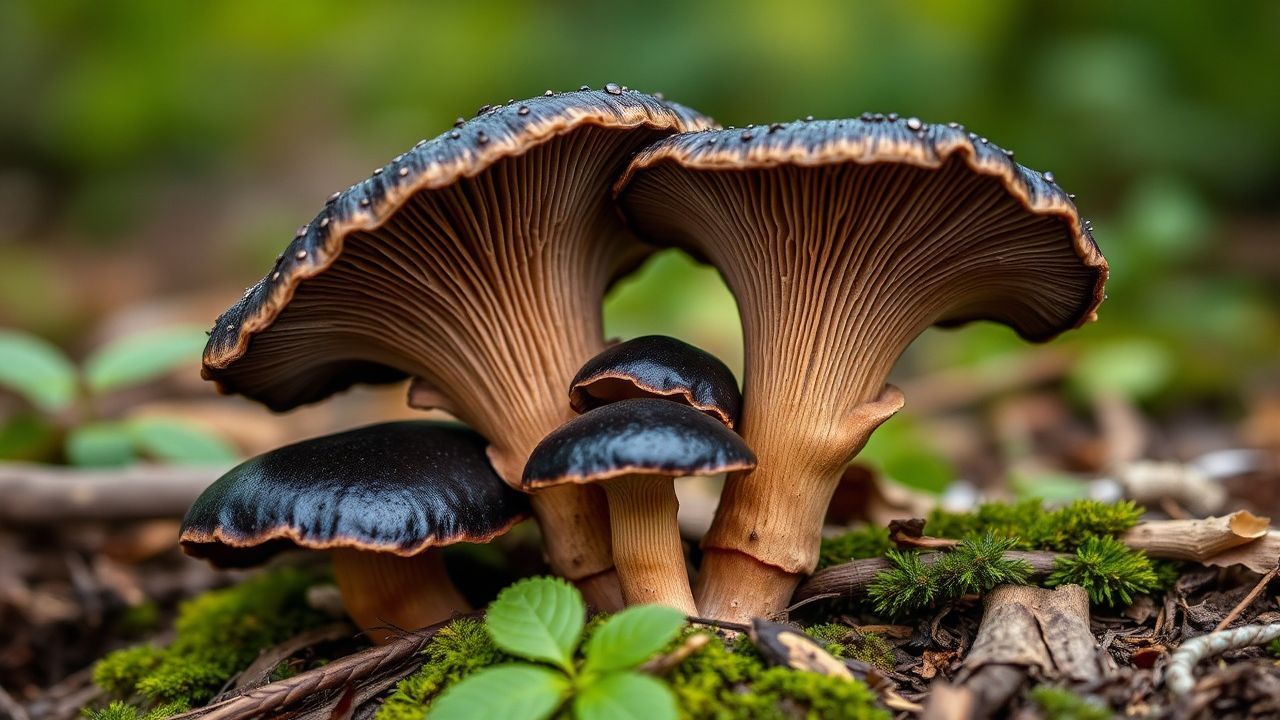

Unlock Nature’s Treasure: A Guide to Foraging Black Trumpets
Deep in mossy woodlands, the black trumpet mushroom rewards patient foragers with a concentrated smoky flavor and delicate texture. These fungi demand careful identification, gentle handling, and culinary respect to translate forest finds into memorable dishes.
- Seasonality: Late summer through autumn is prime for black trumpets.
- Identification: Funnel-shaped, hollow stem, smooth folds rather than true gills.
- Preservation: Drying preserves intense flavor; keep rehydration liquid as broth.
Prep and Cook Time
Preparation: 15 minutes. Cooking: 20 minutes. These mushrooms cook quickly; mise en place preserves texture and aroma.
When using dried black trumpets, allow extra rehydration time. Rehydrate in warm water for about 20 minutes and reserve soaking liquid for sauces.
Yield and Difficulty
Yield: Serves 4 as a flavorful accompaniment when using 2 cups fresh mushrooms. Adjust quantities for intensity when using dried product.
Difficulty: Medium. Foragers need intermediate identification skills; cooks should apply gentle heat to protect delicate tissue and volatile aroma compounds.
Ingredients
Core ingredients focus on fat, mild aromatics, and a splash of acid or wine to brighten the umami-rich mushroom note. Use unsalted butter and a neutral oil for controlled browning.
Typical list: 2 cups fresh black trumpets, 3 tablespoons butter, 1 tablespoon olive oil, 2 cloves garlic, 1 shallot, 1 tablespoon thyme, splash of white wine or broth, salt, pepper, and parsley for garnish.
Instructions
1. Clean. Brush debris with a soft brush or wipe with a damp cloth; avoid heavy rinsing to keep texture intact. Trim stems and discard rotten pieces.
2. Sauté. Heat butter and oil on medium until foaming, then sweat shallot and garlic 2–3 minutes. Add mushrooms and cook 5–7 minutes, stirring gently to avoid crushing the fragile caps.
3. Deglaze and finish. Add wine or broth and scrape caramelized bits; reduce 3–5 minutes. Taste and adjust salt and pepper, then remove from heat and garnish with parsley.
Tips for Success
Work fast once mushrooms hit the pan; they release moisture and concentrate flavor. High heat can dry them out or toughen tissue, so moderate heat and short cook time preserve velvety mouthfeel.
Store fresh black trumpets in a paper bag in the refrigerator for up to three days. Avoid plastic bags that trap moisture and speed spoilage.
Foraging: Identification and Habitat
Black trumpets (Craterellus cornucopioides) appear as dark, funnel-shaped fruiting bodies that blend stem and cap into a single hollow structure. Use a reliable species reference for confirmation; this species page offers morphology details: Craterellus cornucopioides on Wikipedia.
They prefer leaf litter and moss beneath deciduous trees such as oak and beech, often forming dispersed clusters rather than tight, predictable rings. For an overview of edible wild food gathering methods, see the broader context on foraging practices.
Identification cues
Look for a charcoal to brown-black color, a trumpet-like funnel, and smooth, wrinkled hymenium instead of true gills. Absence of true gills helps distinguish black trumpets from some lookalikes documented on general mushroom references: mushroom morphology.
Smell also helps: black trumpets give a smoky, fruity umami scent when crushed or cooked. When in doubt, defer harvest and consult an experienced local identifier.
Sustainable Foraging Practices
Responsible collection protects future crops and maintains forest health. Cut fruiting bodies at the base rather than uprooting to minimize mycelial disturbance and preserve the underground network: mycelium biology.
Take only what you will use and leave small or immature specimens to mature and release spores. Tread lightly, avoid compacting soil, and keep group foraging within local regulations and landowner permissions.
Serving Suggestions and Pairings
Sautéed black trumpets complement roasted meats, fold into risottos, or finish scrambled eggs for an elevated brunch. Their intense flavor pairs well with butter, cream, and bright acids like lemon or a splash of white wine.
For wine pairing, select a crisp white such as Sauvignon Blanc to lift earthy notes, or a light Pinot Noir if you prefer a red that echoes mushroom umami. Use preserved trumpets in sauces where concentrated flavor can shine.
Preservation and Storage
Drying is the most reliable long-term method. Spread mushrooms thinly on racks away from direct sunlight; when fully dry, store in airtight jars in a cool, dark place to retain aroma for months.
To rehydrate, place dried pieces in warm water for 20 minutes, reserve the soaking liquid for soup or sauce, and strain it to remove sediment. Refrigerate fresh mushrooms in paper, not plastic, to minimize spoilage.
Nutritional Snapshot
Black trumpets provide low-calorie umami with modest protein and fiber. They add flavor depth without heavy fats when used judiciously in dishes.
Example per-serving values (approximate):
| Nutritional Value (per serving) | Amount |
|---|---|
| Calories | 120 kcal |
| Protein | 3 g |
| Carbohydrates | 6 g |
| Fat | 9 g |
FAQ
What are black trumpets?
Black trumpets are funnel-shaped edible fungi noted for smoky, fruity umami. The species Craterellus cornucopioides is widely documented and prized by chefs and foragers alike.
When is the best time to forage them?
Late summer through autumn, especially after rain, produces the most abundant fruiting. Early morning surveys reveal moist specimens that are easier to spot in leaf litter.
How can beginners identify them safely?
Focus on shape, hollow body, and absence of true gills. Cross-check multiple features and use local expert confirmation when learning.
How should I preserve a harvest?
Drying yields concentrated flavor and long shelf life. Store in airtight containers and rehydrate as needed, keeping soaking liquid for added flavor.
Are there conservation rules to follow?
Yes. Collect sparingly, avoid damaging mycelium, and follow local regulations. Sustainable harvest preserves the population and the forest ecosystem.
See also: black trumpets