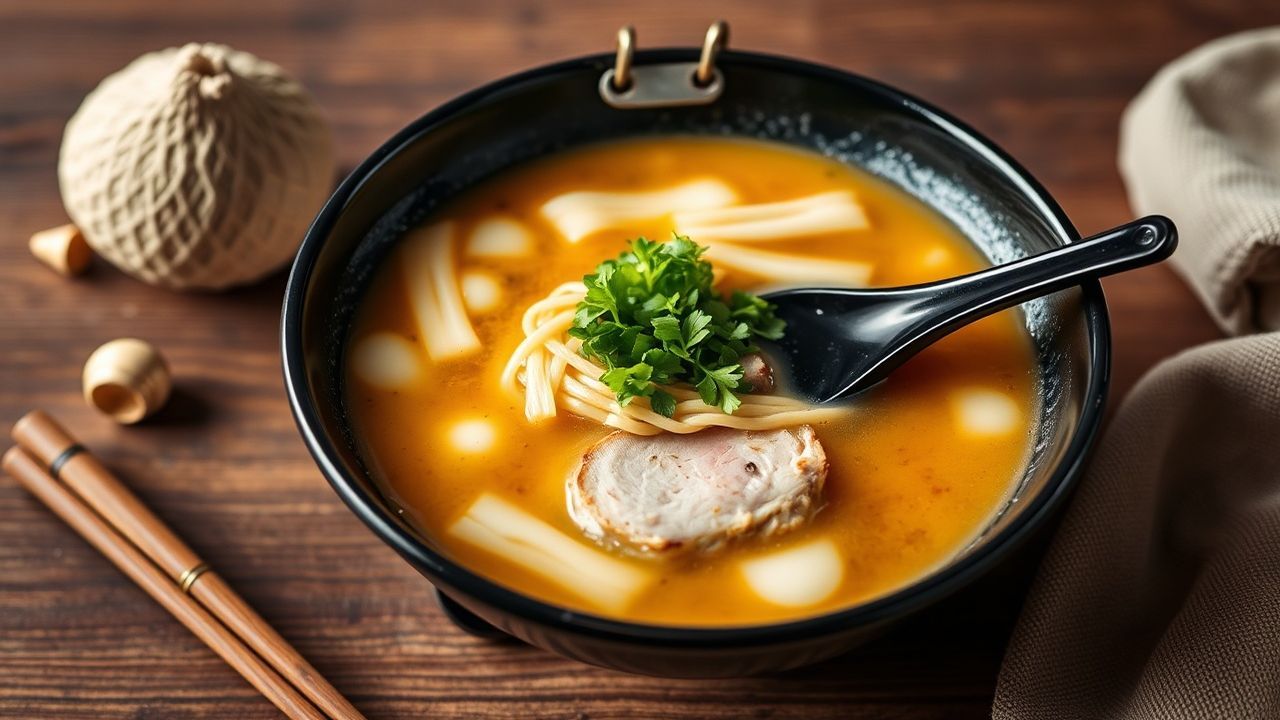

Unlock Rich Flavor by mastering the heart of authentic Japanese Tonkotsu ramen — the deeply savory pork-bone broth that transforms every bowl into an unforgettable experience. This broth comes from long simmering bones, aromatics, and careful technique to deliver a silky mouthfeel and layered umami.
- Deep collagen extraction yields the creamy body of true Tonkotsu.
- Rolling boil technique emulsifies marrow into the broth for opacity and richness.
- Simple aromatics balance and lift the pork flavor without masking it.
- Make ahead — the broth often tastes better after one day of rest.
At a Glance: Prep and Cook Time
Preparation: 30 minutes. Cook Time: 10–18 hours of active simmering for best extraction. These ranges cover traditional home methods and more patient, extended cooks.
Plan for active skimming and periodic checks during the first hours. A steady, rolling simmer requires attention but rewards you with a silky, opaque broth that carries toppings well.
Ingredients & Tools
Use quality pork bones: neck, femur, and trotters provide marrow, cartilage, and connective tissue for gelatin and mouthfeel. Aromatics include onion, garlic, and ginger; optional dried kombu and shiitake add umami layers.
Essential tools: a wide, heavy pot to encourage contact and agitation, a fine-mesh sieve or cheesecloth for final straining, and a skimmer or ladle for surface scum removal. Cold water and a sturdy heat source help maintain a consistent boil.
Complete Ingredient List
5 lbs pork leg bones (with marrow and knuckle), 2 lbs pork trotters, onion, whole garlic head, thumb-size ginger, green onions, dried shiitake (optional), vegetable oil, 12 cups cold water, sake, mirin (optional), and salt.
Swap in extra trotters if you want more gelatin, or add a strip of dried kombu near the end for a sea-like umami. For background on gelatin and collagen chemistry, review collagen and gelatin basics.
Step-by-Step: Building the Broth
1. Blanch bones: cover bones with cold water, bring to a vigorous boil for 8–12 minutes, then drain and rinse to remove surface impurities. This initial blanch keeps impurities from overcooking into the final broth.
2. Sear aromatics: lightly brown onion, garlic, and ginger in a little oil to caramelize sugars and add a rounded savory note. Use a heavy skillet and medium heat for 4–6 minutes until edges color.
3. Combine and start the boil: transfer cleaned bones, seared aromatics, green onions, and optional dried shiitake to a large pot. Add cold water and sake/mirin. Bring to a vigorous boil, then maintain a rolling simmer.
4. Maintain the simmer: keep the pot at a steady rolling boil for 10–12 hours for most home cooks; you can extend to 18 hours for extra breakdown of connective tissue. Skim surface foam every 20–30 minutes for the first 2 hours to clarify the broth.
5. Finish and strain: when the broth reads milky white and has a velvety texture, turn off heat and strain through a fine sieve or cheesecloth. Taste and season with salt. Chill and remove excess fat if you prefer a leaner bowl.
For cultural context on ramen styles and Tonkotsu origins, see Tonkotsu ramen history and the broader ramen overview.
Practical Timing and Heat Control
Use medium-high heat to achieve a consistent rolling boil. Avoid a gentle simmer; Tonkotsu relies on vigorous agitation to emulsify fat and collagen into the liquid. Adjust heat to keep motion without violent splatter.
Mark time in stages: intense skimming period (first 2 hours), steady extraction window (hours 2–8), and long finish (hour 8+). Taste periodically to monitor mouthfeel and adjust final seasoning only after straining.
Tips for Success
Bone selection matters: marrow-rich sections and knuckles give you both flavor and body. Ask your butcher for trotters and neck bones if you want guaranteed gelatin.
Use cold, filtered water to start — it slows early extraction of proteins that cloud the broth. Cold starts also help draw marrow out as the water heats through.
Skimming early prevents persistent scum from mixing into the broth. Use a shallow ladle with a lip to remove foam without losing too much liquid each time.
To reduce surface fat, chill the broth overnight and remove the hardened fat layer; reheat gently before serving. This step allows you to control richness without losing gelatin content.
For additional umami, add kombu for the last 20–30 minutes (remove before it dissolves). For a deeper earthy tone, a single dried shiitake during the simmer helps without dominating the pork profile.
Serving Suggestions
Serve the Tonkotsu base over springy alkaline ramen noodles with sliced chashu, soft-boiled marinated eggs, and thinly sliced green onions. A drizzle of garlic oil or a small spoon of chili paste adds aromatic contrast.
Experiment with texture and brightness: pickled ginger, bamboo shoots, and toasted sesame add balance. For noodle-making guidance, see our internal guide how to make ramen noodles. For topping ideas, check ramen toppings guide.
Nutritional Snapshot
Per serving (approximate): 320 kcal, 25 g protein, 4 g carbs, 24 g fat. Values will shift based on bone-to-water ratio and how much fat you remove during chilling.
Track portions and adjust salt late in the process. The concentrated broth can be diluted for lighter bowls or saved in smaller containers for quicker reheating and portion control.
Q&A
This section answers common questions from home cooks exploring Tonkotsu technique and troubleshooting.
Each answer focuses on practical steps and common variables so you can replicate results at home with predictable outcomes.
What creates the creamy, milky appearance?
The milky look comes from emulsified fat and microscopic particles of collagen and marrow that suspend in the liquid under a rolling boil. This physical suspension yields the classic opaque color and silky mouthfeel.
For scientific background on taste and mouthfeel, consult the umami explanation. That savory taste complements the broth’s texture for full-bodied flavor.
How long should I boil bones for true Tonkotsu?
A vigorous 10–12 hours will produce excellent results for most home cooks. Extended cooks up to 18 hours further break down collagen and extract more marrow for deeper body.
Record your times and bone types so you can reproduce the same texture next batch. Temperature consistency matters more than absolute time.
Can I make Tonkotsu without trotters?
You can, but trotters supply dense collagen that turns to gelatin and creates the signature mouthfeel. Use more knuckle or neck bones to compensate if trotters are unavailable.
If you want a vegetarian-style umami boost, add kombu near the end and shiitake during simmer, though the result will not match pork-based Tonkotsu in body.
How should I store and reheat the broth?
Cool quickly, refrigerate for up to 3 days, or freeze in portions for months. Remove hardened fat after chilling if you prefer a lighter bowl, then reheat gently to preserve gelatin structure.
Label containers with date and bone ratio. Reheat slowly to avoid breaking emulsions too aggressively and losing silky texture.
Final Notes
Mastering Tonkotsu is a skill built on technique, patience, and consistent choices in bones and heat control. Keep a simple log of bone types, times, and the final mouthfeel to refine your method over successive batches.
Use internal guides for noodles and toppings, refer to the linked Wikipedia resources for technical background, and practice a few batches to lock in a reliable rhythm. Your kitchen will yield authentic, restaurant-quality Tonkotsu with repeated, mindful efforts.
| Nutrient | Per Serving (Approx.) |
|---|---|
| Calories | 320 kcal |
| Protein | 25 g |
| Carbohydrates | 4 g |
| Fat | 24 g |
See also: Tonkotsu