
The right jerky temperature makes the difference between leathery, unsafe meat and tender, shelf-stable jerky that holds flavor. Control temperature to manage moisture removal, texture, and pathogen reduction while you dehydrate.
- Key takeaways: Dry jerky within a safe jerky temperature window of 145–160°F to balance tenderness and microbial control.
- Timing matters: Expect 4–8 hours of dehydration depending on slice thickness and equipment; higher jerky temperature shortens time.
- Prep first: Marinate, preheat, and arrange slices for consistent airflow to avoid uneven drying.
- Safety step: If your dehydrator cannot reach 160°F, pre-cook meat to 160°F before drying to reduce risk.
Why Jerky Temperature Matters
Heat drives two parallel processes: water removal and pathogen inactivation. A controlled jerky temperature dries meat surface and interior at a pace that prevents case hardening while reducing bacterial load.
Temperature also affects muscle proteins. Too-high jerky temperature tightens proteins and produces a brittle exterior that can trap moisture, while too-low settings extend drying and increase spoilage risk. For background on drying science, see food drying.
At-a-Glance Jerky Temperature Targets
Most home and commercial protocols target a jerky temperature range of 145–160°F (63–71°C). That span balances tenderness with reliable pathogen control when combined with adequate time and airflow.
For safety, many authorities recommend that beef reach an internal 160°F during or before dehydration to inactivate common pathogens. Read summaries on product categories at jerky.
Prep and Cook Time
Preparation prioritizes uniform slices. Cut meat about 1/8 inch thick and refrigerate briefly for cleaner slices so the jerky temperature affects each piece evenly during drying.
Marinate 6–12 hours so salt and acid penetrate muscle fibers. Dehydration then typically runs 4–8 hours; higher jerky temperature shortens that window but requires monitoring to avoid overdrying.
- Preparation Time: ~15 minutes (plus slicing and trimming)
- Marinating Time: 6–12 hours
- Dehydrating Time: 4–8 hours
Yield and Difficulty
Expect roughly 6–8 servings from 2 pounds of raw lean meat; actual yield depends on moisture loss and trim. Lean cuts last longer because fat encourages rancidity during storage.
Skill level is intermediate. The process demands attention to jerky temperature, slice uniformity, and periodic checks. A beginner who records variables can achieve consistent results quickly.
Ingredients
Choose lean cuts such as top round, eye of round, or sirloin. Trim visible fat and slice against the grain for a more tender bite; lean meat helps control rancidity and shelf life.
Core marinade components include salt (soy sauce or salt), acid (vinegar or citrus), sweetener (brown sugar), and aromatics (garlic, onion, smoked paprika). If you follow cured jerky techniques, consult curing overviews at curing.
- 2 lb lean beef or venison, thinly sliced against the grain
- 1/4 cup low-sodium soy sauce
- 2 tbsp Worcestershire sauce
- 1 tbsp brown sugar, 1 tsp smoked paprika, 1 tsp black pepper
- 1/2 tsp garlic powder, 1/2 tsp onion powder, optional liquid smoke
Instructions
Marinate meat in a sealed container or bag until flavors penetrate and salt begins to affect moisture movement. Keep the marinated meat refrigerated so bacteria growth stays minimal before drying.
Pat slices dry, then arrange in a single layer with at least 1/2-inch spacing for airflow. Preheat your dehydrator or oven so the product reaches the target jerky temperature quickly when drying begins.
Step-by-step Dehydration
Marinate: Combine ingredients, add meat, toss to coat, and refrigerate 6–12 hours. Cold marinating limits bacterial activity while salt and acid start to affect texture.
Pat dry & arrange: Remove meat, blot excess liquid, and place on trays or wire racks in a single layer. Proper spacing improves airflow and keeps the jerky temperature uniform across strips.
Execution
Preheat: Preheat the dehydrator to the chosen target (many cooks use 160°F for a one-step safety point). If you prefer lower final texture, choose 145–155°F and extend time.
Dry: Dehydrate 4–8 hours, flipping halfway for even drying. Start checking after 4 hours and then every 20–30 minutes as the product nears the expected doneness.
Test and Store
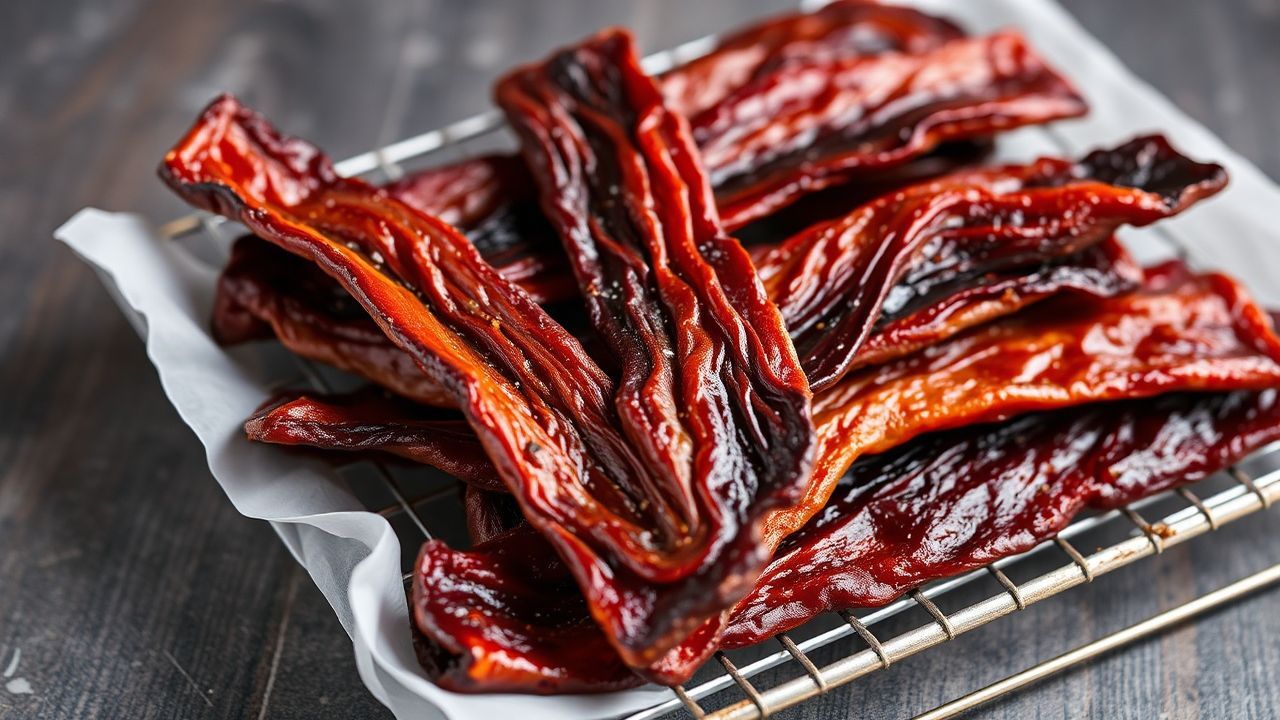
Test doneness: Proper jerky bends and cracks without snapping; the interior should show no wetness. Use a calibrated probe thermometer when verifying finished temperature of thicker pieces.
Store: Cool fully before sealing in airtight containers. Refrigerate or freeze for long-term storage to limit rancidity and maintain quality.
Jerky Temperature Details and Equipment Tips
Dehydrators deliver steady airflow and controlled heat; set them to jerky temperature values of 145–160°F for reliable results. If a dehydrator cannot reach 160°F, pre-cook slices in a hot oven to 160°F, then finish drying.
Ovens can work if you maintain airflow (prop the door) and monitor with a probe thermometer. Avoid temperatures above 160°F to prevent a dry exterior that traps moisture inside.
Thermometers and Accuracy
Use a calibrated probe thermometer to verify internal temperature during preheating or finishing steps. Accurate readings reduce under-processing and improve reproducibility from batch to batch.
Check multiple spots because thin strips heat quickly and unevenly if they touch or stack. An accurate method reduces guesswork and improves every batch.
Lean meat and careful trimming extend shelf life and flavor clarity. Keep a log of temperature, time, and slice thickness so you can replicate successful batches.
After drying, cool jerky at room temperature no more than two hours before packaging. Use airtight containers or vacuum bags and consider refrigeration for longer storage life.
Tips for Success
Section meat across the grain for tenderness and slice uniformly to 1/8 inch when possible. Chilled meat slices cut cleaner and dry more predictably at a given jerky temperature.
Monitor the first batch closely and adjust only one variable at a time: time, temperature, or slice thickness. Small changes produce measurable differences in chew and drying time.
Common Problems and Fixes
If jerky ends up brittle, you likely used too-high a jerky temperature or over-dried the batch. Reduce temperature by 5–10°F and shorten the final drying period on the next attempt.
If pieces stay moist in the center, increase airflow, spread slices further apart, or confirm that the dehydrator actually holds the set jerky temperature. Thicker slices always need more time.
Serving Suggestions
Serve jerky as a high-protein snack alongside cheese, nuts, or dried fruit for balance. Cut into bite-size pieces for travel packs or grazing boards.
Add smoked paprika or liquid smoke for smoky notes, or run a short cold-smoking cycle before drying. For background on smoking as a culinary technique, consult smoking (cooking).
Safety and Storage
Food safety requires either reaching 160°F in the product or starting with meat heated to that level before drying. Those measures reduce the risk of pathogens such as Salmonella and E. coli; read more at food safety.
After drying, cool jerky quickly and package in airtight containers or vacuum bags. Store at room temperature for short-term use, refrigerate for weeks, or freeze for months to maintain quality.
Internal Resources
For recipe ideas and flavor templates, see our internal jerky recipe collection at CookHarvest jerky recipes. These recipes include tested marinades and time/temperature notes for home dehydrators.
To choose the right equipment, read our dehydrator selection guide at Dehydrator buying guide. The guide covers airflow patterns, wattage, and temperature stability important to consistent jerky temperature control.
Final Notes
Mastering jerky temperature and timing delivers repeatable jerky with controlled texture and improved safety. Keep records, adjust gradually, and trust test bites to dial in your preferred chew.
When in doubt, apply a preheat to 160°F or follow curing techniques recommended in established cured-meat practices. Conservative processing protects quality and shopper trust.
FAQ
What exact temperature should I set my dehydrator to?
Set a dehydrator between 145°F and 160°F. Lower temps dry more slowly and preserve tenderness, while upper temps shorten time and improve pathogen kill when maintained consistently.
If you prefer a single safety step, preheat slices to 160°F before drying; otherwise maintain 155–160°F for faster, safer results.
Can I use my oven instead of a dehydrator?
Yes, ovens work if you maintain airflow and monitor temperature closely. Prop the door and use a probe thermometer to mimic dehydrator conditions.
When using an oven, confirm internal slice temperature and avoid high heat spikes that produce an over-dry surface and under-dried interior.
How do I test jerky for doneness?
Proper jerky bends and cracks without snapping cleanly. Break a piece; the interior should look dry and not wet or cool to the touch.
Use texture and visual cues; for thicker strips, verify with a probe thermometer to ensure safety and consistent results.
Is preheating required for safety?
If your dehydrator cannot reach 160°F, preheat meat in an oven or skillet to at least 160°F before drying. This step reduces microbial risk during slower drying phases.
Preheating also shortens overall drying time and produces more consistent texture when finishing at lower dehydrator temperatures.
How long will homemade jerky keep?
Stored in airtight containers at room temperature, expect up to two weeks for best quality. Refrigerate to extend life to several weeks, and freeze for months.
Lean meat and minimal residual fat prolong shelf life. Vacuum sealing and refrigeration produce the longest consistent quality for homemade jerky.
See also: jerky temperature