
Beneath the forest canopy a hidden world of fungi waits for careful observers. Mushrooms present a compact set of visible and sensory clues that, taken together, allow accurate identification and safer foraging.
- At a glance: Build a concise observation routine for reliable Mushroom ID.
- Combine characters: Use cap, gills, stem, spore print and habitat together.
- Prioritize verification: Cross-check with local experts and reference guides.
- Field kit: Carry a ruler, loupe, notebook and two-toned paper for spore prints.
Introduction: Why a structured approach improves Mushroom ID
Identification succeeds when you replace guesswork with repeatable observation. A methodical routine reduces misidentification and speeds learning for anyone practicing Mushroom ID.
Fungi show consistent anatomical features shaped by evolution and ecology. Recognizing those features creates dependable signposts that help narrow candidate species quickly during field work.
Key Features to Observe
To achieve reliable Mushroom ID you must examine multiple, independent characters. Relying on a single trait risks error; a combined profile narrows species with far greater confidence.
Below are the primary characters professional mycologists and experienced foragers use while identifying specimens in the field and in the lab. Each entry links to background material for deeper study.
Cap (Pileus)
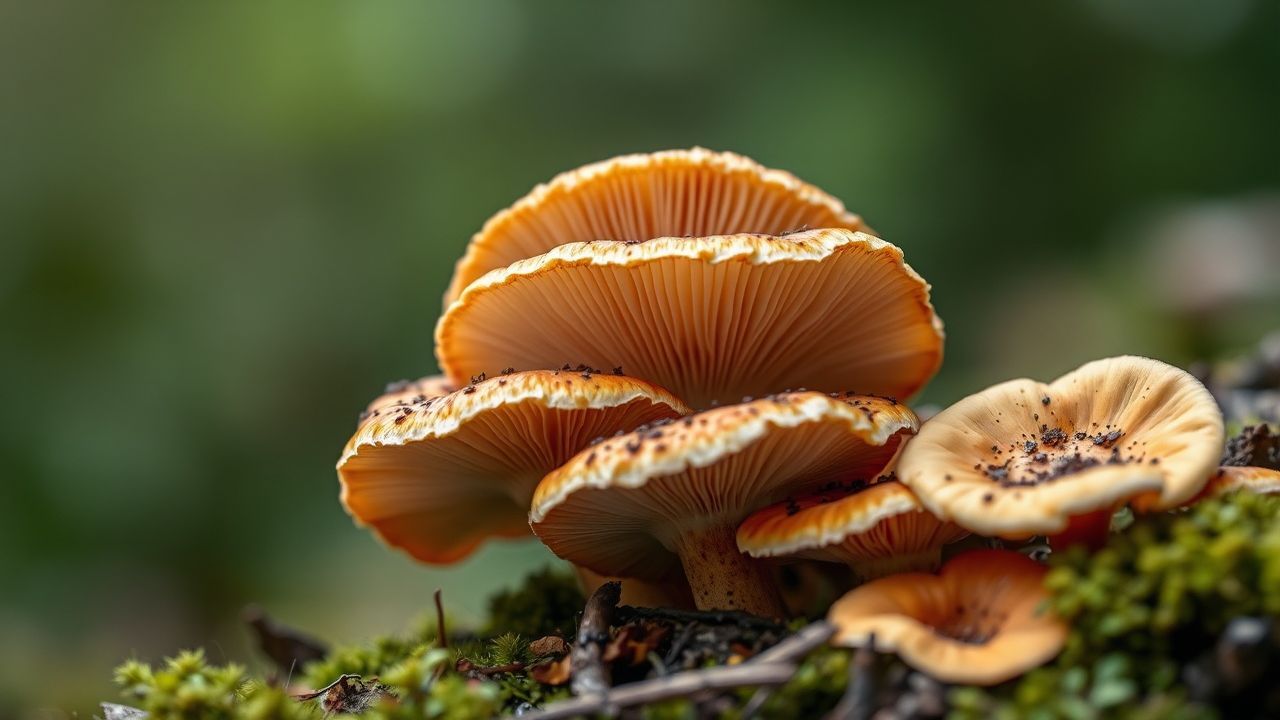
The cap gives immediate visual cues for Mushroom ID: shape, margin behavior and surface texture matter. Note whether the surface is smooth, scaly, sticky, or fibrillose and how color shifts with age.
Record how the cap changes over time; many genera show predictable progression such as a conical cap that flattens with maturity. These ontogenetic shifts are diagnostic when combined with other characters.
Gills or Pores (Lamellae)
Gills reveal attachment and spacing: free, adnate, or decurrent describes how gills meet the stem and often separates genera. Observe whether gills fork or cross; that detail can narrow options rapidly.
Note gill color and bruising reactions as spores mature; gill color often signals broad spore-color groups. For structural background see lamellae (gills).
Stem (Stipe)
Measure stem length and thickness for accurate Mushroom ID. Check for surface features: rings (annulus), skirt remnants, bulbous base or a volva; these are strong genus-level signals.
Break stems to inspect the context tissue—solid, stuffed, or hollow—and note any latex or colored exudate after cutting. These reactions help separate lookalike species.
Spore Print
A spore print captures spore color, one of the most decisive macroscopic tests in Mushroom ID. Place a cap gills-down on half-black/half-white paper and cover with a bowl overnight to collect contrast.
Compare the resulting color—white, cream, brown, black, pink or purple-brown—against keys and references. For spore biology context see spore.
Odor and Taste (Sensory Cues)
Smell can provide reliable clues for Mushroom ID: some taxa smell almond-like, aniseed, fruity or chemical. Record odors carefully because distinctive aromas often match specific genera.
Taste should be used only by trained identifiers and with minimal, spit-tested amounts; avoid tasting anything you cannot confidently identify. Use taste sparingly and always under expert guidance.
Habitat and Substrate
Document whether a mushroom grows on wood, leaf litter, soil or dung—many species show strict substrate preference that assists Mushroom ID. Note the exact substrate and nearby plant species.
Mycorrhizal partnerships often indicate likely genera; tree associations narrow candidate lists significantly. See fungal-plant partnerships at mycorrhiza.
Season and Geography
Seasonal fruiting windows and local geography narrow candidate lists for Mushroom ID. Some species fruit only in spring while others appear in late autumn; elevation and latitude also matter.
Maintain a regional checklist of common edible and poisonous species for your area; regional familiarity reduces risk and speeds confident identifications.
Tools, Prep and Field Workflow
Good tools make observations repeatable and clean, improving Mushroom ID and record quality. Carry a small kit that supports nondestructive and forensic tests in the field.
Pack a pocket ruler, folding knife, pen and waterproof notebook, a loupe, two sheets of contrasting paper for spore prints and a small container. A camera with macro capability completes the kit for reliable documentation.
Prep and Timing
Field sessions should be short, focused and deliberate to enhance Mushroom ID accuracy. Spend 10–20 minutes per specimen for thorough notes and photos and more time on confusing or unusual finds.
Record time of day, weather and substrate moisture at collection. These contextual variables often correlate with species presence and help later confirmation.
Yield and Collection Ethics
Collect small samples rather than bulk harvesting when practicing Mushroom ID. Respect local regulations and adhere to conservation-minded foraging on public lands.
When collecting for identification, extract the whole specimen including the base when possible; critical features frequently hide at the stem base and reveal genus-level clues.
Difficulty Level
Mushroom ID difficulty ranges from straightforward to highly challenging. Recognizing obvious edibles or conspicuous toxics is accessible; differentiating close lookalikes often requires experience and sometimes microscopy.
Only eat species you can consistently identify across multiple specimens and seasons and after expert confirmation. Consistency across seasons is a reliable competence measure.
Step-by-Step Identification Procedure
Use a logical sequence for each specimen to improve repeatability in Mushroom ID: observe in place, document, collect, run simple tests and cross-check references. This sequence reduces oversight and supports verification.
Treat every specimen as a data point and enter repeated measurements into your notebook. Repeated, consistent records form the reference library every experienced forager relies on.
1. Observe in situ
Record where the mushroom grows before handling it: note nearby trees, slope, litter depth and whether the cap detaches or resists touch. In-place photos preserve context vital for later comparison.
Photograph specimens from multiple angles with a scale such as a ruler or coin. Scale allows accurate size estimation for later comparison with keys and reference collections.
2. Examine anatomical features
Gently pick and examine cap, gills and stem using a loupe for gill attachment and surface texture. Small details—like slight veiling or fibrils—often separate similar species.
Document color changes when bruised and note any latex or exudate. Some genera exude colored fluids when cut, which can be diagnostic in identification keys.
3. Spore print and simple tests
Make a spore print on half-black/half-white paper, cover the cap and leave overnight. Record spore color, pattern and dust distribution as part of your Mushroom ID file for that specimen.
Reserve chemical tests and microscopy for trained users or lab-confirmation; rely on macroscopic traits and expert consultation when unsure rather than risky reagents in the field.
4. Compare and confirm
Compare your observations with regional field guides, dichotomous keys and curated photo collections. Match multiple independent features before concluding an identification.
When uncertain, consult local mycological clubs, university extension services or specimen curators for final verification instead of assuming edibility based solely on your notes.
Practical Safety and Best Practices
Field safety for Mushroom ID depends on conservative decision rules and careful record-keeping. The safest rule: do not eat mushrooms unless you have absolute, corroborated identification.
Keep clean, dated records of every specimen you collect; over time your notes become an indispensable, personalized reference that outperforms a single guidebook.
- Use multiple characters: combine cap, gill, stem, spore color, odor and habitat for robust Mushroom ID.
- Handle gently: wear gloves when unsure—some species release skin irritants.
- Learn locally: join guided walks or mycological clubs for hands-on, contextual training.
Serving Suggestions (After Confirmed Identification)
After specimens receive trusted local expert verification, favor gentle cooking techniques to highlight flavor and texture. Many wild mushrooms yield best when sautéed briefly or roasted at moderate heat.
Simple preparations—garlic and butter or a neutral oil with fresh herbs—accentuate umami without masking delicate aromas. Confirmed edibles also benefit from drying as a preservation method.
Nutritional Snapshot
Mushrooms generally provide low calories, modest protein and several micronutrients depending on species. They offer fiber-like compounds and bioactive molecules that interest food scientists.
Typical raw mushroom baseline per 100 g: about 22 kcal, 3.1 g protein, 3.3 g carbohydrates and 0.3 g fat. Use this as general context rather than species-specific nutrition data.
References and Further Reading
Consult university extension publications, regional fungal floras and peer-reviewed keys for verification standards used by professional mycologists. These sources offer vetted identifications and specimen records.
Online resources should prioritize institutional pages and curated collections. For mycelial structure background see mycelium.
See also: Mushroom ID tag and Foraging safety guide for related practical content.
FAQ
Q: What does “unlock nature’s code” mean for Mushroom ID?
It means translating visible and sensory features into a reliable identification profile. Each trait contributes evidence that narrows species possibilities during Mushroom ID.
Q: Which features matter most when identifying mushrooms?
The cap, gills or pores, stem characteristics and spore print are primary for accurate Mushroom ID. Odor, substrate and season provide important secondary evidence.
Q: How do I make an accurate spore print?
Place a fresh cap gills-down on half-black/half-white paper, cover with a bowl and leave overnight. Record spore color and pattern to support Mushroom ID comparisons with keys.
Q: Can I rely on apps to identify mushrooms?
Apps can speed learning but often misidentify lookalikes; treat app results as hypotheses. Always corroborate app IDs with morphology, spore prints and local expert confirmation before eating.
Q: Where can I get expert confirmation?
Local mycological societies, university extension services and herbarium curators offer the most reliable confirmations for Mushroom ID. Submit well-documented specimens for review when possible.
Recommended Reading:
- Mastering Mushroom Tolerance: Step-by-Step Testing Guide
- Savor the Forest: Mastering the Art of Cooking Chanterelles
- Spotted a Destroying Angel? What to Do Next Safely