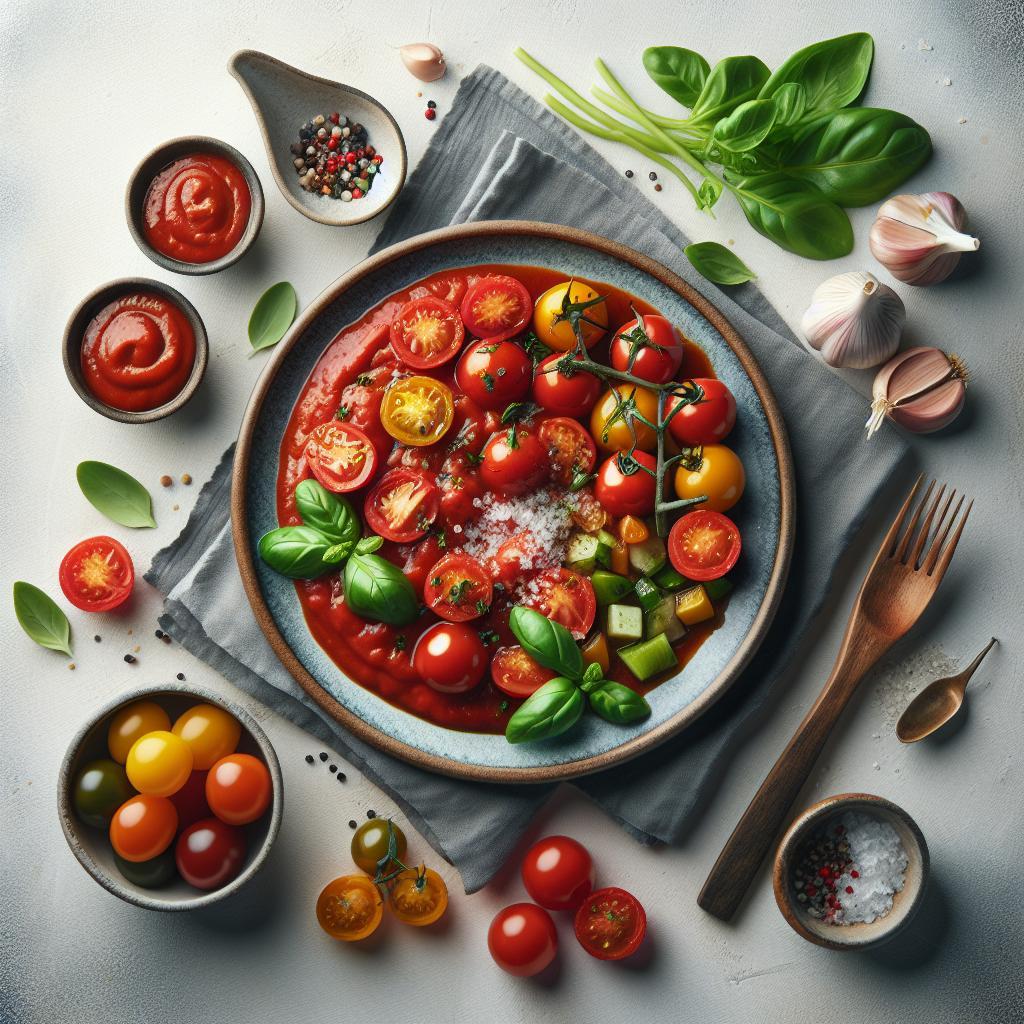

Unlocking Silk: The Ultimate Guide to Smooth Tomato Sauce centers on technique and ingredient quality to produce a velvety, clingy sauce that lifts every bite. Start with the right tomatoes and a calm cooking rhythm to coax natural sugars and dissolve fibers for consistent smoothness. Tomato
- Choose dense tomatoes for less water and more body.
- Blanch, seed, and simmer low to reduce grain and tartness.
- Blend and strain for silk; finish with fat for mouthfeel.
- Reheat gently to preserve texture and emulsion.
This guide lays out methodical steps: prep, controlled simmering, mechanical smoothing, and finishing touches that deliver true silk. Each instruction emphasizes repeatable technique so results stay consistent from batch to batch.
Prep and Cook Time
Preparation: 15 minutes. The prep phase includes blanching, peeling, and chopping to remove skins and excess seeds for a cleaner final texture.
Cooking: 1 hour 10 minutes. Most of that time is a gentle simmer to concentrate flavor and break down cellulose without scorching or bitter breakdown.
Yield
Yield: About 4 cups. This volume suits a family meal or two uses across several dishes.
Scale linearly: double ingredients for larger batches and adjust simmering time slightly to account for increased volume.
Difficulty Level
Difficulty: Medium. The technique requires attention to heat control and texture testing rather than advanced skills.
Key skill: controlled simmering and a methodical finishing routine to bind fats and solids into a stable, silky emulsion.
Ingredients
Use high-quality basics; each ingredient influences texture as well as taste.
Ingredients (approx.):
- 3 lbs ripe Roma tomatoes, cored and halved
- 2 tbsp extra-virgin olive oil
- 1 medium yellow onion, finely chopped
- 3 cloves garlic, minced
- 1 tsp sea salt, adjust to taste
- 1 tsp granulated sugar (balances acidity)
- 1 tsp dried oregano
- ½ tsp red pepper flakes (optional, for depth)
- 2 tbsp unsalted butter, for richness (omit for vegan)
- Fresh basil leaves, a handful, torn
- Freshly ground black pepper, to taste
Instructions
Follow each stage deliberately. A rushed or overheated step will create grain or bitterness rather than silk.
Mechanical smoothing and strain choices determine the final mouthfeel; choose tools that remove seeds and fibers cleanly.
Blanching and Peeling
Score tomato skins, plunge into boiling water for about 30 seconds, then shock in ice water to loosen skins for easy removal. This step reduces peel fragments that cause texture irregularities.
After peeling, chop tomatoes and retain juices for simmering. For high-efficiency prep, use a sharp paring knife and work in a single layer to speed the process.
Sautéing Aromatics
Heat olive oil over medium; sweat finely chopped onion until translucent, about 6–8 minutes. Avoid browning; translucent onions release sweetness without bitter roasted notes.
Add garlic and dried herbs for the final minute of sautéing so they bloom without burning. Salt at this stage to help draw moisture and integrate flavors.
Simmering: Low and Slow
Add chopped tomatoes and juices, bring to a gentle simmer, and reduce to a low bubble for 40–50 minutes. A steady low simmer concentrates natural sugars and softens fibers evenly.
Stir every 8–12 minutes to prevent sticking. If foam forms, skim with a spoon to keep the liquid clear and flavor-focused. Refer to simmering for fundamental temperature control guidance.
Mechanical Smoothing
Remove from heat and use an immersion blender, or transfer in batches to a blender and puree until homogeneous and silky. Work in controlled bursts to avoid overheating and splatter.
For the smoothest result, pass the puree through a food mill or fine-mesh sieve to remove seeds and remaining fibers. See the food mill entry for sieve and milling options.
Finishing: Fat and Freshness
Off heat, swirl in butter or a high-quality extra-virgin olive oil to create a glossy, stable mouthfeel. This final fat addition coats flavor molecules and smooths perceived acidity.
Toss in torn basil leaves and adjust seasoning with salt and freshly ground pepper. Allow the sauce to rest for 10 minutes to let components harmonize before serving.
Chef’s Notes: Tips for Success
For texture, choose tomatoes with dense flesh such as Roma or San Marzano equivalents for lower water content and higher solids. Dense tomatoes yield a thicker, creamier base with less reduction time.
Roasting is an optional flavor layer: roast halved tomatoes for 20–30 minutes to concentrate sweetness and add caramelized depth before blending.
Straining is a polish, not a repair. If you aim for restaurant-smooth, plan to blend first, then strain once to catch stubborn seeds or fibers.
Serving Suggestions
This sauce pairs with fresh pasta, gnocchi, polenta, or as the base for braised proteins. Its smooth texture clings to strands and dumplings for even flavor distribution.
Finish with grated Parmigiano-Reggiano or Pecorino for savory lift and an extra drizzle of olive oil for shine. For vegan service, omit dairy and increase quality olive oil for mouthfeel.

Nutrition (per 1/2 cup)
Basic nutritional snapshot for planning menus and portions. Values vary by exact ingredients and added fats.
| Nutrient | Amount per 1/2 cup serving |
|---|---|
| Calories | 85 |
| Protein | 2g |
| Carbohydrates | 12g |
| Fat | 4g |
For storage, cool quickly and refrigerate in airtight containers for up to 3 days, or freeze in portions for up to 3 months. Reheat gently over low heat to protect texture and fat emulsion.
For a concise primer on blanching technique used in this recipe, see blanching. For the role of fats in mouthfeel, consult the olive oil overview.
FAQ
Common questions about technique, substitutions, and storage for silky tomato sauce.
Answers focus on practical adjustments and troubleshooting so you can replicate results reliably.
What tomatoes make the smoothest sauce?
Choose dense, low-water varieties such as Roma or San Marzano types. Those tomatoes offer higher soluble solids, which reduce cook-down time and produce a richer, creamier body.
Can I use canned tomatoes and still get silk?
Yes. High-quality whole peeled canned tomatoes often have ideal acidity and texture. Use as-is or introduce fresh aromatics and a brief simmer to marry flavors.
Is straining necessary every time?
Straining is optional but recommended when you want restaurant-level smoothness. A single pass through a fine sieve or food mill removes seeds and fibrous bits that blending alone may leave behind.
How do I make this vegan without losing silk?
Substitute butter with an extra drizzle of good olive oil or a small amount of blended cashew cream. Both maintain fat-driven mouthfeel while keeping the sauce plant-based.
How should I reheat leftover sauce to keep it silky?
Warm slowly over low heat while stirring occasionally. Avoid rapid boiling; if the sauce separates, whisk in a small amount of extra virgin olive oil off heat to re-emulsify.
See also: Tomato sauce