
Beneath Mexico’s highland soils lies a tuber with deep cultural roots and culinary potential. The Mexican potato is both a regional staple and an underappreciated ingredient that chefs and home cooks can use to introduce new textures and flavors.
- Native lineage: Multiple botanical families produce tubers commonly called Mexican potatoes.
- Cooking versatility: Roast, sauté, boil, or puree for different textures and uses.
- Nutritional value: A solid source of complex carbohydrates, fiber, and micronutrients.
- Cultivation interest: Heirloom varieties are gaining attention for resilience and flavor.
Origins and botanical identity
The term “Mexican potato” covers several tuberous crops traditionally cultivated in Mexico and adjacent regions. Some belong to the yam group and others to leguminous or related families; the label reflects culinary use rather than a single species.
For botanical context, see the general concept of a tuber on tuber (botany). For comparison to familiar crops, review the standard potato lineage at potato. Specific edible types such as jicama are documented at Pachyrhizus erosus.
Prep and cook time
Plan about 45 minutes from start to finish for a medium-batch sautéed preparation. Active prep time runs roughly 15 minutes; stove time generally totals 30 minutes depending on potato size and variety.
Adjust cook time if you roast whole tubers or simmer them in stews. Dense, waxy types hold shape and require longer gentle cooking; softer varieties break down faster and suit mashes or purees.
- Preparation Time: 15 minutes
- Cook Time: 30 minutes (stovetop sauté)
- Total Time: 45 minutes
Yield and difficulty
This recipe yields four hearty portions and suits cooks with intermediate skills. The methods rely on simple sauté and seasoning techniques rather than advanced culinary maneuvers.
Scale quantities linearly for more servings. The principal variables are tuber size and spice intensity; both are easy to adjust without compromising texture.
Ingredients
The ingredient set prioritizes texture and bright finishing flavors. Use the skin on some varieties to preserve structure and add visual interest.
- 1.5 pounds Mexican potatoes (washed and scrubbed, skin on for texture)
- 2 tablespoons olive oil
- 1 medium yellow onion, finely chopped
- 3 cloves garlic, minced
- 1 teaspoon ground cumin
- 1 teaspoon smoked paprika
- 1 fresh jalapeño, seeded and thinly sliced (optional)
- Salt and freshly ground black pepper to taste
- Fresh cilantro, roughly chopped, for garnish
- Juice of 1 lime
- 1/4 cup crumbled queso fresco (substitute feta)
Instructions
Start by cutting the tubers into uniform cubes so they cook evenly. Uniformity ensures consistent texture across the pan and reduces the chance of overcooked edges.
Heat the oil over medium heat, then sweat the onion until translucent. Add garlic and spices briefly to bloom their aromatics, then fold in the potato cubes and cover to cook through.
- Prepare the potatoes: Cut into uniform bite-sized cubes for even cooking.
- Sauté aromatics: Heat oil in a skillet over medium heat; cook onion until translucent, about 5 minutes.
- Add garlic and spices: Stir in garlic, cumin and smoked paprika; cook 1–2 minutes until fragrant.
- Cook the potatoes: Add potatoes, toss to coat, then cover and cook 15–20 minutes, stirring occasionally.
- Introduce heat: Add jalapeño slices and season with salt and pepper; cook 3–5 minutes to meld flavors.
- Finish and garnish: Remove from heat, squeeze lime, and top with cilantro and queso fresco.
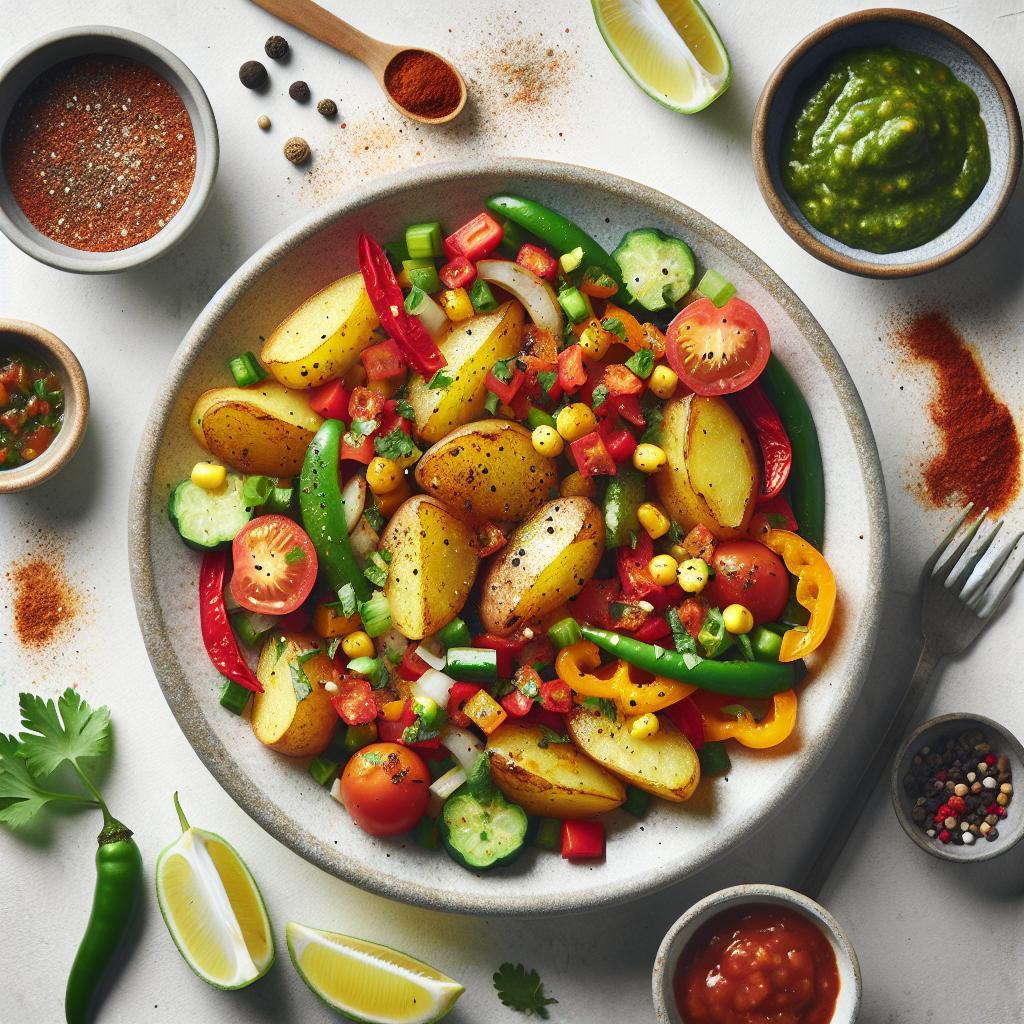
- Serve warm: Serve as a side or vegetarian main with salsas or grilled vegetables.
Tips for success
Selecting the right variety changes the result more than any single spice. Waxy, small-fleshed tubers hold their shape and make a cleaner sauté, while starchier types break down into a creamier texture.
Adjust seasoning in stages: salt early for structure, then finish with acid and fresh herbs for brightness. This layering keeps the final dish lively rather than flat.
- Make-ahead: Cook the spiced potato base a day ahead and reheat gently; add fresh cilantro and cheese at service.
- Spice swaps: Replace smoked paprika with chipotle powder for a deeper smoke note, or add a pinch of cinnamon for warmth.
- Crunch element: Toasted pumpkin seeds or chicharrón crumbs add texture and contrast.
[INFO]
[NOTE]
[!– Expert insight follows –]
[empty]
Let the pan rest one minute after removing from heat before plating; this stabilizes juices and preserves the herb aromas. Simple timing adjustments like these improve final mouthfeel without extra ingredients.
Serving suggestions and storage
Served alongside classic Mexican preparations, the tuber supports bright salsas, grilled vegetables, and warm tortillas. See broader culinary pairings on Mexican cuisine for inspiration and regional pairing ideas.
Store cooked potatoes in an airtight container in the refrigerator for up to four days. For raw tubers, keep them cool and dry; cold but humid conditions can encourage sprouting or decay.
Nutrition snapshot and yield
The dish provides balanced macronutrients suitable for a vegetarian main or a hearty side. A typical serving delivers sustained energy from complex carbohydrates and a modest amount of protein and fat from cheese and oil.
Below is a practical per-serving estimate for the sautéed preparation described. Adjust values when you substitute ingredients or alter portion sizes.
| Nutrient | Per Serving |
|---|---|
| Calories | 210 kcal |
| Protein | 5 g |
| Carbohydrates | 35 g |
| Fat | 6 g |
Cultivation notes for growers
Growers interested in these tubers should evaluate local climate, soil drainage and heat profile before selecting varieties. Many heirloom types prefer well-drained soils and moderate humidity for optimal tuber quality.
Propagation methods differ by species: some require seed pieces, others propagate from seed or root cuttings. Trial small plots first to identify pest pressures and harvest windows in your locale.
FAQ
What exactly is meant by “Mexican potato”?
“Mexican potato” refers to several edible tubers used in Mexican and regional cuisines. The term groups plants by culinary role rather than strict botanical relatedness.
How does it differ from the common potato?
Unlike the common potato, which belongs to the nightshade family, some Mexican tubers come from other families and offer distinct textures and flavors. These differences affect cooking applications and storage traits.
Can I substitute regular potatoes in the recipe?
Yes. Use waxy varieties for a firmer result or starchy ones for mashes. Adjust cook times by monitoring tenderness with a fork rather than relying on an exact minute count.
Is the Mexican potato nutritious?
Generally, these tubers provide complex carbohydrates, fiber and several micronutrients. Nutrient profiles vary by species, so consult specific data for precision in meal planning.
Where can I source authentic varieties?
Look for farmers’ markets, specialty grocers and seed exchanges that focus on heirloom crops. Farmers and specialty suppliers often label varieties and provide handling recommendations.
See also: Mexican potato