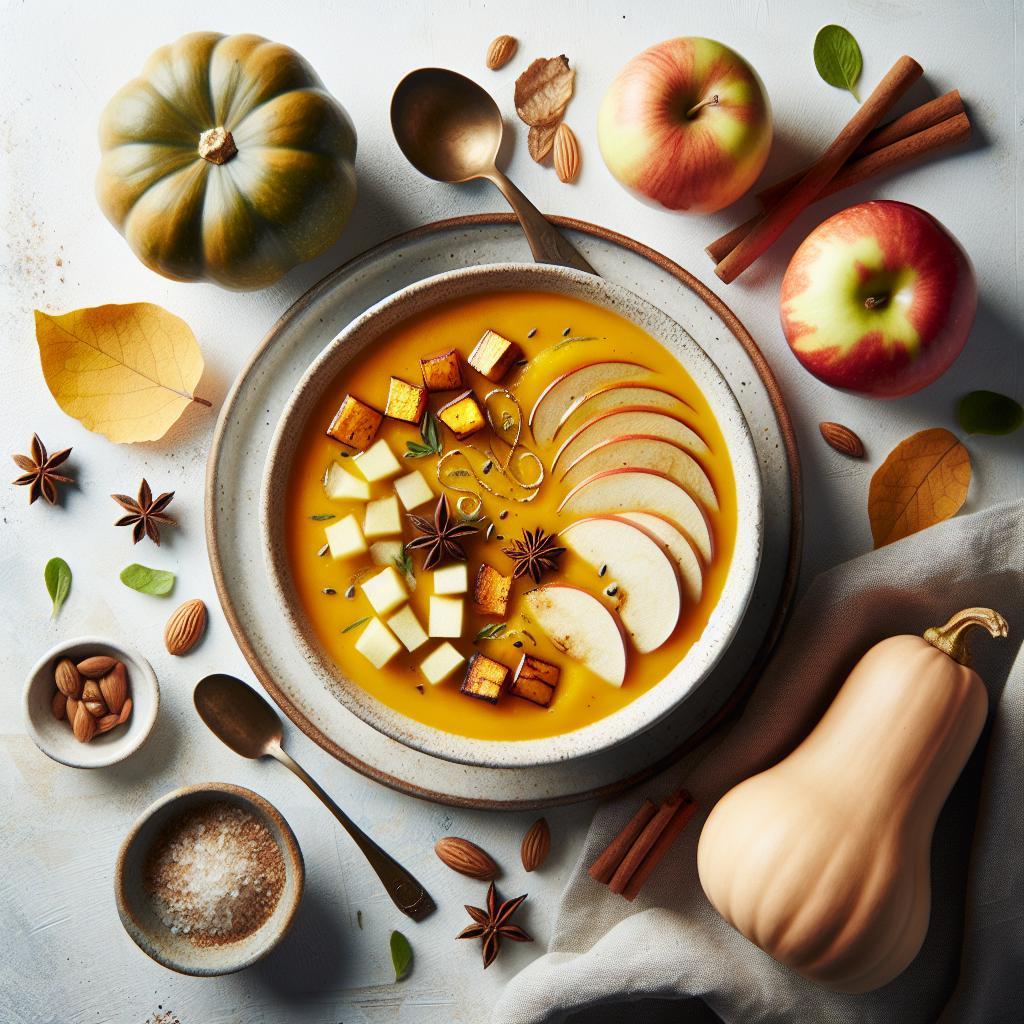

Warm Up Your Fall: Roasted Squash and Apple Squash Soup Recipe
Autumn kitchens call for bold, simple techniques that concentrate flavor. This squash soup balances caramelized sweetness with savory depth, producing a velvety bowl that feels both rustic and refined.
- Roast ingredients to develop natural sugars and deeper aroma.
- Use firm produce for clean texture and reliable caramelization.
- Season in stages—before roasting and after blending for accurate balance.
- Finish with fat—cream, butter, or coconut milk adds silk and mouthfeel.
Why Roasting Changes Everything
Roasting drives complex flavor development through controlled browning and moisture loss. That concentrated flavor is what makes a roasted squash and apple bowl stand apart from a boiled puree.
When you roast, Maillard reactions and caramelization create savory compounds and heightened sweetness. Learn the scientific background on Maillard reaction to understand why color equals flavor.
Prep and Cook Time
Preparation: 15 minutes. Trim, peel, and cut squash and apples to uniform pieces so every cube roasts evenly.
Cooking: 45 minutes. Roast, then simmer briefly to marry flavors without diluting the puree. Refer to general roasting practices for temperature control and pan setup.
Yield and Difficulty
Serves: 6 generous bowls. The recipe scales well; double quantities and use multiple sheet pans for larger batches.
Difficulty: Easy to medium. Controlling roast color and avoiding burned edges are the most technical aspects of this squash soup.
Ingredients
Assemble high-quality produce and simple pantry spices. Choose a firm winter squash for predictable texture; butternut squash gives a smooth puree and consistent yields.
Key components: squash, apples, onion, garlic, vegetable broth, warming spices, olive oil, and an optional finishing fat such as cream or coconut milk. Salt and black pepper anchor the flavors.
- 2 cups butternut squash, peeled and cubed
- 2 medium apples, peeled and cored (Granny Smith or Honeycrisp)
- 1 large yellow onion, roughly chopped
- 3 cloves garlic, minced
- 3 cups vegetable broth, low sodium
- 1 tsp ground cinnamon
- ½ tsp ground nutmeg
- ½ tsp smoked paprika
- 2 tbsp extra virgin olive oil
- Salt & freshly ground black pepper, to taste
- Fresh thyme sprigs for garnish
- Toasted pumpkin seeds for crunch (optional)
- 1 tbsp heavy cream or coconut milk (optional)
Step by Step Guide to Roasting for Maximum Flavor
Preheat the oven to 425°F (220°C). Toss evenly sized squash cubes and apple wedges with olive oil and the spice mix so each piece gets good coverage.
Arrange in a single layer on a sheet pan to avoid steaming. Roast for about 30 minutes, turning once, until pieces show deep golden edges and a pleasant caramel aroma develops.
Saute and Simmer
While roasting, sweat onion and garlic in a heavy pot over medium heat until soft and translucent. Keep heat moderate so you extract sweetness without creating bitter char.
Transfer the roasted squash and apples into the pot, add broth, and bring to a gentle simmer for 10–15 minutes. This brief simmer fuses aromatics to the roasted base and prepares the mixture for a silkier puree.
Puree and Finish
Use an immersion blender for direct control and minimal cleanup. If using a stand blender, cool slightly and vent the lid to avoid steam pressure buildup.
Return the puree to low heat, adjust seasoning, and stir in heavy cream or coconut milk for a rounded mouthfeel. Taste and correct salt; seasoning after blending lets you calibrate sweetness and spice precisely.
Creative Garnishes and Serving Suggestions
Garnishes add texture and visual contrast. Try toasted pumpkin seeds for crunch, a sprig of thyme for herbal lift, or a swirl of coconut milk for gloss and richness.
Serve with rustic bread or whole-grain crackers for contrast to the soup’s silk. For gatherings, keep toppings separate and garnish bowls at the last minute to preserve crisp textures.
Tips for Success
Select firm, fresh squash and crisp apples for reliable roasting. Softer fruit breaks down during roast and can yield a grainy puree.
Roast in a single layer and avoid overcrowding the pan. Crowded pans trap steam and prevent the caramelization that yields the best flavor and color for your squash soup.
To add complexity, try a pinch of ground ginger or cardamom. These spices integrate well with cinnamon and nutmeg and add an exotic autumn accent without overpowering the core flavors.
Nutritional Snapshot
This recipe provides moderate calories per serving with a focus on carbohydrate energy, fiber, and a small amount of healthy fat. Much of the bulk comes from natural sugars in squash and apples balanced by savory broth.
Per serving (approximate): 180 kcal, 3 g protein, 35 g carbs, 5 g fat. For precision, weigh portions and consult nutritional databases when exact macros matter.
| Nutrient | Per Serving |
|---|---|
| Calories | 180 kcal |
| Protein | 3 g |
| Carbohydrates | 35 g |
| Fat | 5 g |
Storage and Meal-Prep
Cool the soup quickly and refrigerate for up to 3 days, or freeze for longer storage. Use airtight containers and label with the date to track freshness.
Reheat gently on the stove to avoid breaking the emulsion. Add a splash of broth or milk while reheating to restore silkiness, and re-season after warming for balanced flavor.
Ingredient Notes and Substitutions
Use apples with a balance of sweet and acid—Granny Smith adds brightness while Honeycrisp brings sweetness. Combining types gives you layered fruit flavor in the squash soup.
Substitute kabocha or delicata squash for butternut to vary texture and sweetness. Learn more about apple varieties and squash options on reference pages like apple and butternut squash.
Q&A
Q1: What makes this soup ideal for fall?
Roasted winter squash and apples peak in autumn, giving the soup a seasonal sweetness and aroma. Spices like cinnamon and nutmeg mirror classic fall palettes and complement the roasted base.
Roasting concentrates flavors, producing a satisfying, warming bowl that suits cool evenings and simple gatherings.
Q2: Can I make this dairy-free?
Yes. Swap heavy cream for unsweetened coconut milk or a neutral almond milk to maintain creaminess without dairy. Coconut milk adds a subtle tropical note that pairs well with cinnamon.
For a strict vegan version, confirm the broth is vegetable-based and avoid butter finishes.
Q3: How do I avoid a watery puree?
Ensure you roast instead of steam the squash and apples. Blot excess moisture and add broth sparingly during blending to control final texture.
Blend to a smooth puree, then thin incrementally; this approach gives you better control over viscosity than adding lots of liquid up front.
Q4: What garnishes work best?
Toasted pumpkin seeds deliver crunch, while fresh thyme, sage, or a drizzle of olive oil introduces herbal lift and gloss. A light drizzle of maple syrup or a pinch of chili flakes creates a sweet-spicy contrast.
Finish with a small dollop of cream or coconut milk when serving for visual appeal and richer mouthfeel.
Q5: Which tools make this easiest?
An oven-proof sheet pan, a heavy-bottomed pot, and an immersion blender make the process efficient and safe. A sharp chef’s knife speeds prep and ensures uniform roast pieces for even cooking.
For technical reference on soup production and styles, see the general soup overview to understand classifications and common techniques.
Wrapping Up
This roasted squash and apple squash soup rewards straightforward technique with rich, layered flavor. Focus on even roasting, careful seasoning, and thoughtful garnishing to elevate the final bowl.
Every step aims to highlight fall produce at its best: concentrated roast flavor, balanced seasoning, and a silky finish that invites repeat servings.

See also: squash soup and roasting techniques for related recipes and troubleshooting.
FAQ
How long does roasted squash and apple soup keep?
Refrigerated, the soup keeps up to 3 days. In the freezer, store up to 3 months in airtight containers to preserve flavor and texture.
Can I roast vegetables the night before?
Yes. Roast and cool completely, then refrigerate overnight. Reheat and finish the soup the next day, blending and seasoning just before serving.
Which apples are best for roasting?
Firm apples like Granny Smith or Honeycrisp roast well. Use a mix if you want tartness and sweetness in balance.
How do I adjust consistency after freezing?
Thaw fully, reheat gently, and add warm broth or milk a little at a time. Re-season after reheating to restore the intended balance.
Can I substitute chicken broth?
Yes. Use low-sodium chicken broth if you prefer an animal-based stock; reduce added salt and taste as you go to maintain balance.
Recommended Reading:
- 9 Expert Couscous Secrets for Perfect Texture
- 9 Incredible Air Fryer Crispy Chickpeas
- 5 Proven Secrets for Silky Creamy Garlic Beef Sauce