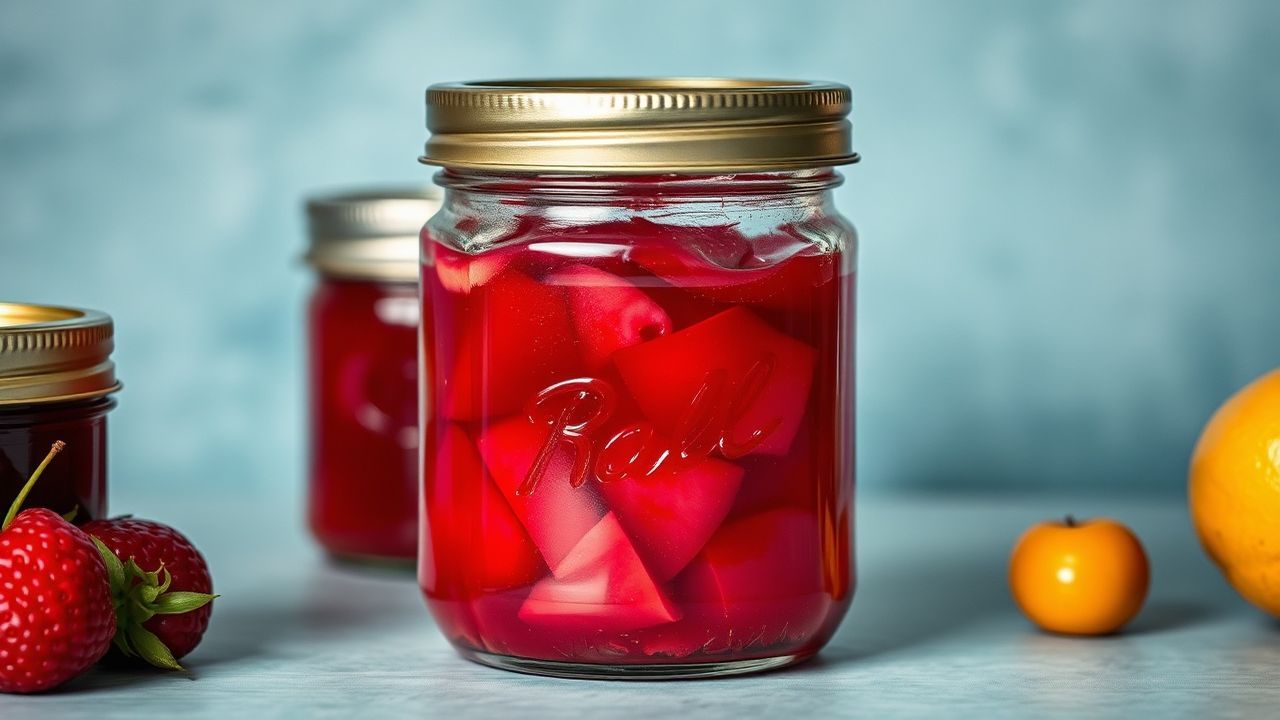

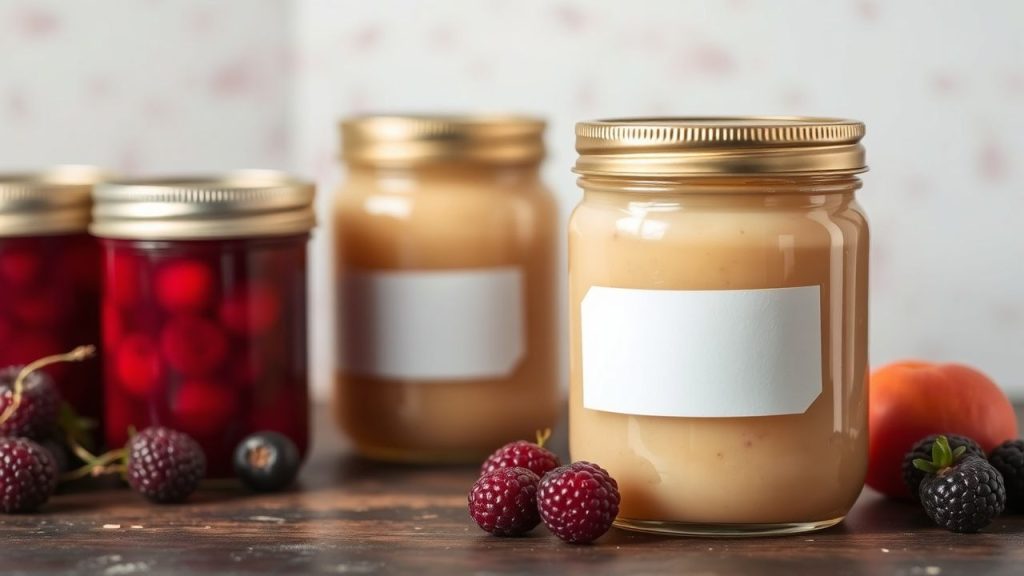
There’s something magical about opening a jar of homemade jam—vivid ruby reds, deep purples, or golden ambers that promise sun-ripened fruit. Yet many home canners find that hue dulls with time. Understanding the why helps you preserve both looks and flavor.
- Color fades mainly from light, heat, oxygen and pH-driven pigment changes.
- Simple fixes include acidifying, shortening heat exposure, and using dark storage.
- Ingredient choice strongly affects longevity—high-pigment fruits hold better.
- Practical storage and jar handling reduce oxidation and slow bleaching.
The Role of Light and Temperature in Color Preservation
Light and heat act on pigments in predictable chemical ways. When light penetrates the jar it drives photo-oxidation and breaks molecular structures of pigments that produce vivid color.
Temperature accelerates chemical reactions and enzyme activity inside the jam. Higher or fluctuating temperatures speed pigment breakdown and reduce the shelf-life of color.
Photo-oxidation: What happens to pigments
Photo-oxidation alters the double-bond structures in pigments like anthocyanins and carotenoids. Those structural changes change how the compounds absorb light, so the jam looks paler.
For background on the chemistry behind pigments see anthocyanin and carotenoid information on Wikipedia.
Temperature and enzymatic degradation
Heat speeds enzyme-catalyzed reactions that modify pigments or release compounds that bleach color. Even short overcooking can shift hues from bright to muddy.
Cold slows these reactions. That is why refrigeration after opening and cool storage before opening both help retain the original tone.
Choosing the Right Ingredients to Maintain Vibrant Hues
Start with ripe fruit that shows intense color; pigment concentration at harvest sets the ceiling for how vivid the finished jam can be. The fresher and riper the fruit, the higher the pigment density.
Acidity stabilizes many pigments. Adding a measured amount of lemon juice or using naturally acidic fruits keeps anthocyanins in their color-favorable forms.
Pigment chemistry and pH control
Anthocyanins change color with pH. In a lower pH (more acidic) they remain redder and more stable. Raising acidity by a tablespoon or two of lemon juice can noticeably improve color retention.
Read more about acidity concepts on Wikipedia at acidity to understand why pH matters for color.
Pectin, sugar, and texture roles
Pectin and sugar influence clarity and how light transmits through the jam. A properly gelling jam with minimal cloudiness looks brighter than a runny, murky batch.
Choose pectin types and sugar ratios that set quickly and clearly. Overcooking to reach set will cost you color, so balance time and temperature carefully.
Another practical tip: match fruit to target color. Blackberries, black currants, elderberries and certain plums have dense pigments that tolerate mild heat better than peaches or pears.
Practical Storage Tips to Keep Your Jam Looking Fresh and Bright
Store sealed jars in cool, dark places away from windows and heat sources. Consistent temperature reduces repeated thermal stress that accelerates color loss.
After opening, keep jars refrigerated and use clean utensils. Oxygen and repeated air exposure speed oxidation and bleaching.
Jar types and light protection
Clear glass shows color beautifully but offers no UV protection. If you prefer clear jars, store them inside opaque boxes or line shelves with dark paper to block light.
Alternatively, choose jars with UV-resistant coatings or use tinted glass where available. Both reduce the amount of damaging light reaching pigments.
Oxygen control and headspace management
Fill jars to the correct headspace and remove surface foam before sealing. Less oxygen in the headspace reduces oxidative bleaching of pigments.
Process jars promptly and cool them carefully to create a strong vacuum seal. An intact seal limits oxygen ingress during storage.
For more practical steps and deeper method descriptions see our internal Guide on Preserving Fruit Color and the internal Canning Basics primer for safe processing and handling.
Blackberry Jam Recipe (Color-conscious)
This recipe uses high-pigment berries, controlled acid, and minimal high-heat exposure to maximize color. Follow timing exactly to avoid overcooking pigments.
The method favors short, vigorous boiling for the set, not long simmering. That reduces pigment breakdown while ensuring safety.
Prep and Cook Time
Preparation: 15 minutes. Wash and gently drain berries to preserve pigments.
Cooking: 30 minutes. Keep heat focused and time limited to reach set quickly.
Yield & Difficulty
Yield: About 4 cups (4-5 half-pint jars). Use smaller jars to reduce oxygen exposure after opening.
Difficulty: Medium. Ideal for home cooks with some canning experience and attention to timing.
Ingredients
- 4 cups fresh blackberries, washed
- 2 cups granulated sugar
- 1/4 cup fresh lemon juice
- 1 package powdered pectin (about 1.75 oz)
- 1/2 cup water
- Optional: 1 teaspoon vanilla extract for depth
Instructions
- Sterilize jars: Boil jars and lids 10 minutes. Keep warm until filling to prevent thermal shock.
- Cook fruit: Combine berries and water in a wide pot. Gently crush and heat to release juices; aim for minimal simmer time.
- Add pectin: Whisk in pectin and simmer 1-2 minutes. Short contact at this stage helps clarity and color.
- Add sugar and lemon: Stir sugar and lemon juice in gradually. Bring to a full rolling boil and maintain for exactly 1 minute.
- Skim and cool briefly: Remove foam promptly for clarity. If using vanilla, add off-heat to preserve aroma.
- Fill and process: Fill jars, leaving 1/4 inch headspace. Wipe rims clean and process in a boiling water bath for 10 minutes.
- Cool and store: Let jars cool undisturbed. Store in a dark, cool pantry; refrigerate after opening.
Chef’s Notes
To intensify color, add a pinch of lemon zest during cooking. The oils boost perceived brightness without altering pH much.
If you use frozen berries, thaw gently and drain excess liquid. Diluted fruit yields paler jam and stretches cooking time.
Common Causes and Quick Fixes
Short processing and careful handling prevent most color loss. Overcooking, high headspace oxygen, and bright storage light cause the majority of fades.
If a jar fades, taste it. If it smells and tastes fine and the seal is intact, use it. For future jars, add a small extra acid dose and cut boil time by 30–60 seconds.
When to adjust technique
If you make jam often, calibrate your boiling times and pan width. Wide pans shorten cooking time and lower the heat exposure needed for set.
Also, experiment with sugar-to-fruit ratios and pectin blends to find the least-aggressive heat profile that still achieves safe preservation.
FAQ
Q: Why does jam color fade but the jam still taste fine?
Color results from pigment molecules that can change without affecting sugars and acids that provide flavor. Oxidation and pH shifts impact color more than taste in many cases.
Q: Can I use stabilizers to prevent fading?
Yes—acid adjustments, certain pectins, and minimal sugar changes help. Avoid additives that alter flavor or safety. Keep recipes close to tested canning recommendations.
Q: Is faded jam safe to eat?
Usually, yes—color fade is cosmetic. However, if the jar shows mold, an off-odor, or a broken seal, discard the jar. Safety signs trump appearance every time.
Q: Which fruits keep their color longest?
High-pigment berries (blackberries, black currants, elderberries) and some plums retain color better. Lighter fruits like pears and peaches change more noticeably.
Q: Where can I learn more about the science behind pigments and preservation?
For technical context check Wikipedia pages on anthocyanins, carotenoids, and canning (food preservation).
Final note: Color fade in jam does not equal failure. Careful ingredient choice, restrained heat, and smart storage preserve both visual appeal and flavor over months of enjoyment.
See also: jam color