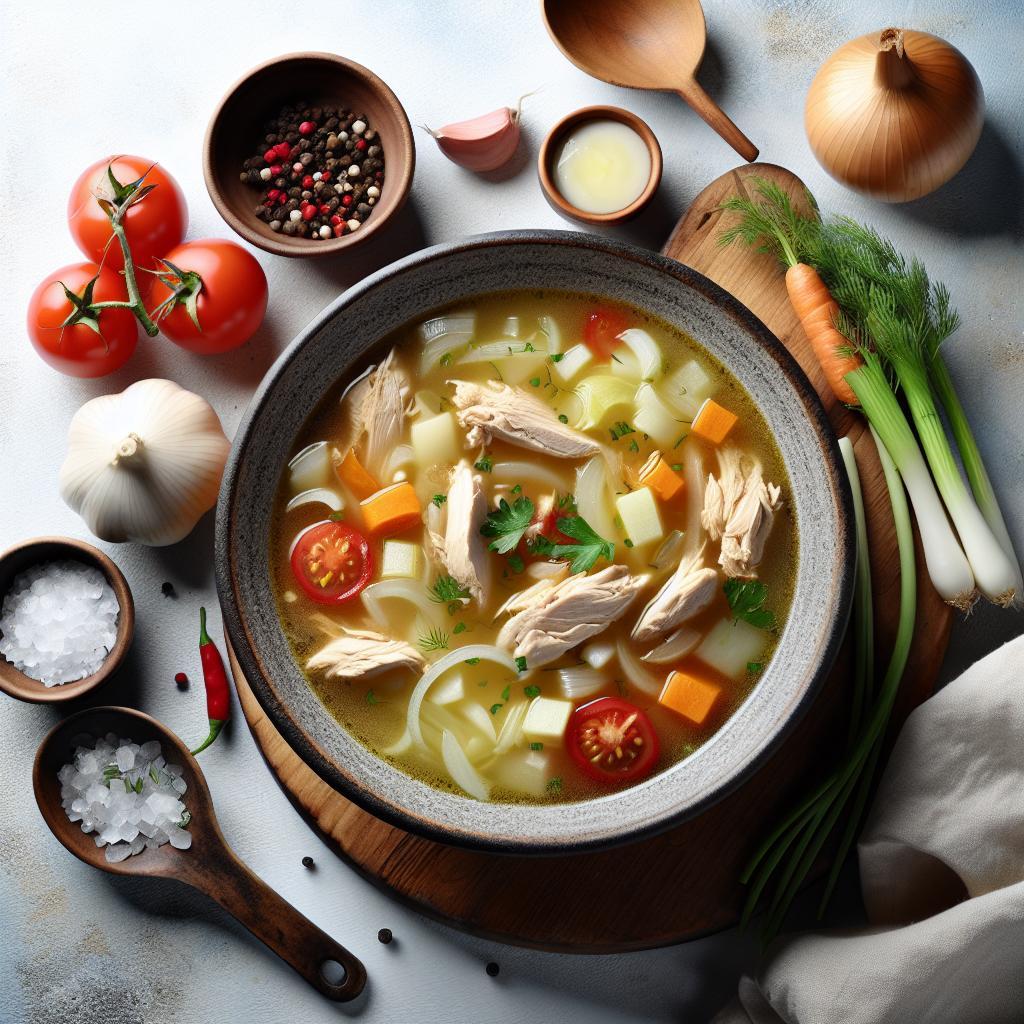

There is something timeless about a bowl of chicken soup — its gentle aroma promising comfort and nourishment with every sip. A great, simple chicken soup starts with technique, quality ingredients, and thoughtful simmering that draws out flavor and body.
- Clear, rich broth comes from slow simmering and regular skimming.
- Bone-in chicken supplies gelatin and depth that make the soup feel restorative.
- Fresh aromatics and correct seasoning create balance without clutter.
Gathering the Finest Ingredients for a Soul-Soothing Broth
Begin with a quality whole chicken or bone-in pieces to maximize collagen extraction and mouthfeel. Use about 10 cups of filtered water per 3–4 lb chicken so the final concentration stays balanced and glossy.
Support the chicken with a classic vegetable base: carrots, celery, and onions. This trio, often called mirepoix, supplies natural sweetness and body that the broth needs.
Ingredients
- 1 whole organic chicken (about 3–4 pounds), cleaned and rinsed
- 3 large carrots, peeled and cut into 1-inch chunks
- 3 celery stalks, trimmed and chopped
- 2 medium yellow onions, peeled and quartered
- 4 garlic cloves, smashed
- 2 bay leaves
- 5 sprigs fresh thyme — a herb that melds beautifully with poultry
- 1 bunch fresh parsley, tied
- 1 teaspoon whole black peppercorns
- 1 tablespoon sea salt (adjust to taste)
- 10 cups filtered water
- Optional: sliced zucchini, chopped kale, or diced sweet potatoes
- Finisher: fresh lemon juice or a small pinch of grated nutmeg
Preparing and Timing: Mise en Place for Smooth Results
Set up your mise en place: vegetables prepped, herbs bundled, and a fine-mesh sieve ready for straining. This planning reduces hands-on stress and prevents overcooking while you tend to skimming.
Plan for a total cook time of roughly 2–2½ hours for a gently simmered broth. Keep the flame low so the surface barely trembles; that low-energy simmer yields clarity and maximum flavor extraction.
Prep and Cook Time
- Preparation Time: 20 minutes
- Cooking Time: 2 to 2½ hours (slow simmering for maximum flavor)
- Total Time: Approximately 2 hours 40 minutes
Step-by-Step Instructions
Start with cold filtered water and the whole chicken in a large stockpot; this helps proteins and collagen release steadily. Bring to a gentle boil, then immediately lower to a soft simmer while skimming off foam to protect clarity.
Add the carrots, celery, onions, garlic, bay leaves, thyme, parsley, salt, and peppercorns once the simmer is steady. Partially cover the pot to allow steam to escape and let flavors concentrate slowly.
- Prepare the chicken: Remove excess fat and pat dry. Place the chicken in a large pot, cover with water, and heat until the surface barely boils; skim the rising foam to keep the stock clean.
- Add vegetables and aromatics: Lower to a gentle simmer and add the vegetables and herbs. Maintain a soft simmer for 2–2½ hours to extract gelatin and flavor without clouding.
- Check and skim: Every 20–30 minutes, use a fine skimmer to remove impurities. Regular skimming yields a clear, golden broth that looks as good as it tastes.
- Remove the chicken: When meat pulls from the bone, lift the chicken out and set it aside to cool. Strain the broth through a fine-mesh sieve into a clean pot to discard solids and produce a pristine liquid.
- Shred the meat: Discard bones and skin if you prefer a leaner soup, then shred the meat and return it to the strained broth.
- Personalize and finish: Add optional vegetables and simmer 10–15 minutes until tender. Brighten with a splash of fresh lemon juice or a tiny pinch of nutmeg before serving.
Tips for Success and Professional Techniques
Use bone-in, skin-on pieces for the most body; collagen converts to gelatin, creating the silky mouthfeel associated with nourishing stock. If you need a lighter finish, chill briefly and remove the hardened fat from the surface.
Resist the urge to boil vigorously; agitation breaks emulsion and clouds the stock. Instead, adjust the heat so only a few small bubbles rise to the surface — that steady movement extracts flavor without turbulence.
Make-ahead strategies increase convenience and depth: refrigerate overnight to allow flavors to meld, then skim fat and reheat gently. This resting step intensifies taste and often improves the texture of the soup.
Serving Suggestions and Pairings
Serve the soup hot in rustic bowls with fresh parsley or chopped chives for aroma and color. Offer lemon wedges tableside so diners can brighten each bowl to taste.
Pair the soup with crusty bread or a light green salad for a balanced meal, or add buttered noodles or rice for a heartier option. For vegetable-forward complements, see our internal guide to Hearty Vegetable Stews and consider pairing with easy meal prep tips for leftovers.
Nutrition and Practical Notes
A typical serving provides lean protein and modest carbohydrates, making this soup suitable for recovery meals and light dinners. The presence of gelatin and minerals from bones contributes to satiety and a comforting mouthfeel.
Here is a concise nutrient snapshot per serving to help with meal planning and portion control. Adjust vegetables and additions to tune calories and macros to your needs.
| Nutrient | Amount per Serving |
|---|---|
| Calories | 220 kcal |
| Protein | 28 g |
| Carbohydrates | 8 g |
| Fat | 6 g |
Practical Safety and Further Reading
Handle raw poultry with standard precautions: separate cutting boards, proper refrigeration, and full cooking to safe internal temperatures. For authoritative guidance on safe handling, consult the food safety resources linked here.
For technical reading on the science behind stock and broth, review the entry on stock (food), which explains gelatinization and flavor extraction. Also see the Wikipedia entry on chicken for breed and meat characteristics that affect cooking.
Closing Remarks
A thoughtfully made chicken soup rewards patience and good ingredients with clear flavor and nourishing texture. With minimal equipment and the right technique, you can produce a bowl that feels restorative and genuinely homemade.
Keep a basic formula in your roster and adapt it with seasonal produce or pantry staples. Over time, a consistent method becomes your signature soup — reliable, adaptable, and deeply satisfying.

FAQ
Q: What chicken cut gives the best broth?
Bone-in, skin-on pieces such as thighs or a whole chicken provide more gelatin and flavor than boneless cuts. The bones and skin release collagen during a long simmer, which turns into gelatin and yields a silky broth.
Q: How do I keep the broth clear?
Start with cold water, maintain a gentle simmer, and skim frequently to remove impurities. Strain through a fine sieve or cheesecloth after cooking and chill briefly to remove surface fat if desired.
Q: Can I make this vegetarian?
Yes. Replace chicken with dried shiitake mushrooms, kombu, or a mix of roasted vegetables and a dash of miso for umami depth. Use the same slow, gentle extraction and adjust seasoning to taste.
Q: How long does homemade chicken soup keep?
Store in airtight containers in the refrigerator for up to three days, or freeze portions for longer storage. Reheat gently over low heat to preserve texture and clarity, and freshen with lemon or herbs before serving.
Q: When should I add delicate herbs?
Add sturdy herbs like thyme and bay early to extract flavor. Finish with delicate herbs such as parsley or dill at the end to preserve brightness and aroma.
See also: chicken soup