
When you assemble a cheese board, the cheeses often get the applause. Yet wild nuts supply the contrast, texture, and terroir that make a platter memorable. They bring crunchy counterpoints, aromatic oils, and rustic character that highlight each cheese’s strengths.
- Layer texture: Nuts add crunch that sharpens soft cheeses.
- Balance flavor: Bitter or buttery nuts offset creamy or salty cheeses.
- Sensory story: Wild-sourced nuts introduce place and season to the board.
The Art of Pairing Wild Nuts with Cheese Varieties: Elevate Your Cheese Board Flavorfully
The pairing of nuts and cheese follows taste chemistry and tradition. For centuries, farmhouse producers and foragers combined seasonal nuts with fresh cheeses to create complementary textures and flavors.
For practical reference, consider how oils and tannins interact: oily nuts soften astringency in young cheeses, while bitter kernels can brighten aged, salty options. Read more about the basics of cheese for context on styles and aging.
Prep & Board Basics
Plan the layout before you slice any cheese. Start by selecting 3–5 cheeses that vary in texture and intensity; then place nuts to bridge contrasts and invite experimentation.
Temperature matters. Bring cheeses to room temperature so their aromas open, and toast raw nuts briefly to release essential oils without overpowering subtle flavors.
Prep and Cook Time
Preparation Time: 15 minutes. Keep tasks simple and focused to avoid overworking the board. A brief, steady workflow preserves texture and freshness.
Assembly Time: 10 minutes. Arrange components with variety in mind: clusters, bowls, and negative space all guide guests. Total time: 25 minutes.
Yield
Serves 6 as an appetizer with generous sampling portions. If you expect heavy eaters, scale portions of nuts and bread accordingly.
For larger gatherings, set multiple small boards rather than one oversized platter to maintain freshness and presentation.
Difficulty Level
Easy. This approach suits beginners and experienced hosts alike because it relies on simple techniques—light toasting and thoughtful arrangement—rather than complex preparation.
Focus on balance and contrast. With a few practiced combinations, you will build boards that feel intentional and polished.
Ingredients and Sourcing
Choose a mix of textures and oil levels: dense chestnuts or macadamia lend butteriness, while pine or hazelnut add resinous or aromatic notes. Consider seasonal availability and sourcing to emphasize locality and flavor.
When possible, buy raw, unsalted nuts and roast them yourself to control the flavor profile. Also consult reliable sources on edible nuts and wild foraging to ensure safe selections; foraging guidance is summarized on foraging.
Core Ingredients
- 1 cup mixed wild nuts (chestnuts, hazelnuts, macadamia, pine nuts)
- 200g Brie, room temperature
- 150g aged Manchego, thinly sliced
- 100g blue cheese, crumbly style like Roquefort or Gorgonzola
- 2 tbsp honey (use a single-variety honey to avoid flavor clash)
- Fresh herbs for garnish (rosemary, thyme, sage)
- Crackers or artisan bread for serving
- Optional: dried apricots, figs, or thin apple slices
Instructions
Follow simple, repeatable steps so the board reads well and remains approachable for guests. Good execution keeps textures distinct and flavors balanced across bites.
Work with small groups of ingredients: a soft cheese with a buttery nut, a firm cheese with a crunchy or bitter nut, and a blue cheese with something sweet and acidic.
Step-by-step Assembly
- Toast the wild nuts lightly in a dry skillet over medium heat for about 4–6 minutes, stirring often. Heat awakens oils and deepens aroma without burning delicate notes.
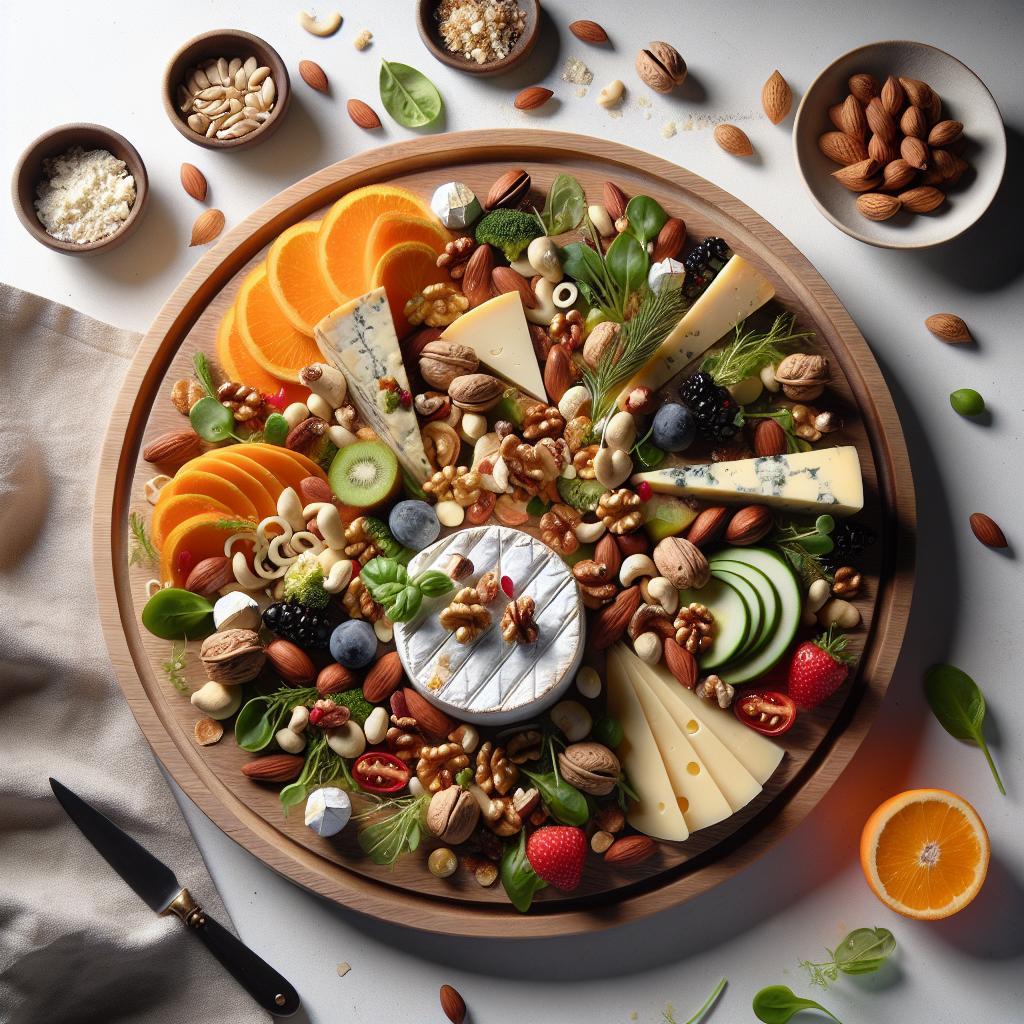
- Arrange the cheeses on a wooden board. Place the Brie as a wheel or wedges, the Manchego in overlapping slices, and crumble the blue cheese in one corner for easy picking.
- Scatter the toasted wild nuts generously around the cheeses, mixing varieties to encourage contrast in each bite. Grouping nuts near compatible cheeses simplifies tasting choices.
- Drizzle honey modestly over Brie and some nuts to add sticky, sweet contrast. Use honey sparingly to avoid dominating subtler flavors.
- Garnish with fresh herbs to add aromatic lift and a palate-cleansing element between rich bites.
- Serve with a variety of crackers, bread slices, and optional fruit to provide acidity and chew that complete the tasting experience.
Tips for Success
Use unsalted, raw nuts so you control seasoning at the last moment. This approach ensures the cheese and nut flavors complement instead of competing.
Also, experiment with lesser-known varieties such as hickory or black walnut for bold, rustic notes. These can introduce a pronounced character that pairs beautifully with strong, aged cheeses.
Store leftovers in an airtight container once fully cooled to preserve crunch. Oily nuts absorb ambient odors, so keep them separate from strongly scented foods.
Serving Suggestions
Present the board on a wooden plank or slate to emphasize rustic appeal. Use small bowls to hold clusters or finely chopped nuts to avoid scattering and to keep the board tidy.
Encourage guests to build bites deliberately: soft Brie with macadamia and honey, or Manchego with toasted hazelnut and an apple slice. For pairings and tasting context, consult general information on wine to match acidity and body with your selections.
Accentuate the layout with microgreens or edible flowers for visual contrast, and place labels so guests with allergies can avoid certain items. Clear labeling improves safety and user experience.
Nutritional Snapshot
This board provides a satisfying macronutrient mix of fats, protein, and carbohydrates. Nuts add heart-healthy unsaturated fats and micronutrients while cheeses contribute protein and calcium.
Approximate per-serving values help guests manage portions and dietary needs. Remember that serving size heavily influences caloric totals.
| Nutrient | Per Serving (approx.) |
|---|---|
| Calories | 280 |
| Protein | 12g |
| Carbohydrates | 16g |
| Fat | 20g |
Q&A
The following answers address common questions chefs and hosts ask when incorporating wild nuts into cheese boards.
Use these notes as quick references when planning a menu or training staff on presentation basics.
Q1: What makes wild nuts a game-changer for cheese boards?
A1: Wild nuts provide crisp texture, concentrated oils, and flavor notes—bitter, resinous, or buttery—that contrast and accentuate cheeses. They supply a sensory pivot that encourages repeat tasting.
Q2: Which wild nuts pair best with soft cheeses like Brie or Camembert?
A2: Pecan and black walnut pair well due to their rich, buttery profiles that meld with creamy textures. A light roast enhances aroma while preserving the nut’s natural balance.
Q3: How do wild nuts influence presentation?
A3: Nuts add sculptural elements and color contrast. Leave some shells on for rustic visual interest, and place clusters in bowls to create focal points that invite exploration.
Q4: Can wild nuts fit common dietary needs?
A4: Wild nuts are naturally gluten-free and offer protein and healthy fats, which suits vegetarian and gluten-free diets. Always label allergens clearly to protect guests with nut sensitivities.
Q5: How should you prepare wild nuts before adding them to a board?
A5: Freshness matters. Toast raw nuts gently to release oils and aroma. Optionally glaze with a touch of honey or a dusting of sea salt, but avoid heavy coatings that mask nuance.
FAQ
What are the best nut-cheese combinations?
Pair soft, creamy cheeses with buttery nuts like macadamia or pecan. Match firm or aged cheeses with crunchy hazelnuts or roasted almonds. Use blue cheese with sweet elements and toasted walnuts.
How long can I prepare the board in advance?
Prepare components up to a day ahead, but toast nuts and slice cheeses just before serving. Store elements separately to preserve texture and aroma.
Are wild nuts safe to use from local foraging?
Only use foraged nuts if you can positively identify them and confirm they are edible. When in doubt, buy from trusted suppliers and consult reputable foraging resources.
Can I substitute tree nuts for wild nuts?
Yes. Many cultivated tree nuts—almonds, walnuts, hazelnuts—provide reliable, consistent flavors and can substitute for wild varieties if availability is an issue.
How do I pair wine with nut-forward cheese boards?
Choose wines that match the board’s dominant intensity: light whites for delicate boards, medium-bodied reds for richer nuts and aged cheeses. For guidance on wine styles and pairing logic, see the general overview of wine.
As you prepare your next board, let wild nuts act as the connective tissue between cheese, fruit, and bread. With mindful sourcing, precise toasting, and deliberate pairing, you will turn a simple platter into an engaging tasting sequence that guests remember.

See also: Wild Nuts