
In a landscape of simple plates, a wild green salad stands out for texture, aroma, and seasonal identity. “Wild & Wonderful: Crafting the Perfect Wild Green Salad” walks you through choosing, dressing, and presenting wild leaves so each bite reads of the place and season it came from.
- Freshness first: harvest or buy the freshest wild greens and dry them completely before dressing.
- Balance flavors: offset bitter leaves with acid, fat, and a touch of sweetness.
- Safety matters: confirm plant ID and avoid polluted areas when foraging.
- Eat same day: dressed wild greens lose crispness quickly, so serve promptly for best texture.
Essence of a Wild Green Salad
Wild green salads deliver flavours that cultivated greens rarely match. They offer bitter, peppery, and herbaceous notes that add depth to simple meals.
When you assemble a salad with intention, you highlight terroir and seasonality. Use contrasts—crunch, cream, acid—to showcase the wild leaves rather than mask them.
Prep and Cook Time
Preparation: 15 minutes. These salads need brief handling and no cooking unless you blanch tougher leaves first.
Cook Time: 0 minutes for raw salads, unless you choose to blanch nets or wilt a handful for texture contrast. A quick blanch takes under two minutes and softens strong flavors.
Yield
This recipe serves four as a starter or two as a main when you add grains or protein. Adjust quantities by volume; wild greens pack differently than market lettuce.
Use a loose measurement like cups packed lightly. Forage or purchase in small batches to keep leaves vibrant and avoid waste.
Difficulty Level
Easy for cooks who can identify common wild leaves and mix a balanced dressing. The technique focuses on gentle handling rather than advanced culinary skills.
Foragers and cooks new to wild greens should practice identification and small-batch preparation before serving to guests. Skills grow quickly with a few confident experiments.
Ingredients
Gather a mix of peppery, bitter, and mild leaves for complexity. Common choices include wild arugula, dandelion, sorrel, and chickweed.
Core ingredients:
- 3 cups assorted wild greens, washed and dried
- 1/2 cup edible flowers (optional for garnish)
- 1/4 cup toasted walnuts, roughly chopped
- 1/3 cup crumbled goat cheese or firm tofu for a vegan option
- 1 small shallot, finely minced
- 2 tablespoons extra virgin olive oil or walnut oil
- 1 tablespoon apple cider or lemon juice
- 1 teaspoon raw honey or maple syrup
- Salt and freshly ground black pepper to taste
- Fresh herbs such as chervil or parsley (optional)
Instructions
Handle wild greens gently; their cell walls break easily. Rinse to remove grit, then dry thoroughly using a spinner or layered towels for crispness.
Toss the salad only when you are ready to serve. Dress lightly and add toppings that contrast the leaves’ texture and flavor.
Dressing Technique
Whisk minced shallot, oil, acid, and sweetener until emulsified. Season incrementally and taste; strong leaves need bright, acidic dressings to lift their flavor.
Use three parts oil to one part acid as a starting ratio. Adjust the ratio to match leaf intensity—bitter greens tolerate more acid and a hint of sweetness.
- Prepare wild greens: Rinse under cold running water. Spin dry to remove moisture that will dilute the dressing and make leaves limp.
- Mix dressing: In a small bowl, whisk shallot, oil, vinegar or lemon, honey, and a pinch of salt until smooth. Taste and adjust acidity or sweetness.
- Combine salad: Place greens in a large bowl. Pour dressing over the leaves and toss gently to coat; avoid crushing delicate leaves.
- Add texture: Scatter toasted walnuts and crumble goat cheese or tofu over the dressed greens. Add herbs and flowers as a final aromatic touch.
- Garnish and serve: Transfer to a platter and serve immediately for peak texture. Leftovers will soften even when refrigerated.
Foraging & Safety
Foraging connects you to place and season, but it demands care. Learn plant identification through reputable guides and hands-on practice with an experienced forager.
Avoid roadside collections and sites near industrial runoff or treated fields. Pollutants concentrate in leaves and render them unsafe to eat.
If you prefer to avoid foraging, source wild greens from trusted farmers or specialty markets. Local suppliers often sell seasonally harvested wild leaves with traceability.
Tips for Success
Balance is the guiding principle. Combine bitter, peppery, and mild leaves to create a layered flavor profile that keeps each bite interesting.
Toast nuts briefly to awaken oils and aromatics. Add them last so they retain crunch against delicate leaves.
For nettles or tough dandelion, blanch briefly to soften fibers and reduce bitterness. Blanching also unlocks nutrients and makes leaves easier to fold into grain bowls.
Store harvested leaves in a sealed container with a damp paper towel to maintain humidity. Use within 2–3 days for peak flavor and texture.
Serving Suggestions
Serve this salad as a bright starter alongside rustic bread or as a bed for grilled fish. The salad’s herbal and bitter notes pair well with rich proteins and light grains.
For a main course, add quinoa, roasted root vegetables, or a pan-seared piece of salmon. A chilled white wine or floral sparkling beverage complements the greens’ earthiness.
Nutritional Information
Wild greens concentrate micronutrients, including vitamins A and C, and often contain more minerals than cultivated counterparts. Their nutrient density varies by species and season.
Typical serving estimates help plan meals: a 180 kcal salad often provides fiber, healthy fats from oil and nuts, and plant-based micronutrients depending on the greens used.
| Nutritional Information (per serving) | Calories | Protein | Carbs | Fat |
|---|---|---|---|---|
| Wild Greens & Wonderful Salad | 180 kcal | 6g | 10g | 14g |
Ingredient Notes and Substitutions
When a given wild leaf is unavailable, substitute with a similar-flavored cultivated green. For example, arugula mimics peppery wild rocket in many recipes.
Swap walnuts for almonds or pine nuts based on your pantry and preference. For a dairy-free option, use marinated firm tofu or a nut-based ricotta.
Visual & Plate Guidance
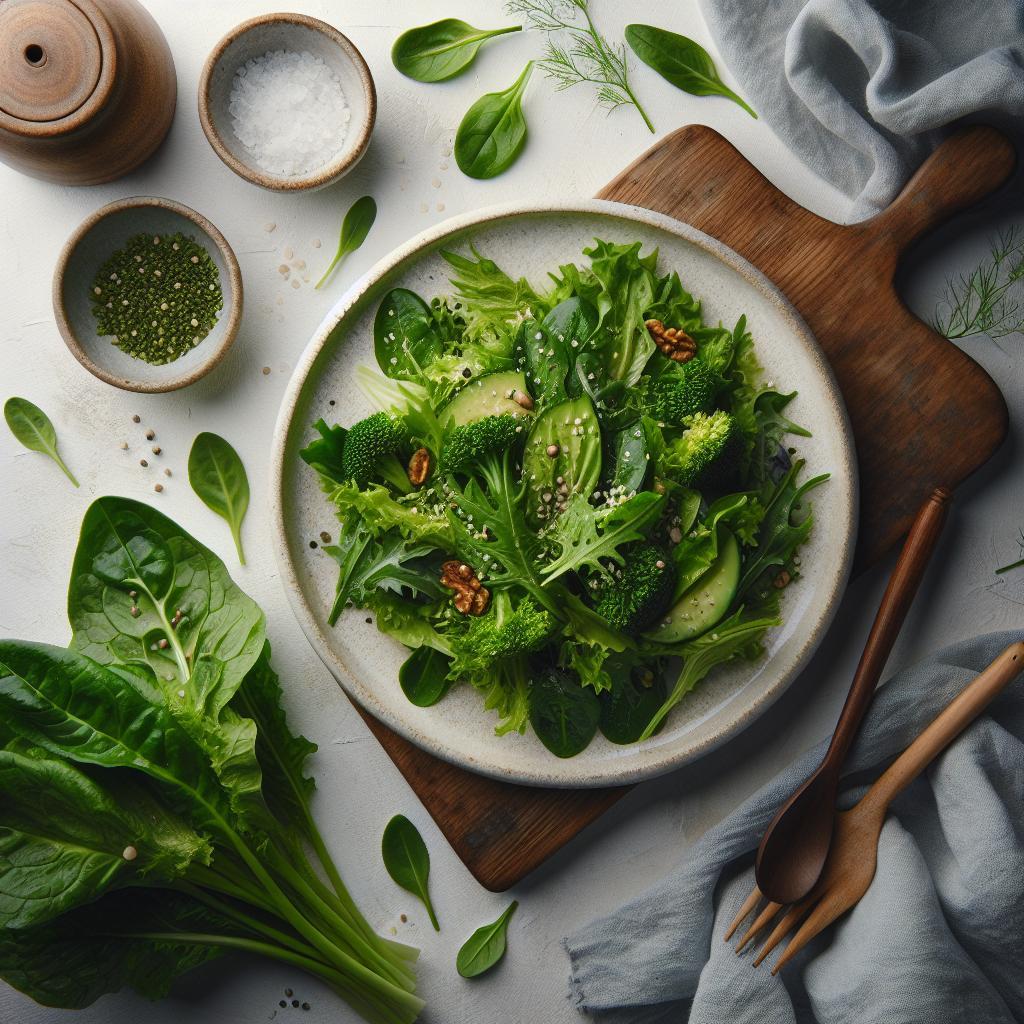
Present the salad loosely to preserve volume and allow colors to read on the plate. Scatter flowers and herbs for visual contrast and aroma.
Choose a shallow bowl or platter so each leaf shows. Serve immediately; finished salads do not reward long waits under dressing.

References and Further Reading
For identification and responsible harvesting, consult established references and community resources. Practical, illustrated guides shorten the learning curve and reduce risk.
Explore these authoritative resources for more context on wild foods and salad basics:
- Foraging (human) — overview of human wild-food gathering practices
- Wild edible plants — catalog of commonly foraged species
- Salad — culinary context and salad types
- Arugula — a common peppery leaf used in wild mixes
FAQ
What counts as a “wild green”?
Wild greens are leaves that grow without deliberate cultivation. They include species like dandelion, sorrel, nettles, and wild arugula, which often have stronger flavors than garden lettuces.
Use reliable visual guides or local foragers to confirm identity before consumption. If you cannot identify a plant confidently, do not eat it.
How do I know which wild greens are safe?
Safety comes from accurate identification and site selection. Avoid industrial zones, roadsides, and fields treated with pesticides. Young leaves usually contain fewer bitter compounds and concentrate fewer pollutants.
When starting, keep a small sample for reference and build a list of 6–8 safe, easily identified species you can collect seasonally.
Can I make this salad vegan?
Yes. Substitute goat cheese with marinated firm tofu or a nut-based cheese. Use maple syrup instead of honey to keep the dressing vegan-friendly.
Plant oils like walnut or hazelnut add depth and pair well with bitter leaves if you skip dairy.
How long will dressed wild greens last?
Dressed wild greens last only a few hours before losing crunch and color. Store undressed leaves in a sealed container with a damp paper towel in the fridge for 2–3 days.
If you must prepare ahead, keep dressing and solids separate and combine at the last minute to preserve texture.
Where can I learn reliable plant identification?
Join local foraging workshops, connect with community herbariums, or consult printed field guides with clear photos. Hands-on learning with an experienced forager accelerates skill and reduces risk.
Online images help orientation, but on-the-ground comparison and seasonal familiarity provide the strongest confidence for safe harvesting.
By focusing on careful selection, balanced dressing, and respectful presentation, you can turn wild leaves into a memorable centerpiece. The process rewards curiosity, seasonality, and a precise hand. Gather confidently, taste often, and let the texture and aroma of wild greens guide your final seasoning choices.
See also: wild greens