
Zesty Homemade Green Chutney: Fresh Cilantro Mint Magic
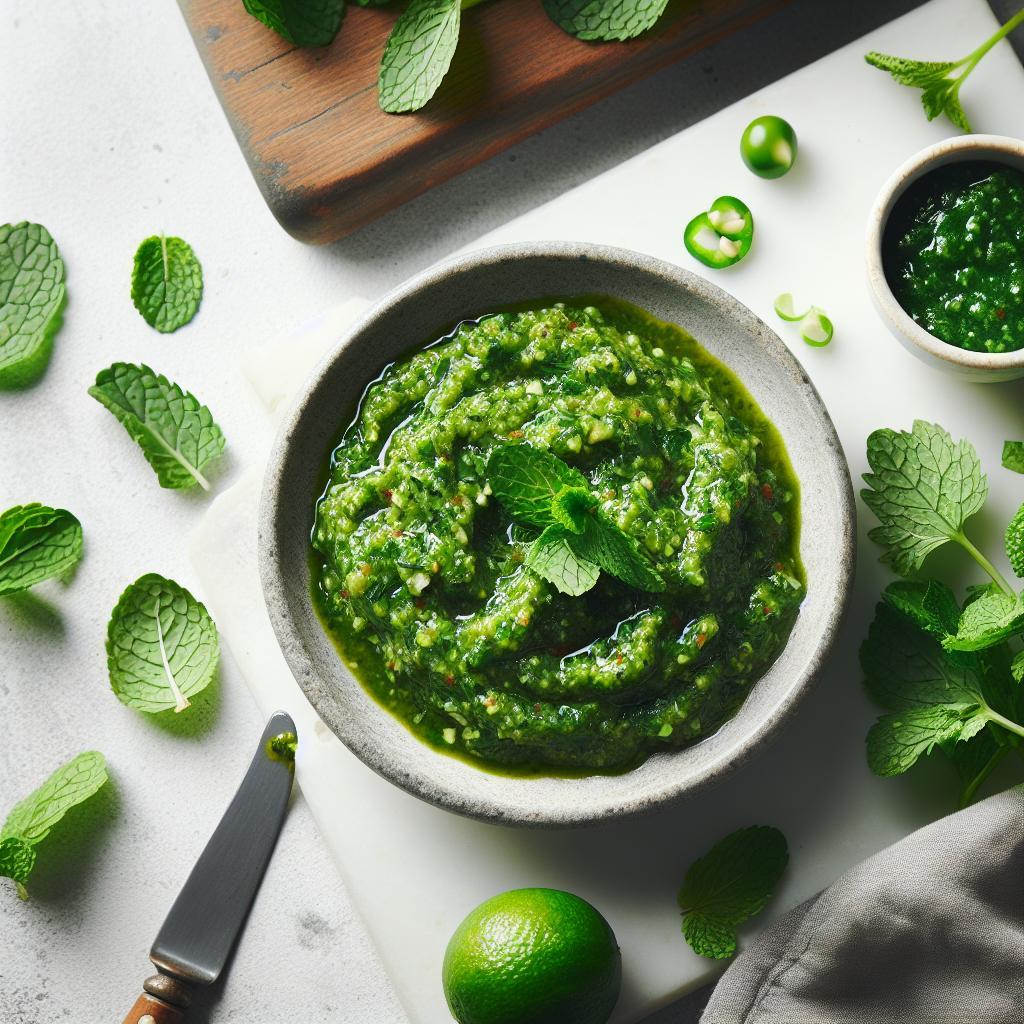
This green chutney blends bright cilantro and cooling mint into a vibrant sauce that livens snacks and mains. The recipe takes about ten minutes from rinsing herbs to a spoon-ready dip.
- Fast to make: ready in roughly 10 minutes with simple tools.
- Versatile: works as a dip, spread, marinade or finishing sauce.
- Fresh-forward: relies on raw herbs and citrus for color and snap.
- Make-ahead options: refrigerate short-term or freeze in portions.
Why this green chutney works
This chutney succeeds because it balances herb intensity, acidity, heat and aromatics. Fresh cilantro provides citrusy-coriander notes while mint brings cooling counterpoint.
For botanical context, cilantro is the leaf of the coriander plant and contributes volatile oils that define the flavor profile. See the plant profile on coriander for varietal and flavor notes.
Prep and Cook Time
Preparation: 10 minutes of active work—rinsing, chopping and blitzing the ingredients. Use a small high-speed blender or a food processor for fastest results.
Total Time: 10 minutes from start to finish when ingredients are ready and herbs are fresh. Cold water and rapid processing preserve the bright green color.
Yield
This recipe yields approximately one cup of chutney, enough for 4–6 servings as a condiment. Yield scales easily; maintain the herb-to-acid ratio if you double or triple the batch.
Portion into small jars or ice cube trays for freezing; one tablespoon to two-tablespoon servings thaw quickly and keep flavor stable. For long-term freezer storage, use airtight containers.
Difficulty Level
Easy: Minimal technique required—mostly cleaning and pulsing ingredients. This recipe is beginner-friendly but offers room for refinement by experienced cooks.
Tools matter: a sharp chef knife speeds prep, while a blender with a tamper yields the smoothest texture. A coarse texture works fine for rustic applications.
Ingredients
Gather fresh herbs and a few pantry staples. Proper ingredient quality drives the chutney’s final character, so choose lively, green leaves and freshly squeezed citrus.
When a specific spice is listed, its roasted form adds depth without fat. Learn about the spice cumin and its aromatic profile on cumin.
- 1 cup fresh cilantro leaves, tightly packed
- 1/2 cup fresh mint leaves, tightly packed
- 2 green chilies, adjust for desired heat
- 1 small onion, roughly chopped
- 2 cloves garlic, peeled
- 1-inch fresh ginger, peeled and chopped
- 1 tablespoon lemon juice, freshly squeezed
- 1 teaspoon roasted cumin powder
- 1 teaspoon chaat masala (optional)
- Salt to taste
- 2 tablespoons water, or as needed to blend
Instructions
Follow a few focused steps to keep the chutney bright and aromatic. Rapid processing and minimal exposure to heat preserve volatile herb oils.
Work in short pulses to avoid overheating the blade and to preserve texture. Add water incrementally to control consistency.
- Prepare the herbs: Rinse cilantro and mint under cold water to remove grit. Pat dry and discard any wilted stems.
- Blend the base: Combine cilantro, mint, green chilies, onion, garlic and ginger in a blender. Pulse until ingredients are finely chopped but not pureed.
- Add seasonings: Add lemon juice, roasted cumin powder, chaat masala (if using) and salt. Pour in 1 tablespoon water to help the blades move.
- Smooth to preference: Blend to the desired texture, adding water one teaspoon at a time. Aim for a slightly coarse finish unless you need a silky sauce.
- Adjust and serve: Taste and tweak salt, heat or lemon as needed. Serve immediately for peak aroma, or chill briefly before serving.
- Storage: Refrigerate airtight for up to 3 days; use a thin lemon slice or a light oil layer on top to slow color loss.
Blending tips and troubleshooting
Pulse rather than continuous-blend to keep the chutney from warming and losing color. Use short bursts and shake the jar or scrape sides as needed.
If the chutney tastes bitter, a small pinch of sugar or a teaspoon of yogurt will round the edges. Too thick? Add cold water or a splash of oil for gloss and spreadability.
Chef’s Notes: Tips for Success
Leaf freshness is critical; select bright, fragrant cilantro and mint with no yellowing. Stems contribute flavor and may be included if tender.
Adjust heat with green chilies and remove seeds for milder results. Lime provides a slightly different citrus profile than lemon—choose based on your preference.
Experiment with texture: a handful of toasted cashews yields a richer mouthfeel, while a spoonful of yogurt mellows sharpness. Keep additions minimal to retain the herb-forward profile.
Serving Suggestions
This chutney functions as a dip, sandwich spread, marinade or finishing sauce. It pairs exceptionally well with fried snacks, grilled proteins and grain bowls.
Use a small spoonful to lift roasted vegetables or to swirl into plain yogurt for a quick raita. For sandwiches, spread a thin layer to add bright, herbal lift without overpowering delicate fillings.
Variations and swaps
Substitute basil or parsley for part of the mint to create new aromatic profiles. Basil adds sweet, peppery notes while parsley softens cilantro’s bite.
Introduce toasted nuts such as almonds or cashews for creaminess or add a tablespoon of yogurt for a cooling, tangy variation. Keep adjustments modest to maintain the chutney’s character.
Nutritional Information
This chutney is low in calories and high in micronutrients when used in small servings. Herbs supply vitamins, antioxidants and trace minerals that contribute to flavor and nutrition.
Per 2-tablespoon serving, expect roughly 15 kcal, 1 g protein, 3 g carbohydrates and negligible fat unless nuts or yogurt are added. For more on basic nutrition concepts see nutrition.
| Nutrient | Per Serving (2 tbsp) |
|---|---|
| Calories | 15 |
| Protein | 1g |
| Carbohydrates | 3g |
| Fat | 0g |
Storage and freezing
Short-term refrigeration in an airtight container preserves flavor for up to three days. A thin film of oil or lemon slice on the surface reduces oxidation.
For longer storage, freeze portions in ice cube trays and transfer solid cubes to a sealed bag once frozen. Defrost single cubes as needed and stir before using to restore texture.
About the core ingredients
Cilantro and mint together create a layered herb profile: cilantro for citrus-top notes and mint for cooling lift. If you want botanical context, read the mint genus profile at Mentha.
Chutneys are part of a culinary category found across South Asian cuisines; the condensed history is available via the chutney article. These sauces evolved to balance meals through acidity, spice and texture.
FAQ
Q: How do I keep the chutney bright green?
A: Work cold, blend briefly, and add citrus at the end. Store airtight and use oil or lemon to limit surface browning.
Q: Can I omit garlic or onion for a mild version?
A: Yes. Omit or reduce garlic and onion for a fresher, milder profile. Add a pinch of salt and extra citrus to maintain brightness.
Q: Is freezing recommended?
A: Freezing is a practical option. Portion into ice cube trays for easy thawing and use; texture may soften slightly but flavor holds well.
Q: What substitutions work for roasted cumin powder?
A: Toast whole cumin seeds and grind them, or use ground cumin lightly toasted in a dry pan for a fresh aroma. You can skip it, but roasted cumin adds earthy warmth.
Q: Can children eat this safely?
A: Reduce or remove chilies for kid-friendly versions. Adjust garlic and salt to taste to create a milder, palatable condiment.
See also: green chutney