
Zesty Lemon Meringue Pie: Achieve Tart-Sweet Perfection
There is a precise, sensory thrill in a perfect slice of lemon meringue pie: bright lemon curd, a pillowy meringue cap, and a crisp, buttery crust. This recipe breaks down professional techniques so you can reproduce that balance every time.
- Key balance: bright lemon flavor vs. restrained sweetness in the meringue.
- Texture control: blind-baked crust, stable curd, and well-sealed meringue prevent sogginess.
- Timing matters: temperature and sequencing make or break the finish.
- Small details: egg temperature, bowl cleanliness, and zest technique raise the result.
Why This Recipe Works
This approach uses controlled heat, measured acid, and mechanical aeration to deliver consistent structure and flavor. The chemistry between sugar, egg proteins, and acid is predictable when you follow timing and temperature guidelines.
Consult reliable references on the components to deepen understanding: read more about lemon for citrus selection, review meringue for foam science, and check pie fundamentals for crust technique.
Prep and Cook Time
Preparation: 25 minutes active prep. Follow precise chilling and blind-bake steps to control moisture.
Cooking: 35 minutes of oven time spread across blind-baking crust, cooking filling, and browning meringue. Chill time adds at least two hours for set.
Yield and Difficulty
Yields 8 generous slices; plan on serving within one day for best meringue loft and crust crunch. A full day’s schedule works well: crust and filling one day, meringue and finish the next when needed.
Difficulty: Intermediate. The recipe demands attention to technique more than rare ingredients. Bakers who master the sequencing will find it repeatable and reliable.
Ingredients
This ingredient list separates components so you can stage work and avoid cross-contamination when whipping egg whites. Use high-quality butter and fresh lemons for pronounced flavor.
Substitute items sparingly: cornstarch stabilizes the curd; alternate thickeners change texture and flavor. See the cornstarch reference for background: cornstarch.
For the Crust
- 1 1/4 cups all-purpose flour, sifted
- 1/2 tsp fine sea salt
- 8 tbsp unsalted butter, chilled and cubed
- 3-4 tbsp ice water
For the Lemon Filling
- 1 cup granulated sugar
- 3 tbsp cornstarch
- 1 1/2 cups water
- 3 large egg yolks, lightly beaten
- 3 tbsp fresh lemon juice (about 2 lemons)
- 1 tbsp lemon zest, finely grated
- 2 tbsp unsalted butter
For the Meringue Topping
- 4 large egg whites, at room temperature
- 1/2 cup granulated sugar
- 1/4 tsp cream of tartar
- 1 tsp vanilla extract
Instructions
Organize mise en place: measure ingredients, chill the butter, and separate eggs carefully so no yolk contaminates the whites. Clean, dry bowls are critical for maximum meringue volume; consult the egg reference for handling: egg.
Work in stages: prepare and blind-bake the crust, then make the curd, and finally whip and bake the meringue. Staging reduces errors and improves texture control.
- Prepare the crust: Mix flour and salt. Cut in cold butter until mixture resembles coarse crumbs. Add ice water one tablespoon at a time until the dough just holds.
- Form into a disk, wrap, and refrigerate 30 minutes. Roll to a 12-inch circle and fit into a 9-inch pie dish. Trim and crimp edges for an even seal.
- Blind-bake at 375°F (190°C) for 15 minutes with pie weights, remove weights and bake 5 more minutes until lightly golden. Cool completely to avoid curd heat transfer.
- Make the lemon filling: Whisk sugar and cornstarch in a saucepan, then add water gradually to a smooth slurry. Cook over medium heat, whisking until the mixture thickens and becomes glossy.
- Temper beaten egg yolks by whisking in a small amount of hot liquid, then return to the pan. Cook 2 minutes more while stirring to stabilize the curd, then remove from heat.
- Stir in lemon juice, zest, and butter until silky. Pour the hot curd into the cooled crust and spread evenly to the edges.
- Prepare the meringue: Whip room-temperature egg whites with cream of tartar to soft peaks, then add sugar gradually and beat to stiff, glossy peaks. Fold in vanilla gently.
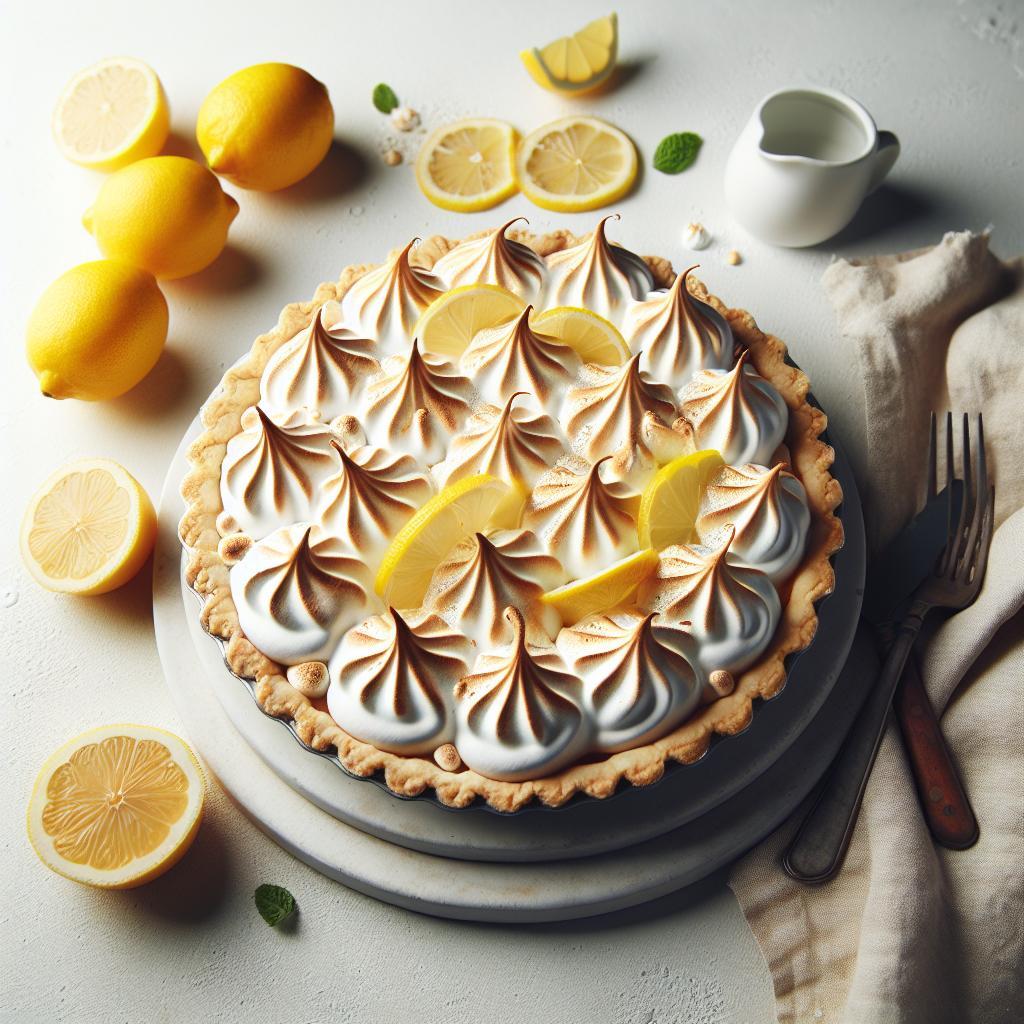
- Spread meringue over filling, pressing to the crust rim to form a full seal. Create peaks for visual contrast and for quicker browning on tips.
- Bake at 350°F (175°C) for 10–12 minutes until the meringue tops reach a light golden hue. Alternatively, use the oven broiler for 30–90 seconds while watching closely to avoid burning.
- Cool at room temperature for 1 hour, then refrigerate at least 1 hour to fully set before slicing with a hot knife for clean cuts.
Tips for Success
Egg temperature matters. Room-temperature whites whip faster and reach higher volume. Separate eggs cold then bring whites to room temperature for 20–30 minutes.
Seal the edges. Press meringue to the crust edge to prevent steam from shrinking the foam away from the rim. A good seal keeps the meringue anchored during bake and cooling.
If you see small beads of liquid (weeping), that usually indicates undercooked meringue or high humidity. Let the pie cool at room temperature to allow moisture to redistribute before refrigeration.
If your kitchen is humid, reduce exposure time by finishing the meringue under a hot broiler for a few seconds; monitor constantly. High humidity increases weeping risks, so plan baking on drier days when possible.
Serving Suggestions
Serve chilled but not ice-cold; refrigeration firms the curd and helps neat slicing. Wipe your knife between slices or dip in hot water before each cut for clean edges.
Garnish with a light dusting of powdered sugar, thin lemon slices, or a small mint sprig for contrast. A neutral vanilla ice cream pairs well but keep accompaniments minimal to highlight the citrus brightness.
Nutrition and Storage
One slice typically ranges around 300–350 calories depending on crust thickness and serving size. Egg, butter, and sugar drive most calories; adjust portions for lighter servings.
Store chilled, covered, up to 48 hours for best texture. Meringue loses loft with extended refrigeration, so assemble and serve within a day whenever possible.
Nutrient Facts
| Nutrient | Per Serving (1 slice) |
|---|---|
| Calories | 320 |
| Protein | 5g |
| Carbohydrates | 45g |
| Fat | 12g |
Q&A
Q&A: Zesty Lemon Meringue Pie – Achieve Tart-Sweet Perfection
Q1: What makes a lemon meringue pie truly zesty?
A1: Fresh lemon zest concentrates essential oils that provide instant aroma and a flavor lift. Grate zest finely to distribute citrus oil without adding bitter pith.
Q2: How do you balance tartness and sweetness?
A2: Start with a boldly lemon curd and temper it with the meringue’s sugar. Taste the curd before adding to the crust—adjust sugar or lemon juice by small increments to suit your palate.
Q3: Why does meringue weep and how do I prevent it?
A3: Weeping comes from liquid separation or undissolved sugar. Whip sugar thoroughly into whites, bake properly, seal edges to the crust, and allow proper cooling to minimize weeping.
Q4: Can I prepare components in advance?
A4: Yes. Prepare crust and curd up to a day ahead, refrigerate covered, and top with freshly whipped meringue before final bake for best appearance and loft.
Q5: Are there creative variations I can try?
A5: Try cardamom or ginger in the curd for subtle warmth, or swap to a graham base for textural contrast. Balance bold additions carefully to preserve the lemon focus.

Explore component science or complementary desserts by referencing foundational topics: lemon, meringue, and pie techniques. These resources reinforce best practices and deepen technical knowledge.
See also: Lemon Meringue