
Biga Unveiled: The Secret Starter for Perfect Artisan Bread
Biga is the Italian pre-ferment that serious bakers use to add depth, structure, and aroma to artisan loaves. It starts as a firm, slightly dry dough that ferments slowly, developing flavor without relying on long sourdough maintenance.
- Slow fermentation improves flavor without added ingredients.
- Lower hydration in biga yields an open, chewy crumb.
- Small yeast dose gives predictable timing and modern compatibility.
What is biga?
Biga is a traditional Italian pre-ferment made from flour, water, and a small amount of commercial yeast. It functions as a controlled leavening base that changes dough chemistry before final mixing.
For context, biga sits in the family of leavening methods; it differs from wild starters like sourdough and wetter pre-ferments such as poolish. For background on related concepts see leaven and yeast.
Why bakers use biga
Bakers choose biga to improve crust color, aroma, and crumb texture while keeping process control. The extended fermentation lets enzymes and yeast gently transform starches and proteins, creating nuanced taste and better oven spring.
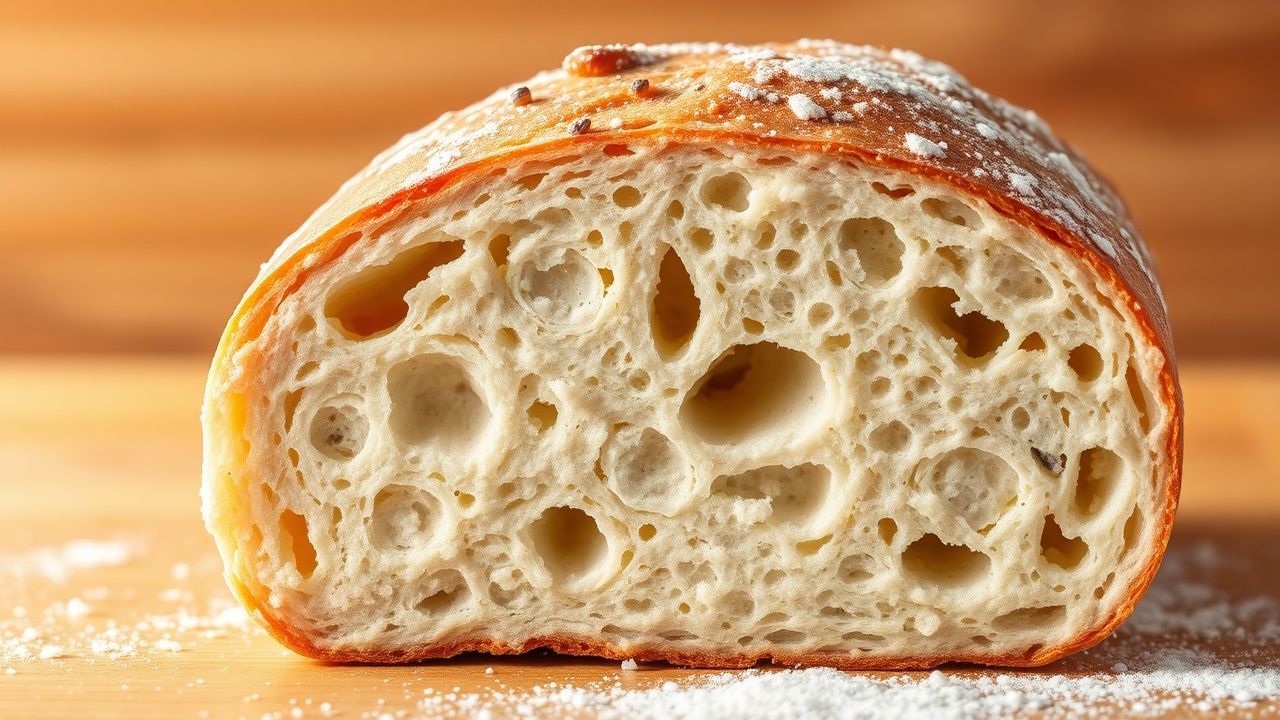
Because biga stays relatively firm, it helps strengthen gluten and contributes irregular, attractive holes in the crumb. Its role sits squarely in fermentation science; for the food science perspective consult fermentation (food).
Biga recipe and timing
Below is a tested formula that fits most artisan loaf formulas when you want predictable flavor and structure. Adjust hydration and flour type to match your final dough plan.
Typical timelines run 12–16 hours at moderate room temperature, though colder rooms will lengthen this. The recommended yeast quantity remains low to favor flavor production over sheer speed.
Ingredients
Use simple, quality ingredients for consistent results. The basic ratio and ingredient list below makes enough biga for two medium artisan loaves.
Basic biga: 120 g bread flour, 120 ml water (approx. 75°F/24°C), 0.25 tsp active dry yeast. Use unbleached, high-protein flour where possible.
Instructions
Follow steps that emphasize gentle handling and time. The goal is a firm, shaggy dough that ferments slowly and develops flavor.
- Mix flour and yeast: Combine dry ingredients to distribute yeast evenly.
- Add water: Stir in water to form a stiff, shaggy mass; do not hydrate fully like a poolish.
- Minimal knead: Turn out and fold two to three times to bring it together—avoid over-developing gluten at this stage.
- Bulk ferment: Place in a lightly oiled bowl, cover, and hold at roughly 20–22°C (68–72°F) for 12–16 hours.
- Ready check: Look for slight expansion (about 40–60%), a glossy surface with bubbles, and a pleasant yeasty aroma.
- Use in final dough: Fold biga into your final mix, then follow your normal mixing, bench rest, shaping, proofing, and bake schedule.
Tips for success
Temperature control matters more than absolute time. Warmer rooms accelerate the enzymatic and yeast activity and will shorten the ideal window for biga maturity.
Hydration defines biga character: a drier biga supports open crumb and crisp crust, while a slightly softer biga shifts toward a more extensible dough. Adjust accordingly and keep notes.
Temperature and hydration
Target a moderate room temperature and avoid strong fluctuations. Use your phone to record ambient temperature when you prepare biga so you can correlate outcomes with conditions.
If you must speed or slow fermentation, change the yeast dose or refrigerate the biga after four to six hours. Cold slows yeast activity predictably while keeping flavor development.
Yeast and timing
Use a conservative yeast dose—roughly 0.1–0.3% baker’s yeast relative to flour—so the ferment runs long and flavors emerge. Overdosing yeast produces rapid fermentation but flatter taste.
Allow flexibility: 12 hours is a good baseline at 20°C; extend to 16 hours if the room is cooler. If the biga peaks and collapses, shorten the time next attempt.
Troubleshooting
If your biga smells strongly sour, alcoholic, or sharp, the ferment likely ran too long or the temperature was too high. Reset timing and lower ambient temperature on the next batch.
When biga shows poor activity—very little rise or few bubbles—check yeast freshness and water temperature. Use fresh yeast and aim for water around 24°C to wake the yeast without overheating it.
Serving suggestions
Breads made with biga excel sliced thick to showcase the open crumb and caramelized crust. They pair well with olive oil, fresh cheeses, or alongside soup and rustic charcuterie boards.
Use biga in recipes such as ciabatta or country loaves when you want an open interior and glossy crust. For enriched doughs, reduce the biga proportion to maintain dough balance.
Nutritional information
Nutrition for artisanal bread varies by flour and add-ins. Below is a representative estimate per serving when made with standard bread flour.
| Per Serving (1/8 loaf) | Calories | Protein | Carbs | Fat |
|---|---|---|---|---|
| Artisan Bread with Biga | 180 | 6 g | 36 g | 1 g |
FAQ
What is the main difference between biga and sourdough?
Biga uses a small amount of commercial yeast and has a drier consistency, while sourdough relies on wild yeast and lactobacilli. The two give distinct flavor profiles and require different maintenance approaches.
Sourdough involves an ongoing culture you feed regularly; biga is a single-use pre-ferment you build for each bake. For general background on wild fermentation see sourdough.
How much biga should I use in a recipe?
A common approach replaces 20–30% of the flour and corresponding water in the final dough with biga. That range balances flavor impact with manageable dough handling.
Adjust the percentage if you want a stronger biga character; test in small batches and record changes. Keep other variables constant for accurate comparison.
Can I refrigerate biga before using it?
Yes. After a short warm ferment, you may chill biga to slow activity and use it later. Bring it back to room temperature before incorporating to avoid shocking the final dough.
Refrigeration slows yeast and enzyme activity but does not stop it entirely. If you store biga too long in the fridge, flavor can become excessively acidic; plan timing carefully.
Will biga work with whole-grain flours?
Biga works with whole-grain flours, but expect faster fermentation and stronger flavor due to bran and germ activity. Reduce fermentation time or lower temperature compared to white flour biga.
Whole-grain biga often benefits from lower hydration to compensate for bran’s water absorption. Test hydration changes and keep clear notes for repeatability.
Where can I learn more about bread science?
Foundational concepts live in broad resources on baking and fermentation. For authoritative background, consult the general bread topic on bread.
Pair that reading with hands-on experiments: controlled trials in your kitchen will teach you how biga behaves under your specific conditions.
In Summary
Biga offers a practical route to richer flavor and superior structure without the maintenance commitment that sourdough requires. It blends tradition with modern predictability.
Weigh ingredients, monitor temperature, and keep a log of results. With disciplined testing, biga will become a reliable tool in your artisan-bread toolkit.
See also: biga