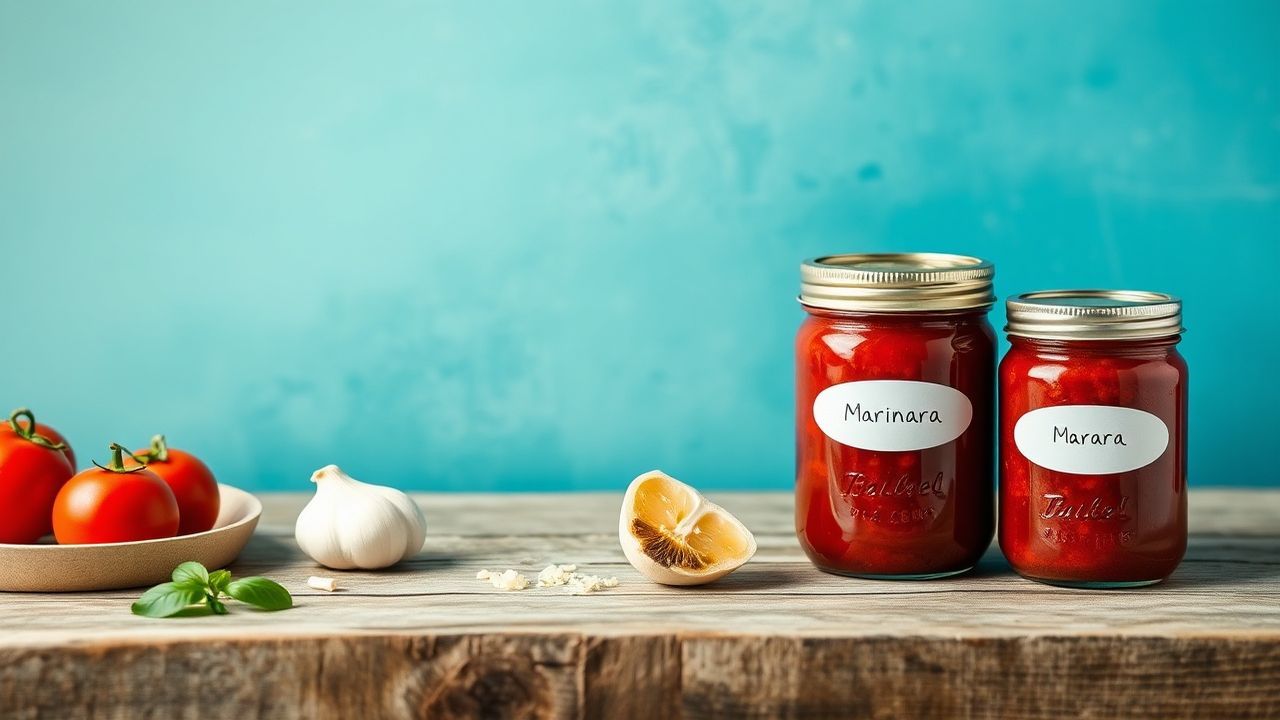

There is a simple, perennial joy in a jar of well-made marinara: bright tomato, fragrant basil, and garlic that sings. This guide puts the focus on safe home canning and flavor control so you capture peak tomatoes into pantry-ready jars of marinara.
- Preserve peak flavor: select tomatoes and techniques that balance acidity and sweetness for lasting marinara.
- Safe canning: step-by-step processing and headspace rules that protect shelf stability and quality.
- Versatile sauce: one reliable marinara becomes the base for pasta, braises, and baked dishes.
- Make it yours: adjustments for texture, heat, and acidity without sacrificing safety.
Choosing Tomatoes and Primary Ingredients for Marinara
Start with tomatoes that concentrate sugar and flesh for a bold marinara. Plum types like San Marzano tomatoes and Roma tomatoes are traditional choices because their thick walls reduce excess water in the pot.
Use extra virgin olive oil, fresh basil, and properly handled garlic to build mouthfeel and aroma. For botanical context, consult the tomato entry when deciding on ripeness and handling for canning.
Prep and Cook Time for Marinara
Preparation: 20 minutes. Cooking: 1 hour 15 minutes. Total: about 1 hour 35 minutes depending on reduction. These times target a balanced marinara that holds up to canning yet remains bright.
Assume a 5-pound batch; reduce longer for thicker jarred marinara, shorten for a looser sauce used in soups. Gentle simmering extracts sweetness without developing burnt or bitter notes.
Yield and Difficulty for Marinara
Yield: roughly 6 cups (serves 8 as a pasta sauce). This fills six to seven half-pint jars or three to four pint jars when you leave proper headspace for marinara.
Difficulty: Medium — ideal for cooks familiar with heat control and ready to add water-bath canning to their skills. Follow tested processing times for reliable results.
Ingredients
Gather ingredients at room temperature for consistent cooking. For a baseline marinara use ripe tomatoes, good olive oil, a sweet onion, garlic, fresh basil, tomato paste, and modest seasoning; adjust sugar only if tomatoes taste flat.
Optional additions like crushed red pepper or oregano change the profile without altering canning safety. For herb background see basil.
- 5 lbs fresh San Marzano or Roma tomatoes, peeled and chopped
- 1/4 cup extra virgin olive oil
- 1 medium yellow onion, finely diced
- 4 cloves garlic, thinly sliced
- 1 teaspoon crushed red pepper flakes (optional)
- 1/2 cup fresh basil leaves, torn
- 1 teaspoon dried oregano
- 1 teaspoon sea salt, adjusted to taste
- 1 teaspoon freshly ground black pepper
- 1 tablespoon tomato paste
- 1 tablespoon granulated sugar (optional)
- 2 cups filtered water or light vegetable stock
Instructions for Marinara: Step-by-Step
Keep your station organized and sterilize jars and lids while the sauce reduces so you can jar hot. Hot-filling minimizes contamination risk and helps form a reliable vacuum for marinara jars.
Below, each sub-step contains clear actions and safety notes relevant to home canning of marinara.
1. Prepare the Tomatoes
Score tomato bottoms, blanch in boiling water for 20–30 seconds, then shock in ice water to slip skins easily. Core and roughly chop, keeping the juices in the pot to preserve flavor concentration for marinara.
Remove excess seeds only if you want a very smooth sauce; seeds add acidity and body and seldom affect long-term flavor in jarred marinara.
2. Sauté the Aromatics
Heat olive oil over medium heat in a heavy pot. Sweat diced onion until translucent, about 6–8 minutes, stirring to prevent browning; this draws sweetness into the marinara base.
Add sliced garlic and optional red pepper, cooking one to two minutes until fragrant. Brief, gentle cooking releases oil-soluble aromatics without creating bitterness in the marinara.
3. Build the Sauce Base
Stir in tomato paste and toast briefly to deepen flavor, then add chopped tomatoes, water or stock, torn basil, oregano, salt, pepper and sugar if needed. Bring to a gentle boil and then reduce to a low simmer for the marinara to reduce and meld.
For a smoother finish pulse with an immersion blender late in the simmer; avoid over-blending if you want rustic texture. Taste and adjust salt, acid, and sweetness before canning marinara.
4. Prepare for Canning
Sanitize jars and lids in boiling water or a dishwasher sanitize cycle while the marinara simmers. Keep jars hot until filling to prevent thermal shock and preserve headspace accuracy.
Ladle hot marinara into jars leaving 1/2 inch headspace. Wipe rims, apply lids, and process in a boiling water bath with altitude adjustments to ensure safe seals for marinara jars.
After processing, remove jars and place them on a towel with spacing. Avoid moving jars for 12–24 hours while they cool and seals set; this stabilizes the vacuum in each marinara jar.
Tips for Success with Your Marinara
Control heat and time: a low, steady simmer extracts sweetness without producing bitter or scorch notes. High heat breaks down delicate aromatics that give marinara bright flavor.
Use smell and sight as primary gauges; a rounded tomato aroma and lightly caramelized paste signal readiness. If you want official canning parameters, refer to tested guides on canning.
- Consistency: mash gently for rustic texture or reduce longer for thicker marinara.
- Acidity: add a tablespoon of bottled lemon juice per quart if tomatoes test low in acidity before water-bath canning.
- Make-ahead: marinara often tastes better the next day; refrigerate or freeze portions if not canning immediately.
Creative Serving Ideas for Marinara
This marinara doubles as a foundation sauce. Use it for pasta, as a braising liquid for meatballs, in baked dishes, or spooned over roasted vegetables for a quick meal.
Finish plates with torn basil and a drizzle of peppery olive oil. A spoonful of ricotta or toasted pine nuts adds texture contrast and richness to marinara-based dishes.
Nutritional Information
Per 1/2-cup serving, approximate nutrition: 70 calories, 2 g protein, 12 g carbohydrates, 4 g fat. Values change with oil or sugar adjustments you make to marinara.
For labeling or menu planning, calculate with your exact ingredient weights and brands to reflect the marinara you actually jar.
To Wrap It Up
Proper technique yields jars that protect both safety and flavor. When you can at peak season, each jar becomes a concentrated memory of that harvest preserved as marinara.
Label jars with date and contents, rotate stock by date, and enjoy the convenience of a homemade marinara base to lift quick dinners and celebratory meals alike.
FAQ
How long will homemade canned marinara last unopened?
Unopened, properly processed jars stored in a cool, dark pantry typically remain at peak quality for up to one year. Quality declines slowly afterward, but seals intact may preserve safety beyond that period.
For best flavor, rotate jars and use the oldest first when serving your marinara.
Can I water-bath can marinara made from fresh tomatoes?
Yes. Most tomato-based sauces with sufficient acidity and proper fill and processing can be preserved with a boiling water bath. Use tested processing times and altitude corrections for reliable marinara preservation.
If adding low-acid ingredients like cream or meat to marinara, use refrigeration or pressure canning as recommended by authoritative sources.
Do I need to add acid when canning marinara?
Many modern tomato varieties have lower natural acidity than older cultivars. Adding bottled lemon juice or citric acid per quart is a standard safety measure for water-bath canning of marinara.
Test your tomatoes or follow tested recipes to ensure safe pH for shelf-stable marinara jars.
How should I store an opened jar of marinara?
Once opened, refrigerate in a sealed container and use within 5–7 days. Freeze portions for longer storage; thawed marinara retains quality for several months when frozen solid.
Do not return used utensils to an opened jar if you plan to restock jars for canning; cross-contamination risks the batch.
Can I use this marinara recipe as a base for other preserves?
The technique transfers to many tomato-based preparations, but additions like cream, meat, or other low-acid ingredients change required processing methods. Adapt carefully and follow pressure-canning guidelines where needed.
For more marinara resources and related recipes visit our site tags and canning guides: marinara sauce and canning basics.
See also: marinara sauce
Recommended Reading:
- Crisp & Sweet: The Ultimate Guide to Dehydrated Apple Chips
- Preserving Fresh Flavor: The Art of Putting Up Tomatoes
- Crunchy Creations: Homemade Granola Using a Dehydrator