
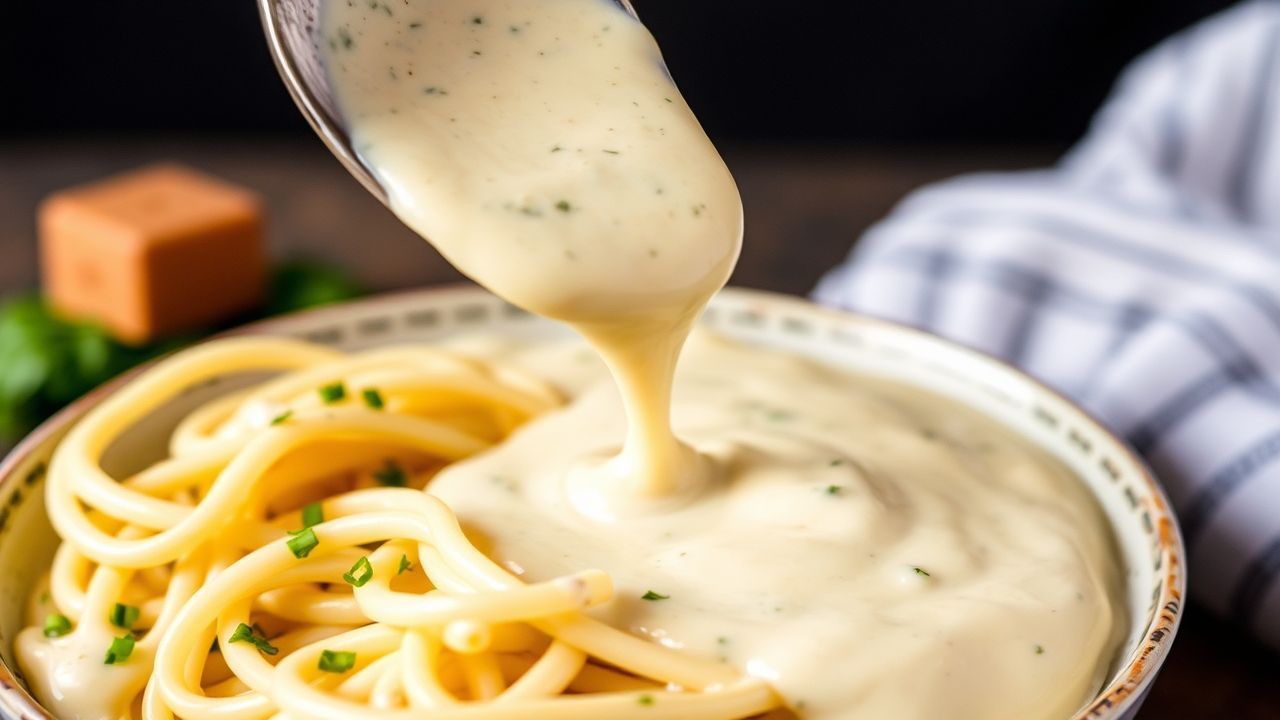

There is a simple joy in a bowl of pasta coated in rich, velvety Alfredo sauce. When you make it from scratch, you control texture, balance, and aroma so the sauce feels freshly made and deeply satisfying.
- Silky texture requires low heat and gradual cheese incorporation.
- High-fat cream and real Parmigiano-Reggiano deliver the classic mouthfeel.
- Make-ahead and reheat strategies preserve creaminess for up to 3 days.
Prep and Cook Time
Preparation: 10 minutes. Cooking: 15 minutes. The total active time stays around 25 minutes, which suits weeknight dinners and small dinner parties.
These timings assume you have grated cheese ready and garlic minced. For larger batches, increase cooking time by short increments and monitor texture closely to avoid overcooking.
Yield
This recipe yields serves 4 generous portions when tossed with about 12–16 ounces of pasta. It pairs well with fettuccine but adapts to other shapes.
You can scale the ingredients proportionally. For four servings doubled, work in two smaller saucepots to keep heat control precise and prevent separation.
Difficulty Level
Easy for cooks who follow temperature control and timing. The technical demands are modest, but technique matters: slow heat, steady whisking, and patience.
With a few practice runs you will consistently produce a smooth, lump-free sauce. The method gives reliable results whether you cook weekly or occasionally.
Ingredients
Gather fresh, high-quality components. The ingredient list below focuses on the classics that build flavor and texture.
Use ingredients at hand temperature where possible to reduce shock to the sauce when combining elements.
- 1 cup heavy cream (see cream source below)
- ¾ cup freshly grated Parmigiano-Reggiano (prefer genuine Parmigiano-Reggiano)
- 3 tbsp unsalted butter, cut into cubes
- 2 garlic cloves, finely minced
- ½ teaspoon sea salt (adjust to taste)
- ¼ teaspoon freshly ground white pepper
- Pinch of ground nutmeg (optional)
- Fresh parsley, finely chopped, for garnish
Background reading: learn about the role of dairy fats in mouthfeel on the cream (dairy) page. For cheese provenance, consult Parmigiano-Reggiano.
Choosing real, freshly grated cheese matters more than any single spice. Pre-grated cheese often contains anti-caking agents that interfere with melt quality.
Instructions
Follow the steps in order. Temperature control and gradual incorporation of cheese create a stable emulsion and a creamy end result.
Keep utensils ready: a medium saucepan, non-stick skillet, fine whisk, and a spoon for testing consistency.
Step 1 — Warm the cream
Pour the heavy cream into a medium saucepan and heat over low heat until it starts to steam. Do not boil; small bubbles or steam indicate the right range.
Heating gently concentrates flavor and reduces the risk of the sauce breaking when cheese joins the mixture. Stir occasionally to prevent a skin from forming.
Step 2 — Sauté the garlic
Gently melt the butter in a separate non-stick skillet over medium-low heat. Add the minced garlic and sauté until fragrant and lightly golden, about 1–2 minutes.
Avoid browning beyond light gold; overcooked garlic turns bitter. Infusing the butter adds aromatic depth to the cream base without overpowering the cheese.
Step 3 — Combine and season
Whisk the sautéed garlic butter slowly into the warm cream. Add salt, white pepper, and a pinch of nutmeg. Stir continuously for an even base and glossy texture.
White pepper keeps the sauce visually uniform; black pepper is fine if you prefer visible specks. Taste and adjust seasoning before adding cheese.
Step 4 — Add the cheese and finish
Reduce heat to very low. Gradually sprinkle in freshly grated Parmigiano-Reggiano while stirring constantly. Work in small batches so the cheese melts smoothly without clumping.
Continue stirring for 3–5 minutes until the sauce thickens enough to coat the back of a spoon. Avoid boiling after cheese addition to prevent curdling.
Chef’s Notes: Tips for Success
Small technique choices produce big differences. Use low, steady heat; use freshly grated cheese; and add the cheese slowly.
For texture checks, dip a spoon, run your finger across the back, and look for a clean line. That indicates the sauce will cling properly to pasta.
Clump prevention and emulsion care
Whisk continuously and avoid introducing high heat spikes. An even, gentle stir breaks cheese into tiny particles that disperse into the cream matrix.
The chemistry here is simple: you create an emulsion where fat from cream and butter carries flavor and suspends cheese proteins. Read more about sauces and emulsions on the sauce entry.
Creative Twists and Serving Suggestions
Alfredo sauce provides a neutral, creamy canvas for proteins and vegetables. Toss cooked pasta directly into the sauce for best coating and texture.
Gently toss hot pasta in the sauce over the lowest heat for 30–60 seconds to marry the starch and cream. Fresh pasta like fettuccine pairs exceptionally well; see the fettuccine article for background.
- Protein: Grilled chicken or seared shrimp add savory contrast and structure.
- Vegetables: Blanched broccoli or roasted asparagus give color and bite.
- Finishes: Fresh parsley or basil brightens each forkful.
Use a splash of pasta cooking water to loosen the sauce if it tightens too much. The starchy water improves glide and adhesion without diluting flavor.
Nutritional Information
Per serving estimates depend on portion and added ingredients. A basic serving made to this recipe measures roughly 450 kcal, with high fat content due to heavy cream.
Typical macronutrients per serving in the base recipe: approximately 17 g protein, 4 g carbohydrates, and 38 g fat. Adjust when adding proteins or vegetables.
| Nutrient | Per Serving |
|---|---|
| Calories | 450 kcal |
| Protein | 17 g |
| Carbohydrates | 4 g |
| Fat | 38 g |
Q&A
Common technical questions address ingredients, shelf life, and texture. The answers below focus on technique and practical substitutions.
Keep this Q&A handy while you practice; most challenges resolve with minor temperature or timing tweaks.
Q: What makes homemade Alfredo better than jarred versions?
Freshness and control. You choose the cream-to-cheese ratio and avoid stabilizers that alter mouthfeel.
Freshly grated cheese melts with greater fidelity, and subtle adjustments to heat and seasoning deliver a personalized taste profile.
Q: Can I make Alfredo without heavy cream?
Yes. Substitute part of the cream with whole milk thickened with a bit of cornstarch or use half-and-half for a lighter result. Expect a thinner consistency and adjust with reduction or added cheese.
Blended cream cheese can mimic richness but will change the classic flavor. Test small batches to match your preference.
Q: How do I store and reheat the sauce?
Keep leftovers in an airtight container in the refrigerator for up to 3 days. Reheat gently over low heat while whisking, adding a splash of cream or milk to restore texture.
Avoid high microwave heat; it tends to separate emulsion. Slow rewarming on the stove preserves gloss and mouthfeel.
Q: Is this sauce vegetarian-friendly?
Yes, the base sauce contains no meat. Verify that your Parmesan uses microbial rennet if you follow a strict vegetarian diet.
When in doubt, choose cheeses labeled as vegetarian to ensure compliance with dietary preferences.
Future Outlook
Homemade Alfredo remains a flexible recipe that rewards small refinements. With practice, you will dial in the exact richness and seasoning you prefer.
Experimenting with add-ins and pairing choices will expand the dish’s versatility while preserving the fundamental technique that makes the sauce reliably creamy.
FAQ
How can I prevent the sauce from becoming grainy?
Graininess usually comes from overheating or adding cheese too quickly. Keep heat low and add cheese gradually while stirring constantly.
Use freshly grated Parmigiano-Reggiano and avoid pre-shredded varieties that include anti-caking agents.
What pasta works best with Alfredo?
Long, flat shapes like fettuccine or linguine hold and present the sauce well. Short shapes also work; toss thoroughly so each piece gets coated.
Fresh or dried pasta both work, but adjust the sauce-to-pasta ratio: fresh pasta often needs slightly less sauce due to its higher moisture.
Can I freeze Alfredo sauce?
Freezing cream-based sauces can change texture. Refrigerate for short-term storage and reheat gently. If you must freeze, expect some separation and plan to re-emulsify on reheating.
Label and portion before freezing to limit thaw cycles and preserve quality as much as possible.
What is the best way to reheat without losing silkiness?
Warm slowly in a saucepan over very low heat, whisking and adding small amounts of cream or milk until smooth. Avoid boiling.
Reheating in short bursts at low microwave power can work if you stir frequently, but stove reheating gives the most predictable results.
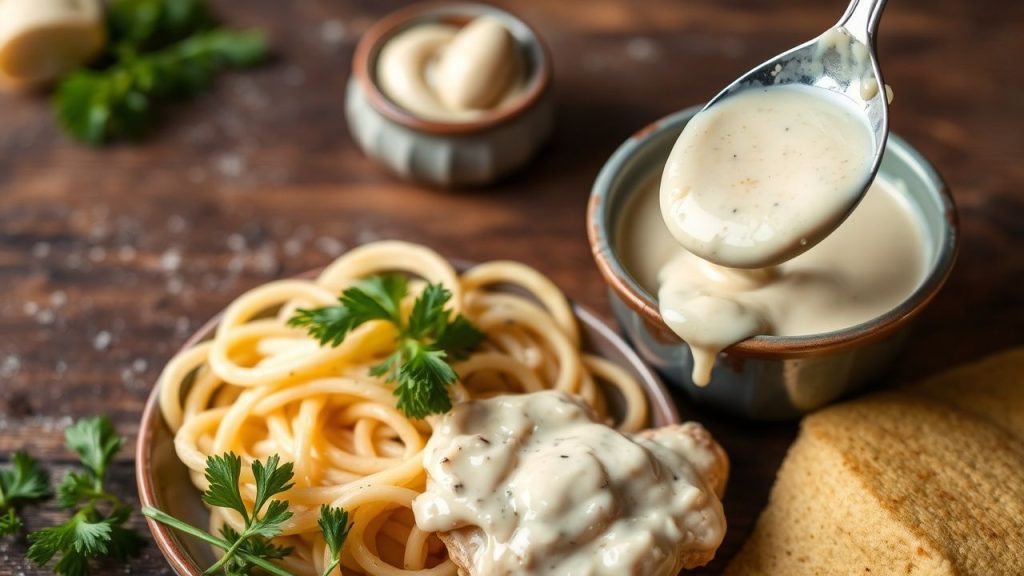
For further technical background on pasta chemistry and sauce adhesion, consult the general pasta overview.
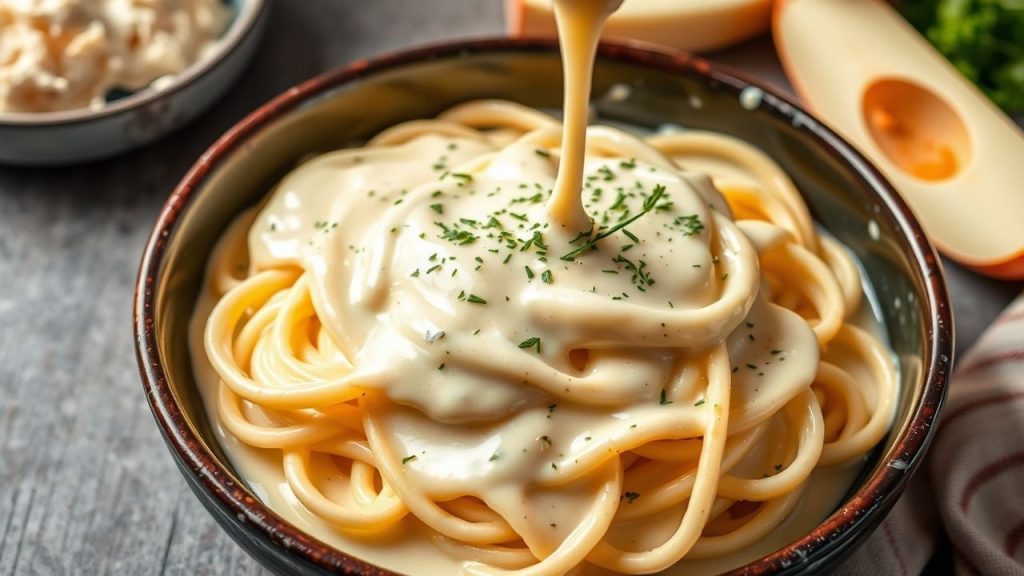
See also: Alfredo sauce