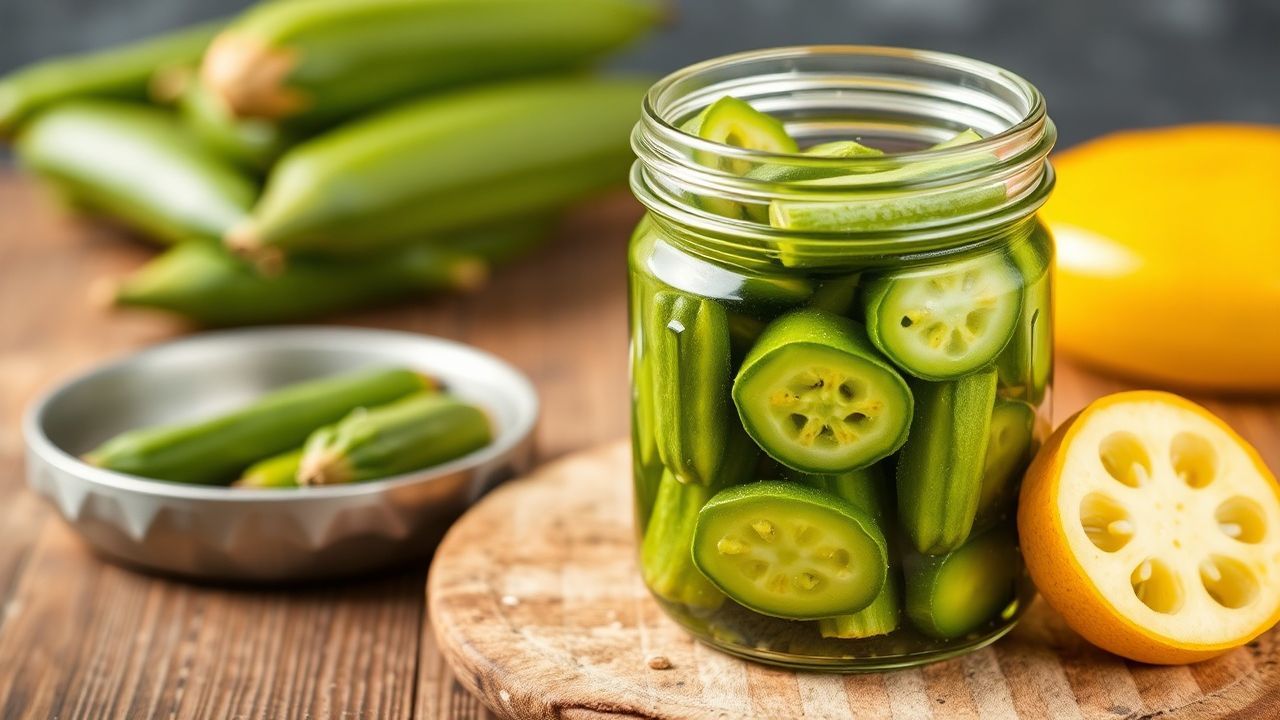

Pickled okra transforms a humble pod into a crisp, tangy snack when handled correctly. This guide explains how to eliminate slime while preserving snap, using tested techniques and clear rationale.
- Choose fresh pods and keep stems intact to lock in crunch.
- Use alum or cold vinegar soak to neutralize mucilage and firm tissues.
- Cold pickling (refrigerated brine) prevents softening while flavors develop.
- Pack jars tightly and maintain acid concentration for shelf stability.
Okra’s mucilage is the biochemical reason some jars go slimy; controlling that mucilage plus moisture level gives consistent results. For background on the plant and its properties, see okra.
Prep and Cook Time
Preparation: 20 minutes active work. This includes trimming, soaking, and jar packing.
Pickling time: 5 days in the refrigerator for optimal texture and flavor integration. Cold pickles take time to absorb aromatics without softening.
Yield
This recipe yields approximately 4 cups of pickled okra, enough to serve 6–8 as a snack or side. Jars should be tightly packed to maximize shelf life and crunch.
Yield depends on pod size; small-to-medium pods give the best density per jar and the most consistent texture retention.
Difficulty Level
Rated Medium: you must control timing, soak chemistry, and temperature to avoid slime. The technique is straightforward but demands attention.
Precision yields repeatable results. With two or three batches you will internalize the timing and texture cues that separate good jars from great jars.
Ingredients
- 1 lb fresh okra pods, medium size, firm and unblemished
- 2 cups white vinegar (5% acidity)
- 1 cup filtered water
- 1 tablespoon kosher salt
- 1 tablespoon sugar
- 4 garlic cloves, peeled and halved
- 2 teaspoons dill seeds
- 2 teaspoons mustard seeds
- 1 teaspoon black peppercorns
- 1 teaspoon crushed red chili flakes (optional)
- 2 sprigs fresh dill
- 1 tablespoon alum powder (to reduce sliminess)
Alum is the traditional agent used to firm pickled vegetables by interacting with pectin and cell walls. For chemical context, consult potassium aluminium sulfate (alum).
Vinegar provides acidity to denature enzymes and inhibit microbial activity; for technical details see vinegar.
Instructions
Follow each step precisely. Small deviations in timing or temperature change the texture outcome more than ingredient swaps do.
All steps below assume sterilized jars and clean work surfaces. Work quickly when handling soaked okra to avoid rehydration from ambient moisture.
1. Prepare the okra
Rinse pods under cold running water and pat dry thoroughly with towels. Trim only the stems; leaving pods whole preserves internal structure that provides crunch.
Small-to-medium pods retain firmness better than large, mature pods. Inspect each pod for blemishes that accelerate breakdown.
2. Remove sliminess
Dissolve alum powder in cold water and submerge okra for 10–12 minutes. This limits mucilage release and firms tissues by mild ionic interaction with cell walls.
Do not exceed the soak time; overexposure can give a slightly astringent mouthfeel. For an acid alternative, use a short vinegar-water rinse to coagulate some mucilage.
3. Make the pickling brine
Combine vinegar, filtered water, kosher salt, and sugar in a saucepan. Bring to a gentle boil, stir until dissolved, then remove from heat and cool to room temperature.
Maintain a brine ratio that keeps acidity at or above 5% effective concentration when diluted by vegetable volume to preserve texture and safety.
4. Pack the jars
Sterilize jars and lids; place aromatics (garlic, dill seeds, mustard seeds, peppercorns, chili flakes, fresh dill) at the bottom. Pack soaked okra vertically and tight to minimize trapped air.
Vertical packing exposes minimal pod surface area to brine turbulence and keeps pods intact. Headspace should be 1/2 inch to allow for slight expansion.
5. Pour brine and store
Fill jars with cooled brine until okra is fully submerged. Seal lids and refrigerate. Do not process in a hot-water bath for this cold method; cold brining keeps structures firm.
Allow at least five full days of refrigeration before tasting. The cold period lets acid and aromatics penetrate while inhibiting bacterial action that softens texture.
After refrigeration and before serving, inspect each jar visually and by smell. Any off-odors or cloudiness beyond expected brine turbidity means discard the jar.
Tips for Success: Expert Advice for Slimeless Pickled Okra
Choose firm, bright-green pods and work cold. Freshness limits mucilage release and gives a decisive snap after pickling.
Pack jars tightly and minimize handling once soaked. Excess agitation releases more mucilage and weakens pod walls.
Adjust spices to taste, but keep core steps constant. Smoked paprika or lemon zest change flavor without affecting texture when used sparingly.
Serving Suggestions
Serve chilled as a snack, a garnish for cocktails, or as a crunchy contrast on charcuterie boards. Their tangy profile pairs well with creamy elements.
For salads, slice pods diagonally to maintain bite. Use as a savory topper on grain bowls or as an unusual but effective Bloody Mary garnish.
Nutrition
Okra is low in calories and supplies fiber and small amounts of protein. Pickling alters sodium content, so account for that in dietary planning.
Per 100g: ~15 kcal, 1.5 g protein, 3.2 g carbs, 0.1 g fat. Salt in the brine increases sodium significantly; rinse if needed to reduce surface salt.
| Nutrient | Amount per 100g |
|---|---|
| Calories | 15 kcal |
| Protein | 1.5 g |
| Carbohydrates | 3.2 g |
| Fat | 0.1 g |
Practical Science Behind the Crunch
Okra mucilage is a polysaccharide-rich gel that forms when cell walls rupture and pectins hydrate. Controlling that hydration is the core technique to prevent slime.
Refer to the mucilage overview at mucilage for biochemical context. Acid and ionic agents like alum change the gel properties and reduce viscosity.
Q&A
Below are focused answers to frequent questions that arise when pickling okra. Each answer highlights practical, tested steps you can apply immediately.
These responses assume a cold-brine approach; for fermented alternatives consult fermentation-specific resources.
Q1: What makes pickled okra’s crunch prized?
Crunch signals intact cell walls and controlled moisture. When preserved correctly, okra retains textural integrity that complements its tangy flavor.
Textural contrast elevates dishes and signals careful handling during harvest and processing.
Q2: Why does okra become slimy and how do I avoid it?
Okra releases mucilage when cell walls degrade or when pods are overcooked or over-soaked. Limit mucilage by using fresh pods and short, controlled soaks.
Physical handling, temperature, and pH all influence mucilage behavior. Cold brining keeps mucilage from dispersing and turning jars gooey.
Q3: Can I pickle okra without alum?
Yes. A quick vinegar-water rinse or a brief blanch can reduce slime without alum. However, alum often gives the most predictable firmness for novice picklers.
If avoiding alum for dietary or regulatory reasons, increase cold soak time and use higher vinegar concentration while testing texture incrementally.
Q4: How long do pickled okra last?
Refrigerated, properly made pickles stay high quality for up to a month after opening. Shelf-stable jars processed correctly can last longer; follow validated canning protocols for that goal.
Always inspect jars before consumption; off-odors, gas, or unusual cloudiness indicate spoilage and require disposal.
Q5: Where can I learn more about pickling principles?
For reliable, science-based pickling fundamentals, consult the broad overview at pickling. That resource explains acidity, preservation, and common techniques.
Combine those principles with the practical steps here to refine your method for different vegetables and flavor profiles.
Key Takeaways
Controlling mucilage, maintaining acid, and using cold pickling produce repeatable crunchy okra. Fresh pods and tight packing matter as much as ingredient ratios.
Practice increases reliability: test one jar for timing, then scale once you confirm the desired snap and flavor.
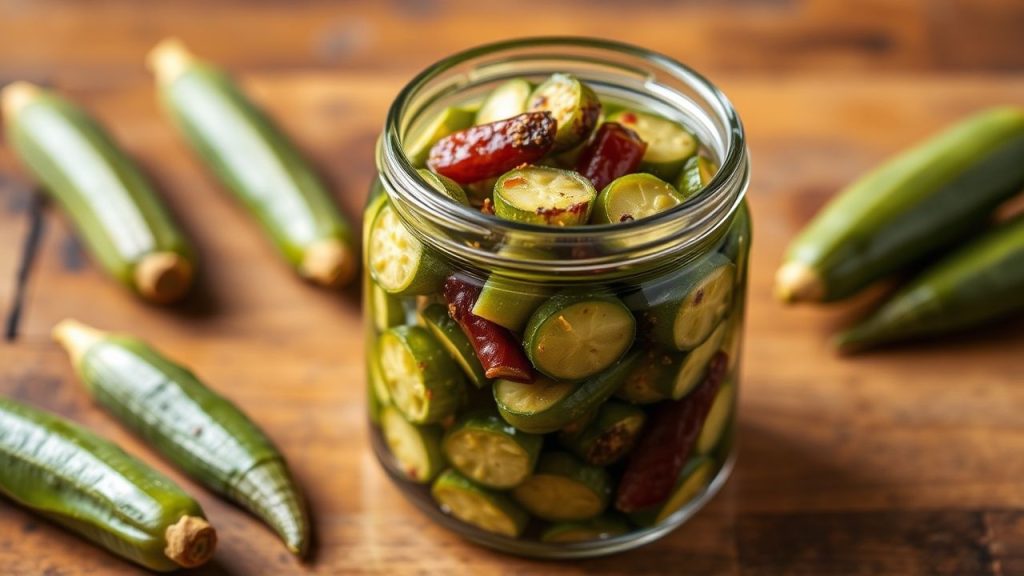
See also: pickled okra