
Crunchy & Sweet: 7-Step Ultimate Bread Pickles Recipe
Bread pickles that snap open with a bright, sweet tang reward precise technique and the right brine ratios. This recipe explains how to produce reliably crunchy bread pickles using timing, cold-soak, brief blanching, and balanced sugars and spices.
- Quick outcome: Ready to serve after 24 hours refrigeration.
- Texture control: Ice soak plus brief blanching preserves snap.
- Flavor balance: A measured vinegar-to-sugar ratio yields sweet-tart bread pickles without overpowering acidity.
- Storage: Refrigerate up to 4 weeks; follow tested canning for shelf-stable storage.
Perfecting the Balance of Flavors for Bread Pickles
Bread pickles rely on a clear vinegar-to-sugar relationship to create the classic sweet-and-tang profile. Use measured ratios so acidity brightens rather than overwhelms, and let warm spices carry secondary flavor notes.
Start with firm fruit and consistent cuts so the brine penetrates evenly and the slices retain texture. For botanical and varietal context, consult cucumber to understand how variety affects cell structure and water content.
At a Glance: Yield, Time, Difficulty for Bread Pickles
Quick Facts
Yield: About 4 cups (roughly 8 servings) when using thin-sliced cucumbers packed in jars. These figures assume 1/8-inch rounds and standard jar packing.
Timing: 15 minutes active prep, ~10 minutes hot brine/blanch, then 24 hours refrigeration for peak flavor. The schedule keeps the process practical for weeknight cooks making bread pickles.
Ingredients for Bread Pickles — Practical, Proven Choices
These ingredients form a dependable base for classic bread pickles; adjust minor quantities to taste. For canning safety, choose vinegars at 5% acidity to meet standard preservation assumptions.
Choose small, firm pickling cucumbers to preserve cell structure during pickling and reduce the risk of soft slices. For background on pickling chemistry, see pickling.
- 6 medium kirby or pickling cucumbers, 1/8-inch rounds
- 1 large yellow onion, thin half-moons
- 1 1/2 cups white vinegar (5% acidity)
- 1 cup granulated sugar
- 1/4 cup light brown sugar, packed
- 1 tablespoon kosher salt
- 1 teaspoon mustard seeds
- 1 teaspoon celery seeds
- 1/2 teaspoon turmeric for color
- 1/2 teaspoon ground ginger
- Freshly ground black pepper, to taste
- Ice water for crisping
Step-by-Step Guide to Bread Pickles Texture and Flavor
1. Prepare and Crisp
Trim cucumber ends and slice uniformly to 1/8-inch for consistent brine penetration. Immediately transfer slices to ice water and soak at least one hour to contract cells and firm tissue.
For larger batches, rotate water or add crushed ice to maintain low temperature during the soak. This cold soak reduces later sogginess and supports crisp bread pickles.
2. Salt Draw and Rinse
Drain cucumbers and onions, toss with kosher salt, and rest 30 minutes in a colander to draw out moisture via osmosis. The salt step firms flesh so slices remain snap-prone after brining.
Rinse thoroughly under cold running water to remove excess salt, then drain completely. Excess residual salt will mask balance and can accelerate softening if left in place.
3. Make the Brine
Combine vinegar, both sugars, mustard seeds, celery seeds, turmeric, and ground ginger in a saucepan. Bring to a gentle boil while stirring until sugars dissolve and seeds bloom, releasing essential oils.
Brine chemistry influences both color and flavor stability for bread pickles. For context about salt-solution behavior during heating, review brine.
4. Brief Blanching
Add cucumbers and onions to the hot brine and cook for 2–3 minutes to temper raw sharpness while protecting cell integrity. This short heat step helps slices retain most of their snap.
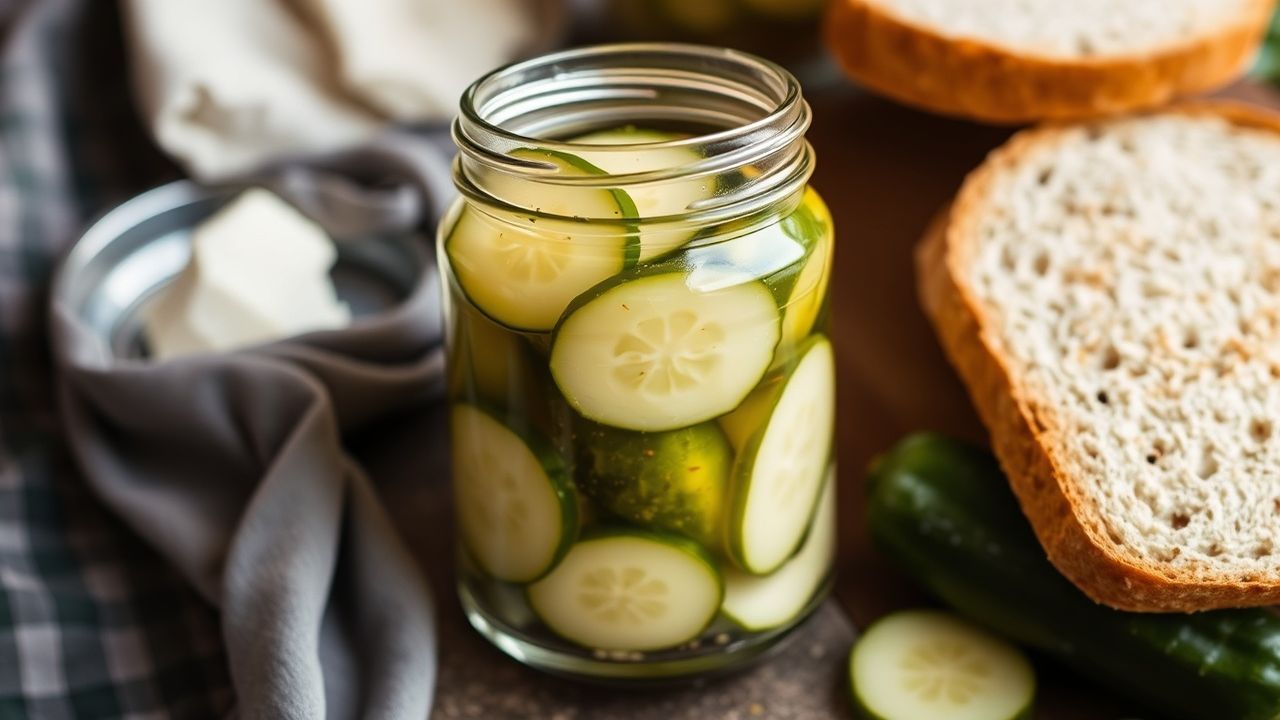
Remove from heat and transfer the hot mixture into sterilized jars, packing slices neatly to minimize trapped air. Immediately seal jars to capture hot brine contact and ensure even infusion across each jar of bread pickles.
5. Chill, Mature, and Optional Canning
Let jars cool to room temperature, then refrigerate; allow at least 24 hours before tasting so flavors meld and texture stabilizes. Refrigerated pickles are safe and tasty after a day, improving over 48–72 hours.
If you plan long-term storage, use a verified hot water bath canning method with proper headspace and processing times; follow tested guidelines rather than guesswork. For step-by-step canning guidance related to bread pickles, consult our internal resource on safe canning: How to Can.
Tips, Storage and Serving Bread Pickles
Storage: Keep refrigerated in airtight jars for up to 4 weeks for best crunch. For months-long shelf-stable storage, follow tested canning protocols to avoid spoilage.
Serving: Bread pickles complement deli sandwiches, burgers, salads, and charcuterie boards. Slice, chop, or layer them for texture contrast with rich proteins.
Chef’s Notes and Ingredient Substitutions for Bread Pickles
Best cucumbers: Kirbys and short pickling cucumbers give firmer texture than long, watery slicers. Choose blemish-free fruit and avoid overripe specimens to prevent soft pickles.
Vinegar options: White distilled vinegar gives a clean tang while apple cider vinegar adds fruity depth and a darker hue. Always use vinegars at approximately 5% acidity to maintain safety and consistent flavor when canning bread pickles.
Common Issues and Fixes for Bread Pickles
If slices go soft, common causes include overripe cucumbers, insufficient ice soak, or prolonged boiling in the brine. Address each by choosing firmer produce and minimizing high-heat exposure.
If brine becomes cloudy during refrigeration, check seals and temperature history; cloudiness often signals non-ideal storage or contamination. When in doubt, discard and remake with sterilized jars and fresh brine to protect quality and safety for your bread pickles.
Nutrition Snapshot
The following snapshot reflects a small serving and varies with sugar levels and slice thickness. Use it as a quick orientation rather than exact lab analysis.
| Nutrient | Amount per 1/4 cup |
|---|---|
| Calories | 45 kcal |
| Protein | 0.4 g |
| Carbohydrates | 12 g |
| Fat | 0.1 g |
Serving Suggestions for Bread Pickles
Serve chilled as a bright counterpoint to fatty or fried foods; they cut richness and add textural lift. Layer slices on an open-faced sandwich with creamy cheese and fresh greens for an elegant, everyday presentation.
Chop and scatter over potato salad to introduce a sweet-sour pop, or place whole rounds on a cheese board for color and crunch. Finish with a quick grind of black pepper to lift aroma and flavor in each bite of bread pickles.
See also: bread pickles
FAQ
What makes bread and butter pickles different from dill pickles?
Bread and butter pickles use a higher sugar ratio and warm spices to build sweetness and depth. Dill pickles rely on dill and garlic for savory, herb-forward emphasis rather than a pronounced sweet profile.
How long before I can eat these bread pickles?
Refrigerated bread pickles taste good after 24 hours, and their flavor improves over 48–72 hours. Texture stabilizes within a day when you follow the ice soak and brief blanching sequence.
Can I substitute apple cider vinegar for white vinegar in bread pickles?
Yes. Apple cider vinegar adds a fruitier tang and slightly darker color to bread pickles. Keep vinegar acidity consistent (around 5%) to preserve safety and predictable flavor when canning or refrigerating.
How do I keep bread pickles crunchy long-term?
Start with firm cucumbers, use an ice soak, avoid overcooking in the brine, and consider a tannin leaf like grape for added crispness if that fits your pantry tradition. For extended storage, use tested canning methods and follow processing times closely.
Are there easy customizations for bread pickles?
Add red pepper flakes for heat, swap yellow onions for red for milder bite and color, or include thin carrot slices for texture contrast. Maintain the core brine ratio when experimenting so the balance of sweet and tang remains consistent across batches.
Recommended Reading:
- Tangy Twist: How to Make Perfect Homemade Pickled Eggs
- Unlock Gut Health: Creative Ways to Add Fermented Foods
- Pickle Perfection: Crafting Small Batches with Big Flavor