
Introduction: Mayonnaise Cake Overview
The mayonnaise cake transforms a pantry ingredient into a shortcut to reliably moist, deeply flavored chocolate layers. Bakers call this approach a dependable way to get an ultra-tender crumb using simple tools and ingredients.
- Ultra-moist crumb: Mayo supplies emulsified fat and whole-egg structure.
- Minimal fuss: No creaming required; one-bowl methods work well.
- Flavor lift: Coffee or espresso heightens chocolate without extra sugar.
Unlocking the Magic: How Moistness and Texture Intertwine
The mayonnaise cake relies on an emulsion of oil and egg yolk that suspends cocoa and sugar evenly. This stable mixture prevents dry pockets and produces a fine, consistently moist crumb.
When you combine ingredients gently, the emulsion traps small air cells that support a gentle rise and soft mouthfeel. For context on emulsions and why they matter, consult emulsification.
Science of Flavor
Cocoa compounds dissolve more completely in the presence of fat, so the mayo-derived oil deepens chocolate notes. Adding brewed coffee accentuates dark chocolate aromatics without raising sweetness.
Chocolate’s volatile flavors release more readily with moisture and a touch of acidity during baking. For technical background on chocolate composition, see chocolate.
Prep Details: Timing and Temperature for Mayonnaise Cake
Prep time usually runs 15 minutes when ingredients are measured and staged. Accurate weighing improves predictability for texture and bake time.
Bake at 350°F (175°C) for roughly 30–35 minutes in an 8-inch pan; ovens vary, so test early. Allow a 10-minute resting period in the pan before unmolding to prevent collapse.
Yield & Difficulty
This mayonnaise cake typically serves eight generous slices and rates as Easy for bakers familiar with basic mixing. The method uses straightforward steps: combine, fold, and bake.
Both novice and experienced bakers find the batter forgiving when they avoid overmixing and remove the cake at the first sign of a moist crumb on a tester.
Ingredients for a Reliable Mayonnaise Cake
Use standard pantry staples: all-purpose flour, unsweetened cocoa, baking soda, salt, sugar, mayonnaise, vanilla, brewed coffee or hot water, and eggs. Choose full-fat mayonnaise made with whole eggs for best texture.
If desired, replace half the all-purpose flour with cake flour for a lighter crumb or use a gluten-free 1:1 blend for dietary needs. For basic cake history and context, see cake.
- 1 cup all-purpose flour, sifted
- ½ cup unsweetened cocoa powder
- 1 teaspoon baking soda
- ¼ teaspoon salt
- 1 cup granulated sugar
- ½ cup mayonnaise (full-fat)
- 1 teaspoon vanilla extract
- ½ cup brewed coffee or hot water
- 2 large eggs
Instructions: Step-by-Step for a Fail-Safe Mayonnaise Cake
Preheat oven to 350°F (175°C). Grease an 8-inch round pan and line parchment for clean removal. Set racks to the center position to ensure even heat circulation.
In a medium bowl, whisk flour, cocoa, baking soda, and salt. Sifting or vigorous whisking breaks lumps and helps even distribution of leavening agents.
Mixing Sequence
In a large bowl, beat sugar and mayonnaise until smooth using a spatula or low-speed mixer. Then add eggs one at a time, mixing after each addition to maintain a stable emulsion.
Stir in vanilla, pour hot coffee or water slowly, and mix until uniform. Fold the dry ingredients in gently to avoid developing excess gluten and creating toughness.
Bake and Cool
Transfer batter to the prepared pan, smooth the top, and bake 30–35 minutes. The center should spring back slightly and a tester will show moist crumbs, not wet batter.
Cool in the pan for 10 minutes, then release to a rack to finish cooling. Full cooling prevents runny frosting and improves slice definition.
Chef’s Notes: Tips for Success with Mayonnaise Cake
Use brewed espresso or strong coffee to intensify chocolate without adding sugar. The bitter elements lift cocoa and create a more complex profile.
Avoid overmixing once wet and dry are combined; gentle folding preserves a tender crumb. Monitor bake time closely, as overbaking quickly dries this style of cake.
For textural tweaks, swapping part of the flour for cake flour reduces chew while keeping moisture from the mayonnaise. Adjust liquid slightly when using alternative flours.
Serving Suggestions to Amplify Your Indulgence
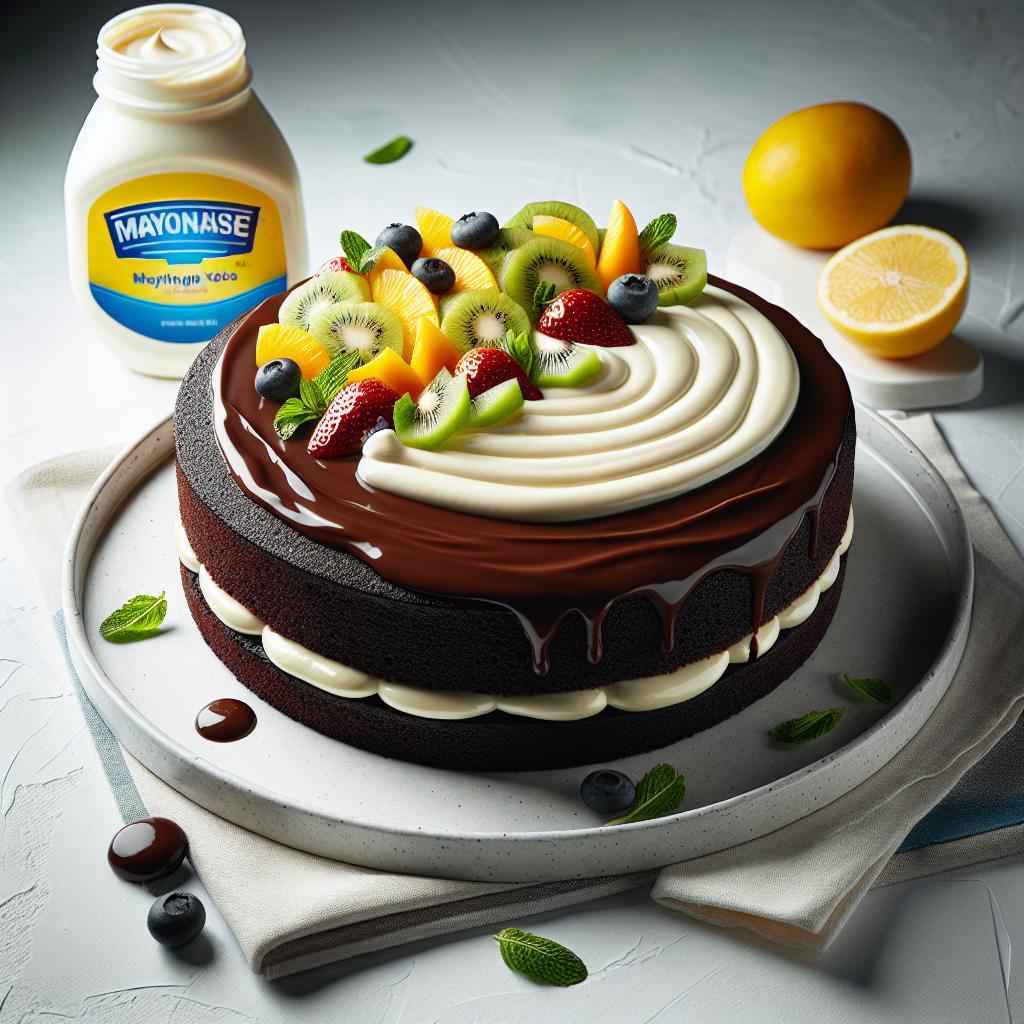
Finish with a glossy chocolate ganache for elegance, or toss with a dusting of powdered sugar for simplicity. Fresh berries add bright acidity and visual contrast.
Pair slices with whipped cream, vanilla ice cream, or a small glass of fortified wine depending on the occasion. For pairing background, consult coffee notes when serving with a cup.
Creative Variations for Personalized Perfection
Try folding in ¼ cup finely chopped dark chocolate for pockets of melted richness. Toasted nuts like pecans add crunch and balance the cake’s density.
Introduce subtle spices—cinnamon or a hint of cayenne—for warmth. For dairy-free needs, use vegan mayonnaise and a plant-based milk replacer; expect modest texture differences.
- Mocha Magic: Add 1–2 teaspoons instant espresso powder.
- Nutty Delight: Fold in ½ cup toasted walnuts or pecans.
- Spiced Sensation: Add ¼ teaspoon cinnamon and a pinch of cayenne.
- Fruity Fusion: Swirl raspberry jam for a jammy ribbon.
Nutrition (Per Serving)
Estimated nutrition will vary by brand and portion size. A typical slice using standard full-fat mayonnaise runs near 280 kcal per serving.
For precise tracking, calculate based on your ingredient labels. Use online calculators or recipe software for exact macros when you substitute ingredients.
Why Bakers Keep Coming Back to Mayonnaise Cake
Home bakers turned to mayonnaise cake historically when pantry substitutions solved shortages and reduced baking steps. The method endured because it reliably produced moist results with minimal technique.
Century-old home-cooking traditions favor adaptive recipes that reward small tweaks. This approach fits that lineage: simple swaps, predictable texture, and broad acceptance at the table.
Resources and Internal Guides
For foundational techniques, review our internal baking primer at Baking Basics. That guide covers mixing methods and leavening behavior.
Explore complementary templates and chocolate-forward recipes at Chocolate Recipes. These internal references help you scale or adapt the mayonnaise cake reliably.
At a Glance
- Key texture driver: Emulsified fat from mayo keeps crumb moist.
- Simple technique: One-bowl mixing reduces error and cleanup.
- Flavor boost: Coffee deepens chocolate without added sugar.
FAQ
What exactly is a mayonnaise cake?
A mayonnaise cake uses mayonnaise as the primary fat source, supplying both oil and whole-egg structure. The result delivers a moist crumb and pronounced chocolate flavor without tasting like mayonnaise.
Will the cake taste like mayonnaise?
No. Heat breaks down mayonnaise and integrates its fat into the batter, leaving texture benefits rather than a savory flavor. Cocoa, sugar, and coffee mask any residual notes.
Can I replace coffee with water?
Yes. Hot water hydrates cocoa and maintains crumb structure, though coffee or espresso enhances chocolate aromatics. Decide based on flavor intensity you want.
Is this recipe suitable for special diets?
You can adapt the mayonnaise cake for gluten-free or dairy-free diets using specialty flours and vegan mayonnaise. Expect minor texture and hydration adjustments.
How do I store leftovers?
Wrap cooled slices tightly and store at room temperature up to three days or refrigerate up to five days. Freeze in airtight containers for longer storage; thaw slowly to retain moisture.
For background on the core ingredient, historical context, and chemistry, visit relevant entries on mayonnaise and chocolate: mayonnaise, chocolate, and coffee. These references clarify ingredient behavior and pairings.
See also: mayonnaise cake