
DIY Chicago-style giardiniera delivers punchy acidity, crunchy texture, and adjustable heat that lifts sandwiches and bowls alike. Make your own to control salt, spice, and oil, and to preserve bright vegetable snap that store jars often lose.
- Make a vibrant, oil-packed relish in 30 minutes of active time, then let flavors develop in the fridge.
- Customizable heat and crunch let you match Chicago-style intensity or a milder table-friendly version.
- Keep jars refrigerated for weeks; reserve brine for repeat quick-pickles and dressings.
What is Chicago-style giardiniera
Chicago-style giardiniera is an oil-forward, spicy pickled vegetable relish with roots in Italian-American kitchens. It differs from many Italian versions by leaning into heat and chopped textures that pair well with meat sandwiches and sausages.
This condiment belongs to a broader pickling tradition; learn more about pickling on Pickling. Also, the style grew up in the United States, closely associated with Chicago and Italian-American foodways described on the Italian American page.
Prep and Cook Time
Preparation active time: about 30 minutes of chopping and blanching. You will spend most of the total time waiting while the vegetables marinate and the flavors develop.
Pickling time: allow a minimum of 24 hours in the fridge; best flavor after 72 hours. Total calendar time ranges from 1 to 7 days depending on how strong and integrated you want the flavors.
Yield
This recipe makes approximately 4 cups of giardiniera, enough for multiple sandwiches or several salads. You can easily double the quantities and use larger airtight jars if you want to gift or keep a bigger supply on hand.
Store jars in the refrigerator; cold slows enzymatic softening and keeps the vegetables crisp longer. Read the storage guidance later in the article for safety and longevity tips.
Difficulty Level
I rate this recipe as medium difficulty because it requires precise chopping, brief blanching, and patience for marination. The technique favors cooks who can manage timing and small-batch preservation basics.
If you follow the steps and sanitize jars, you will get consistent results. Safety and texture depend on correct salt and acid balance, which I detail in the brine section.
Ingredients
Gather fresh, firm vegetables and pantry staples. Use these amounts as a base and scale proportionally if you increase yield.
- 1 cup cauliflower florets, bite-sized
- 1 cup celery sticks, sliced into 2-inch lengths
- 1 cup carrots, thinly sliced
- 3/4 cup small pearl onions, peeled
- 4 cloves garlic, thinly sliced
- 3 medium sweet peppers, sliced into strips
- 2–3 hot cherry peppers, chopped (adjust to taste)
- 1 cup green olives, pitted and halved
- 1 cup white vinegar (5% acidity)
- 1 cup water
- 2 tablespoons kosher salt
- 1 tablespoon sugar
- 1 teaspoon dried oregano
- 1 teaspoon black peppercorns
- 1/4 cup extra virgin olive oil
Choose crisp, in-season vegetables. Freshness impacts final mouthfeel and color retention.
Instructions
Follow these seven focused steps for a balanced Chicago-style giardiniera. I break the technical parts into manageable sub-steps so you can track texture and acidity precisely.
1. Prepare and blanch the vegetables
Wash and trim all vegetables. Cut cauliflower into small florets and slice carrots, celery, peppers, and garlic to uniform thickness so they pickle evenly.
Bring a large pot of water to a rolling boil. Blanch cauliflower, celery, carrots, and pearl onions separately for about 90–120 seconds, then immediately transfer to an ice bath to arrest cooking and maintain crunch.
2. Make the brine
Combine white vinegar, water, kosher salt, sugar, oregano, and peppercorns in a non-reactive saucepan. Heat until the salt and sugar dissolve, then remove from heat and let cool to room temperature before using.
Cooling the brine prevents softening the vegetables further and preserves the crisp texture you just achieved by blanching. Maintain a 1:1 vinegar-to-water ratio for safe acidity and balanced tang.
3. Combine, marinate, and finish
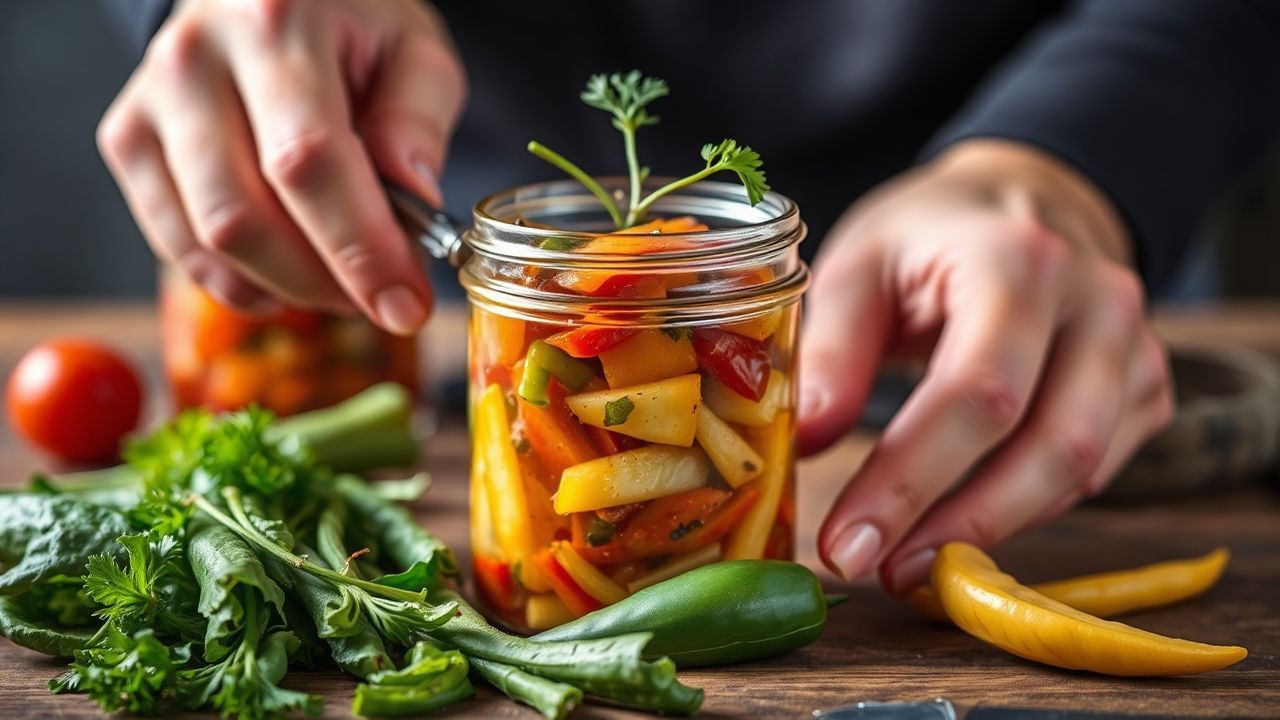
Place vegetables, garlic, hot and sweet peppers, and olives in a large glass or ceramic container. Pour cooled brine over the vegetables; submerge everything so flavor distributes evenly.
Refrigerate for at least 24 hours. For Chicago-style depth, wait 48–72 hours. Before serving, drain the vegetables and pack them into sterilized jars; finish by pouring extra virgin olive oil over the top to coat and preserve flavor.
4. Storage and reuse
Keep giardiniera refrigerated in airtight jars; flavors will continue to develop and mellow over time. Properly stored, the relish typically remains excellent for several weeks, sometimes longer if oil remains clean and jars stay cold.
Reserve the brine after straining and store it in the refrigerator for use in quick pickles or to add acid and flavor to dressings. Always check the brine for off smells before reusing.
Tips for Success
Small technique choices make a big difference with texture and flavor. I recommend testing one variable at a time—heat level or oil quantity—until you dial in your preferred profile.
- Heat control: remove seeds to reduce heat, or add extra chopped hot peppers for more bite.
- Maintaining crunch: ice-bath after blanching and minimal cook times preserve snap.
- Jar hygiene: sterilize jars in hot water and use clean utensils to extend shelf life.
- Oil finish: a thin oil layer floats on top to help keep air away from solids and to mellow sharp acidity.
Creative Serving Suggestions
Use giardiniera as a bright, crunchy condiment anywhere you want acid and texture contrast. It complements fatty, rich proteins and creamy spreads particularly well.
- Spoon generously over Italian beef, sausages, or grilled chicken to add acidity and heat.
- Fold into grain bowls, potato salad, or pasta salads for instant flavor lift.
- Blend chopped giardiniera into whipped ricotta or cream cheese for a lively crostini topping.
- Scatter over deviled eggs, omelets, or roasted vegetables as a colorful finishing garnish.
Nutritional Information
A typical 1/4-cup serving of giardiniera is low in calories and offers small amounts of fiber and vitamins from the vegetables. The olive oil adds healthy monounsaturated fat but also increases calorie density.
Estimate roughly 40–60 kcal per 1/4 cup depending on oil amount and olive inclusion. If you need precise tracking, weigh your batch and calculate based on exact ingredient totals.
Why homemade beats store-bought
Making giardiniera at home gives you control over oil quality, acidity, and vegetable freshness. Commercial jars can contain stabilizers or extended-heat processing that softens vegetables and dulls flavor.
Homemade jars allow you to choose extra virgin olive oil, organic produce, or zero-added-sugar brines. Those choices affect mouthfeel and nutritional profile, and they let you tune the relish to pair with your menu.
Related reading
To understand giardiniera’s place among condiments and regional food culture, the Wikipedia entry on Giardiniera provides compact history and variants. For broader context on regional Italian-American dishes, consult the Chicago cuisine overview.
FAQ
What exactly is giardiniera?
Giardiniera is a mixed vegetable relish traditionally pickled in vinegar and often finished with oil. The Chicago variant favors chopped vegetables, hot peppers, and an oil finish for richness and spreadable texture.
How long should I marinate giardiniera before serving?
Marinate a minimum of 24 hours for baseline flavor penetration. For a more integrated, bolder taste, wait 48–72 hours in the refrigerator; flavors deepen each day.
Can I can giardiniera for shelf stability?
Standard water-bath canning for oil-packed giardiniera requires careful technique because oil interferes with heat transfer. Many home preservers choose to refrigerate jars or follow tested canning recipes from reputable sources rather than canning an oil-finished product at home.
How do I adjust heat without losing flavor?
Remove pepper seeds and membranes to lower heat but retain pepper flavor. Alternatively, reserve a portion of mild peppers and blend in hot peppers incrementally so you can test and balance spice without overshooting.
How long will homemade giardiniera keep in the fridge?
Properly refrigerated, giardiniera typically stays good for several weeks; many sources report quality up to two months if oil remains clear and jars stay cold. Always check for off smells or mold before use.
Enjoy making this bold, tangy condiment at home: you control the crunch, heat, and oiliness to suit your preference. Try variations with different pepper mixes or add capers for a briny twist.
For further context on Mediterranean oils and culinary uses, see Olive oil. If you want background on Italian-American sandwich culture where giardiniera often appears, review Italian beef.
See also: Giardiniera