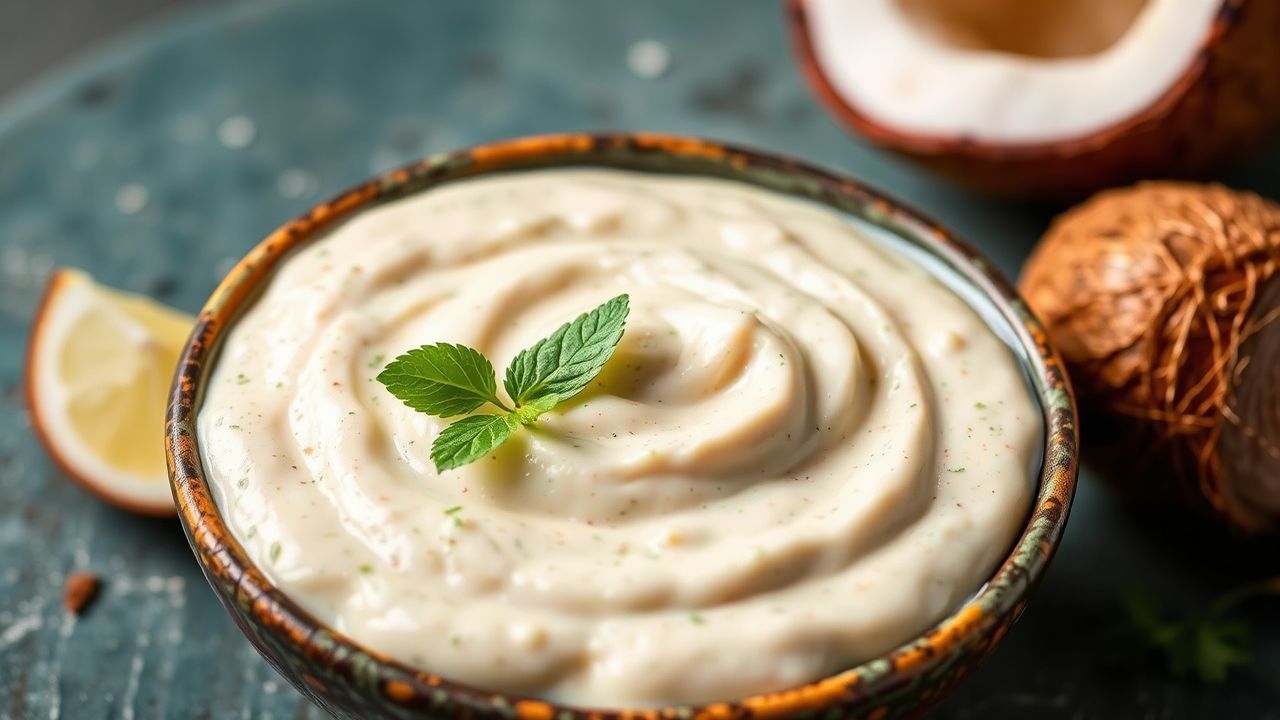

Imagine a condiment so luscious, rich in flavor, and versatile that it transforms every bite into a tropical celebration. Creamy coconut chutney delivers that balance of natural sweetness, gentle heat, and bright tang that complements South Indian staples and modern snacks alike.
- Fast prep: Ready in about 15 minutes with minimal cooking.
- Texture trick: Roasted chana dal gives body without dairy.
- Temper for depth: A hot tadka of mustard, curry leaves and asafoetida lifts aroma.
- Storage: Keeps well 48 hours refrigerated; a thin oil seal preserves color.
Overview and Culinary Context
Creamy coconut chutney originates from coastal South Indian kitchens where fresh coconut is abundant. Its role is simple: to balance the crisp texture and savory batter of items like dosa and idli with a cooling, aromatic counterpoint.
Cooked correctly, the chutney accentuates texture and flavor rather than overpowering. For background on the core ingredient, see coconut.
At a Glance: Prep, Yield and Difficulty
Preparation: 10 minutes. Cooking: 5 minutes (tempering). Total: 15 minutes. Serves 4.
Difficulty: Easy. This recipe fits novice cooks and experienced cooks who want consistent, restaurant-style texture.
Ingredients
Gather fresh grated coconut and a small set of supporting ingredients to build texture and flavor. The ingredient list below keeps the chutney bright and balanced.
Core:
- 1 cup freshly grated coconut (or frozen, thawed)
- 2 tbsp roasted chana dal (roasted Bengal gram) for body
- 1-2 green chilies — adjust to taste
- 1-inch fresh ginger, peeled and chopped
- 1/2 tsp salt or to taste
- 1/2 cup water, more as needed for blending
For tempering (tadka):
- 1 tbsp oil (coconut oil preferred)
- 1/2 tsp mustard seeds
- 1/2 tsp urad dal
- 1-2 dried red chilies
- Few curry leaves
- Pinch of asafoetida (hing)
Why These Ingredients Work
Fresh grated coconut provides natural fat and sweetness; roasted chana dal acts as a binder and gives a silky mouthfeel without cream. Green chilies and ginger add clean heat and aromatic lift.
Use coconut oil for tempering when you want a traditional aroma. For technical context on the cuisine and related staples, consult chutney and regional dishes like dosa and idli.
Equipment and Prep Notes
Use a medium-power blender or small food processor. For the smoothest result, pulse and scrape rather than run on high for long stretches.
Toast chana dal until golden and aromatic if you buy it raw; pre-roasted pieces work fine. Always taste and adjust salt at the end.
Instructions
Follow these precise steps to achieve the signature creamy, slightly textured chutney. Each step focuses on texture control and flavour layering.
- Combine base: Add grated coconut, roasted chana dal, green chilies, chopped ginger and salt to the blender. Pour the initial 1/2 cup water to aid milling.
- Pulse to texture: Pulse on medium speed until the mixture is smooth yet slightly textured. Avoid overblending; the aim is creamy, not soupy. Add water in small increments if needed.
- Transfer: Put the chutney into a serving bowl and set aside. The chutney will settle and thicken slightly as it rests.
- Heat tempering oil: Warm oil in a small pan over medium heat until it shimmers. Use caution with oil temperature; too low and spices won’t bloom, too high and they burn.
- Add seeds and dal: Add mustard seeds and let them pop. Toss in urad dal until it turns golden, roughly one to two minutes.
- Finish tempering: Add dried red chilies, curry leaves and a pinch of asafoetida. Sauté about 30 seconds until aromatic, then remove from heat.
- Combine: Pour the hot tempering over the chutney and stir gently to blend the flavors evenly.
- Adjust and serve: Taste for salt and heat. If you prefer tang, finish with a small squeeze of lime or a teaspoon of tamarind paste.
Tips for Consistent Results
Texture and freshness matter more than exact proportions. Small adjustments produce big results, so tweak chilies and salt for each batch.
If the chutney gets too thick after refrigeration, stir in cold water a teaspoon at a time until you reach the desired consistency.
Let the tempering sizzle briefly but avoid prolonged frying of spices. Always add the tempering to room-temperature chutney for best aromatic lift.
Serving Suggestions and Pairings
Serve this chutney with crispy dosas, steamed idlis, uttapam, medu vada or as a dip for grilled snacks. The chutney’s sweetness and spice complement fermented batters particularly well.
Garnish with a drizzle of coconut oil, fresh curry leaves, or a few toasted coconut flakes to emphasize coconut aroma. For modern fusion, serve it alongside roasted vegetables or as a spread on flatbreads.
Storage and Food Safety
Store chutney in an airtight container in the refrigerator for up to 48 hours. For best color retention, press a thin layer of coconut oil over the surface before sealing.
Re-stir before serving. The chutney will thicken when cold; return it to room temperature or add a small amount of water to loosen texture.
Nutritional Snapshot
| Nutrient | Amount per Serving |
|---|---|
| Calories | 120 kcal |
| Protein | 3 g |
| Carbohydrates | 8 g |
| Fat | 9 g |
Related Reading
Explore broader chutney techniques and variations in our Complete South Indian Chutney Guide for recipes and troubleshooting. This internal resource expands on regional tempering and ingredient swaps.
For additional regional context, review the Wikipedia pages linked earlier on coconut and key South Indian staples to deepen your technique knowledge.
Q&A
Below are concise answers to common technique and storage questions.
What makes coconut chutney essential with dosa and idli?
Coconut chutney provides a cooling, aromatic contrast to the fermented batter dishes. The fat from coconut softens the palate while spices and tempering add complexity.
How do I achieve a silky texture without making it watery?
Use roasted chana dal for body and add water sparingly during blending. Pulse the blender rather than running it continuously to control texture.
Can I use frozen coconut?
Yes. Thaw frozen grated coconut and drain any excess water before grinding. Avoid dried coconut flakes as they absorb moisture and change the texture.
Which tempering components are non-negotiable?
Mustard seeds and curry leaves are signature elements for aroma and texture contrast. Asafoetida adds umami depth in small amounts.
FAQ
How long does coconut chutney last?
Stored cold in an airtight container, it keeps up to 48 hours. Covering the surface with a thin layer of oil reduces oxidation and color loss.
Can I make the chutney ahead for a party?
Yes. Make it the day before and refrigerate. Restir before serving and adjust seasoning if flavors mellowed overnight.
Are there vegan or allergy-friendly swaps?
The recipe is naturally vegan. For nut allergies, avoid peanut variations and stick with roasted chana dal or roasted gram for texture.
What else pairs well beyond South Indian staples?
Try the chutney as a dip for vegetable fritters, a spread for wraps, or a bright finishing sauce for grilled fish or chicken where coconut complements the protein.
Where can I learn more about regional chutney styles?
See our internal guide at Complete South Indian Chutney Guide for regional tempering, ingredient swaps and advanced techniques.
Mastering coconut chutney rewards attention to simple techniques: ingredient quality, controlled blending and a correct tempering. Practice once and you build a reliable formula that suits your palate and occasions.
See also: coconut chutney