
Fluffy Biscuits: 5 Pro Baking Secrets
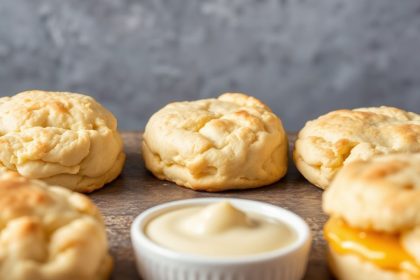
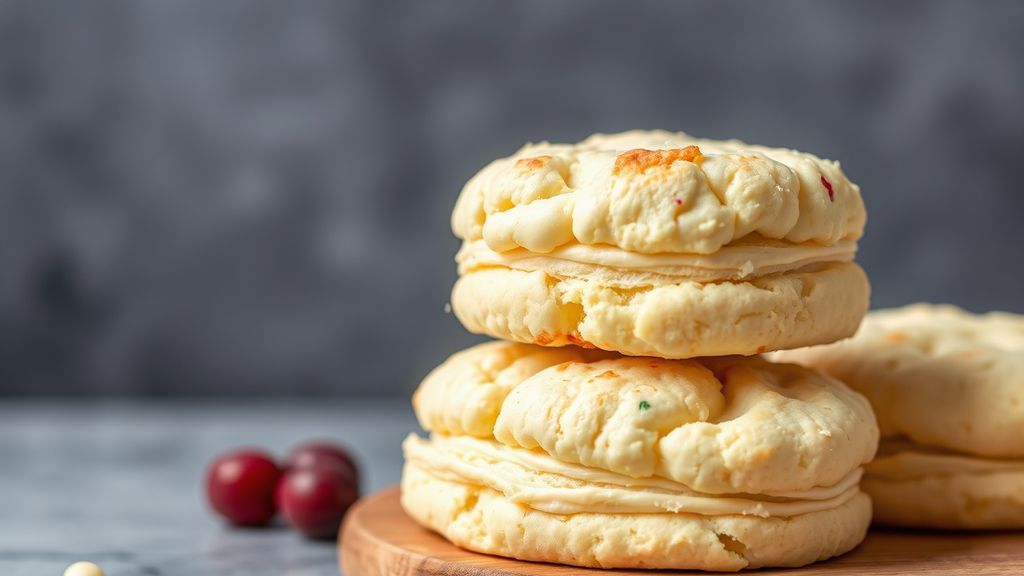
Fluffy biscuits are the reference for home baking: tall, layered rounds that rely on steam lift, chemical leavening, and limited gluten development to produce a tender, flaky interior and buttery crust.
- Cold fat + hot oven: Maximize steam and sharp layer separation.
- Weigh ingredients: Scales give consistent texture across climates.
- Fold gently: Create layers while limiting gluten activation.
- Fresh leaveners: Ensure predictable rise and crumb.
Fluffy Biscuits: A Short Cultural & Technical History
The modern American biscuit evolved from quick breads and regional flatbreads into the steam-lifted rounds we expect today. Techniques that emphasize cold fat and quick handling created the signature layers and tender crumb.
For historical context on form and lineage, consult the encyclopedia entry on Biscuit (bread). That article outlines how shifts in leavening and ingredient availability shaped the biscuit we bake now.
Ingredients for Fluffy Biscuits
Use a medium-protein all-purpose flour, very cold unsalted butter, fresh chemical leaveners, and cultured buttermilk or an acidified whole milk substitute. Ingredient choices control structure, flavor, and color.
For the role of grain protein in structure, see the general overview on Flour. That explanation helps you choose the right staple flour when you want strength without toughness.
Wet Ingredients
Buttermilk gives acidity and tenderness while reacting with baking soda for improved rise and color. If you lack cultured buttermilk, acidify whole milk with a little lemon or vinegar and keep it cold.
Background on cultured dairy and its effects appears in the Buttermilk article. Use that when you experiment with substitutes so you match acidity and consistency.
Dry Ingredients
Baking powder delivers the main lift; baking soda supports browning when acid is present. Distribute leaveners evenly to avoid uneven pockets of metallic flavor or irregular rise.
For more on how chemical leaveners work, review Leavening agent. Knowing reaction timing helps you time mixing, shaping, and baking for a predictable rise.
- All-purpose flour — 450 g (3 2/3 cups, spooned and leveled)
- Baking powder — 12 g (2 1/2 tsp)
- Baking soda — 2 g (1/2 tsp)
- Fine salt — 9 g (1 1/2 tsp)
- Granulated sugar — 12 g (1 tbsp)
- Unsalted butter, very cold — 170 g (12 tbsp / 3/4 cup), cubed or grated
- Buttermilk, cold — 240 ml (1 cup)
- Optional: 30–45 ml (2–3 tbsp) melted butter for brushing
Fluffy Biscuits Preparation Method
This sequencing preserves fat pockets, limits gluten development, and uses the oven to transform texture. Work on a cool surface and move deliberately but quickly.
Follow the steps: mix dry, cut fat, add cold liquid, fold, chill, cut, and bake on a very hot surface. Each step has a mechanical purpose that affects rise and layers.
Step 1 — Mix Dry Ingredients
Whisk flour, baking powder, baking soda, salt, and sugar until homogeneous. Uniform dispersion prevents localized over-rise and keeps flavor balanced across rounds.
If you find clumps in leavening, pass the mix through a fine sieve or re-whisk; consistent dispersion ensures consistent lift for every biscuit.
Step 2 — Cut in the Cold Butter
Grate very cold butter or cut into 1/4–1/2-inch cubes and work into the dry mix until pieces resemble peas. Leave small, discrete nuggets so they remain suspended and melt into steam pockets during baking.
Use a pastry cutter, two knives, or brief food-processor pulses; stop once you see pea-sized pieces. If the butter softens, chill the bowl briefly and continue.
Step 3 — Add Cold Buttermilk and Fold
Pour cold buttermilk over the flour-butter mixture and stir until the dough just comes together. An uneven surface and visible butter pockets are signs you preserved fat properly.
Turn dough onto a lightly floured surface, pat into a rectangle roughly 9×6–7 inches and 1½ inches thick, fold into thirds, rotate, and repeat. Two folds create laminated layers while minimizing gluten activation.
Step 4 — Chill, Cut, and Bake
Chill folded dough 20–30 minutes while you preheat the oven to 230°C / 450°F and place a heavy baking sheet or pizza stone on the middle rack. Cold dough in a very hot oven yields rapid steam and strong vertical rise.
Pat to 1 inch thickness and cut straight down with a sharp, non-twisting 2 1/2–3 inch cutter. Place rounds snug for soft sides, or spaced for crisper edges; bake 12–15 minutes until deep golden.
Let biscuits rest 3–5 minutes on the pan so interiors finish setting from residual heat. Brush with melted butter after baking for soft, shiny tops; use an egg wash before baking for deeper color if desired.
Nutritional Info for Fluffy Biscuits
Estimates assume 12 uniform servings and depend on portion size and ingredient brands. Use these values for menu planning and calorie estimates.
Adjust counts when you change fats (butter vs lard), swap milk types, or alter portion sizes. Freezing and reheating decisions also change final nutrition per serving.
- Calories: ~220 kcal per biscuit
- Total Fat: 11 g
- Saturated Fat: 6.5 g
- Carbohydrates: 25 g
- Protein: 4 g
- Sodium: 320 mg
Expert Pro-Tips for Fluffy Biscuits
Small technique adjustments yield big differences. Use chilled metal bowls, weigh ingredients, and keep working times short for consistent results.
Advanced bakers sometimes substitute 25% of the butter with rendered lard to increase flake. Lard changes flavor and melt behavior, so test small batches first.
- Weigh flour: scales remove cup variability, especially in humid climates.
- Chill tools: metal bowls and chilled cutters slow butter warming.
- Freeze cut biscuits 10 minutes before baking to preserve shape and encourage lift.
- Brush with melted butter after baking for soft tops; egg wash before baking for deeper color.
Common Problems & Fixes
Diagnose issues by tracing them to handling, temperature, or ingredient freshness. Most faults come from warm butter, overmixing, or stale leaveners.
Check leavener dates and control dough temperature first. Small adjustments to mixing time and oven placement solve most problems.
- Dense, flat: Overmixing, warm butter, or expired leaveners. Chill dough and limit handling.
- Irregular rise: Uneven folding or leavener distribution. Re-whisk dry mix and fold evenly.
- Gummy interior: Underbaked or too much liquid. Bake until a skewer inserted comes out hot.
- Overbrown tops: Oven runs hot or rack too high; lower temperature 10–20°C or move pan down one slot.
Conclusion
Repeatable, bakery-style biscuits come from tight control of fat temperature, accurate weighing, and minimal handling. Those three variables dominate texture and height.
Track small changes—salt level, fold count, oven surface—and record outcomes. Over a few bakes you’ll dial in timing and technique for predictable results.
See also: Fluffy Biscuits and baking tools for recommended equipment and recipes on this site.
FAQ
How do I make taller biscuits without changing the recipe?
Chill dough between folds, keep layers thick, and use a sharp cutter plunged straight down. Bake on a hot sheet or stone and add one more fold if you need more visible layering.
Also maintain a 1-inch final thickness; thicker layers strengthen vertical lift while still baking through.
Can I substitute milk for buttermilk in this recipe?
Yes. Acidify 1 cup whole milk with 1 tablespoon lemon juice or white vinegar and let sit 5 minutes, then use it cold. Whole milk gives richer flavor than low-fat options.
If you use plant-based milk, add an acid to approximate buttermilk tang and adjust fat content to maintain tenderness.
What causes biscuits to be dense instead of fluffy?
Major causes are overmixing, warm butter, or expired leavening agents. Measure flour by weight, stop mixing once the dough holds together, and confirm leavener dates.
Also check oven temperature and bake time; an oven that runs cool reduces lift and can produce a dense crumb.
How should I store and reheat leftover biscuits?
Cool completely, wrap airtight for up to 3 days, or freeze for 2 months. Reheat in a 175°C / 350°F oven for 8–10 minutes for best texture retention.
Microwave briefly then crisp in a toaster oven if you need a faster revive; shield with foil to prevent over-browning.
Can I make Fluffy Biscuits at high altitude?
At high altitude reduce baking powder slightly (about 1/8–1/4 tsp per teaspoon) and watch for rapid rise and fast browning. Slightly increase liquid if dough feels dry and shorten bake times while monitoring color closely.
Test one tray at a time to dial changes in, and keep a log of adjustments so future bakes become predictable.
See also: Fluffy Biscuits