
Sourdough pancakes give an airy lift, a subtle tang, and a tender crumb that pairs perfectly with whipped butter and bright jam. This recipe balances predictable fermentation timing with a simple cooking technique so you get repeatable results each morning.
- Reliable lift: Active starter plus a small baking-soda boost produces an open, tender crumb.
- Fresh spreads: Whipped butter and a quick berry jam add creamy texture and bright acidity.
- Simple workflow: Overnight feed, short morning prep, and moderate griddle heat yield consistent pancakes.
- Scalable: The formula adapts from 4 pancakes to larger batches with easy ratio changes.
Prep and Cook Time for Sourdough Pancakes
Plan for an overnight starter feed and a focused morning session. The starter needs 8–12 hours to peak so it contributes flavor and gas to the batter.
Active hands-on time runs around 35 minutes. That includes whipping butter (optional), simmering jam, mixing batter, and cooking on a hot griddle for roughly 15 minutes.
At a Glance: Yield, Difficulty & Starter
This batch yields about 8–10 medium pancakes, enough for 3–4 adults depending on appetite and toppings. Portion size, butter and jam quantity will change the final calorie estimate considerably.
Skill level sits at medium: you must manage starter activity and pan temperature. Follow feeding windows and avoid overmixing to get forgiving, repeatable results.
Ingredients for Sourdough Pancakes, Butter & Jam
Split ingredients into three components: the pancake batter, homemade butter, and quick jam. Each part uses common pantry items to maximize flavor with minimal fuss.
Use quality dairy and ripe fruit where possible, and keep eggs at room temperature. When you substitute buttermilk, choose cultured buttermilk for consistent acidity and a predictable reaction with baking soda.
Pancake Ingredients
For the pancakes: 1 cup active sourdough starter, 1 cup all-purpose flour, 1 tbsp sugar, 1 tsp baking soda, 1/2 tsp kosher salt, 1 large egg, 3/4 cup buttermilk (or milk + acid), 2 tbsp unsalted butter, melted. Adjust hydration slightly for thicker or thinner batter.
Feed your starter 8–12 hours before use so it is bubbly and near its peak. A lively starter produces better lift and the characteristic mild tang that defines great sourdough pancakes.
Homemade Butter Ingredients
For the butter: 1 cup chilled heavy cream and 1/4 tsp fine sea salt, optional. Cold cream and a chilled bowl speed separation and reduce splatter when beating by hand or with a mixer.
Beat the cream until the emulsion breaks and buttermilk separates; then rinse and knead the butter until clean. Reserve strained buttermilk to enrich the pancake batter or other baking projects for a flavor boost.
Jam Delight Ingredients
For the jam: 2 cups fresh mixed berries, 2 tbsp honey or maple syrup, 1 tbsp lemon juice, and 1/2 tsp vanilla. Simmer gently until the fruit breaks down and the mixture thickens slightly.
Ripe berries reduce cooking time and concentrate natural sugars. Cool the jam to thicken and preserve bright acidity so it complements the tang of the pancakes rather than overpowering it.
Technique and Science for Sourdough Pancakes
Controlled fermentation and a small amount of chemical leavening work together. The active starter supplies flavor and some gas, while baking soda offers a late surge of lift during cooking.
Understanding starter activity helps you predict batter behavior. A bubbly, doubled starter reacts faster and needs less bench time; that improves texture and rise in the pan.
For background on the organisms that drive flavor and rise, consult the sourdough entry on Wikipedia: Sourdough. For the biochemical side of gas production and acid balance, see the fermentation overview at Wikipedia: Fermentation.
Instructions for Sourdough Pancakes
Follow the sequence to avoid overworking gluten and to keep the batter airy. Measure and prepare ingredients before mixing to keep the workflow smooth.
Heat the griddle to medium and adjust after the first two pancakes because temperature changes as the pan absorbs heat. Moderate heat prevents surface burning while allowing the interior to set.
- Make the jam: In a small saucepan, combine berries, honey, and lemon over medium heat and simmer 8–10 minutes until the fruit breaks down. Remove from heat, stir in vanilla, then cool.
- Whip butter: Pour chilled cream into a chilled bowl and beat until solids separate. Strain off buttermilk, rinse the butter, knead briefly, salt to taste, and chill.
- Mix batter: Combine starter, flour, sugar, baking soda, and salt in a bowl. Whisk the egg, buttermilk, and melted butter separately, then fold wet into dry just until combined—don’t overmix.
- Cook pancakes: Grease the griddle lightly and pour 1/4 cup batter per pancake. Cook 3–4 minutes until bubbles form and edges set, flip, and finish 2–3 minutes on the second side.
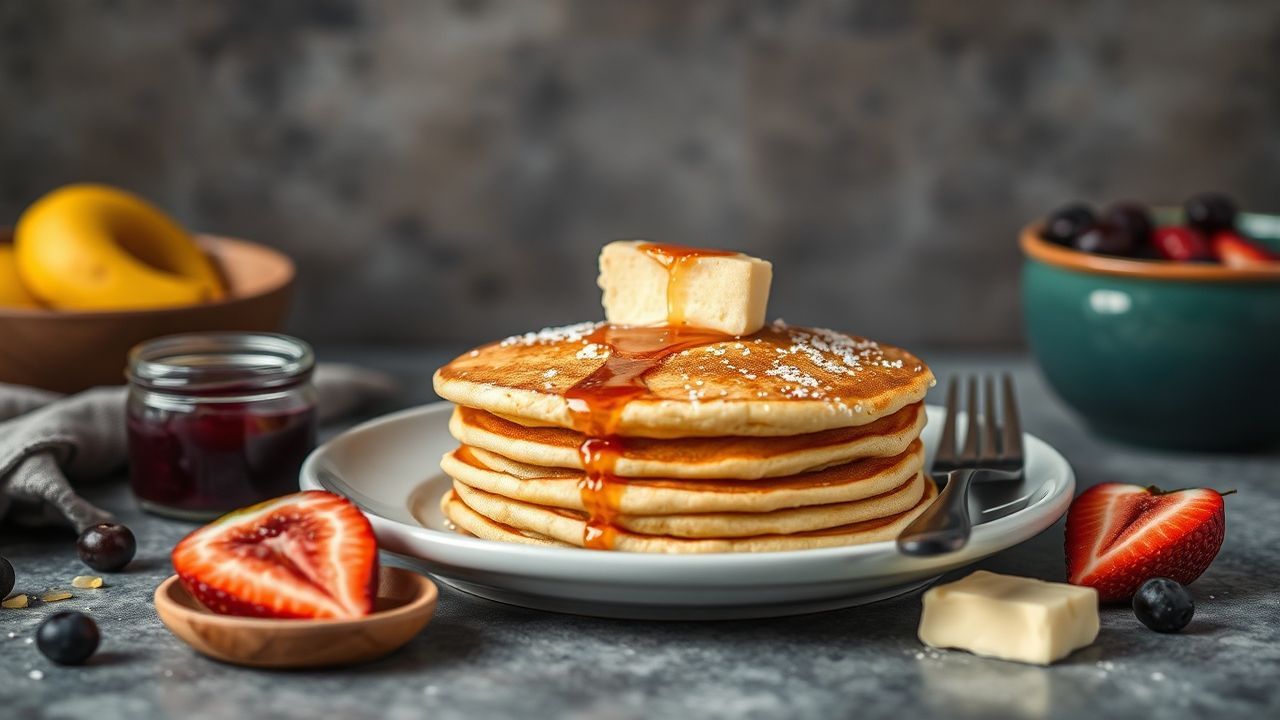
- Serve: Stack pancakes, top with a pat of homemade butter and a spoonful of jam. Add fresh berries or toasted nuts for texture and pass maple syrup on the side.
Tips for Success with Sourdough Pancakes
Temperature control matters: too hot burns the exterior before the interior sets, while too cool yields dense, dry pancakes. Aim for medium heat and tweak after the first few rounds.
Avoid overmixing to preserve tenderness; rest the batter 10–20 minutes when you can to relax gluten and hydrate the flour. If the batter looks slack, give it a brief 5–10 minute rest to regain structure.
Serving Suggestions for Sourdough Pancakes
Serve stacks on warm plates so the butter melts slowly into the layers. Offer maple syrup on the side so guests can control sweetness and preserve the jam’s bright acidity.
For a brunch presentation, add a sprinkle of toasted nuts for crunch and a small bowl of extra jam. Pair the dish with robust coffee or a floral tea to complement the tang and fat without masking it.
Nutrition & Storage for Sourdough Pancakes
Two pancakes with a tablespoon each of butter and jam fall near 300–350 kcal depending on butter and sugar used. Protein and fat come mainly from eggs and dairy, while carbohydrates derive from the flour and fruit.
Store leftover pancakes in an airtight container in the refrigerator for up to 48 hours. Reheat gently on low heat in a skillet or at 325°F (160°C) in the oven to preserve texture; homemade butter keeps refrigerated about a week and jam lasts several weeks when chilled.
References and Further Reading
For reliable background on the chemical leavening used here, read about baking soda at Wikipedia: Baking soda. For the dairy component and how butter behaves under heat, see Wikipedia: Butter.
For preservation and basic jam techniques, consult Wikipedia: Jam. These entries explain the core chemistry and storage principles that support the methods described above.
FAQ
How active should my starter be for sourdough pancakes?
Use a starter that doubles and shows abundant bubbles within a few hours after feeding. That activity supplies fermentation flavor and gas for reliable lift in the pancake batter.
Can I skip homemade butter and jam?
Yes — store-bought spreads work fine and speed the process. However, fresh butter and jam improve texture and let you control salt and sugar for a cleaner finish.
Why add baking soda to sourdough pancakes?
Baking soda reacts with acidic components in the starter or buttermilk to provide a quick lift during cooking. That reaction shortens set time and helps preserve an open crumb while the pancake cooks.
How do I fix flat sourdough pancakes?
Flat pancakes usually point to weak starter activity, overmixed batter, or pan temperature that’s too low. Feed the starter earlier, mix gently, and increase pan heat slightly to restore rise.
Can I make these pancakes gluten-free?
Use a tested gluten-free flour blend and add binders like xanthan gum for structure. Expect a different texture and adjust hydration and rest time so the flour hydrates fully before cooking.
See also: sourdough pancakes