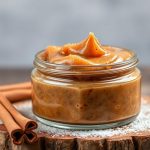
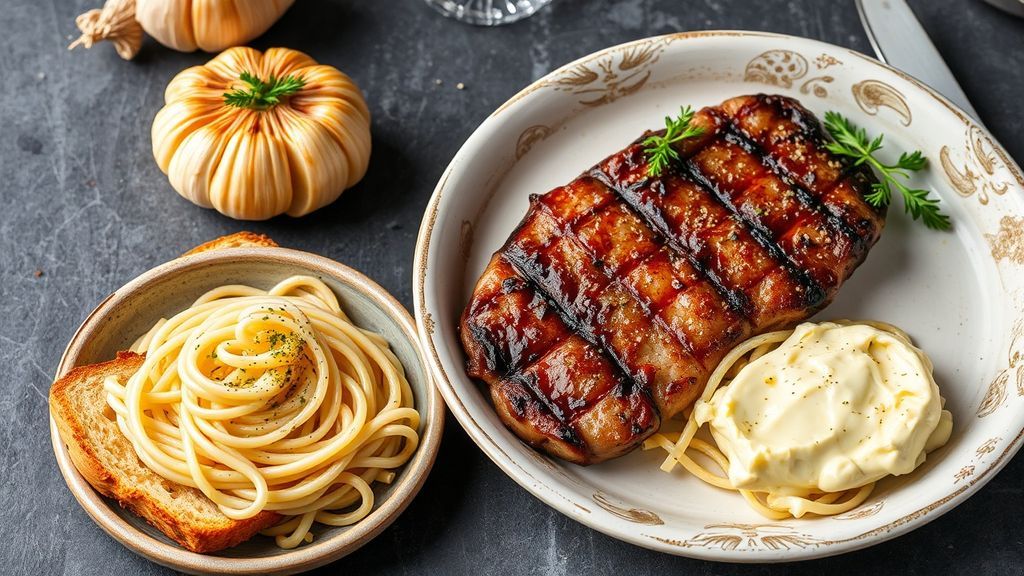

Roasted Garlic Butter: 7 Restaurant Uses
Roasted garlic butter multiplies flavor with minimal effort and reliable results. A small coin of compound butter adds aroma, gloss and a savory finish that lifts simple plates into restaurant quality.
- Finish with garlic butter to add aroma, shine and mouthfeel.
- Apply across platforms: bread, pasta, steak, vegetables and sauces for consistent impact.
- Store and portion for safe service and consistent intensity.
Why roasted garlic butter transforms simple dishes
Fat carries volatile aromatics; butter provides a silky coating that increases perceived richness. Roasting garlic converts sharp sulfur notes into caramelized sugars and blended sweetness that integrate easily into hot and cold applications.
Chefs use compound butters to standardize finish flavors and portion control. For technical context see garlic and butter on Wikipedia.
7 Creative Ways to Use Garlic Butter
Think in terms of texture and function: spread, glaze, emulsifier or laminating fat. Each application changes how the butter releases flavor and interacts with heat, acid and starch.
The seven examples below include practical technique, portion guidance and finishing notes line cooks can apply immediately. I focus on repeatable steps that support consistent service during busy shifts.
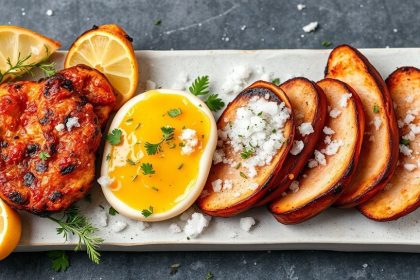
1. Garlic butter on Bread: Crisped, spread, and baked
Spread softened roasted garlic butter on sliced bread and toast under a broiler or in a 220–240°C (425–465°F) oven to get a crisp exterior and molten interior. For pull-apart bread smear butter between dough layers so steam and fat create distinct strands.
Finish with chopped parsley or lemon zest for brightness and flaky sea salt for texture. Portion about 10–15 g per slice to avoid greasiness and ensure even plating.
2. Garlic butter with Pasta: Toss, emulsify, finish
Cube cold garlic butter and add to hot, freshly drained pasta in a warm pan. Reserve 60–120 ml (1/4–1/2 cup) of starchy pasta water and add by tablespoons while tossing to form a glossy emulsion; starch binds fat into a coating.
Add grated Pecorino or Parmesan off-heat to thicken and round the sauce. If heavier than desired, lift with a splash of lemon juice or vinegar; for background on pasta structure see pasta.
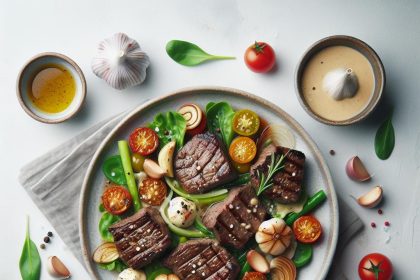
3. Garlic butter for Steak: Compound butter as the finishing touch
After resting, place a chilled coin or pat of garlic butter on the steak so it melts into the crust and pools into a glossy sauce. For consistent plating, form logs in parchment, chill and slice medallions just before service.
For high-heat searing, use clarified garlic butter in the pan to reduce milk-solid burn; add the compound butter off heat to release aroma without scorching. Use roughly 15–20 g per 250–300 g steak as a starting guideline.
4. Garlic butter on Vegetables: Roast, glaze, or sauté
Toss vegetables in melted garlic butter before roasting to boost browning; the milk solids in butter accelerate Maillard reactions and deepen color. For delicate steamed vegetables, add a small knob just before service to add sheen and seasoning.
For searing sturdy greens such as broccolini or asparagus, use clarified garlic butter to raise smoke tolerance while preserving garlic flavor. Finish roasted root vegetables with a splash of sherry or balsamic vinegar to cut richness and brighten the plate.
5. Garlic butter in Sauces & Compound applications
Add small pieces of garlic butter at the end of a sauce reduction, off heat, and whisk to create a smooth emulsion. The butter rounds acids and softens aggressive reductions without relying on starch or cream.
When deglazing a hot pan with wine or stock, reduce, remove from heat and whisk in garlic butter for an immediate silky finish that clings to proteins. Temperature and acid will affect stability, so add butter slowly and taste as you go.
6. Garlic butter in Baking: Savory breads and pastries
Use cold, grated garlic butter in laminated doughs like savory croissants and brioche twists to create flavored layers. Keep everything cold so butter pockets remain distinct and produce steam-laminated layers during bake.
For biscuits, fold cold grated garlic butter into flour so pockets of garlic-fat bloom while baking. Match the original butter-to-flour ratios of your recipe when substituting flavored butter to preserve dough structure.
7. Garlic butter as a Spread or Compound Dip
Whip softened garlic butter with lemon zest, chives or hot sauce for chilled dips served with seafood, roasted potatoes or warm bread. Chill logs and slice coins to allow guests to melt them onto hot items.
Combine garlic butter with crème fraîche or strained yogurt for a lighter dip that still reads as indulgent. Vacuum-pack logs flat for efficient thawing and longer fridge life; for batch tips see our internal prep guide at batch prep.
Roasted Garlic Butter Recipe (Perfect Compound Butter for Bread, Pasta, Steak & More)
This roasted garlic butter offers a rounded roast-sweet garlic character and melts predictably. The recipe scales linearly by weight; maintain consistent butter-to-garlic ratios for repeatable intensity.
Use European-style butter for higher fat content and richer mouthfeel; adjust salt if using salted butter. For the chemistry behind browning see the Maillard reaction.
Ingredients
150 g unsalted butter, cold and cubed; 1 head garlic roasted; 10 g kosher salt; 10 g parsley; 5 ml lemon juice. Optional: black pepper or smoked paprika to taste.
Yield is approximately 180–200 g depending on moisture loss during roasting. Scale by weight: roughly one head of roasted garlic per 150–200 g butter as a baseline and tweak by taste.
Detailed Preparation Method
Roast garlic: Preheat oven to 200°C / 400°F, trim the top to expose cloves, drizzle with 5 ml olive oil, wrap tightly and roast 30–40 minutes until soft. Cool then squeeze cloves into a bowl and mash to a smooth paste.
Blend: Keep butter cold and pulse cubed butter with garlic paste, salt, lemon juice and parsley in 3–5 second bursts until homogeneous but not warm. For a velvety texture pass through a fine mesh; for rustic flecks pulse less.
Shape and chill
Transfer mixture to plastic wrap or parchment and shape into a 4–5 cm diameter log, roll tightly and twist the ends. Refrigerate until firm or freeze for longer storage and slice partially frozen logs for clean coins.
For high-heat finishing, render a clarified garlic butter by gently melting the compound, separating and reserving the clear fat. Use clarified fat for pan finishes to reduce milk-solid burn during searing.
Expert Pro-Tips
Work quickly and keep components cold to avoid melting and separation. Adjust salt after blending because different butter types vary in moisture and salt content.
Vacuum-pack logs flat for efficient thawing and extended shelf life; label with date and variant. Rotate stock chronologically to maintain quality and traceability.
[TESTIMONIAL]
Keep a small tray of coins in a chilled cabinet for service and move only the coins needed for a rush. Portion control reduces waste and preserves flavor balance during continuous service.
Storage & Safety for Garlic Butter
Treat garlic butter like fresh dairy compound: cool quickly and refrigerate at or below 4°C (40°F). Limit time at room temperature during service to reduce microbial risk.
Refrigerated: use within 7 days for best safety and flavor. Frozen: store at -18°C (0°F) or colder for up to 3 months for optimal quality; label clearly with date and variant.
Do not store garlic-in-oil at room temperature because anaerobic conditions can support dangerous organisms. For background on microbial hazard see Clostridium botulinum and food preservation.
Thaw overnight in the refrigerator and use within 48–72 hours; do not refreeze to preserve texture and aroma. Portion into single-serve coins before freezing for fastest, safest thawing and easiest service.
For operational safety, train staff on labeling and time-temperature control and shelve vacuum-packed logs chronologically. Maintain a clear FIFO system and document thaw times during service.
FAQ: Garlic butter — quick answers
Can I use raw garlic instead of roasted for garlic butter?
Yes. Raw garlic delivers a sharper, more pungent profile and you should use less by weight. Start with roughly half the roasted amount and mince or grate finely so the flavor distributes evenly.
Roasted garlic provides sweetness and integrates cleanly in both cold and hot applications. Choose raw when you want a bright, assertive garlic note and roast when you want mellow complexity.
How long does garlic butter keep in the fridge and freezer?
Refrigerated: up to 7 days at ≤4°C (40°F). Frozen: up to 3 months at -18°C (0°F) or colder for best flavor retention.
Thaw in the refrigerator overnight and use within 48–72 hours; avoid refreezing to keep texture and aroma intact. Portion before freezing for fastest, safest thawing.
Is garlic butter safe for people with garlic sensitivities?
No. Garlic compounds remain after roasting and can trigger sensitivities. Substitute mild aromatics such as chives, parsley or roasted shallot for lower-intensity flavor.
Label dishes clearly during service and provide alternative finishing options to accommodate guests with intolerances. Train staff to communicate ingredients accurately.
How do I add garlic butter to pasta without making it greasy?
Reserve starchy pasta water and add it slowly while tossing with the garlic butter to form an emulsion. Starch binds fat into a thin, glossy coating rather than leaving pools of grease.
Add acid such as lemon juice or vinegar sparingly to lift flavors, and finish with grated cheese to integrate the sauce. Adjust butter quantity to portion size for balanced richness.
Can I make garlic butter ahead for restaurant service?
Yes. Shape, portion and freeze logs or coins for consistent plating and fast service. Thaw in refrigeration before use and keep coins chilled during service to prevent rapid softening.
Use clear labeling to avoid service errors and maintain food-safety traceability. For freezer and thaw protocol see our internal guide at freezing and thawing.
See also: garlic butter
See also: Garlic butter