
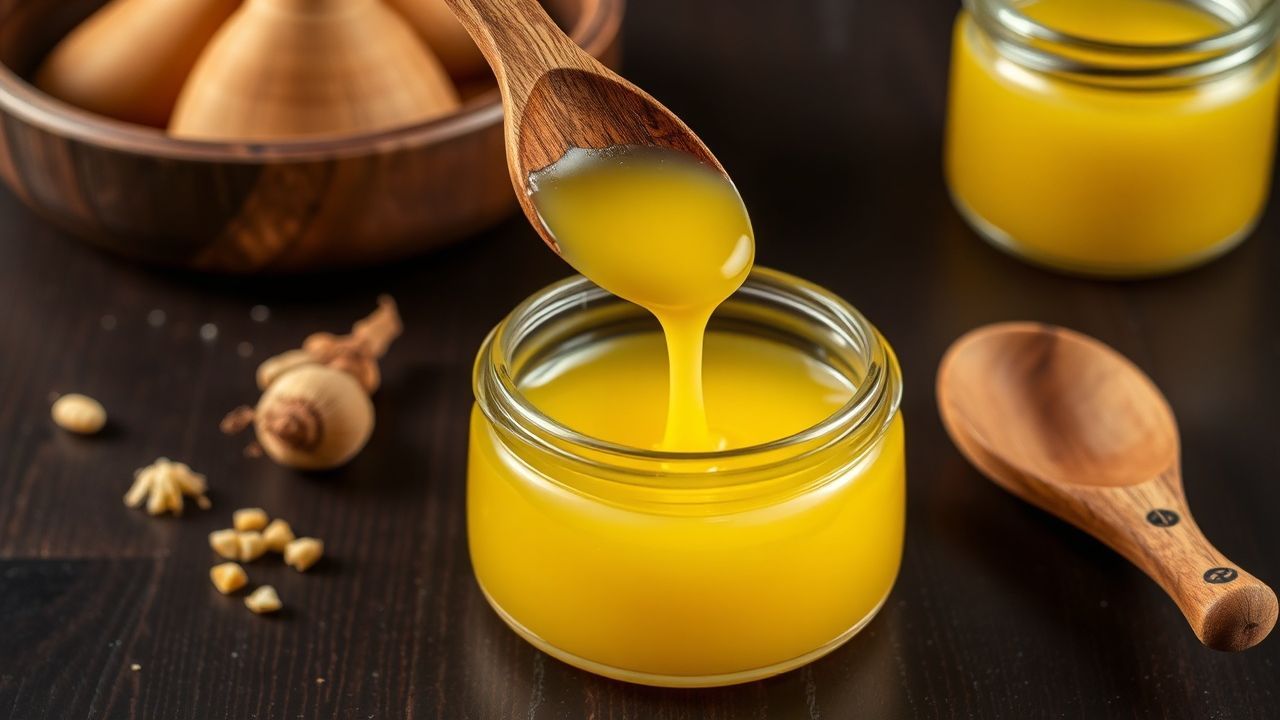

Homemade ghee offers a rich aroma, nutty flavor, and a wide range of uses in the kitchen. Many home cooks ask: how long does homemade ghee truly last? Knowing homemade ghee shelf life helps you preserve flavor, avoid waste, and use it safely.
Unlocking shelf life means understanding the factors that affect longevity. Temperature, light, moisture, and how well you strain and store the ghee all play a role.
Prep and Cook Time
- Preparation: 5 minutes
- Cooking: 30-40 minutes
- Total Time: 35-45 minutes
Yield
- Approximate Volume: 1 cup of homemade ghee
Difficulty Level
- Medium: Requires attentive simmering and proper straining
Ingredients
- 1 lb unsalted, high-quality butter (preferably grass-fed)
- Optional: a pinch of turmeric or a few curry leaves for subtle flavor infusion
Instructions
- Begin by melting the butter in a heavy-bottomed saucepan over medium-low heat. Gentle heat prevents burning.
- As the butter melts, allow it to simmer gently. It will foam and bubble as water evaporates; keep the heat steady.
- After 25-30 minutes, milk solids separate and settle at the bottom, turning golden brown. The bubbling softens and a nutty aroma appears—signs ghee is nearly ready.
- Remove the pan from heat and let the ghee cool for about 10 minutes so solids settle further.
- Strain the ghee through a fine-mesh sieve or cheesecloth into a clean, dry, airtight glass jar, leaving browned solids behind.
- Seal your jar tightly and store as outlined below to maximize shelf life and freshness.
Chef’s Notes and Tips for Success
- Use grass-fed butter for richer flavor and better natural stability.
- Avoid moisture: Never use wet spoons or containers; water accelerates spoilage.
- Store properly: Keep ghee in a cool, dark place away from sunlight to prevent oxidation. For more details, see our storage guide.
- Refrigeration: Optional but extends shelf life dramatically without sacrificing texture.
- Customize flavors: Infuse with herbs or spices before straining for added taste.
- Strain carefully to remove milk residue that could shorten shelf life.
The next step is simple: let the ghee settle, cool, and then seal. Avoid introducing moisture or food particles when spooning ghee out—these are common reasons batches spoil early.
Signs Your Ghee Has Gone Bad and When to Discard It
- Off smell: A rancid or sour aroma signals spoilage.
- Discoloration: Dull or darkened ghee indicates oxidation beyond acceptable limits.
- Mold growth: Visible mold means discard immediately.
- Change in texture: Excessive graininess or separation that doesn’t remix upon stirring can signal deterioration.
Some people attempt to reheat questionable ghee, but that won’t reliably remove contamination. If in doubt, toss it.
Storing Homemade Ghee for Maximum Freshness and Homemade Ghee Shelf Life
Store ghee in a sterile, airtight glass jar with a tightly fitting lid. A dark amber jar or cupboard protects delicate flavors from light.
At room temperature, properly stored ghee is suitable for short-term use—typically 3 to 6 months. Refrigeration can extend freshness up to a year or more.
For very long-term storage, freezing portions in airtight, freezer-safe containers preserves quality for up to 2 years.
Best Practices for Extending the Shelf Life of Your Homemade Ghee
- Ensure bottles and utensils are completely dry before use.
- Cool ghee completely before sealing to prevent condensation inside the jar.
- Consider freezing smaller portions; frozen ghee retains quality and thaws easily.
- Regularly check stored ghee, especially if kept at room temperature, for early signs of spoilage.
- Read more on benefits and uses in our benefits of ghee and ghee recipes pages.

Nutritional Information Per 1 Tbsp Serving
| Calories | Protein | Carbohydrates | Fat |
|---|---|---|---|
| 112 | 0g | 0g | 13g |
For more on the health benefits and culinary versatility of ghee, explore this detailed guide on ghee’s benefits. To understand the science behind fat preservation, visit the Nutrition Society.
Key Takeaways
- Properly made and stored homemade ghee typically has a homemade ghee shelf life of 3–6 months at room temperature and up to a year refrigerated.
- Freezing extends shelf life up to 2 years if sealed well.
- Dry, sterile containers and removing milk solids are essential to prevent spoilage.
FAQ
Q: How long does homemade ghee last at room temperature?
A: Typically 3–6 months when stored airtight in a cool, dark place; this reflects common homemade ghee shelf life expectations.
Q: Can I refrigerate ghee?
A: Yes. Refrigeration can extend shelf life to about a year and may change texture to solid, which is normal.
Q: Is frozen ghee still good?
A: Yes. Freeze in small, sealed portions for up to 2 years without significant flavor loss.
Q: What common mistakes shorten ghee life?
A: Introducing moisture, not straining milk solids, using dirty utensils, or storing in warm/light conditions.
In Conclusion
Homemade ghee can be a long-lasting pantry staple when prepared and stored correctly. With simple precautions—dry tools, airtight jars, cool storage, and occasional checks—you can enjoy its buttery, nutty flavor season after season.

See also: homemade ghee shelf life