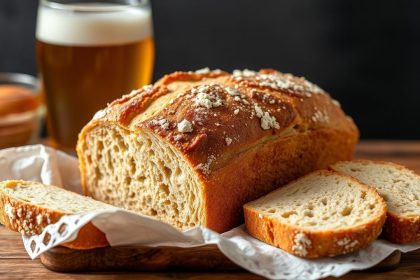
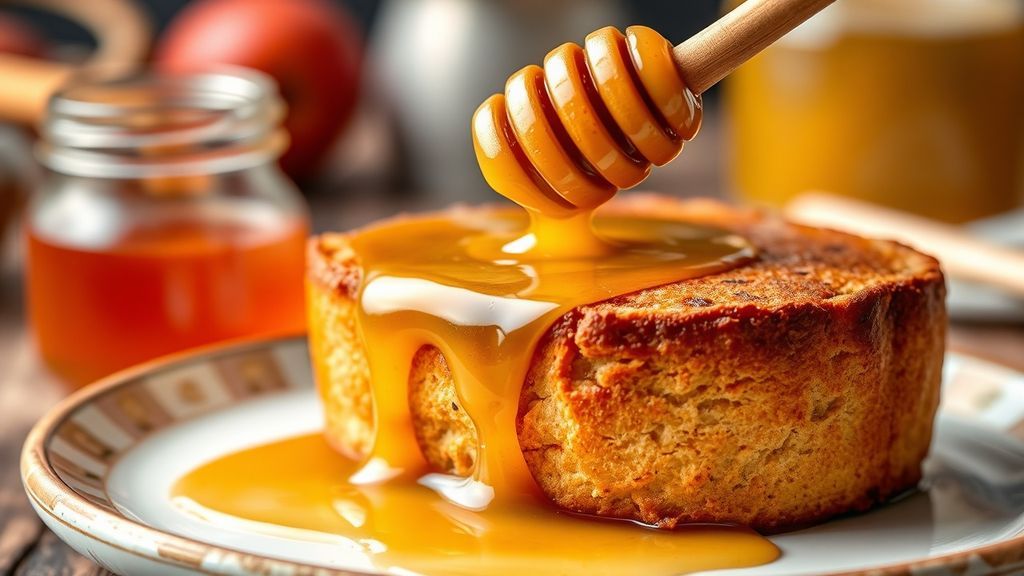

Honey Butter turns ordinary toast into a memorable bite by pairing creamy dairy fat with aromatic honey. This guide gives a reproducible base, a fail‑proof whipping sequence, and five tested variations that scale from home jars to service tubs.
- Key ratio: 5:1 butter to honey by weight for a stable texture and predictable glazing.
- Technique: whip butter first, then add honey slowly to form a glossy emulsion.
- Storage: refrigerate 10–14 days; freeze portioned logs for months.
- Scaling: keep temperatures below 20 °C during mixing for best results.
Why Honey Butter Transforms Breakfast Toast
Honey Butter pairs butter’s creamy mouthfeel with honey’s concentrated sugars and volatile aroma compounds to create a spread that both melts and clings to bread. The sensory result delivers immediate sweetness and layered after‑notes that elevate simple toasts and rolls.
From a food‑science perspective, aeration changes texture and perception; whipping incorporates tiny air cells while the sugar in honey influences gloss and melting behavior. For concise background on the primary ingredients consult the chemistry of butter and the composition of honey.
Classic Honey Butter Recipe
The classic formula yields a stable, silky compound that holds shape at room temperature yet softens and glazes on warm toast. Consistent ingredient temperatures and a controlled whipping sequence prevent greasiness and over‑aeration.
Use a high‑fat unsalted butter for richness and a mild floral honey to preserve buttery notes. For a primer on how liquid distributes in fat matrices see the basic principles of emulsion.
Ingredients for Classic Honey Butter (Per 250 g / ~1 cup yield)
- Unsalted butter — 200 g, room temperature (16–18 °C / 60–65 °F).
- Pure honey — 40 g (2 tbsp).
- Sea salt — 1/4 tsp or to taste.
- Optional: 1/4 tsp vanilla extract (2.5 mL).
Preparation Method for Classic Honey Butter
Place softened butter in a chilled mixing bowl and whip on medium speed for 30–45 seconds until the color lightens and texture becomes silky. Stop before the butter becomes overly aerated to avoid a dry, whipped texture.
With the mixer running, add the honey in a thin, steady stream so it incorporates evenly; continue whipping until glossy and homogeneous. Finish by folding in salt and vanilla with a spatula for a uniform surface and to de‑aerate any large bubbles.
5 Variations of Honey Butter
Each variation uses the same 200 g butter : 40 g honey base (5:1 by weight) and follows the same whipping technique. Additions fold in after the primary emulsion forms to keep texture consistent.
Avoid excess free liquid and coarse solids because they destabilize the spread. The brief notes below include pairing and technique tips so flavor stays balanced without ruining structure.
Citrus Honey Butter (Lemon‑Orange)
Add the colored zest from 1 lemon and 1/2 orange plus 1 tsp citrus juice to the whipped base. Zest supplies volatile oils that amplify aroma without thinning the spread.
Finish with a light scatter of flaky sea salt and extra micro‑zest for shine. This variation pairs well with seeded sourdough and nut breads, and it benefits from a short rest in the fridge to let oils distribute.
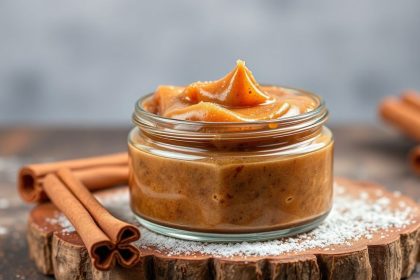
Cinnamon‑Maple Honey Butter
Replace half the honey with pure maple syrup (20 g honey + 20 g maple) and add 1 tsp ground cinnamon. Use a quality maple to shift the caramel tone and preserve a smooth mouthfeel.
Add the maple in a slow stream; if the mixture loosens chill briefly and re‑whip. Slow addition prevents a broken emulsion and keeps the blend glossy for plating.
Herbed Honey Butter
Fold in 2 tbsp finely minced fresh herbs such as thyme, rosemary, or chives and 1/2 tsp lemon zest. Mince herbs very fine so leaf oils distribute evenly and don’t create gritty pockets.
This savory‑sweet spread pairs well with cheeses like chèvre or ricotta and with whole‑grain toasts. Test any floral herbs sparingly; a small trial batch prevents overpowering the honey.
Nutty Honey Butter (Almond or Pecan)
Stir in 2 tbsp finely ground toasted nuts and 1/2 tsp ground nutmeg. Toast nuts until fragrant, cool, then grind—warm nuts release oil and can make the butter greasy.
Label these jars clearly for allergens. For allergen‑friendly kitchens substitute finely ground toasted sunflower or pumpkin seeds for a similar texture.
Chili‑Sweet Honey Butter
Mix in 1/2 tsp crushed chili flakes or 1/4 tsp smoked paprika plus a pinch of cayenne. The gentle heat contrasts the sweetness and lifts savory breads like country sourdough or corn toast.
Press the compound into a log on plastic wrap and chill to firm, then slice rounds for plated service. Sliced rounds create attractive, portioned presentations for guests or buffet trays.
Detailed Nutritional Info for Honey Butter (Per 1 tablespoon / ~15 g)
Estimated values for the classic Honey Butter using standard nutrition tables: energy ~110 kcal per tablespoon. Fat dominates the profile while sugars reflect the honey inclusion.
Typical per‑tablespoon values: 110 kcal, total fat ~11 g (saturated ~6.8 g), carbohydrates ~4 g (sugars ~3.8 g), protein ~0.1 g, sodium ~40 mg when 1/4 tsp salt is used. Adjust estimates for mix‑ins and alternative fats.
Expert Pro‑Tips for Honey Butter
Temperature control matters: aim for butter at 16–18 °C (60–65 °F). If butter is too cold it will tear and form coarse lumps; if too warm the emulsion can separate and the spread will feel greasy.
Whip briefly and intentionally. Over‑whipping traps air and changes mouthfeel; under‑whipping leaves dense spots. Keep a chilled bowl on standby to firm the mix if it loosens.
When working with crystallized honey, warm the jar gently in a water bath and cool to room temperature before adding. Avoid heating honey above 40–50 °C to protect volatile floral compounds and minimize graininess.
Labeling and storage protect quality: keep the spread in an airtight container in the refrigerator for 10–14 days. Freeze portioned logs for up to 3 months and thaw overnight in the fridge to maintain texture.
Scaling and Commercial Notes
Maintain the 5:1 butter:honey ratio by weight when scaling to keep texture predictable. For batch production use a planetary mixer with a paddle and control ingredient temperatures carefully.
Start mixers on low and build aeration gradually; add honey slowly in a steady stream. Monitor bowl temperature and keep product below 20 °C (68 °F) during mixing to prevent separation and gloss loss.
Portion into tubs, squeeze bottles, or preformed logs depending on service needs, and record yields and guest feedback. Small changes in honey varietal or salt often shift perceived balance more than altering the base ratio.
See in‑house notes on butter science for temperature control and on scaling recipes for batch yield calculations. These internal resources help standardize production and QA steps.
Conclusion: Put Honey Butter to Work
With a reliable base ratio and a clear whipping sequence you can turn butter and honey into a suite of signature spreads. Variations from citrus to chili let you match bread and menu intent without reworking technique.
For service testing present multiple variations with different breads and cheeses, label each clearly, and note guest responses on balance and mouthfeel. Simple presentation—quenelles or sliced coins—amplifies perceived care and increases perceived value.
FAQ
The FAQ answers common operational and kitchen questions about shelf life, ingredient swaps, and commercial adaptation. Each answer stays concise and actionable.
How long does Honey Butter keep?
Refrigerated in an airtight container, Honey Butter keeps 10–14 days. Freeze in portions for up to 3 months and thaw overnight in the refrigerator.
Can I use salted butter for Honey Butter?
Yes. Reduce or omit added salt if using salted butter and taste at room temperature. Salt intensity shifts with temperature, so adjust in small increments.
Which honey varieties work best?
Milder honeys like clover, orange blossom, and wildflower preserve buttery richness. Stronger honeys such as buckwheat or manuka will dominate and suit only small, punchy profiles.
Can I make Honey Butter vegan?
Use a high‑quality vegan butter and replace honey with maple syrup or agave. Expect a slightly different texture and a greater need to chill to firm the spread.
How do I adapt the recipe to a commercial scale?
Maintain the 5:1 ratio, use a planetary mixer with a paddle, control ingredient temperatures, and add liquids slowly. Portion promptly and label batches for traceability and quality control.
Further reading: For ingredient context consult Honey, Butter, and Maple syrup on Wikipedia.
See also: Honey Butter tag
Recommended Reading:
- Maple Butter Masterclass: 5 Chef-Tested Recipes & Pro Techniques
- Fluffy Biscuits: 5 Pro Baking Secrets
- 7 Smoked Salt Spread Recipes That Transform Meals