
Introduction
There’s a simple alchemy in turning fresh fungi into tangy, shelf-ready jars. Pickling mushrooms preserves their umami and adds a bright, savory counterpoint to many dishes.
- Quick result: Ready-to-eat in 48 hours, better at 3–7 days.
- Best texture: Use small, firm mushrooms such as button or cremini.
- Safety first: Refrigerate unless you follow tested canning methods.
- Flavor play: Vinegar, garlic, and whole spices make the brine sing.
Choosing the Perfect Mushrooms for Pickling
Pick the freshest, firmest specimens you can find. Small caps such as button, cremini, or trimmed shiitake hold texture and let the brine penetrate faster.
Each variety brings its own personality: button mushrooms deliver a mild canvas, cremini deepen the flavor, and shiitake add woodsy notes. For general info on fungi, see mushrooms on Wikipedia.
Prep, Times, and Yield
Preparation: 15 minutes. Cooking: 10 minutes. Minimum maturing time: 48 hours; optimal at 3–7 days.
Yield: About 4 cups pickled mushrooms (roughly 8 servings). These numbers assume 1 lb of cleaned mushrooms and standard brine volume.
Essential Tools and Ingredients
Use sterilized glass jars with airtight lids, a small saucepan, a sharp paring knife, and an ice bath for blanching. Sterilization and clean tools reduce spoilage risk.
Core ingredients for one batch: 1 lb mushrooms, 1 cup distilled white vinegar (5% acidity), 1 cup water, 1 tbsp kosher salt, 1 tbsp sugar, garlic, whole peppercorns, mustard seeds, and bay leaf. For background on vinegar chemistry, consult vinegar.
Crafting the Ideal Brine
The brine balances acidity, salt, and a touch of sugar to soften flavors and preserve texture. Heating the brine dissolves salt and sugar while releasing aromatics from spices.
Common spices include mustard seed, black peppercorns, bay leaf, and garlic. You can substitute or add dried herbs and chili flakes to personalize the profile.
Instructions
Follow these steps in order to get crisp, flavorful pickled mushrooms that store well in the fridge. I’ll break the process into concise steps so you can scan quickly while working in the kitchen.
Step-by-step Method
1. Clean and trim mushrooms: wipe or rinse briefly, then pat dry. Trim stems and score caps if you want faster brine uptake.
2. Blanch briefly: boil salted water, add mushrooms 1–2 minutes, then shock in an ice bath. Drain thoroughly to avoid diluting the brine.
3. Make the hot brine: combine vinegar, water, salt, sugar, and whole spices. Heat until sugar and salt dissolve and spices bloom—about 2–3 minutes after boiling.
4. Pack jars and pour: place mushrooms and herbs in jars, pour hot brine to fully cover, leave 1/2-inch headspace, then seal. Let jars cool at room temperature before refrigerating.
5. Maturing: refrigerate and wait at least 48 hours before tasting. Flavors will deepen over the next week.
Techniques for Safe Preservation and Long-Lasting Freshness
Use sanitized jars and lids every time. For refrigerator pickles, maintain an acidic brine (vinegar at around 5% acidity) and always chill promptly after cooling jars to prevent bacterial growth.
If you want room-temperature shelf stability, follow tested hot-water-bath canning procedures from authoritative food-safety guidelines. See the established process at canning for safe, long-term preservation.
Keep a simple jar log: label each jar with the pack date and batch notes. That habit helps you track aging and discard any jars that show cloudiness, off-odors, or lid bulging.
Chef’s Notes and Flavor Variations
Experiment with mushroom varieties: oyster mushrooms offer a delicate, meaty texture but require gentler blanching. Adjust sugar and salt to suit your palate.
Try alternate vinegars—apple cider or rice vinegar—for subtle differences. Add aromatics such as ginger, rosemary, or tarragon to create signature jars.
Hold herbs out of the jar if you want a cleaner visual; add them at the bottom for aroma but not for presentation. Fresh dill or thyme both complement mushroom umami well.
Serving Suggestions
Pickled mushrooms make a bright garnish for salads, charcuterie, and sandwiches. They also work well tossed into grain bowls or used as a tangy pizza topping after the bake.
Serve chilled or at cool room temperature and consider a finishing drizzle of good olive oil or a sprinkle of fresh parsley just before plating.
Nutrition and Portioning
Pickling adds sodium: expect roughly 550 mg of sodium per 1/2-cup serving depending on your brine strength. Other macros remain low—mushrooms are naturally low-calorie and provide modest protein.
Adjust salt in the brine if you monitor sodium intake, and remember that pickles concentrate flavors over time, so seasoning may taste stronger after a few days.
Common Troubleshooting
If mushrooms become soft or mealy, you likely overcooked during blanching or used overly mature specimens. Choose firm mushrooms and reduce blanch time.
Cloudy brine can result from dissolved proteins or spices; if the smell is off or the lid is bulging, discard the jar. For cosmetic cloudiness alone, taste carefully—if flavor is normal and refrigeration has been continuous, it can be safe to consume.
Images and Visual Cues
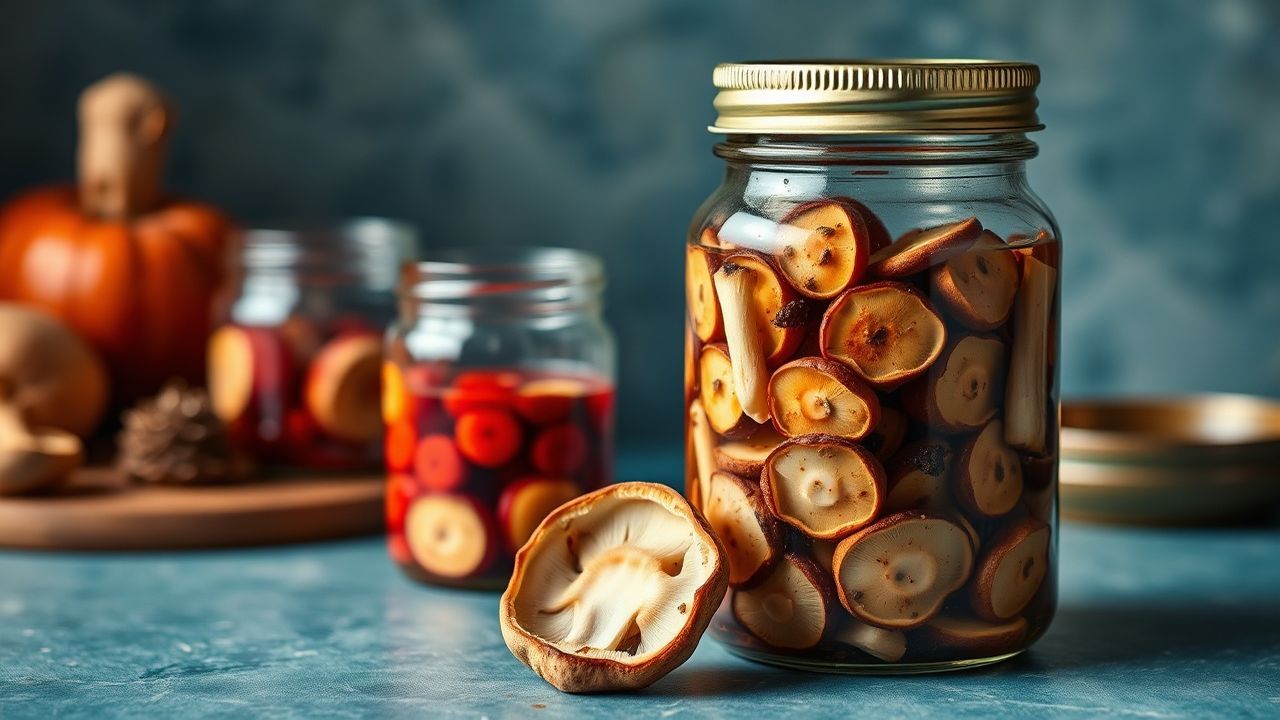
When inspecting jars, look for even color and full brine coverage. Properly packed jars should show mushrooms submerged without trapped air pockets.
A good visual sign of readiness: aroma shifts from sharp vinegar-only to a rounded, spiced tang after 3–7 days. That indicates the mushrooms absorbed the brine aromatics.
Further Reading
For technique background and historic context, consult the general pickling entry: pickling on Wikipedia. It covers acidity, fermentation, and preservation principles that underpin this recipe.
Also view the mushroom entry for taxonomy and culinary variety information at mushroom, and vinegar chemistry at vinegar.
Nutrition Table
| Nutrient | Per 1/2 cup |
|---|---|
| Calories | 35 kcal |
| Protein | 2.5 g |
| Carbohydrates | 5 g |
| Fat | 0.1 g |
| Sodium | ~550 mg |
FAQ
Why pickle mushrooms instead of cooking them?
Pickling preserves mushrooms longer while adding tang and layered spice. It can extend shelf life and provide a ready-made condiment to amplify multiple dishes.
Which mushrooms work best for this method?
Firm varieties like button, cremini, and shiitake hold texture. Oyster mushrooms also work but require gentler handling and shorter blanching.
How long before pickled mushrooms reach peak flavor?
They taste good at 48 hours, but flavor peaks between day 3 and day 7. Over time, intensity increases as spices and vinegar further infuse the flesh.
Can I store pickled mushrooms at room temperature?
Not without processing. Refrigerator pickles must remain chilled. For ambient storage, use validated hot-water-bath canning procedures; improper canning risks food safety.
How can I customize the brine?
Adjust vinegar type, salt level, sugar, and aromatic spices. Add chili flakes for heat, honey for sweetness, or herbs like rosemary for an herbal twist.
See also: Pickled Mushrooms